Keep tabs on your favorite ETFs with a personalized weekly tracker. Create a Watchlist now →



The “Sell America” Trade, Part 2: Top International ETFs to Watch For 2026
Investors considering pivoting away from domestic equities may find these ETFs appealing.

Keep up with what matters in ETFs
Get timely ETF insights, market trends, and top ideas straight to your inbox.
Your newsletter subscriptions with us are subject to ETF Central's Privacy Policy and Terms and Conditions.
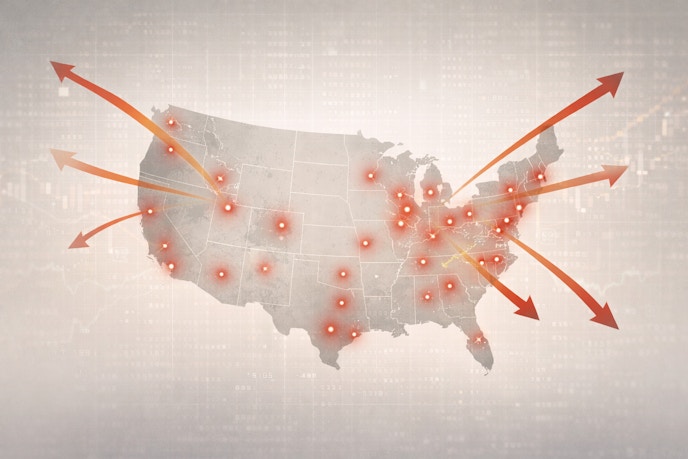
At the start of 2025, one of the dominant themes making the rounds among Wall Street pundits was the “sell America” trade. For a brief moment in April, following the rollout of Trump’s Liberation Day tariffs, it looked like that call might hold. U.S. equities sold off sharply, while international markets held up better.
By year end, though, the results were mixed. U.S. investors, as represented by the iShares Core S&P Total U.S. Stock Market ETF
That context matters because in the opening days of 2026, investors are once again being forced to reassess political risk inside the United States. We have already seen the U.S.-backed toppling of the Venezuelan regime and the capture of Nicolás Maduro. At the same time, the White House has floated the idea of annexing Greenland as a strategic move to counter Russian and Chinese influence.
Most concerning, there has been an unprecedented threat of an indictment against Federal Reserve Chair Jerome Powell over renovations to the Federal Reserve building. Powell has made it publicly clear that this is not about construction. He has publicly framed it as a dispute with President Donald Trump over his refusal to cut interest rates.
Former Fed chairs have come out in support of Powell, openly warning that this type of political pressure on a central bank is characteristic of emerging markets, not developed ones. The comparison that keeps coming up is Turkey, where President Erdoğan repeatedly fired central bank governors until he installed a loyalist willing to cut rates, triggering runaway inflation and a collapse in the currency.
Layer on top of that the valuation backdrop. U.S. equities remain historically expensive. The cyclically adjusted price to earnings ratio, also known as the Shiller P/E, currently sits at 41.01. The long-term mean and median are 17.33 and 16.07, respectively. The only higher reading on record was December 1999, at the peak of the dot-com bubble, when the ratio hit 44.19.
Personally, I believe the “sell America” trade is still very much alive heading into 2026, and may even be gaining renewed momentum. Here are two notable NYSE-listed international ETFs that are on my watch list for the year ahead.
Global ETF Survey 2026 is Live!
With 1,790 new products launched by July 2026, choosing is harder than ever. Our Global ETF Survey 2026, built on 620 professional investors and allocators, shows how active, fixed income, options-based and thematic ETFs are reshaping fund selection.
Xtrackers MSCI EAFE Hedged Equity ETF DBEF+0.97%
DBEF is my preferred way to gain exposure to developed international equities in the EAFE region. Its 0.35% expense ratio is comparable to EFA, which charges 0.32%, but DBEF includes one feature I value: currency hedging.
In my opinion, if you are investing in international stocks, the goal is to earn returns from share price appreciation, reinvested distributions, and buyback activity. Currency movements, therefore, add a separate source of risk and return that can distort those results.
With an unhedged ETF like EFA, changes in the U.S. dollar versus foreign currencies directly affect performance. When the U.S. dollar strengthens, foreign equity gains translate into fewer U.S. dollars, dragging on returns. When the dollar weakens, unhedged ETFs benefit from the opposite effect.
That currency exposure can work for or against you, but historically it has often worked against U.S. investors due to persistent dollar strength. While a sell U.S. theme could imply dollar weakness, this is not about making a directional call on the currency. It is about removing that variable altogether.
DBEF does that by hedging out currency fluctuations while holding the same underlying basket of stocks as EFA. The ETF currently offers a 2.26% 30-day SEC yield and has $8.44 billion in assets under management, making it a well-established vehicle for hedged developed-market exposure.
WisdomTree Europe Defense Fund WDEF+0.31%
One of the standout industries over the past several years has been defense. We are now roughly 1,420 days into the Russia–Ukraine war, the conflict between Israel and Palestine continues, and civil unrest in Iran against the Khamenei regime remains unresolved, with the possibility of U.S. involvement.
President Trump’s renewed emphasis on defense has pushed U.S. military-industrial stocks to record highs. At the same time, European defense companies have also seen meaningful gains.
Europe is facing a shifting security backdrop. A more isolationist and nationalistic United States is forcing European governments to rethink defense spending and long-term military readiness, particularly as a deterrent against Russia.
Added to that is the rhetoric around Greenland. Trump has not ruled out the use of force, stating he would pursue control through a deal or annexation. While remote, the idea of a serious rupture within NATO is now being openly discussed, which would fundamentally change Europe’s defense posture.
That is the context in which WDEF stands out. The ETF tracks the WisdomTree Europe Defense Index, which tracks companies domiciled and listed in developed European markets that generate at least 10% of revenue from defense-related activities. That definition extends beyond weapons manufacturing to areas such as military electronics, propulsion systems, space, and cyber defense.
A distinguishing feature of the methodology is its use of an exposure score. Each company receives a score from 1 to 3 based on how much revenue comes from defense. At each semi-annual rebalance in March and September, holdings are weighted by free-float market cap multiplied by this exposure score, with caps applied to prevent excessive concentration.
Constituents must also meet minimum size and liquidity thresholds, including a free-float market capitalization of at least $300 million and average daily trading volume of $2 million. Current top holdings include Thales, BAE Systems, Rheinmetall, Saab, and Leonardo.
If the United States pulls back from its role as global security backstop, or becomes a less reliable ally, European rearmament could shift from a long-term goal to an urgent priority. In that environment, WDEF remains firmly on my watch list.
Please note this article is for information purposes only and does not in any way constitute investment advice. It is essential that you seek advice from a registered financial professional prior to making any investment decision.
Segments
See all
Mentioned ETFs
Further reading
Latest ETF News
See all ETF newsBeyond Big Tech: The Increasing Specialization of AI ETFs

There's an ETF for That? Humanoid Robotics and Physical AI

How Some ETF Issuers Use Their Own Funds for Cash Management

These Public-Private ETFs Invest in Polymarket and Anduril

There's an ETF for That? Frontier Markets



 Advantages of ETFs over Mutual Funds1/6
Lower Costs
In this guide, we'll explore the advantages of ETFs over mutual funds, giving you valuable insights into why ETFs have gained significant popularity among investors like yourself.
Leveraged ETFs: Unlocking the Potential for Amplified Returns1/6
Understanding Leveraged ETFs
Explore leveraged ETFs: potential for amplified returns & risks. 5 ETFs to consider across equities, commodities & fixed income.
What is a Leveraged ETF?1/6
Introducing Leveraged and Inverse ETFs
In this guide, we'll dive into the world of leveraged ETFs, exploring their definition, mechanics, potential risks, and rewards.
Recent educational content

First Look ETF
First Look ETF: Income, International, and Cash Flow ETFs
In this season 6 episode of First Look ETF, Stephanie Stanton @etfguide examines the latest ETF marketplace trends with NYSE and guests.


ETF Trends
ETF Industry KPIs October 5, 2026
This week’s KPI data overview highlights key metrics and trends shaping the ETF landscape.

ETF Trends
ETF Industry KPIs September 28, 2026
This week’s KPI data overview highlights key metrics and trends shaping the ETF landscape.
ETF Trends
ETF Industry KPIs September 22, 2026
This week’s KPI data overview highlights key metrics and trends shaping the ETF landscape.