ETF model portfolios designed for real investor needs. Discover →



The Rise of 351 Conversions: Tax Deferral or True Investment Vehicle?
The real challenge of 351 conversions is turning tax efficiency into long-term success.


Keep up with what matters in ETFs
Get timely ETF insights, market trends, and top ideas straight to your inbox.
Your newsletter subscriptions with us are subject to ETF Central's Privacy Policy and Terms and Conditions.
In recent years, Section 351 exchanges have gained traction as a strategy for investors looking to shift assets into an ETF structure while deferring capital gains taxes. While the tax benefits of these conversions are clear, the real question is whether these ETFs are being built as viable investment vehicles or simply as mechanisms to delay taxation.
For a 351 conversion to be truly successful, it must do more than just provide tax deferral—it must attract new investors, build liquidity, and function as a sustainable investment strategy. This article explores how 351 conversions work, their benefits and pitfalls, and what differentiates a well-structured ETF from one destined to fail.
Like what you're reading?
Stay in the loop — get the latest ETF insights: trends, analysis, and expert picks.
How 351 Conversions Work
Under Section 351 of the Internal Revenue Code, investors can transfer appreciated assets into a newly created corporation (ETF) in exchange for its stock, deferring capital gains taxes in the process.
Once inside the ETF wrapper, assets can be reallocated without triggering taxable events, thanks to the ETF’s ability to use in-kind creations and redemptions.
To qualify for tax-deferred treatment, the following rules must be met:
Diversification Test (25/50 Rule):
- No single stock can exceed 25% of the portfolio’s value.
- The top five holdings cannot exceed 50% of the total portfolio.
Ownership Requirement:
- The transferors must own at least 80% of the ETF immediately after the exchange.
Eligible Assets:
- Stocks, bonds, and ETFs are generally allowed.
- Mutual funds, REITs, and alternatives may not qualify.
While 351 exchanges have been around for decades, their application to individual investment portfolios is a more recent development—one that has caught the attention of both ETF sponsors and financial advisors.
The Pitfalls of 351 Conversions: Tax Deferral Without a Real Investment Vehicle
While 351 conversions offer a clear tax benefit, not all ETF structures created through this method are equal. Some issuers have built ETFs that exist only for tax purposes, rather than as genuine investment vehicles with market demand.
A successful 351 conversion must result in an ETF that:
- Attracts new investors beyond those contributing assets
- Has sufficient liquidity and market-making support
- Is structured around a long-term, viable strategy
However, many recent 351-seeded ETFs have struggled due to a lack of organic demand, leading to low liquidity, poor market performance, and eventual closure.
One such example is TAX ETF, which has maintained the same AUM since inception.
While this doesn’t necessarily mean it won’t succeed, it underscores the need for effective marketing and distribution efforts. Without active engagement to grow assets, even a well-structured ETF can remain stagnant, limiting its long-term viability.
Case Study: A Successful 351 ETF - TOV
One ETF that has emerged as a 351 success story is the JLens 500 Jewish Advocacy U.S. ETF (TOV). TOV was structured as a 351 conversion, as confirmed by Robert Elwood of Practus, LLP:
"Not to go all inside baseball on you, but we employed an innovative structure called a 'Section 351' to allow a lead investor to contribute a portfolio of securities to the new fund on a tax-free basis." - Robert Elwood
TOV launched with $28 million in AUM and has since grown to over $115 million, making it one of the few 351 conversions that has successfully scaled beyond its initial seed capital.
Why It Worked:
- Strong initial backers, including large Jewish organizations.
- A clear and compelling investment theme tied to Jewish values.
- Market demand extended beyond the original seed investors.
The Others: Stagnation or Future Success?
While TOV has seen significant AUM growth, most other 351-converted ETFs remain stuck at their initial asset levels. Many of these ETFs have yet to attract a broader investor base, raising concerns about whether they will make the transition from a tax-efficient conversion to a truly viable investment vehicle.
That said, it is too early to declare them failures. Many ETFs take time to build traction, and some may yet evolve into sustainable products. The key question is whether they can generate enough interest beyond their initial tax-driven investors.
Market Maker Challenges: The Hidden Liquidity Strain
Another often-overlooked challenge is how 351 ETFs impact market makers and lead market makers (LMMs). If a 351 conversion results in an ETF that lacks investor demand, the LMM is left holding an inventory position that requires hedging and daily pricing updates.
This not only consumes capital but also ties up resources that could be allocated to more liquid and profitable products. Over time, this can turn into an equity drain for market makers, making them less inclined to support similar ETFs in the future.
If an ETF is not structured for sustainable growth, the LMM may ultimately view it as a resource waste, negatively impacting its ability to stay competitive in the secondary market.
Regulatory Scrutiny: Could Weak 351 ETFs Invite IRS or SEC Oversight?
The rise of 351 conversions that fail to attract organic investors may eventually draw the attention of regulatory authorities. If too many ETFs are launched solely for tax deferral purposes without a legitimate investment thesis or demand, it could prompt scrutiny from the IRS or SEC.
Regulators may begin to question whether certain 351 structures are truly designed for long-term investment or if they function more as tax loopholes.
This is why it’s critical for ETF issuers to ensure their products are built for sustainability, not just tax efficiency.
The "Golden Egg" of 351 Conversions: What Makes a Good ETF?
For a 351 conversion to be truly successful, the ETF must be more than just a tax-deferral vehicle—it must be a viable, investable product. Key factors include:
- Right Asset Selection: The ETF must be seeded with diversified, attractive assets, such as an already successful SMA or group of SMAs.
- Market Demand: If the ETF fails to attract outside investors, it will lack liquidity and struggle to survive.
- Liquidity & Market Maker Support: Strong market-making relationships help ensure tight spreads and efficient trading.
Final Thoughts: A Tool with Potential, But Only If Done Right
351 conversions present an innovative tax-deferral strategy, but their long-term success depends on structuring the ETF as a true investment vehicle.
For investors and advisors considering a 351 conversion, the key questions should be:
- Does this ETF have a viable strategy beyond tax deferral?
- Will it attract a broad investor base and sustain liquidity?
- Are the costs and risks worth the tax benefit?
A poorly structured 351 ETF is just a tax trap waiting to happen. But when done right—with the right assets, investor demand, and strategy—it can be an effective tool for managing embedded gains while creating a sustainable, investable product.
Next Steps
- Advisors: Consider whether a 351 exchange aligns with your clients' needs.
- ETF Issuers: Focus on structuring a fund with real market demand—not just tax benefits.
- Investors: Evaluate whether the ETF is truly a long-term investment or just a temporary tax loophole.
Not all 351 conversions are created equal. The question is: Are you investing in an ETF, or just postponing the inevitable tax bill?
Acknowledgments:
- ETF AUM data sourced from ETF Action, thanks to Roland Wilhelm.
- Quotes from Robert Elwood confirming TOV as a 351 conversion.
About the Author
Nicholas Phillips | President of ETF Capital Markets Advisors LLC
With over 25 years of experience in ETF market making and capital markets, Nicholas Phillips is recognized as a subject matter expert in the ETF industry. He started his career spending the first ten years as a lead market maker for SIG and Goldman Sachs.
At the helm of MCAP LLC's ETF Desk, Nicholas built and scaled the division, enhancing its operations through innovative pricing and risk models, and robust relationships with market makers and issuers. His tenure at Van Eck Associates as Director of ETF Capital Markets further solidified his expertise, managing critical facets of operations and deepening connections within the trading community.
Beyond market making, Nicholas is an avid content creator, sharing insights that demystify complex market dynamics. He is keen on exploring board member roles that benefit from his extensive background and forward-thinking approach to ETF strategies. His dual US/Ireland citizenship complements his global perspective, enriching his professional endeavors in diverse markets.
Disclaimer
Please note that this article reflects the author's personal views and does not represent the opinions of the publication or its affiliates. It is for informational purposes only and does not constitute investment advice. It is essential to seek guidance from a registered financial professional before making any investment decisions.
Latest ETF News
See all ETF newsForm 4 Has 20 Transaction Codes. None Say "Section 351 ETF Swap"


Who Really Owns a White-Label ETF?

What If a Futures-Based ETF Never Had to Roll Again?

How Do You Build a Winning ETF Business?

Losers Of Q2 2026 REIT Earnings Season


Winners of Q2 2026 REIT Earnings Season


 Advantages of ETFs over Mutual Funds1/6
Lower Costs
In this guide, we'll explore the advantages of ETFs over mutual funds, giving you valuable insights into why ETFs have gained significant popularity among investors like yourself.
Leveraged ETFs: Unlocking the Potential for Amplified Returns1/6
Understanding Leveraged ETFs
Explore leveraged ETFs: potential for amplified returns & risks. 5 ETFs to consider across equities, commodities & fixed income.
What is a Leveraged ETF?1/6
Introducing Leveraged and Inverse ETFs
In this guide, we'll dive into the world of leveraged ETFs, exploring their definition, mechanics, potential risks, and rewards.
Recent educational content

ETF Trends
ETF Industry KPIs September 8, 2026
This week’s KPI data overview highlights key metrics and trends shaping the ETF landscape.

ETF Trends
ETF Industry KPIs August 31, 2026
This week’s KPI data overview highlights key metrics and trends shaping the ETF landscape.
ETF Trends
ETF Industry KPIs August 24, 2026
This week’s KPI data overview highlights key metrics and trends shaping the ETF landscape.
What’sTheFund
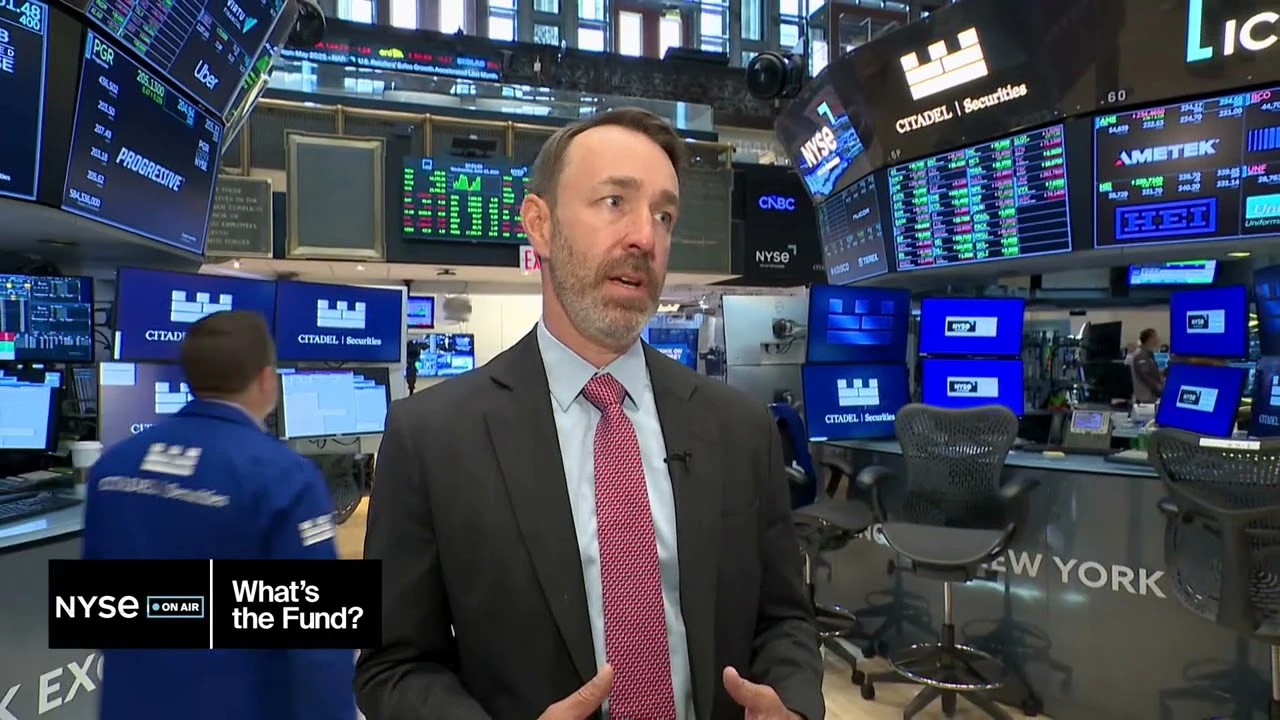
What's the Fund | Ocean Park Diversified Income ETF (DUKZ)
James St Aubin, Chief Investment Officer at Ocean Park Asset Management, discuss the DUKZ ETF, exposing investors to the whole spectrum of asset classes in the fixed income markets, through their rules-based process.

Browse all educational columns



Active Trader Report: Use of Leveraged & Inverse ETFs Way Up
Direxion partnered with Compound Insights and Vanda to explore what’s driving the evolution of active trading — and how active traders are using leveraged and inverse funds across equities, single stocks, commodities, and volatility.