Open Now: The Global ETF Survey Take the Survey →



The New Interest Rate Regime of 2024: Which Fixed Income ETFs Stand to Benefit?
The most recent FOMC meeting painted a mixed picture. Here's the takeaway for ETF investors.


Keep up with what matters in ETFs
Get timely ETF insights, market trends, and top ideas straight to your inbox.
Your newsletter subscriptions with us are subject to ETF Central's Privacy Policy and Terms and Conditions.
The outcome of the Federal Open Market Committee (FOMC) meeting on January 31st, 2024, carries significant implications for ETF investors.
At this meeting, the Federal Reserve maintained its interest rate at the current range of 5.25-5.5%. This decision marks the fourth straight hold, following a series of 11 rate increases that began in March 2022.
But beyond the headline decision to keep rates steady, the nuances in the Fed's announcement reveal insights particularly pertinent to those investing in fixed income ETFs.
In the following discussion, we will explore these subtleties and uncover how they might influence the ETF market. Additionally, I'll highlight a specific ETF type that appears well-positioned to capitalize on the current interest rate environment.
The ETF Industry Is Evolving Fast
From AI infrastructure to active strategies, the ETF landscape is shifting. Share your perspective in the 7th Annual Global ETF Survey and get exclusive early access to the final report.
Unpacking the Fed decision
I think the biggest takeaway from the FOMC meeting is the following statement: "The Committee does not expect it will be appropriate to reduce the target range until it has gained greater confidence that inflation is moving sustainably toward 2 percent." In my opinion, the Fed said this to temper overly optimistic market expectations for a rate cut earlier in 2024.
The subsequent market reaction was notable, with the CME FedWatch Tool adjusting the probability of a rate cut at the March 20, 2024, meeting from 65% to 37.5%. Now, the focus has shifted to the May 1st, 2024, meeting, where the likelihood of a cut has been repriced to 89.8%.
Federal Reserve Chair Jerome Powell's approach is one of caution. He emphasizes the need for more data confirming that inflation is not only decreasing but also stabilizing near their target rate of 2% before considering a rate reduction. This stance indicates a 'higher for longer' interest rate environment.
Another critical aspect of the Fed's announcement is the continuation of its balance sheet reduction plan when it comes to Treasurys, agency debt, and mortgage-backed securities. This policy, part of the Fed's broader monetary normalization strategy, will likely have significant implications for fixed income assets. The balance sheet reduction, or quantitative tightening, effectively removes a substantial buyer (the Fed) from these markets, potentially leading to higher yields and lower prices on these securities.
For fixed income ETFs, particularly those holding longer-duration bonds, this could mean increased sensitivity to interest rate changes and potentially more volatility.
Floating Rate Treasury ETFs: A Strategic Choice in the Current Market
In the current climate of uncertainty and rapidly shifting investor expectations regarding future rate cuts, it seems prudent to avoid excessive interest rate risk and credit risk. With short-term rates hovering around 5%, there's a compelling argument to focus on investment options that offer stability.
In this context, floating rate Treasury ETFs, such as the WisdomTree Floating Rate Treasury Fund (USFR) and the iShares Treasury Floating Rate Bond ETF (TFLO), emerge as particularly attractive under these conditions, offering a balanced risk-return profile.
Focusing on USFR, this ETF invests in newly issued U.S. government floating rate notes (FRNs). These FRNs are designed to align with short-term interest rates, as they are priced at a spread over 3-month Treasury Bills. This mechanism makes the USFR an appealing option in a fluctuating rate environment.
As of January 30, USFR boasts an average yield to maturity of approximately 5.53%. Additionally, its effective duration stands at a mere 0.02 years.
For investors, this means two things: firstly, the yield to maturity represents the return they can expect if they hold the ETF until the FRNs mature, assuming the interest rates don't change. Secondly, the extremely short duration indicates minimal sensitivity to interest rate changes, thereby reducing the risk of significant price fluctuations in the ETF.
Investing in USFR also offers practical benefits. It eliminates the complexity of purchasing individual floating rate notes, providing the same liquidity as any other stock. This is evidenced by its 0.02% 30-day median bid-ask spread, which underscores the ease of trading this ETF.
Additionally, USFR and similar ETFs provide monthly distributions, allowing investors to realize regular income from their holdings. Coupled with a reasonable expense ratio of 0.15%, these ETFs offer a cost-effective way to gain exposure to floating rate treasury securities.
Please note this article is for information purposes only and does not in any way constitute investment advice. It is essential that you seek advice from a registered financial professional prior to making any investment decision.

Latest ETF News
See all ETF newsHow Investors can Maximize Tax Efficiency with Income ETFs

Trump Accounts: Here's Which ETFs You Can Invest In

The Two Best Types of Fixed-Income ETFs For Managing Cash

ETF Comparison: Roundhill Generative AI & Technology ETF Versus iShares A.I. Innovation and Tech Active ETF




 Advantages of ETFs over Mutual Funds1/6
Lower Costs
In this guide, we'll explore the advantages of ETFs over mutual funds, giving you valuable insights into why ETFs have gained significant popularity among investors like yourself.
Leveraged ETFs: Unlocking the Potential for Amplified Returns1/6
Understanding Leveraged ETFs
Explore leveraged ETFs: potential for amplified returns & risks. 5 ETFs to consider across equities, commodities & fixed income.
What is a Leveraged ETF?1/6
Introducing Leveraged and Inverse ETFs
In this guide, we'll dive into the world of leveraged ETFs, exploring their definition, mechanics, potential risks, and rewards.
Recent educational content

ETF Trends
ETF Industry KPIs July 20, 2026
This week’s KPI data overview highlights key metrics and trends shaping the ETF landscape.

ETF Trends
ETF Industry KPIs July 13, 2026
This week’s KPI data overview highlights key metrics and trends shaping the ETF landscape.
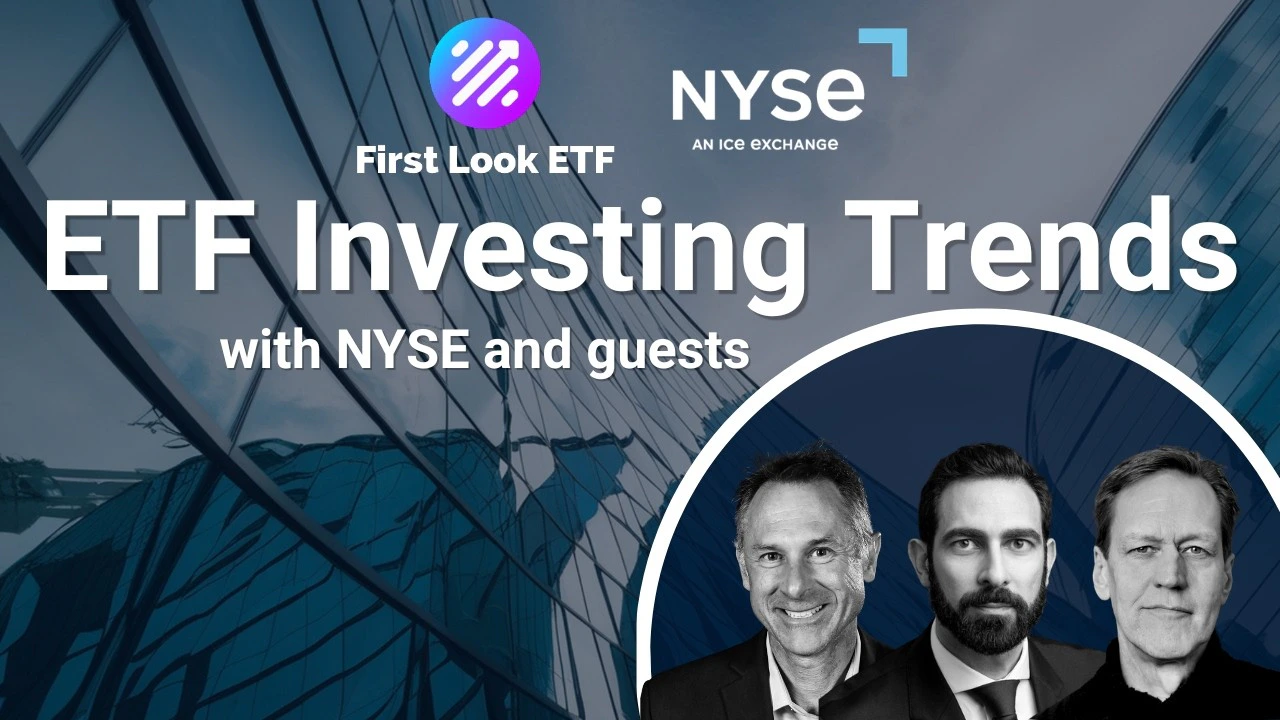
First Look ETF
First Look ETF: Cash Deployment, Bond, and Hedged ETFs
In this season 6 episode of First Look ETF, Stephanie Stanton examines the latest ETF marketplace trends with NYSE and guests.

ETF Trends
ETF Industry KPIs July 6, 2026
This week’s KPI data overview highlights key metrics and trends shaping the ETF landscape.
Browse all educational columns



Expert-Built ETF Portfolios, All in One Place
Don’t start from scratch. Discover ready-made ETF portfolios built by professionals to match different goals, timelines, and market views. Use them as inspiration or as a starting point for your own allocation.