NYSE CRTR Economy Event Watch the replay →



The ETF Market-Making Bottleneck: The Real Risk Takers Behind ETF Liquidity
ETF liquidity doesn’t just happen, it’s built every day by firms willing to take risk.


Keep up with what matters in ETFs
Get timely ETF insights, market trends, and top ideas straight to your inbox.
Your newsletter subscriptions with us are subject to ETF Central's Privacy Policy and Terms and Conditions.
I’m Nicholas Phillips, President of ETF Capital Markets Advisors LLC, with over 25 years of expertise in ETF trading and capital markets. As a contributor to ETF Central, my mission is to offer practical insights for both investors and issuers navigating the complexities of the ETF landscape.
Today, I’ll be discussing a topic that’s frequently mentioned but often misunderstood: Authorized Participants (APs). They play an essential role in the ETF creation and redemption process.
But let’s be clear — investors don’t interact with APs. When you buy or sell an ETF, you’re actually dealing with the market maker — the firm quoting both sides of the market, taking on inventory risk, and putting real capital on the line.
The ETF Industry Is Evolving Fast
From AI infrastructure to active strategies, the ETF landscape is shifting. Share your perspective in the 7th Annual Global ETF Survey and get exclusive early access to the final report.
Who Really Makes the Market
Today, ETF liquidity in the U.S. is supported primarily by a handful of firms: Jane Street, Citadel Securities, Virtu Financial, Susquehanna International Group (SIG), GTS, Flow Traders, Old Mission, and RBC.
These eight or so market makers dominate both lead market maker (LMM) assignments and overall ETF quote volume across exchanges.
They’re the reason investors can trade ETFs with spreads as tight as a penny — and also the reason liquidity can vanish when risk becomes too high.
This consolidation wasn’t by accident. It began after the Dodd-Frank Act, which raised capital and margin requirements across the financial system.
Those post-crisis reforms, combined with higher interest rates and tighter financing conditions, increased the cost of balance-sheet usage for trading desks.
At the same time, the allowance of payment for order flow reshaped equity market structure — concentrating retail execution among a few dominant wholesalers while fragmenting liquidity across venues.
Together, these dynamics helped reinforce the consolidation of ETF market-making power into the hands of a small number of highly capitalized firms.
Add in the technology costs of quoting thousands of ETFs across global markets, and you start to understand why there are fewer true market-making desks than ever before.
APs Facilitate But Market Makers Risk Capital
It’s the market makers who provide the liquidity that investors actually experience.
They take on real exposure when markets gap, or when the underlying basket moves faster than the ETF itself.
They are the ones absorbing that temporary dislocation and pricing risk in milliseconds.
APs play a critical role in the primary market — facilitating creations and redemptions — but they don’t stand ready to trade with investors every second of the trading day. That’s the market maker’s job. They are the ones with skin in the game.
Signs of Strain
Even among the largest players, there’s growing selectivity in where capital is deployed. Many market makers are cutting back displayed size or thinning out depth across less-active ETFs.
There was a time when many ETFs had multiple layers of true liquidity visible across several exchanges — a deep, stacked order book that provided real cushion. Now, in many products, it’s often just one visible layer quoted across six to twelve exchanges.
You might see a few Thousand shares at the top of the book and very little behind it.
Some markets may have second layers of liquidity 40 basis points wide or more, and aside from those, new ETFs are often bare.
If a market order hits one of these thin books, it can blow through the displayed depth and execute far away from fair value.
Unless that order is routed through an RFQ platform or a desk that understands ETF liquidity and pricing, the result can be a poor or even shocking execution.
This isn’t a malfunction of the ETF structure — it’s a byproduct of a stretched liquidity layer. A handful of firms are carrying the load for thousands of ETFs.
The Banks Are Playing Catch-Up
For more than a decade, major banks largely ignored ETFs from a true market-making standpoint. They facilitated creation and redemption orders and serviced clients through RFQ (Request-for-Quote) trading, but they didn’t invest in dedicated ETF market-making infrastructure.
As a result, the independent trading firms — Jane Street, Citadel, Virtu, SIG, and others — became the liquidity engines of the ETF market while the banks stood on the sidelines.
Now, as the ETF ecosystem expands into active management, private credit, and share-class conversions, the banks are starting to take notice. They’re rebuilding teams, hiring talent, and upgrading systems. But after years of neglect, they have a long way to go.
Most large institutions today can provide a quote to a client via RFQ, but those quotes often come with wider spreads than the dedicated ETF market-making firms.
They’re not yet competing at the same speed or depth. Until banks commit capital and technology to true ETF market making — not just client facilitation — their role in ETF liquidity will remain limited.
The Share-Class Flood Is Coming
With the likelihood of mutual fund–ETF share-class structures being approved, the number of listed ETFs could easily double within 24 months.
Every one of those funds will require:
- Continuous two-sided quoting.
- Depth of book.
- Hedging and risk management.
- Access to stock-loan and financing.
- Real capital commitment.
ETF liquidity doesn’t scale just because new tickers are listed.
Without more market-making desks and diversified capital sources, the industry could face significant inefficiencies as product count outpaces liquidity support.
Beyond CIBs: Time to Build Market-Making Desks
Some trading firms today think, “We already help with custom in-kind baskets (CIBs) — that’s our entry into ETFs.”
But CIB facilitation isn’t the same as making a market. It’s an operational service — important, yes, but not the same as standing ready to quote, hedge, and warehouse risk throughout the trading day.
Market making is a different muscle:
- It requires systems that monitor NAV and iNAV in real time.
- Traders who understand cross-asset risk.
- Balance-sheet flexibility for long and short exposure.
- And connectivity to AP desks, custodians, and exchanges.
With share-class ETFs on the horizon, now is the moment for proprietary trading firms and broker-dealers to invest in ETF-specific capabilities.
An Opportunity Hidden in Plain Sight
Exchanges are eager to expand their Lead Market Maker programs and are offering rebates, incentives, and support to new entrants who can commit capital and add real depth. For emerging firms, this is a rare window — one that won’t stay open long.
The next decade of ETF growth won’t be about product innovation alone; it will depend on liquidity innovation.
More ETFs mean more complexity, more rebalances, and more opportunities — but only if there are enough desks ready to make those markets.
Final Thought
ETFs have changed how investors access markets, but the system still relies on a small group of firms taking real risk. With share-class ETFs on the horizon, the demand for depth, capital, and execution quality will multiply. For trading firms — and yes, even the banks — that want a piece of the rebalancing flow, the time to build an ETF market-making desk is now.
About the Author
Nicholas Phillips | President of ETF Capital Markets Advisors LLC
With over 25 years of experience in ETF market making and capital markets, Nicholas Phillips is recognized as a subject matter expert in the ETF industry. He started his career spending the first ten years as a lead market maker for SIG and Goldman Sachs. At the helm of MCAP LLC's ETF Desk, Nicholas built and scaled the division, enhancing its operations through innovative pricing and risk models, and robust relationships with market makers and issuers.
His tenure at Van Eck Associates as Director of ETF Capital Markets further solidified his expertise, managing critical facets of operations and deepening connections within the trading community. In 2025, Nicholas joined GQG Partners as Director of ETF Capital Markets, where he helped launch the firm’s first ETF. His role concluded following GQG’s strategic decision to pause additional ETF launches, after which he returned to lead ETF Capital Markets Advisors LLC.
Beyond market making, Nicholas is an avid content creator, sharing insights that demystify complex market dynamics. He is keen on exploring board member roles that benefit from his extensive background and forward-thinking approach to ETF strategies. His dual US/Ireland citizenship complements his global perspective, enriching his professional endeavors in diverse markets.
Disclaimer
Please note this article is for information purposes only and does not in any way constitute investment advice. It is essential that you seek advice from a registered financial professional prior to making any investment decision.
Segments
See all
No specific market segments were tagged
Mentioned ETFs
No specific ETFs were tagged
Further reading
Latest ETF News
See all ETF news

Why ETF Spreads Often Mislead Investors







 Advantages of ETFs over Mutual Funds1/6
Lower Costs
In this guide, we'll explore the advantages of ETFs over mutual funds, giving you valuable insights into why ETFs have gained significant popularity among investors like yourself.
Leveraged ETFs: Unlocking the Potential for Amplified Returns1/6
Understanding Leveraged ETFs
Explore leveraged ETFs: potential for amplified returns & risks. 5 ETFs to consider across equities, commodities & fixed income.
What is a Leveraged ETF?1/6
Introducing Leveraged and Inverse ETFs
In this guide, we'll dive into the world of leveraged ETFs, exploring their definition, mechanics, potential risks, and rewards.
Recent educational content
Asset TV
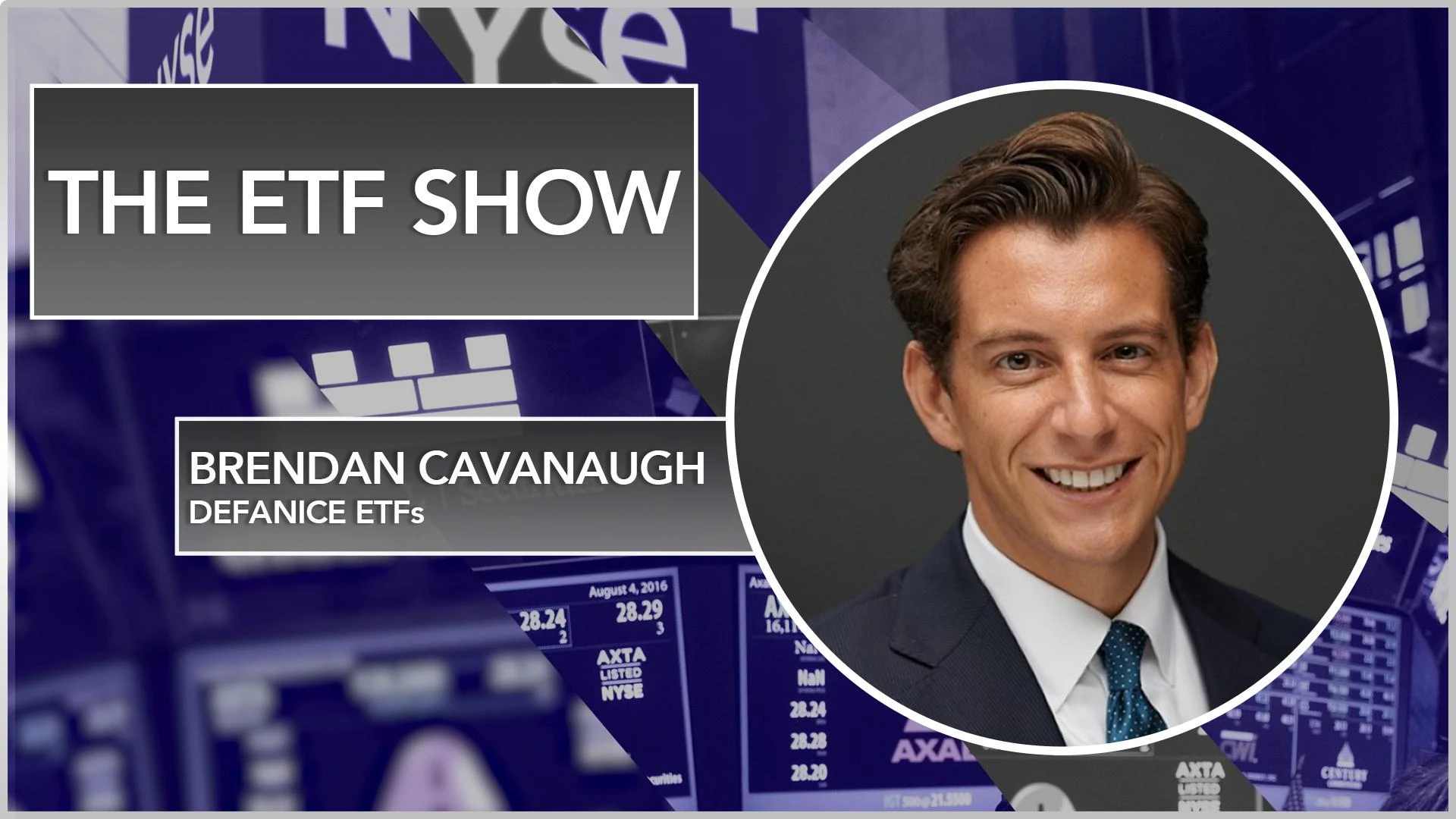
The ETF Show - New Autism-Impact ETF Launched
Defiance ETFs has launched the first ETF, $ASD, focused on the autism ecosystem, investing in companies that provide services, products, and research related to autism and neurodivergence.


ETF Trends
ETF Industry KPIs June 1, 2026
The ETF Industry saw 22 New Launches, 1 Ticker Change and 1 closure last week.

ETF Trends
ETF Industry KPIs May 20, 2026
The ETF Industry saw 44 New Launches, 3 Mutual Fund Conversions and 9 closures last week.
Asset TV
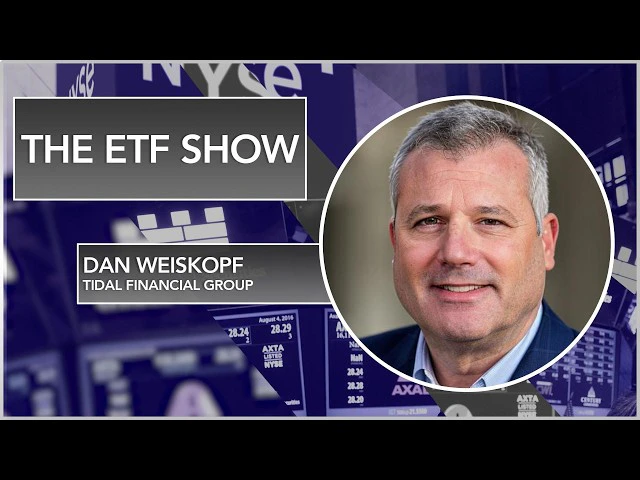
The ETF Show - Politics Becomes Investable Trade through ETFs
Dan Weiskopf, Senior Portfolio Manager at Tidal Financial Group spoke with the ETF Show about Subversive ETFs that help investors trade like politicians.
Browse all educational columns



Expert-Built ETF Portfolios, All in One Place
Don’t start from scratch. Discover ready-made ETF portfolios built by professionals to match different goals, timelines, and market views. Use them as inspiration or as a starting point for your own allocation.