Ready-made ETF portfolios built for real investor needs. Explore now →



The Day After Tomorrow: ETF Share Classes, Are You Ready?
Imagine flipping a switch and flooding the ETF market with hundreds of new funds overnight—are we prepared for the tsunami?


Keep up with what matters in ETFs
Get timely ETF insights, market trends, and top ideas straight to your inbox.
Your newsletter subscriptions with us are subject to ETF Central's Privacy Policy and Terms and Conditions.
Imagine a world where hundreds—if not thousands—of mutual funds are suddenly able to launch ETF share classes with the stroke of a pen. The impact on the ETF ecosystem would be immediate, far-reaching, and potentially overwhelming for the infrastructure currently in place.
With the SEC once again reviewing the structure of multi-share class funds, it’s time to ask: Are we ready?
This isn't just about product innovation—it’s about operational capacity, human capital, capital requirements, and ecosystem resilience. If approval comes, the ETF ecosystem will be tested like never before.
Like what you're reading?
Stay in the loop — get the latest ETF insights: trends, analysis, and expert picks.
A Wave of New Listings
The first impact would be sheer volume. Mutual funds that meet basic eligibility could rush to introduce ETF share classes within weeks. If even a fraction of the mutual fund universe takes this route, exchanges may see a surge in listings unlike anything in ETF history.
Will the exchanges be able to handle the influx of product filings, new symbols, and associated quote traffic? Trading systems and quote engines would face pressure to accommodate a rapidly expanding universe of ETFs—many of which will be brand new to market makers and investors alike.
Strain on Market Makers and Lead Market Makers (LMMs)
With this potential surge, market makers and LMMs would face critical questions:
- Do they have enough traders and support staff to monitor and manage these new listings?
- Will they have enough capital to hold positions, hedge risk, and manage spreads across such a diverse new set of funds?
- Are there enough LMMs willing to support small or niche ETF share classes, or will liquidity suffer?
What many people don’t realize is that being an LMM isn’t simply about showing up to quote. There are significant responsibilities—daily pricing, risk management, hedging, monitoring fair value, and ensuring the ETF trades smoothly and efficiently throughout the day. These responsibilities take time, systems, and experienced human capital.
In fact, it’s entirely possible that some firms may choose not to add new LMM assignments, focusing instead on being a competitive market maker in ETFs they prefer based on liquidity, volume, or internal positioning. This has happened before—and it could easily happen again, especially if capacity is stretched.
Smaller issuers, in particular, could find themselves on the outside looking in. Without strong relationships and advocacy, finding a capable and committed LMM may become one of the biggest challenges in a share class approval scenario.
Operational Load on APs and Custodians
Authorized Participants (APs) will also feel the heat. Basket processing, creation/redemption order management, and coordination with custodians will all scale up dramatically. Many APs and custodians are already running lean operations—do they have the bandwidth to double or triple their ETF touchpoints practically overnight?
Custodians, too, will be under pressure to manage the nuances of dual-structure portfolios and accommodate different operational timelines, valuation methods, and compliance frameworks.
Capital Markets Desks Under Pressure
For ETF issuers, internal capital markets desks will need to manage new relationships with APs, LMMs, and exchanges for potentially dozens of products simultaneously. New education will be required around share class nuances, portfolio transparency, and hedging challenges.
The burden on capital markets professionals will grow significantly, especially during the first months of onboarding and live trading. It’s not just about launching ETFs—it’s about maintaining liquidity, facilitating trades, managing expectations, and resolving operational bottlenecks.
This is where capital markets experts with deep relationships across the ETF ecosystem will truly stand out. Those who understand how to communicate with LMMs, guide issuers through exchange selection, negotiate with APs, and keep custodians aligned will become indispensable. In a high-volume, high-stakes environment, relationships and experience will separate the winners from those who are left scrambling.
White-Label Platforms and Conflicting Priorities
Another underappreciated complexity lies with white-label ETF platforms and ETF servicing programs at large banks. These firms often support dozens of smaller issuers—many of which may be preparing to launch ETF share classes concurrently. If several clients approach their platform partner at the same time, looking to go live in a compressed window, the firm will have to triage.
If market making and exchange capacity is constrained, white-label partners may need to prioritize which funds get operational support and liquidity coverage first. That decision could come down to size, readiness, or existing relationships. Issuers who haven’t had strategic conversations early may find themselves waiting.
It behooves issuers and partners alike to start working through “what-if” scenarios now—modeling out market maker assignments, LMM coverage, and exchange bandwidth. The window to prepare is short, and being proactive today could make the difference when things accelerate.
Strategic Risks and Resource Constraints
There’s also the issue of scale and prioritization. LMMs, APs, and exchanges may need to choose which products to support first. Smaller issuers may struggle to get attention, and even larger firms could face roadblocks if they lack established capital markets relationships.
The risk of “ETF inflation”—an overwhelming number of products with limited differentiation—could create investor confusion, dilute liquidity, and hinder the performance of the ecosystem as a whole.
Conclusion: Time to Prepare
The ETF ecosystem has long anticipated the possibility of share class approval, but anticipation is not the same as preparation. Every stakeholder—issuers, market makers, APs, custodians, capital markets desks, and exchanges—should begin preparing for a fast-moving, high-volume scenario.
If the SEC gives the green light, the race will begin. If it moves forward with guidance in the coming months, readiness won’t be optional—it will be critical. Only those who have already built their infrastructure, secured their partners, and modeled for capacity will be ready. And those who aren’t? They risk being left behind in a transformed ETF landscape.
Now is the time to get your capital markets strategy ready—before the window for preparation closes.
About the Author
Nicholas Phillips | President of ETF Capital Markets Advisors LLC
With over 25 years of experience in ETF market making and capital markets, Nicholas Phillips is recognized as a subject matter expert in the ETF industry. He started his career spending the first ten years as a lead market maker for SIG and Goldman Sachs.
At the helm of MCAP LLC's ETF Desk, Nicholas built and scaled the division, enhancing its operations through innovative pricing and risk models, and robust relationships with market makers and issuers. His tenure at Van Eck Associates as Director of ETF Capital Markets further solidified his expertise, managing critical facets of operations and deepening connections within the trading community.
Beyond market making, Nicholas is an avid content creator, sharing insights that demystify complex market dynamics. He is keen on exploring board member roles that benefit from his extensive background and forward-thinking approach to ETF strategies. His dual US/Ireland citizenship complements his global perspective, enriching his professional endeavors in diverse markets.
Disclaimer
Please note that this article reflects the author's personal views and does not represent the opinions of the publication or its affiliates. It is for informational purposes only and does not constitute investment advice. It is essential to seek guidance from a registered financial professional before making any investment decisions.


Latest ETF News
See all ETF newsHow Much ETF Infrastructure Do You Really Need?

Are ETFs Getting Too Complicated? Not Necessarily, But Complexity Has a Cost

Form 4 Has 20 Transaction Codes. None Say "Section 351 ETF Swap"


Who Really Owns a White-Label ETF?

What If a Futures-Based ETF Never Had to Roll Again?

How Do You Build a Winning ETF Business?


 Advantages of ETFs over Mutual Funds1/6
Lower Costs
In this guide, we'll explore the advantages of ETFs over mutual funds, giving you valuable insights into why ETFs have gained significant popularity among investors like yourself.
Leveraged ETFs: Unlocking the Potential for Amplified Returns1/6
Understanding Leveraged ETFs
Explore leveraged ETFs: potential for amplified returns & risks. 5 ETFs to consider across equities, commodities & fixed income.
What is a Leveraged ETF?1/6
Introducing Leveraged and Inverse ETFs
In this guide, we'll dive into the world of leveraged ETFs, exploring their definition, mechanics, potential risks, and rewards.
Recent educational content

ETF Trends
ETF Industry KPIs October 5, 2026
This week’s KPI data overview highlights key metrics and trends shaping the ETF landscape.

ETF Trends
ETF Industry KPIs September 28, 2026
This week’s KPI data overview highlights key metrics and trends shaping the ETF landscape.
ETF Trends
ETF Industry KPIs September 22, 2026
This week’s KPI data overview highlights key metrics and trends shaping the ETF landscape.
First Look ETF
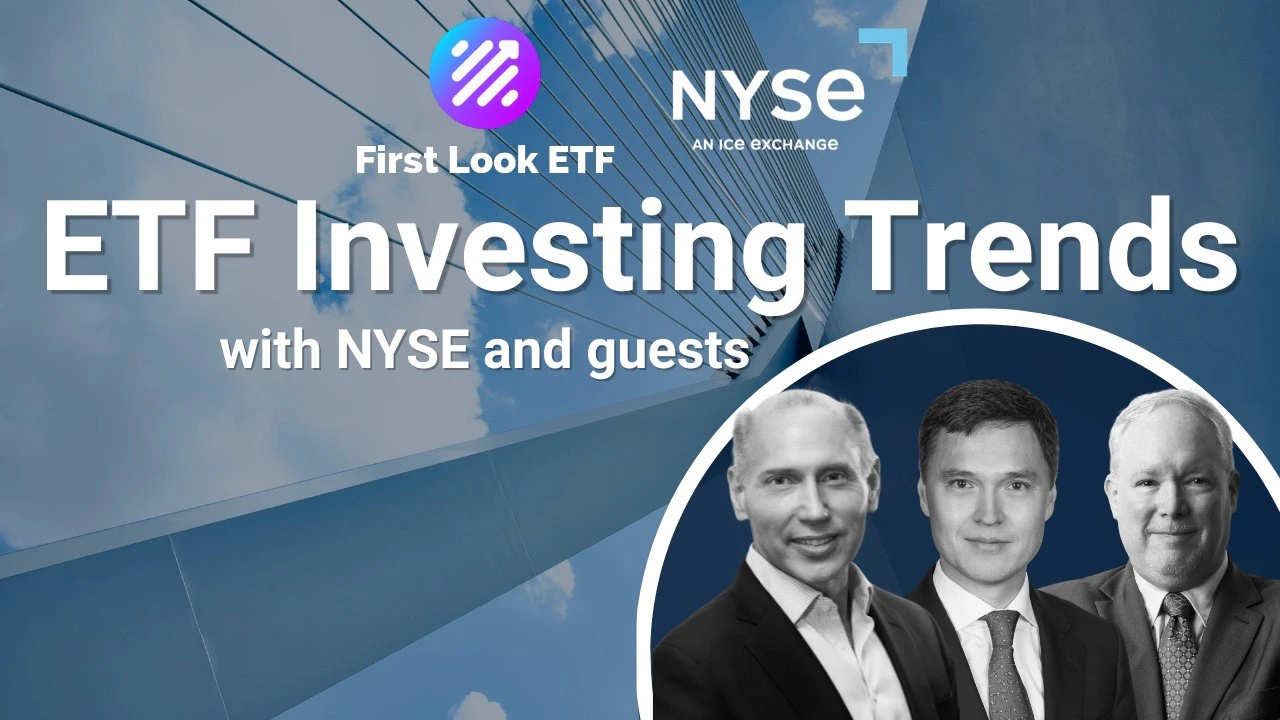
First Look ETF: Income, Corporate Arbitrage, and Growth and Value Investing
First Look ETF September 2026: iCapital, Mast Investments and North Square unpack new ETFs targeting monthly income, merger arbitrage and complementary growth and value exposure.

Browse all educational columns



Expert-Built ETF Portfolios, All in One Place
Don’t start from scratch. Discover ready-made ETF portfolios built by professionals to match different goals, timelines, and market views. Use them as inspiration or as a starting point for your own allocation.