Create, analyze, optimize your ETF portfolio. Start now →



The Case for Equal Weighting the S&P 500 Via This Unique ETF
Worried about concentration risk? This equal-weight S&P 500 ETF from Invesco is a great alternative.


Keep up with what matters in ETFs
Get timely ETF insights, market trends, and top ideas straight to your inbox.
Your newsletter subscriptions with us are subject to ETF Central's Privacy Policy and Terms and Conditions.
The popularity of market cap-weighted indexing, where the size of a company directly influences its impact on the index, has been a preferred strategy among investors aiming to efficiently capture market beta.
This method is straightforward: as a company's share price climbs, so does its weight in the index, allowing the index to naturally benefit from the rise of successful companies without the need for complex rules or manual adjustments.
However, this approach comes with significant drawbacks, particularly in terms of concentration risk. If a specific sector or a group of stocks outperforms for an extended period, they can come to dominate the index.
The problem arises because the index, bound by its structure, cannot take profits or adjust its holdings; it must simply hold on, even as valuations peak and eventually revert to the norm. This situation can lead to heightened volatility and potential downturns when these overvalued stocks adjust.
The inherent risks in an average market cap-weighted index highlight why an equal-weighted ETF can be a valuable alternative for investors. By allocating investments equally across all index constituents, an equal-weighted ETF reduces concentration risk and provides a more balanced approach to market exposure.
Get data on 14,000+ ETFs
Access Trackinsight's reliable and comprehensive data with 500M+ points on 14,000+ ETFs.
The current state of the S&P 500
The current composition of the S&P 500, as reflected in the SPDR S&P 500 ETF (SPY), showcases a significant concentration in the technology sector.
Currently, technology stocks alone constitute around 30.58% of the ETF. This heavy weighting means that the performance of the SPY is heavily influenced by the tech industry's fortunes, which can amplify risks for investors due to the sector's volatility.
A downturn in technology stocks could disproportionately impact the entire index, which may not be in line with the diversification goals of some investors.
Furthermore, the ETF's top ten holdings command a substantial portion of its overall weight at around 32% as of April 22, 2024. This concentration suggests that the performance of SPY is less about the broad market and more about the movements of these few mega-cap companies.
If these top stocks experience a downturn, it could heavily influence the ETF's performance, potentially leading to greater-than-expected volatility for investors who might believe they are invested in a broad market index.
How RSP ETF sidesteps this
Established in 2003, the Invesco S&P 500 Equal Weight ETF (
In contrast to capitalization-weighted ETFs, RSP assigns the same weight to all components of the S&P 500, irrespective of their market size.
This means that a behemoth like Apple, with its multi-trillion-dollar market cap, holds the same proportion of the fund as a much smaller company such as Stanley Black & Decker.
The result is a portfolio where each constituent starts each quarter with an equal influence—approximately 0.20%—on the ETF's performance.
The fund's rebalancing process, which occurs quarterly, inherently embodies a "buy low, sell high" philosophy. Stocks that have decreased in value by the rebalancing date are bought, while those that have increased in value are sold, thus maintaining equal weighting.
This methodology not only avoids the concentration risk but also allows for the potential capture of the reversion to the mean within the market.
The outcome of this equal-weight strategy is a more balanced sector distribution and a more substantial inclusion of mid-cap stocks, which have historically been strong performers.
According to a 2015 study by S&P Dow Jones Indices, the S&P MidCap 400 has outperformed both the S&P 500 and the S&P SmallCap 600 over the majority of the preceding 20 years, suggesting the potential for RSP to benefit from the historically stronger performance of mid-sized companies.
RSP isn't an obscure fund either. Since its inception, the ETF has accumulated over $53 billion in assets under management. According to the ETF Central Screener, it is currently the largest equal-weight ETF on the market. Recently, it has been very popular as well, having received $2.75 billion in inflows over the preceding month as of April 22, 2024.
Please note this article is for information purposes only and does not in any way constitute investment advice. It is essential that you seek advice from a registered financial professional prior to making any investment decision.
Latest ETF News
See all ETF newsETF Comparison: Global X Data Center REITs & Digital Infrastructure ETF (DTCR) Versus Pacer Data & Infrastructure Real Estate ETF (SRVR)
Calamos Autocallable Growth ETF (CAGE): The Next Evolution of Structured Products






 Advantages of ETFs over Mutual Funds1/6
Lower Costs
In this guide, we'll explore the advantages of ETFs over mutual funds, giving you valuable insights into why ETFs have gained significant popularity among investors like yourself.
Leveraged ETFs: Unlocking the Potential for Amplified Returns1/6
Understanding Leveraged ETFs
Explore leveraged ETFs: potential for amplified returns & risks. 5 ETFs to consider across equities, commodities & fixed income.
What is a Leveraged ETF?1/6
Introducing Leveraged and Inverse ETFs
In this guide, we'll dive into the world of leveraged ETFs, exploring their definition, mechanics, potential risks, and rewards.
Recent educational content
What’sTheFund
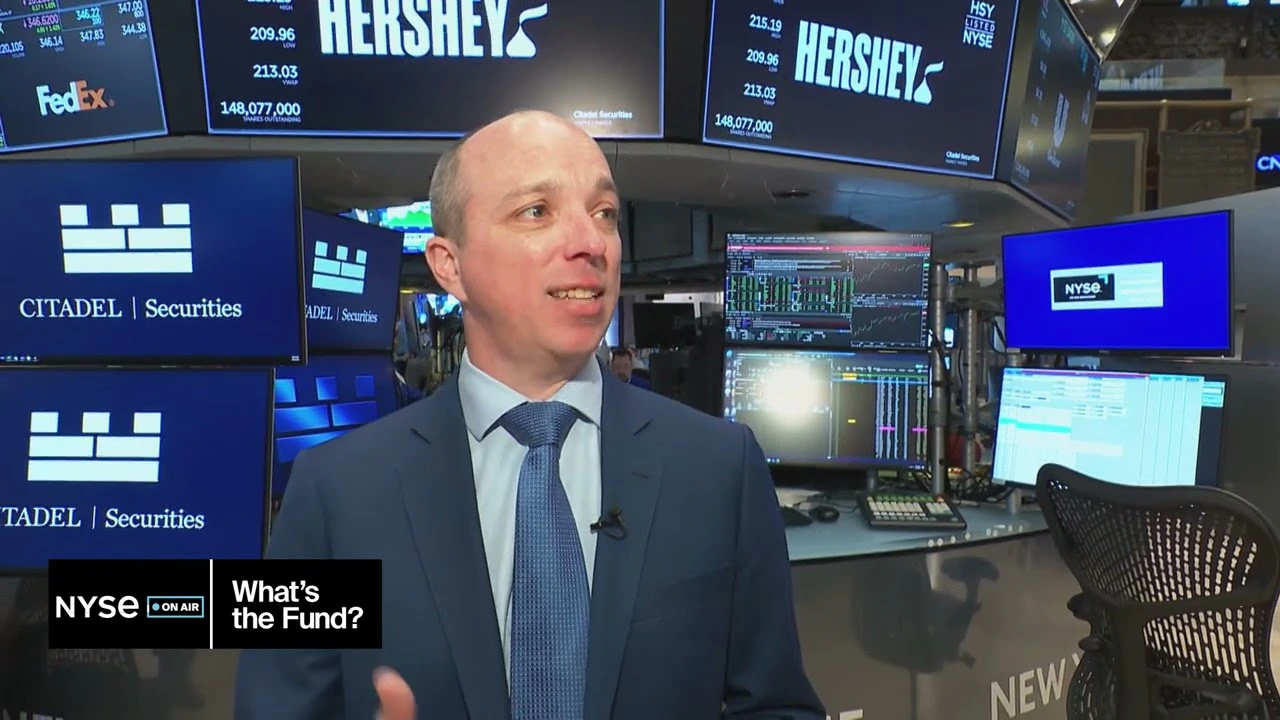
What's the Fund | State Street SPDR IG Public & Private Credit ETF (Ticker: PRIV)
Matthew Bartolini, Global Head of Research Strategists, at State Street Investment Management, joins Ethan Hertzfeld on the New York Stock Exchange Floor to discuss PRIV, the State Street SPDR IG Public & Private Credit ETF.


ETF Trends
ETF Industry KPIs April 27, 2026
The ETF Industry saw 23 New Launches, 1 Ticker Change and 4 closures last week.

Asset TV
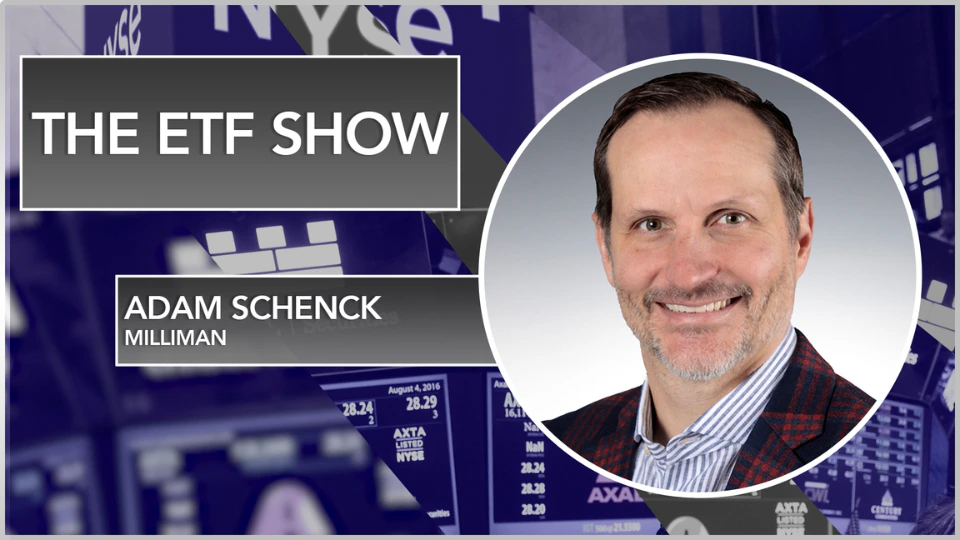
The ETF Show - Investors Can Fight Healthcare Inflation with Newly Launched ETFs
Adam Schenck, Principal and Managing Director of Fund Services at Milliman joined The ETF Show to discuss Milliman's first ETFs designed to hedge against rising healthcare inflation.

ETF Trends
ETF Industry KPIs April 20, 2026
The ETF Industry saw 14 New Launches, 1 Ticker Change and 16 closures last week.
Browse all educational columns



Expert-Built ETF Portfolios, All in One Place
Don’t start from scratch. Discover ready-made ETF portfolios built by professionals to match different goals, timelines, and market views. Use them as inspiration or as a starting point for your own allocation.