Keep tabs on your favorite ETFs with a personalized weekly tracker. Create a Watchlist now →



What Is the State of the American Farmer? Deputy Under Secretary for the USDA, Sanah Baig, Weighs In
Explore the current state of American agriculture and food insecurity. Join USDA's Sanah Baig and Elysabeth Alfano as they discuss future initiatives and investments.

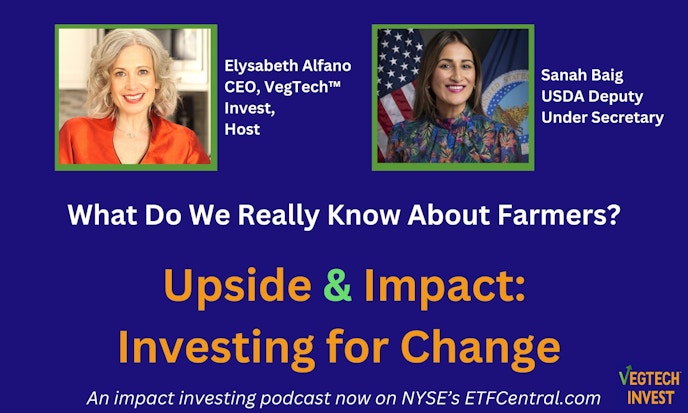
What is the state of the American Farmer? Is food insecurity in the U.S. on the rise? What initiatives are upcoming to address feeding more people with fewer resources? What does the USDA science data tell us? Deputy Under Secretary of the USDA, Sanah Baig, joins CEO of VegTech Invest and host Elysabeth Alfano for the big knowledge drop just months before the Farm Bill drop.
Specifically, they discussed
- As we turn the corner into 2025, what is the USDA working on given the need to feed a growing population with fewer resources?
- How is the USDA prioritizing food systems transformation and the plight of the American farmer?
- What level of money is being spent on the future of agriculture and what kind of time frame for change are we talking about?
- What does a change in the food system mean for the average American?
- Can you share what the landscape looks like for investors around agriculture?
- Are we close to a food systems shift taking hold and what will that entail?
Get data on 14,000+ ETFs
Access Trackinsight's reliable and comprehensive data with 500M+ points on 14,000+ ETFs.
Listen here
Full Transcript
Elysabeth: Hey everyone, welcome to the VegTech Invest Upside & Impact podcast. I’m your host, Elysabeth Alfano, the CEO of VegTech Invest, Advisor to the Plant-based Innovation and Climate ETF, EATV. On Upside & Impact I chat with the leaders and movers who are shaping and growing impact investing for meaningful change. We “pull up as we go up” as the expression goes so this podcast is all about making meaningful and productive impact while also managing one’s portfolio for upside. Of course, always managing for upside.
If you’d like more information about VegTech Invest you can visit us at VegTechInvest.com and subscribe to our newsletter. You can also find us on LinkedIn and on Twitter @VegTechInvest. We record live every first and third Wednesday of the month on our LinkedIn page at 1:30pm eastern standard time. So, check us out live and be sure to bring your questions.
Now if you’re listening as part of a podcast, of course subscribe to this podcast right now so that you never miss an episode. And if you’re listening on iTunes, be sure to leave a 5-star review. It really does help.
So now let’s get down to today’s show and thanks for being with me on today’s episode of VegTech Invest’s Upside & Impact. And as always, a reminder, this podcast is for informational purposes only and is not meant to recommend any specific company or investment. Now, onto the show.
Hi everyone, I’m Elysabeth Alfano, CEO of VegTech Invest and host of the New York Stock Exchange’s Upside & Impact: Investing for Change podcast. Thank you to the New York Stock Exchange for distributing this podcast. You can also of course always find it on iTunes and Spotify. Yes, you should go and leave a five-star review. Yes, you should. Yes, you should. It does really matter.
As we get to the tail end of summer, when I speak around the globe about food systems transformation and the investment opportunities therein, there’s a question that always comes up: But what about the American farmer? Hmm, what about the American farmer? I understand that many still carry with them the idea that the American farmer is like what they read as a child. They saw small farms, family farms, small amounts of animals, and basically a unit of three, four, or five people working the land.
Is that really what’s going on in today’s world for the American farmer? Don’t ask me, folks. Let’s ask the expert who knows. I want to bring on the Deputy Under Secretary for the USDA, Sanah Baig. She joins us today from the Capital. Thank you, Sanah, for being with us.
Sanah Baig: Oh, it is my pleasure to be here, Elysabeth. Thank you for having me, and yes, I’m dialing in from Washington, DC here at the USDA headquarters right on the National Mall.
Elysabeth: I love that you have the American flag to your right, but you also have a USDA flag. I didn't even know that such a thing existed. Can you maybe unfurl the flag and show it?
Sanah Baig: Let’s see if folks can see it. I wish I had it more beautifully laid out here, but yeah, we are very proud to have both together. I don’t know if a lot of folks know but we’re the only U.S. government building on the National Mall. It belongs to the Department of Agriculture. So, if you ever pay a visit to our nation’s Capital and walk the mall, you will see the USDA flag flying high.
Elysabeth: Oh, that is so wonderful. It might seem elementary for you, but let’s moonwalk it back just a little bit. What is a deputy under secretary? And maybe even more elementary than that, spell out for people what the USDA is and what it does and maybe if you can, how it’s different from the FDA.
Sanah Baig: Sure. Those are critically important questions to understand the foundation of what we’ll be talking about. I will say, I have worked at the USDA now- this is my tenth year as a political pointy across two different administrations. There is still so much I don’t know. So, for anybody who doesn’t understand, don’t feel bad because it takes a long time. There is so much that we do.
I like to think of the Department of Agriculture as almost every other federal agency rolled into one, often with the rural overlay on top, because we are the primary department that focuses on supporting rural prosperity, rural economic development, rural health, you name it. We do everything from food safety inspections, which people often see right at the grocery store. The label or the grade A label. We are also responsible for delivering our food safety net programs and feeding 30 million students every single day through our school lunch program. So that’s our food safety mission area and our food nutrition consumer services mission area.
We’ve got our role development mission area, which provides billions of dollars every single year to rural communities for things like infrastructure and rural energy and broadband, as well as things like value added producer grounds to turn cherries to cherry pie and to build schools and hospitals. I mean, there’s so much going on in that world as well.
We’ve got our natural resources environment missionary which includes the forest service so millions and millions of acres of protected forest land under USDA’s purview. I could go on, but my mission area is one of eight of these programmatic mission areas, which is really the scientific heart of the Department of Agriculture.
So, we include REE, the Research Education Economics Mission area which includes our agriculture research service, ARS, which is our intramural- just think of thousands of scientists or problem solvers trying to solve every agricultural issue under the sun. We’ve got our complement to that, the National Institute of Food and Agriculture, NIFA, which is primarily an extramural funding agency, giving about $2 billion out every year to largely land-grant universities, minority serving institutions, and a host of other partners and businesses to advance research, education, and extension for agriculture and food.
Then our third agency, the Economic Research Service also delivers economic analyses on everything under the sun that you can think of from food and nutrition insecurity to rural prosperity to trends and consumption of certain goods. I mean, they are a wealth of knowledge. If you are not subscribed, log in right now and look at ERS’s charts of note app. Deliver it to your inbox, or you can get it in your app wherever you consume information on your phone. They just have beautiful imagery around trends in agriculture, so I highly recommend that for those of you who are interested in what’s going on in the broader landscape.
Then finally, we’ve got our National Agriculture Statistics Service, which collects a lot of data through hundreds of surveys every year. Every five years we deliver the Census of Agriculture. So, we’ll talk a little bit more about that. Then finally, the fifth component of our missionary is the Office of the Chief Scientist, which coordinates agricultural research and science policy, not only for the Department of Agriculture, but for the entire United States. So, we’re grateful to have a team of 9,000 to 10,000 people that really oversee this work. We’re the scientific heart for agri-food innovation in the United States.
Elysabeth: Oh my gosh, so I would have stopped short at just saying the USDA is food safety. I think that’s probably where I would have generally stopped and once pushed, I would have also said funding, but to hear how much science data you have and research, I really wanted to bring you on so that we could elaborate on this. I think the average person thinks that the American farmer is probably a small family farm of four or five people and I was surprised to see some of the data coming out of the 2022 census information. There were some shocking stats for me like one third of farmers are female. I would not have thought about this, and that the farmer population is aging out. I guess I probably would have thought about that had I been pushed, and that really the small farm is on the decline, and I’ll say corporate farms and conglomerates are on the rise. I don’t know if you can elaborate on some of these statistics and where you see the American farmer going.
Sanah Baig: A lot to unpack there, but yes thank you for calling attention to our Census of Agriculture. As I mentioned, we produce every five years. It really is the most comprehensive snapshot of farms and farm operations that we have in America. We rely on our trusted partners to be able to get that information from our producers because it is so valuable. It’s so trusted.
We want to make sure that people can understand the lay of the land so that it can inform policy and decision-making. So, we need to know where we are so we understand where we can go. So, as you mentioned, Elysabeth, there are I think some bright spots in our related census and some areas where we’re really focused on understanding how we can turn that tide.
So, a couple of things to highlight what you said. So again, it takes a long time to get all this data right. It takes about a year and then to analyze it takes a little bit more time. So, we collected the data in 2022, and hats off to our NAS team because it happened during the pandemic, which we never had to face that issue before. As you can imagine, working with farmers to get this information really requires one-on-one trust-based, community-based relationships and doing it in a largely virtual setting or hybrid setting was challenging, but they met our mission.
So, in 2022, about 1.2 million producers were female, which accounts for about 36% of all producers in the United States. Interestingly, when you look at who is making decisions on the farm, about 58% of all farms have at least one female decision maker in that operation. I think that’s a great area of trajectory and growth, especially considering that this week we celebrated Women’s Equality Day.
To another point you made on the age of producers, the average age of producers does continue to rise. In our latest census count, the average age of our producers in the United States is about 58.1 years old, up about 0.6 years from 2017. So, it’s a smaller increase in the average age this census cycle than we have seen in previous census years. So, I think that is a testament to a lot of work we’ve done to cultivate the next generation of farmers, of ranchers, and of people involved in food production.
So, we’re still inching up, but we’re seeing that kind of growth or that aging out slowed out a little bit. The number of producers under the age of 35 is about 9%. It’s great to see that we continue to build out that cohort and we need that bench for the future as we do in all industries to know that we have people that will be there on farms, on land and throughout the entire supply chain to deliver the food that we need.
Now I did want to talk briefly about some of the other trends and just what the data shows us. So, when we look at our Ag Census between 2017 and 2022, we found that in just five years, the United States lost 20 million acres of farmland, which roughly is the size of the state of Maine. That, Elysabeth, is primarily land that we won’t get back. We won’t be able to get that land back because it largely goes into things like commercial real estate or other types of real estate.
Really when you think about that loss, which is huge, I think about what the secretary says which is you can’t sequester carbon in a parking lot. So now that we don’t have that land in use, we can’t find ways to thoughtfully meet our climate challenges and find ways to sequester that carbon in our soils.
Elysabeth: So, can I just unpack that a little bit? So, it’s not climate change that is changing the face of how much agricultural land we have. It’s commercial development.
Sanah Baig: I would say that’s one of the drivers for sure. I would say it’s also a variety of issues that include young people who don’t necessarily want to continue in farming and see that opportunity. So, when you think about that transition of land and farming operations, it’s a difficult conversation that families must have in thinking about succession planning and the future and seeing more non-farm opportunities in many communities than they do on-farm opportunities as well. So, it’s a confluence of different things, but certainly people can make quite a lot of money selling their land and I think developers in real estate know that.
Elysabeth: I know you have so much data to get to and so I want to let you get to it, but I also am sort of representing the audience here. I have these questions, and so I just want to make sure I understand in full. When I think of who can sequester carbon, it’s basically only farmers. You had talked about parking lots. Barring novel innovation where scientists can re-engineer sequestering carbon from air. I think of Lisa Dyson who you may know.
Sanah Baig: We invited her to our event back in June, actually. She presented and did a fantastic job.
Elysabeth: She’s a brilliant scientist working on sequestering carbon, but also making protein from the carbon in the air. Her company called Air Protein has brilliant scientists. So, barring novel technologies that haven’t been done at scale, you’re looking at only the farmer who can sequester carbon, and that puts them in an enormous position of power.
I don’t want to divert you from all your stats, but I wonder if you can comment on that at all and what the negotiation power is in today’s climate change world for the American farmer. The reason I bring it up is because my understanding is that as we move into fewer family farms and we get into more corporate farms, the small farmer is squeezed, and they are in a world of debt and maybe even in a world of pain. As you talk about the stats and I’ll let you get back to your stats, maybe you could incorporate how this is going to go for them on a personal lifestyle note. I’d love to know if they can increase their power in negotiating because of their position.
Sanah Baig: That’s such a good question. I think every event that we go to or that USDA hosts or that we’re involved with, we always try to advocate to make sure that there is a farmer voice. Even looking across the halls and within this administration, we have folks that are active producers that have kind of taken a pause from what they do to come in and form policy, which I think is critically important.
When I think about the COP stage as well, I know that there’s a lot of activity, a lot of focus, and making sure that current ag producers are represented in a lot of those conversations. I would also say that we think about land as a huge opportunity and our soils sequestering carbon. The oceans are our largest source of carbon sink. I think that is a whole other topic of conversation and a huge, huge area of opportunity and focus as well.
In terms of some of the things that you pointed out around where things are going for small and family farms, you know, we still do have a system in the United States where most of our farms are considered small and mid-sized family operations. What the difference is though, is that when you break down where profitability and income are going, it really is the top 8% to 10% of farms and producers in this country that are making 90% of the farm income.
It is kind of a nuanced story, but when Secretary Vilsack himself looked at the data and we saw in the early years of this administration, record farm income. It’s really an incredible story to tell in terms of overall how much profit we were making in U.S. agriculture and that the private sector was really making. Then in talking with communities and going to the Delta, going to the Appalachian regions, going to the heartland, and you see people are struggling and you hear that operations, especially small family farms, are shuttering. They’re being squeezed, as you said, for profit.
Why is there such a disparity in which overall it looks like number wise, we’re doing well? Yet, on the ground we’re not quite hearing the same, especially when we saw the impacts of Covid on the economy and on small businesses and you realize that the system that we’ve created has really over the past seventy or so years, been set up to value hyper efficiency and production and yield and all these things that did lift millions out of hunger and poverty.
Yet, there have been some unintended consequences of that. So, it is important to note that people think that we have this huge accessor, and we once did. Yet, we peaked in the United States in terms of our number of farms back in 1935. In 1935 we had about 7 million farming operations here domestically. Today, we have just under 2 million farms in America. According to our latest census, as your kind of alluded to, only the number of large farms increased in our latest census, while the number of small and mid-sized farms continue to tick downwards.
Then you mentioned the average age, right? We’re ticking up to more than 58 years old as the average age of the U.S. farmer, but then actually more than one-third of all our producers are 65 or older. So, they’re on the edge or in retirement territory. These are worrying things and luckily, we have tools to help address some of these challenges.
As I mentioned to you, when you look at the numbers according to our Economic Research Service, again an independent body that looks at the data and they come out with these analyses and they show us that 84% of our producers, of our farm families today, must rely on off-farm income to feed their families and to support their families. More than 50% of U.S. producers, our farmers, ranchers, forcers, are in the red based on farm income alone.
So, we have a system that doesn’t really value as it should the many and the most producers. We have a system that has really been built brick by brick over time to support the few who are doing incredibly well. So, what we have been focused on over the past year is focusing on the many and the most. We want everybody to do well, and we don’t want to say, “Oh, the people over here shouldn’t do well.” It’s not a zero-sum game, right?
We can increase profitability across all these sectors, all these farm types, and we’ve been doing that actively over the past three and a half years. I would say three of the main things guiding us in addition to just thinking about profitability and recognizing that if you don’t have agricultural opportunities and all the related supply chain opportunities, you’re not going to have people living in these areas and we’re going to have continued urban growth and strain on those resources.
We want to make sure that people don’t have to decide about staying in their communities or having to leave for opportunity elsewhere. We’re driven by equity, we’re driven by climate change and really considering the world we’re in as a climate crisis, as we’ve heard former United States Secretary of State John Kerry say. We’re really driven by nutrition security as well, and a shift from just food security which is also critically important, but really looking at the quality of diets as well. So those are a couple of things that really underpin and drive the work that we’ve been doing.
Elysabeth: So much to unpack here. Thank you for helping the audience understand. As I alluded to in the beginning of this interview, the American farmer is already in a very tricky position and so food systems transformation, which we’ll dive into what that looks like, what the priorities are, what are the funding opportunities, etc. Food systems transformation is an opportunity to exercise that lever of power as farmers are the only jobs really that can sequester carbon and a different use of the land or a land management shift, could put them in a better negotiation power up against the larger firms which do control so much.
That’s profit as well as maybe even policy or direction or as a voting block. They’re powerful. So, this is an opportunity for the small farmer. At least that’s how I understand the data coming from you. So, I think that’s uplifting. I think it’s very interesting that you say that we’re interested in nutrition as much as quantity. So, I’ll say the quality of the food. We’ve been so driven by comedy coming out of World War II, just this push for efficiency to our own detriment, shall we say. But maybe there’s a focus now on nutrition and food justice. So, I think it’s a very interesting time and that maybe we as society are even slightly behind where we need to be with food systems transformation.
I think we saw in Covid how the food system is not as resilient as we thought it was. You don’t want to be in that situation where you find out after the fact that you don’t have a resilient food system. You’d like to know that ahead of time. So, with that, maybe we can transition a little bit, but I don’t want to cut you off. If you’ve got more data, you just spat out the facts.
Sanah Baig: I would tell people, we have more than six million data points that we collected for this. Look at the USDA website. You can dive into it all. We’re trying to make it as transparent and accessible as possible. We want people to go in there, dig into that information and make the decisions that they need to make either for their farm operations, or you might be a state or local leader and you want to understand what’s happening in your community.
We can slice and dice that information and you can reach out to us and if you need something that you don’t see, we’re happy to get that to you. I’m eager to talk about nutrition security, food justice, and all the work that we’re doing to really think about quality and not just quantity, which is also important but really, it’s a shift.
Elysabeth: Yes, it is. So just for everyone, if you’re watching you can see it across the screen but if you’re listening to audio, it’s usda.gov. Sanah is giving us so many statistics and I will have links to all those websites and studies in the show notes. For those again who are watching on video, I did flash up the USDA Ag Census from 2022. That was on the screen. Of course, you can dive into all those statistics, and I’ll have that in the show notes as well.
Sanah Baig: Thank you so much.
Elysabeth: My pleasure. So basically, there’s maybe a little bit of trouble in paradise and no one wants to be on the back of the bus on food systems transformation. It’s too critical to national security and the health of our people. I was surprised to see a USDA stat that food insecurity in the U.S., the wealthiest nation in the world, rose almost 25%. I believe it’s from 2021 to 2022. I hope you’ll correct me. Going into almost twelve and a half million and I thought “Twelve and a half million people in the United States, that’s amazing.” Do I have that statistic right?
Sanah Baig: I don’t know it right off the top of my head, Elysabeth, but I would say we are going to come out with a new report here soon as well that will give updated numbers. I think that there is a headline from all of that, which ERS looks at, and they track over time. We used all the best available data and we saw that thanks to a whole suite of actions that supported food and nutrition security for Americans during the pandemic, we didn’t see rates climb as a result.
During one of the most challenging and worrying times in modern history, the government and Congress were able to stand up and put in emergency programs and made sure that families can feed themselves. As a result, we saw food security rates not go the way that many people thought that they would in such a global and scary time of supply chain instability.
So yes, numbers change, and they evolve all the time. We have a snapshot view, but we can also view over a couple of different snapshots in time, but that was an important report to me. I think that was in 2021 to 2022, it might have been, and we can correct this later if not, but really seeing that all this infusion of money going directly to families and all these programs that USDA and our partners stood up actually held the tide. It made a huge difference in making sure that more people in America didn’t go without full bellies at night.
Elysabeth: So critical.
Sanah Baig: There’s some glimmer of hope there. So, we know that some of these programs had a huge impact and can work. The other thing I want to talk about in the realm of food and nutrition security is I want to give kudos to my colleagues over at the Food and Nutrition Service because they did something that the first lady has been talking about and the president has been talking about. It’s a big deal in creating the first new permanent food entitlement program in multiple generations, I think, maybe over fifty years.
It’s called the SunBucks program, which allows families to get $120 per child for the summer to buy groceries to fill that gap in between the school year. They are recognizing that the summertime can be an unpredictable time for families in need and who are eligible. So, I want to call attention to all of the ways that we’re talking about research, meeting people where they are, but also just this brand-new program which is a huge deal to help families right away to lower costs and make it so that their children can be well fed.
Elysabeth: Yeah, that’s incredible. Again, the enormous umbrella that is the USDA. So, we started with food security and that stamp of approval on the food that we buy every day at the grocery store, but now we’re getting into all the research and all the data. It’s so important in understanding the profile of a country. Food is just the perfect way to do that and now you’re talking about the nutritional needs.
So, as you take this overarching view from the USDA and you’re realizing as we go into 2025, leading our way into 2030, maybe we need to tweak our food system to better prepare us for more people on the planet. According to the United Nations we’re going from approximately eight billion people to ten billion people, but we’re not getting more land and we’re not getting more water. Maybe now there’s this focus because really food insecurity globally is an issue of national security for the United States because people don’t tend to stay around and be hungry. They tend to go where there’s food.
So, we don’t want people in other countries starving. We really want everyone to be secure in that way. So, as you look at a growing middle class in China, Africa, and India, it’s not only that more people means that we need more food, but we’re having demands for better food and higher quality food. So, as you look at this landscape and where some of our lack of resiliency is, the USDA has done an incredible job at shoring things up like in Covid. It could have been so much worse. In many ways from the food perspective, we did sail through well from the programs that you have in place, but we live in a dynamic and changing world and that’s only going to increase between now and 2050 so as the USDA looks at food systems transformation, what are the priorities for you?
Sanah Baig: Well, thank you for the good words about our team here which has really been working around the clock since we got in height of the pandemic under the Biden, Harris administration because we recognize both the long term and the near-term challenges. So, Elysabeth, you mentioned by 2050 we have about two billion more mouths to feed. That won’t require a small amount of increase in food production.
It will require about 70% more food, double the amount of protein and to be able to produce that food, we’ll need 30% more water and over 50% more energy. We’re talking about already scarce resources, right? So, all of this, as you said, also attracts the fact that we have, as I mentioned, shrinking farmland, farm consolidation, severe impacts of our climate crisis, huge biodiversity loss especially in the Amazon, lingering and growing profitability issues especially in some parts of the farm economy and an aging producer population.
Then we didn’t even talk about mental health and farm stress as being a huge, huge, huge issue and one that we’re doing a lot to support our producers through. So, we have all of this, but it's not a doom and gloom story here. It’s, I would say, a positive but a very active work in progress. You can’t turn the tide on a system that has been intentionally built over as I said about seventy years, overnight. You can’t do it over the course of an administration or even ten years, right?
But you must start somewhere and that is really what we’ve been focused on. Thankfully, because of President Biden’s leadership and the work of Congress, very honestly, to get historic pieces of legislation through for UDSA to then implement, we have been able to invest billions. I don’t even have the total amount yet because we’re still putting money out every day, but multiple billions of dollars in a range of super important issues.
So, the first was coming on board and really launching a whole food systems transformation effort. So, you can go onto USDA’s website, and you can look at how we’re focused on everything from food production to food processing to food distribution and aggregation to markets and consumers and investing in every single part of that supply chain, recognizing what people cared about in the height of the pandemic. Getting water and getting access to different nutritious foods. That was a real concern, right?
We knew that there were huge vulnerabilities in the way that we currently produce and distribute food. So, we invested billions of dollars in processing and more local and regional processing and distribution capacity. I think that is one overarching story. Localize food production and make sure that farmers have an opportunity through things like our Farm to School program to provide their produce and their crops and their products directly to feed children in their communities. Do things like invest in organic agriculture and supporting producers who want to meet the huge demand in the organic market and supporting the development of specialty crops through marketing and through research.
We’ve also invested in things like community forestry, so billions of dollars to plant trees in communities all over the country through our forest service to literally bring down the heat because we know that greener spaces are cooler spaces. So, it is to be very fair, overwhelming how much we do as the Department of Agriculture. I can barely keep up. As I said, I understand how overwhelming it can be for a regular person just trying to keep tabs on what we’re doing, but I think our team has done a great job of putting everything in one stop shops online, making sure that you can dig through and look at the components that you’re most interested in.
What I would say is we can talk about investments, billions of dollars, but the impact and the outcomes will take years to measure. So, I want people who feel like maybe there’s not as much hope or we’re not seeing progress as quickly as we need to take a deep breath and recognize that we will see that positive transformation happen within the next five to ten years, but we can’t take our foot off the pedal.
We need to continue to partner with not just Congress who is busy writing the next farm bill, but really partnering with our local state communities, with our local governments, with our community-based organizations who are telling us in real time, “Hey, that’s not going so well,” or “Hey, this is going well. There’s great demand.” So, it is such a dynamic environment that we’re in right now but kudos to our team here and really our partners at the state and local levels who have activated quickly to get billions of dollars out the door which is historic amounts of funding to try to plug all these issues with our food system.
At the same time, Elysabeth, through our science mission area at REE we mapped out a whole new vision for the future of science and research for agri-food innovation so check that out. We have a whole brand-new science and research strategy to say we can’t just rebuild the old system. We must build new systems and we must build complementary systems of production as well. In addition, we must bring new players in. Those who have been left behind and those who never were brought to the table to begin with, including our tribal partners who have very different and unique research needs when it comes to indigenous crops and seeds and how to meet challenges in food sovereignty.
Elysabeth: Oh my god, there’s so much to unpack there. I’m just going to highlight for the audience, so basically what we’re talking about is feeding more people more nutritiously in a shorter amount of time, maybe because it’s local, using fewer resources while creating less damage. That is no small feat.
Sanah Baig: Well said.
Elysabeth: It’s enormous and I’m grateful and excited about all the billions being invested into food systems transformation and you note it’s more than plugging holes. It’s really building a better system because many were left out in the initial system. The system which served us well right after World War II, but really doesn’t work for us anymore to be only quantity driven.
So, we’ve outgrown it. It’s not bad. It’s not a slam to the past. It’s just that we’ve outgrown it. So now as we’re looking at a new model, maybe there’s more to be learned as we work in indigenous practices and we have maybe a more just transition, if you will, and a stat that I didn’t get from USDA but I believe comes from the World Bank is that those who are the most food insecure around the world are the people who work in the food industry. That’s an odd little bit of a stat. The people picking the food, the migrant workers who are picking the food.
So, as we work on this kind of just transition, I think it’s very interesting to see that it’s going to be all hands on deck. You alluded to this, that there’s not one answer. It’s going to be many answers and that is bringing in perhaps regenerative practices, rebuilding the soil, using that traditional knowledge. I note Biden’s bold goals for um-
Sanah Baig: Synthetic bioeconomy and biomanufacturing.
Elysabeth: Thank you, thank you. Those words are right on the tip of my tongue. On page 20, everybody, he notes some diversified proteins, complementary proteins, fermented proteins, and cultivated proteins. This idea that it’s not black or white or one kind of protein or nothing. It’s that the consumer who loves choices and only benefits from choices will have many choices because the food system, like an investment portfolio, is resilient when it’s diverse. Like an investment portfolio is weak when it’s not diverse.
So, I’m excited for all that money which goes to innovation which goes to jobs. So, I think of this as again, food touching everything. I think of this as a food systems transformation, but ultimately, it could be a jolt for the economy as well.
Sanah Baig: It is all about prosperity and like I mentioned, making sure that we have more circular bio economies, and we have an opportunity to keep wealth where it is created. That has been a huge focus. You can Google Secretary Vilsack’s whiteboard speech and he lays out much better than I think anybody else on the planet in terms of what we’re trying to do here.
But it really is quite a challenge I think, to help people understand how much science and research it takes to have the food system we have today. I think about our scientists as really the chief problem solvers that we have for food systems. So, they’re making sure that we can always be one step ahead of emerging pests and diseases and if they transfer over into our domestic croplands we can fight them.
You talked about food safety. So, there’s a baseline of innovation and science needed just to keep things how they are today but then going beyond that I love that you mentioned the president’s bold goals report and really all of this stimulated under his executive order to advance the bio economy and bio manufacturing and recognizing food production as well as producing many other types of things is increasingly high tech. We have tools at our fingertips that we should be using more to be thoughtful about this main issue of resource conservation and land conservation.
You talk about this protein diversity and how we need to double supply to meet demand. People, especially in the global south, as incomes rise, we know what kinds of proteins they’re demanding. So how do we do that, Elysabeth? We know that farmland is shrinking, and you need a lot of land to provide our foods that we know and love today.
And then water, to me, is a topic that people just don’t talk about nearly enough. I know we’re trying to call attention to it and talking about combating drought and being more water resilient and looking at research roadmap needs for the controlled environment. The Ag industry, for example, is doing innovative and interesting things with water, but these are systems, right? They’re systems and I think we can’t pit technologies or sectors against each other.
To your point, we also must bring everybody to the table. So when I think about the future and where there’s great promise and potential, what I would personally love to see is the sustainable and regenerative folks, including our indigenous tribal leaders, come together with our specialty crop producers and our organic producers and our urban agriculture movements, really it is a movement, to come together with our supplementary protein or whatever you want to call them, alternative protein folks coming together and saying, “Hey, we actually have a lot of shared goals. We might have a different view of what we’re trying to do, but all of it amounts to feeding people more nutritiously, more affordably, with less resource intensity, more quickly and more reliably into the future.”
So, I think it would be great to see. I know we talk about the big tent in agriculture a lot. It would be great to see other tents emerge and to have this whole camp of people who are aligned and recognize that you must know where we are and what the landscape is to be able to meet the needs of the future. I’m optimistic that that is happening as we speak.
Elysabeth: So that’s what I wanted to ask. How much of this do you feel is a vision for the future and how people refer to their 2030 goals when they say, “Sure, I’ll get to that later,” and how much of this is already underway?
Sanah Baig: I would say it’s remarkable how much is already underway. Again, from the USDA’s point of view, we always have an opportunity to tell the story better and humanize what is happening on the ground in terms of how we’re investing billions of dollars and hundreds of millions of dollars here. What does that mean for the average person? I think it really takes those partnerships with our local organizations to say, “Here is how we’re making our school meals healthier. Here is how we provided a grant to this small crop producing family and now that they can get cold storage and now that they can aggregate, they can reach new markets and now they can have more profitability baked in.”
There’s so much that it can be hard to pick one thing, but I would say that there are great examples of how our investments are put into practice. I think you mentioned the climate change issue and how we support producers through the fact that climate change is very, very much impacting farmers. We know that agriculture and our production is impacting climate change as well.
So, we made, I think, more than a $3 billion investment through our Climate Smart Commodities program to give producers money, to test out different practices and give us back data to measure what’s going on. Are these practices really sequestering carbon? Are our soils getting healthier? What is the impact on waterways? So, I say all of that to say I know people might not like this answer, but it will take time to look at all that data and understand what is really working best and what we should keep investing in.
I think a hopeful message for the future is that we can act now. Even in the absence of perfect information, you can lean on partnerships, not just with nonprofits and producer groups, but I want to call out and thank our partners in our land-grade universities and our minority-serving institutions, because we rely on them not just to deliver the science and push forward solutions for technology and seeds and things like biofilms and bioproducts, but also an extension. We support the extension community, which are really consultants, right? Let by science and research on farm to help farmers figure out how they navigate changing markets, changing challenges, and incorporate new technologies.
So, as you said, it takes all of us and it really is powerful to have such a network of partners on board. From my point of view and our team’s point of view, we’re bringing in new partners every single day.
Elysabeth: Yeah, I love this because the reverse is also true. Not working together creates a stalling mechanism in which it’s not even preserving business as usual because we’re seeing land being eroded either from climate change or parking lots of other pressures like a growing population shifting the housing needs which is shifting the agricultural landscape. So, if we do nothing and just fight amongst ourselves, we are indeed working backwards. We’re not even staying in place.
I don’t want to be dire, but so many are focusing as we head to New York for Climate Week, I’ll be speaking three times in September. As so many focus on fossil fuels, I always try to say fossil fuels alone won’t do it. You’re going to have to start incorporating food systems transformation to this vision for mitigating climate change because 32% of the world’s global methane emissions comes from animal factories, primarily the grazing of cows.
The top two reasons for the next pandemic according to the United Nations are the intensification of animal factories. It’s not the pandemic we’re in now. It’s the next one. For those of you in the finance world who experienced quantitative tightening, it was because there was quantitative easing because there was a pandemic. Let’s not do that again. So, we’re losing ground if we’re not working together and time is of the essence. What do you think, Sanah?
Sanah Baig: I couldn’t agree more. I couldn’t agree more. I know you have a financial and an investor community that listens and tunes in, which I love because I would love to see more partnership with the private sector and institutions on how we do things, how we launch a public-private partnership.
There was a big initiative during the Obama years that was called our Rural Opportunity Investment Initiative, which said how do we bring private and institutional capital to rural communities and help them both support the growth of rural infrastructure, especially for food businesses, but also get a return. So, we recognize there’s an opportunity to do both. I also want to make sure that people understand that we are funding through my mission area about $4 billion of science every single year.
I think a lot of people don’t realize that there is so much information and so much research out there that can be commercialized today. You can look at our tech transfer reports and peek in there and see what might be of interest through either ARS or then our land-grant universities. Their job is to promote and advance agricultural R&D. A lot of people have made a lot of money by looking at some of that research and translating it into either a different technology that could be incorporated into a business or an entirely new product. You name it.
Our goal is to make sure that our science doesn’t live on the shelf. It is incredibly important to us that it can spur entirely new industries and create jobs because we know there is so much promise and potential and money to be made in these sectors in addition to meeting our foundational goals of feeding people nutritionally, equitably, and with an eye toward climate change, sustainability, and resilience. So, people can look at that.
We try to make sure everybody has access to the types of things that we’re funding. You can look at the NIFA website and see what grants we’re giving money to and what types of research. We have a public funding dashboard which you can look at and see by topic type and by institution type what we are doing and what we are funding. You can see what we are talking about when we mean innovation. It means quite a lot of things. Our goal is to make sure that we can commercialize, and I would be remiss to not mention this given my background working on alternative proteins and recognizing the importance of public R&D.
So, I think about success stories, and you mentioned Lisa Dyson. She got an SBIR grant to help commercialize some of the work that she’s doing. There are so many examples of our small business innovation research program at USDA but many of our research, all the federal research agencies, have some version of this. If you’re a startup or a small-scale company and you’re trying to commercialize, you can get access and you should. Please apply to get funding to help grow and commercialize your business.
When I think about the company Beyond Meat, their core technology to extract pea protein came out of science that USDA funded at the University of Missouri. That’s just one of so many examples. Another is Nature Seal which is the biofilm that’s now commercialized to extend the shelf life of fruits and vegetables. So many different things come from this essential science that we’re funding through ARS and through NIFA, as well as the Forest Service on the product side. Again, we want people to access that.
We want people to see that research and turn it into a business and grow jobs and help maintain our climate goals, reach our climate goals, but also build more circular bio economies in the process and build more nutritious food systems in the process. I think we can do all that.
Elysabeth: Yes, and a better food system is a less damaging food system. So along with these novel innovations, you have less food waste. There are all these residuals that come from our food system that when we innovate like we have always done, Americans are always championing innovation, and we can innovate our way out of this to a better system. Again, not because our system as it was bad for us then, it just doesn’t work for us now. That’s all.
So, we’re going to be smart and innovate our way into the future. From a political standpoint, you really don’t want to be behind on something as critical as food. You’ve given me so many links that are going to be in the show notes. I’m the host of the show and then I’m also the producer in the background, so I’ve been trying to get the links as you’ve been talking.
Sanah Baig: You wear all hats.
Elysabeth: All hats. I’ve been trying to bring on different links so that people can see about getting grants, but I want to get in grants and other things like nutritional studies, etc. I want to highlight for the investors who are following this interview today. There’s the entrepreneur who can go and get grants, but there’s also the investor that might want to follow the money. So, if you see where the United States government is putting in money for innovation, then you know what innovations are already getting support and you yourself might want to invest or follow that line of investment dollars.
So, I point that out because there are some VCs that focus on wherever the U.S. government is investing. We’re then going to follow on and invest, and I know that’s what we do with VegTech Invest. We’re following this quite closely to see what innovations the best opportunity must take hold and are getting funding. So, it’s both the investment from the entrepreneur side who’s getting the investment dollars and then putting their sweat, equity, and IP knowledge into novel innovations. Then it’s the investor side from following on where you see the technology going. So, it’s a very dynamic and very exciting and very critical area.
Sanah Baig: Good point. You pointed to the bold goals report, a deliverable of the executive order that the president signed on the bioeconomy, and we lay out some bold goals. It’s true to the title of where we think we need to go. The USA Science and Research Strategy outlines some of the innovations that we know that we need. We say some of that as saying, “Hey, we hope that you’ll come with us because the government is the ultimate investor and the ultimate de-risker of technology and of innovation.”
When I think about DARPA at the Department of Defense laying the foundations of the internet, right? When I think about the fact that through investments in the Department of Energy in the renewable energy sector, we now have renewable energy that is cheaper and is set to take over in terms of production of fossil fuel-based energy. So, it takes investment from the government, but it takes partnership from the private sector to get us there.
We have a lot of documents out there which show you where we think we’d like to go and where there is tremendous promise. Then of course, looking at regional and looking at the local levels, universities and academic institutions are huge, huge areas of opportunity and partnership as well because they’re on the ground doing the hard work and they’re at the crossroads right there with producers and their region too that can help you create that supply chain and create the inputs that you might need for an end product that you could be excited about.
Elysabeth: I love that you say that because we’re talking about a circular economy, but I’ll also say a circular interview. So, we started this interview talking about the rural farmers and what is their plight. I love to see universities getting funding because often these universities are in rural areas. They are agricultural universities working on ag tech. So, it’s not just the food creation, but it’s the more sustainable production of that food.
So, let’s say precision watering as a technology to mitigate how much water is used or even precision pesticide use so that you really mitigate what exposure we all have to those chemicals. These kinds of technologies are all being innovated at rural universities. That is working in conjunction with the rural economy and the rural farmer to see that these farmers might be better off- I’m just pulling something out of a hat. I’m not saying this is the structure, but as an example, as we work towards fermenting proteins, you look at the stock needed for that and a lot of it is based on sugar, beet, and cane sugar.
Maybe it’s better for the farmer to be shifting to growing beet and sugar cane, or maybe mushrooms or this opportunity based on the university data for the farmer to participate in a better economy. It’s very exciting, I think.
Sanah Baig: Thank you for pointing that out. I think that there could be a lot better matchmaking between what we know that the whole agri-food sector will need in the future and what farmers might be making decisions to grow right now. Then how do we bridge those incentives and give them the choice to be able to say, “Okay, maybe I’ll grow oats on this part of my acreage and also keep my apiary and keep my aquaculture,” whatever it may be and help them understand that it doesn’t have to be one thing only, but you could test out different things and different market opportunities.
We do have a lot of programs that support that. I would say thank you again to extension and thank you to Congress for giving us this funding to be able to transfer that technology into the hands of our producers that need it most. We have a climate hubs network that is regional, and we help at a regional level understand what are our projections of how the climate will change, how will that impact what you’re growing and what you could be growing, right?
We have our plant hardy to sown map that has kind of changed and shifted what we can grow, but we know farmers need trust-based relationships to make such critical decisions about the future of their operations. So, we can’t just expect people to skim through reports and make those decisions. We need to make sure that we have these trusted partners and entities that can help guide them into the future, which gives me an opportunity to thank our National Institute of Food and Agriculture, our farm service stations, the NRCS, because we have entered into cooperative agreements to the tune of hundreds of millions of dollars to give directly money to producer organizations, to provide technical assistance to black farmers, Hmong farmers, and veteran farmers. You name it.
It’s for every type of producer to help them understand exactly what the future could hold and how they can leverage USDA and other federal resources to be profitable, to be productive, to be climate smart, and to provide more nutritious foods and products for us all.
Elysabeth: Yeah, it’s really very exciting. We started a little bit doom and gloom, but it’s really very exciting. I am grateful to the USDA for de-risking so that farmers can take an innovative risk to see if growing different things than what they’re used to is going to work out for them. That comes from the funding opportunity, allowing for the creativity and the innovation which is always where wealth is created.
As my investors know on this call, wealth isn’t created because one company goes up 2% one quarter over another. Real wealth is created when you have an enormous system shift that is adopted en masse. It’s in all our best interests to see these innovations take hold and that de-risking is so critical. I’ll also say just in case anyone was thinking, “The USDA is a government organization, so they’re not really down in the trenches with us in business.” I’ll say Bloomberg Intelligence asked me to speak at a farm, food, and fuel summit and all the investors like hedge fund folks from Tyson, etc., and the investors in the audience were all interested in food systems transformation.
I didn’t even know this existed. It was kind of cool. The chief meteorologist of the USDA came to speak about El Nino. We’re moving through that and we’re going to, I believe it’s La Nina, and that’s going to mean three years of drought and what that means for us in terms of growing and it was a great concern at the conference as to whether we are innovating fast enough to get ourselves out of increasing climate pressure, increasing population pressure and increasing disease pressure with not a lot of results at the moment for how we’re going to make more food that’s more nutritious under this new regime of life as we know it.
So, it’s not just the U.S. government that is focused on this. Bloomberg Intelligence and investors are as well.
Sanah Baig: Great to hear. Yeah, we have data. We have science and new projections. We have models that we can walk producers and other partners through what the future could hold. I think back to a point we made earlier, there is no silver bullet. We must try different things, which is why all the investments that we’ve made in innovation have been broad. They’ve been diverse. We’re not trying to pick winners and losers.
Ultimately, the market will decide, but we want to give people choice and opportunity. We want to be smart about how we leverage our resources into the future. Again, going back to that point, we want people to be able to profit. We don’t want them to have to take off-farm income to feed their families. We don’t want them to have to leave their community to be in food and agriculture. I think we’re moving toward a new system, a transformative system that will enable all those things to be true.
Elysabeth: Yes, Godspeed. On that I will say I know that you have a very busy day and we’ve gone a little bit over from your allotted time today. I want to thank you, Sanah Baig, Deputy Under Secretary of the USDA. I want to thank you for all your time, all your data, and all your stats. I will do my best to have absolutely every link that has ever been mentioned in this podcast.
Sanah Baig: And we’ll help you. We’ll get you what you need.
Elysabeth: Okay, that would be wonderful. Before I let you go, let me just understand, you’re having a very busy day like today and you don’t have time for lunch. What is your go-to snack?
Sanah Baig: I always have snacks with me. My favorite snack, especially in the summer, is a peach or a mango. Absolutely my favorite. My mom as a Pakistani, she instilled a deep love of Pakistani and flavorful mangoes. So, if I see a mango, I will grab as many as I can. They are so yummy.
Elysabeth: I’m ignorant here. I don’t think of mangoes as Pakistani.
Sanah Baig: They’re beloved there, but in South Asia generally. But yes, a mango. I would also say old school apples and peanut butter.
Elysabeth: Oh, yes. I’m very much an apples and peanut butter fan, and I’m a mango with Mexican spices on top, fan.
Sanah Baig: Tajin!
Elysabeth: Tajin! Yes! I do that kind of at a sick level. We could talk for hours. I hope that you’ll come back maybe after the Farm Bill. I don’t know how you feel about that or what your schedule is like, but you are a wealth of knowledge. There is so much data and science here. It is all science driven and investment driven. That’s ultimately where we’re going here, folks. So, Sanah, you are welcome back anytime.
Sanah Baig: Thank you. I’d love to come back.
Elysabeth: I would love it. Please don’t go away. Everybody else on LinkedIn, YouTube, X and Facebook, I will see you all in about two weeks. Thanks everybody.
Sanah Baig: Thank you so much for having me.
Elysabeth: Thanks for being with me everyone on today’s episode of VegTech Invest’s Upside & Impact. I hope that you’ve found this to be a knowledge drop and I’m always here to answer any questions so please feel free to reach out to me on LinkedIn. Elysabeth Alfano, you can find me there. I’m also on Twitter @ElysabethAlfano and you can find the VegTech Invest pages on both LinkedIn and Twitter.
Sign up for our newsletter at VegTechInvest.com and share this podcast with your colleagues, friends, and clients. And of course, be sure to subscribe to this podcast to never miss an episode. Remember we record live on the VegTech Invest LinkedIn page every first and third Wednesday of the month at 1:30pm eastern standard time. So come find us there to join the conversation live. Until then, thanks for leaving a 5-star review on this podcast app because it really does help.
If you’d like more information about VegTech Invest you can visit us at VegTechInvest.com and subscribe to our newsletter. Okay everyone, great show today. See you next time on VegTech Invest’s Upside & Impact.
VegTech Invest is a registered investment advisor focused on investing in sustainable food and materials. This podcast is for informational purposes only and should not be relied on as the basis for investment decisions. It does not constitute either explicitly or implicitly any provision of services or products by VegTech Invest. All statements made regarding companies and securities are strictly beliefs and points of view held by VegTech Invest or podcast guests and are not endorsements or recommendations to buy, sell, or hold any security. Clients of VegTech Invest may maintain positions in the securities discussed in this presentation. VegTech Invest believes that the information presented is accurate and was obtained from sources that VegTech Invest believes to be reliable. However, VegTech Invest does not guarantee the accuracy or completeness of any information and such information may be subject to change without notice from VegTech Invest.
Certain statements in this presentation may be statements of future expectations and other forward-looking statements that are based on VegTech Invest’s views and assumptions at the time of publication and involve risks that could cause actual results, performance or even events to differ materially from what is expressed or implied by such statements. VegTech Invest’s strategies are actively managed and not intended to replicate the performance of any cited index which may differ materially. You cannot invest directly in an index.
Latest ETF News
See all ETF newsThis is How Calamos Turned Wall Street’s $100 Billion Secret Into an ETF


AAM’s Chandler Nichols on Making ETFs Work for Advisors and Investors


From Dot-Com to ETFs: How One Entrepreneur Helped Spark an Investment Revolution
How Blossom Social Is Revolutionizing Retail Investing and ETF Marketing

Is 2025 the Year for Financing Food Fast?

 Advantages of ETFs over Mutual Funds1/6
Lower Costs
In this guide, we'll explore the advantages of ETFs over mutual funds, giving you valuable insights into why ETFs have gained significant popularity among investors like yourself.
Leveraged ETFs: Unlocking the Potential for Amplified Returns1/6
Understanding Leveraged ETFs
Explore leveraged ETFs: potential for amplified returns & risks. 5 ETFs to consider across equities, commodities & fixed income.
What is a Leveraged ETF?1/6
Introducing Leveraged and Inverse ETFs
In this guide, we'll dive into the world of leveraged ETFs, exploring their definition, mechanics, potential risks, and rewards.
Recent educational content
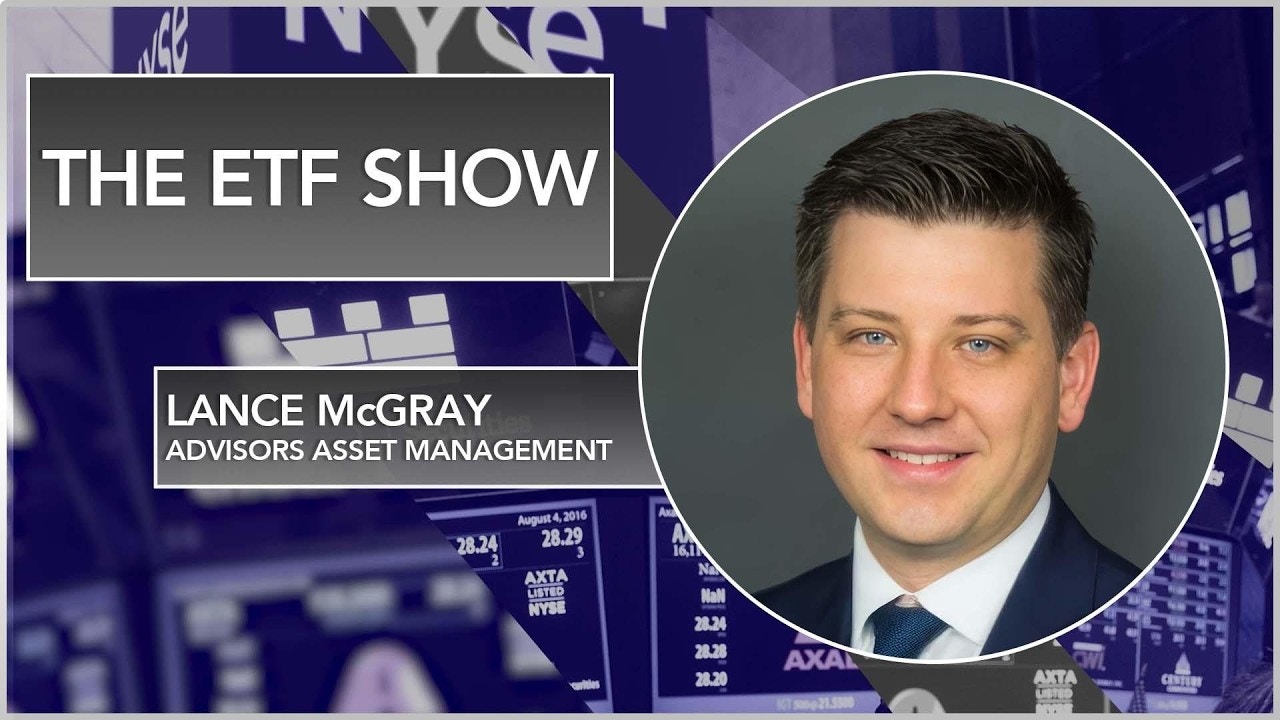
Asset TV
The ETF Show - US-Iran Conflict Sends Oil ETFs Soaring
Lance McGray, Managing Director and Head of ETF Product at Advisors Asset Management joins The ETF Show.

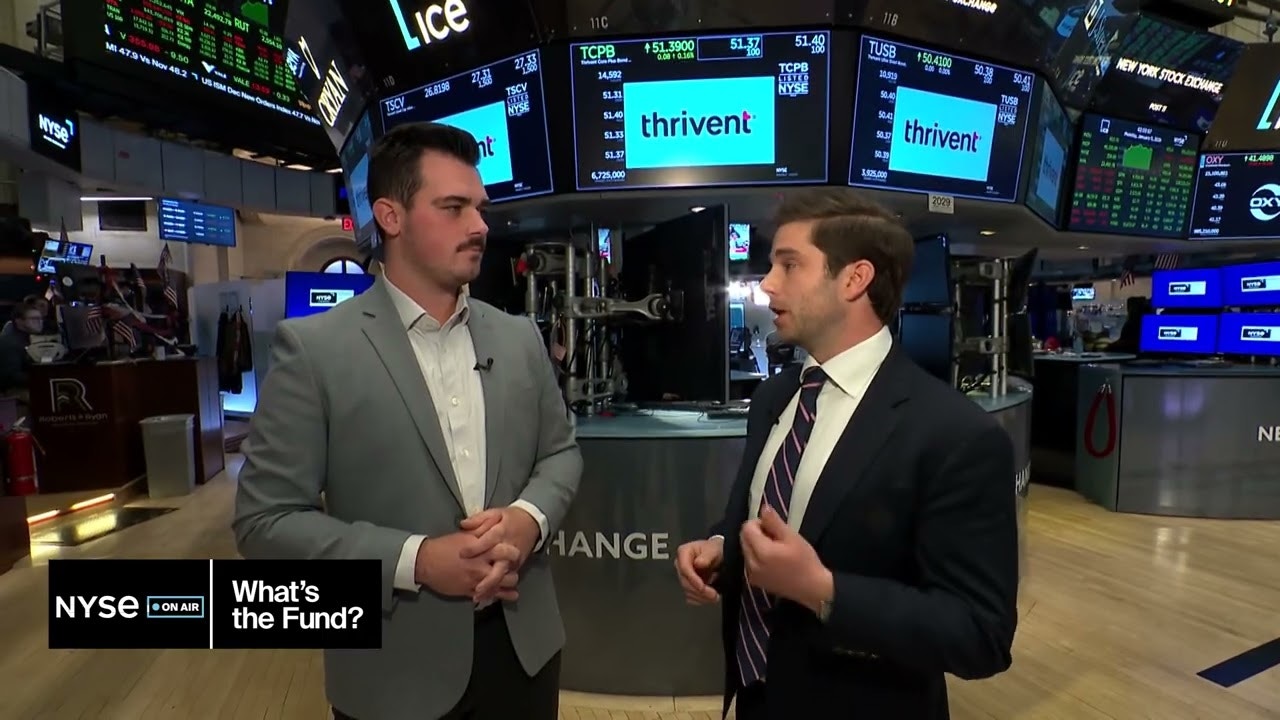
What’sTheFund
What's the Fund | Thrivent Small Cap Value ETF (Ticker: TSCV)
Kyle Detullio, ETF Capital Markets Specialist at Thrivent Asset Management, joins Ethan Hertzfeld on the NYSE trading floor to discuss the Thrivent Small Cap Value ETF (TSCV).

What’sTheFund
What's the Fund | Thrivent Small-Mid Cap Equity ETF (Ticker: TSME)
Kyle Detullio, ETF Capital Markets Specialist at Thrivent Asset Management, joins Ethan Hertzfeld on the NYSE trading floor to discuss the Thrivent Small-Mid Cap Equity ETF (TSME).
What’sTheFund
What's the Fund | Thrivent Mid Cap Value ETF (Ticker: TMVE)
Kyle Detullio, ETF Capital Markets Specialist at Thrivent Asset Management, joins Ethan Hertzfeld on the NYSE trading floor to discuss the Thrivent Mid Cap Value ETF (TMVE).
Browse all educational columns



Active Trader Report: Use of Leveraged & Inverse ETFs Way Up
Direxion partnered with Compound Insights and Vanda to explore what’s driving the evolution of active trading — and how active traders are using leveraged and inverse funds across equities, single stocks, commodities, and volatility.