NYSE CRTR Economy Event Watch the replay →



Why the SPDR S&P 500 ETF Trust (SPY) Remains the King of ETFs
Even after 30 years, SPY remains the largest and most liquid S&P 500 ETF available.


Keep up with what matters in ETFs
Get timely ETF insights, market trends, and top ideas straight to your inbox.
Your newsletter subscriptions with us are subject to ETF Central's Privacy Policy and Terms and Conditions.
I've been noticing a lot of headlines lately about how the iShares Core S&P 500 ETF
However, I would say: good luck with that. Even today, the gap isn't as close as some might think—according to the ETF Central screener, SPY still leads with an AUM of $598.56 billion as of October 29, maintaining a lead of over $50 billion compared to IVV and VOO, which is far from negligible.
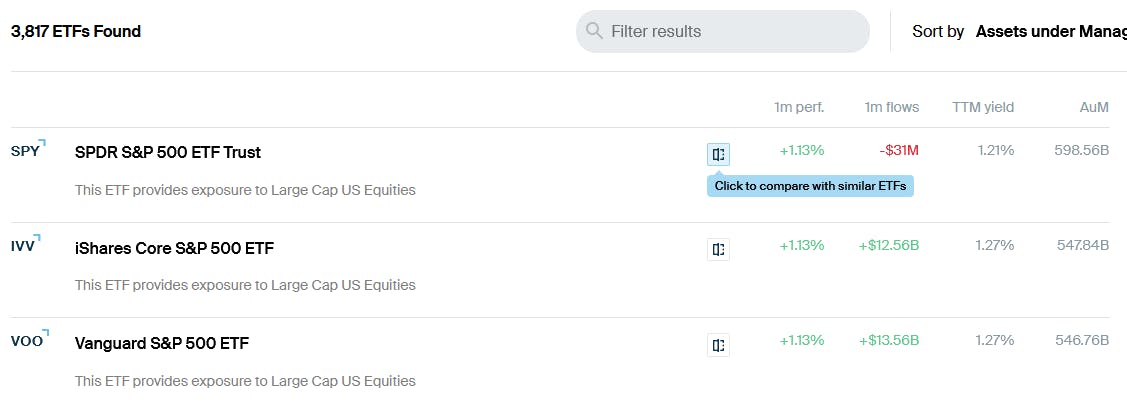
Indeed, VOO and IVV offer lower expense ratios at 0.03% compared to SPY's 0.0945%, and they benefit from being able to reinvest dividends directly due to their structural differences, unlike SPY which is constrained by its Unit Investment Trust (UIT) structure that doesn't allow for reinvestment of dividends.
Despite these competitive edges from its peers, there are two compelling reasons why SPY continues to wear the crown as the 'King of ETFs,' more than 30 years since it debuted on January 22, 1993. Here are my thoughts on why SPY is likely to continue its reign.
The ETF Industry Is Evolving Fast
From AI infrastructure to active strategies, the ETF landscape is shifting. Share your perspective in the 7th Annual Global ETF Survey and get exclusive early access to the final report.
Unparalleled liquidity
In understanding ETF liquidity, it's essential to look beyond just trading volume. Liquidity in ETFs involves two layers: the volume of the ETF itself and the liquidity of the underlying assets it holds. Both aspects are crucial when evaluating an ETF's overall liquidity profile.
When comparing SPY
According to ETF Central's comparison tool, over the past 30 days, VOO traded an average of 4,377,160 shares per day, while SPY traded a staggering 42,632,015 shares per day. This significant difference in trading volume—a factor of nearly 10 times—highlights SPY's superior market presence.
This higher trading volume for SPY translates into a more favorable bid-ask spread, which is an indirect indicator of liquidity. SPY boasts a 30-day average median bid-ask spread of just 0.003%, compared to VOO's 0.005%.
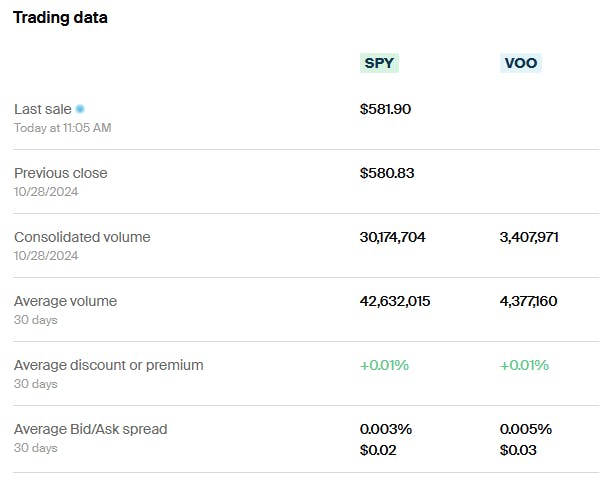
While these differences might seem negligible for retail investors, it's a critical factor for institutional investors, for whom even small percentage differences can represent substantial amounts of money. This efficiency in trading and cost-saving is why many institutional investors may continue to prefer SPY.
Options trading versatility
SPY is also the undisputed king of ETFs when it comes to options trading, to the extent that some investors prefer trading SPY
Firstly, SPY is one of the few ETFs that offer options with daily expirations. This frequency is highly valued by institutional traders because it allows for more precise timing and flexibility in hedging strategies or capitalizing on short-term market movements. In contrast, IVV options are typically available on a weekly basis, which can limit strategic flexibility.
In addition, the options chain for SPY includes a much wider array of strike prices, allowing traders to fine-tune their positions with greater specificity. This variety can be crucial for implementing complex trading strategies or for better alignment with specific market outlooks. On the other hand, IVV options have fewer strike prices available, which can restrict trading choices.
Finally, SPY consistently exhibits higher open interest in its options compared to IVV. Open interest represents the total number of outstanding options contracts that have not been settled. High open interest indicates more liquidity, making it easier to enter and exit positions.
Please note this article is for information purposes only and does not in any way constitute investment advice. It is essential that you seek advice from a registered financial professional prior to making any investment decision.
Latest ETF News
See all ETF news
The SpaceX (SPCX) IPO: Here's Which ETFs Already Own it

ETF Comparison: Vanguard FTSE Emerging Markets ETF (VWO) Versus iShares Core MSCI Emerging Markets ETF (IEMG)




 Advantages of ETFs over Mutual Funds1/6
Lower Costs
In this guide, we'll explore the advantages of ETFs over mutual funds, giving you valuable insights into why ETFs have gained significant popularity among investors like yourself.
Leveraged ETFs: Unlocking the Potential for Amplified Returns1/6
Understanding Leveraged ETFs
Explore leveraged ETFs: potential for amplified returns & risks. 5 ETFs to consider across equities, commodities & fixed income.
What is a Leveraged ETF?1/6
Introducing Leveraged and Inverse ETFs
In this guide, we'll dive into the world of leveraged ETFs, exploring their definition, mechanics, potential risks, and rewards.
Recent educational content
Asset TV
The ETF Show - New Autism-Impact ETF Launched
Defiance ETFs has launched the first ETF, $ASD, focused on the autism ecosystem, investing in companies that provide services, products, and research related to autism and neurodivergence.


ETF Trends
ETF Industry KPIs June 1, 2026
The ETF Industry saw 22 New Launches, 1 Ticker Change and 1 closure last week.

ETF Trends
ETF Industry KPIs May 20, 2026
The ETF Industry saw 44 New Launches, 3 Mutual Fund Conversions and 9 closures last week.
Asset TV
The ETF Show - Politics Becomes Investable Trade through ETFs
Dan Weiskopf, Senior Portfolio Manager at Tidal Financial Group spoke with the ETF Show about Subversive ETFs that help investors trade like politicians.
Browse all educational columns



The ETF Industry Is Evolving Fast
From AI infrastructure to active strategies, the ETF landscape is shifting. Share your perspective in the 7th Annual Global ETF Survey and get exclusive early access to the final report.