From idea to ETF portfolio in minutes. Build yours now →



Small Caps and Value Stocks Continue to Rally Amid Market Rotation
Economically sensitive small caps extended their rally, offering fresh opportunities for investors. Discover how interest rate expectations and sector rotation are shaping the market.


Keep up with what matters in ETFs
Get timely ETF insights, market trends, and top ideas straight to your inbox.
Your newsletter subscriptions with us are subject to ETF Central's Privacy Policy and Terms and Conditions.
Small Caps and Value Stocks Take the Lead
The Russell 2000 Index, widely regarded as the premier benchmark for small-cap U.S. stocks, rose by 1.68% over the week, in contrast to the S&P 500 and the Nasdaq Composite which lost 1.97% and 3.65% respectively. This rally highlights a resurgence in economically sensitive small caps, which have long been overshadowed by their larger peers.
Like what you're reading?
Stay in the loop — get the latest ETF insights: trends, analysis, and expert picks.
In the same vein, value stocks, which have lagged growth stocks and the broad-based indexes this year, also outperformed their growth peers this week (S&P 500 Value index up 0.68%, S&P 500 Growth index down 3.82%), indicating a shift in market dynamics. A major catalyst emerged from geopolitical concerns threatening the AI-driven boom in semiconductor stocks as the Biden administration is considering even stricter trade restrictions on companies that provide China with access to the most advanced semiconductor technologies. Meanwhile, increasing confidence that Federal Reserve rate cuts are imminent has the potential to enhance the attractiveness of dividends offered by many value stocks.
The Decline of Big Tech
Big tech stocks, once the primary drivers of market rallies, are “no longer the only game in town.” Investors have started to diversify, moving away from megacaps in favor of smaller companies and previously overlooked sectors where value stocks are mainly found. The so-called Magnificent Seven — behemoths that have dominated the S&P 500’s gains — took a hit this week. This decline has been exacerbated by a global sell-off in semiconductor companies with Nvidia’s stock down 8.75% for the week. Interestingly, as these tech giants faltered, sectors including companies with low price-to-book ratios like energy, real estate, and financials were on the rise. The S&P energy, real estate, and financials indexes gained 2.02%, 1.30%, and 1.18% respectively, while the S&P 500 benchmark index was down 1.97% over the week.
Interest Rate Cuts and Market Rotation
The current market rotation indicates a high likelihood of interest rate cuts this year. Small-cap companies, particularly those in the Russell 2000, are among the best-positioned to benefit from these anticipated rate cuts. These groups tend to have higher debt burdens compared to large-cap companies. Therefore, lower interest rates would alleviate some financial pressures, making them more attractive to investors.
While lower rates generally benefit fast-growing tech companies, many large tech firms have enjoyed a boost in earnings from high interest rates due to their significant cash reserves. This nuance adds another layer to the investment landscape, making it essential for investors to remain vigilant and adaptable.
What This Means for ETF Investors
For those investing in ETFs, these market shifts offer intriguing opportunities. ETFs focusing on small-cap and value stocks may provide more promising returns in the current environment. Thinking about adding small-cap ETFs to your portfolio? ETF Central’s brand-new comparison tool can help! Dive deep into any ETF and compare key factors like fees (expense ratios), holdings, flows, and past returns to make informed investment decisions.
- Here’s a comparison between Small Cap ETFs: SCHA and VTWO
- Here’s a comparison between Small Cap Value ETFs: AVUV and IJS
Group Data
Index Data
Funds Specific Data: IJR+0.53% AVUV+0.58% IWN+0.33% SPSM+0.55% DFAS+0.64% CALF+0.72% DFAS+0.64% IJS+0.58% SLYV+0.49% DFSV+0.53%
Please note this article is for information purposes only and does not in any way constitute investment advice. It is essential that you seek advice from a registered financial professional prior to making any investment decision.
Mentioned ETFs
Further reading

Latest ETF News
See all ETF newsMoneyShow Chart of the Day 9/4/26: Don't Just Watch Oil. Watch THESE.


Chart of the Day 8/14/26: The Great "Hot Money" Migration

MoneyShow Chart of the Day 7/29/26: Now, THAT's What I Call Market Rotation!

MoneyShow Chart of the Day 7/16/26: Good News/Bad News on Inflation (and the Fed)




 Advantages of ETFs over Mutual Funds1/6
Lower Costs
In this guide, we'll explore the advantages of ETFs over mutual funds, giving you valuable insights into why ETFs have gained significant popularity among investors like yourself.
Leveraged ETFs: Unlocking the Potential for Amplified Returns1/6
Understanding Leveraged ETFs
Explore leveraged ETFs: potential for amplified returns & risks. 5 ETFs to consider across equities, commodities & fixed income.
What is a Leveraged ETF?1/6
Introducing Leveraged and Inverse ETFs
In this guide, we'll dive into the world of leveraged ETFs, exploring their definition, mechanics, potential risks, and rewards.
Recent educational content

ETF Trends
ETF Industry KPIs September 8, 2026
This week’s KPI data overview highlights key metrics and trends shaping the ETF landscape.

ETF Trends
ETF Industry KPIs August 31, 2026
This week’s KPI data overview highlights key metrics and trends shaping the ETF landscape.
ETF Trends
ETF Industry KPIs August 24, 2026
This week’s KPI data overview highlights key metrics and trends shaping the ETF landscape.
What’sTheFund
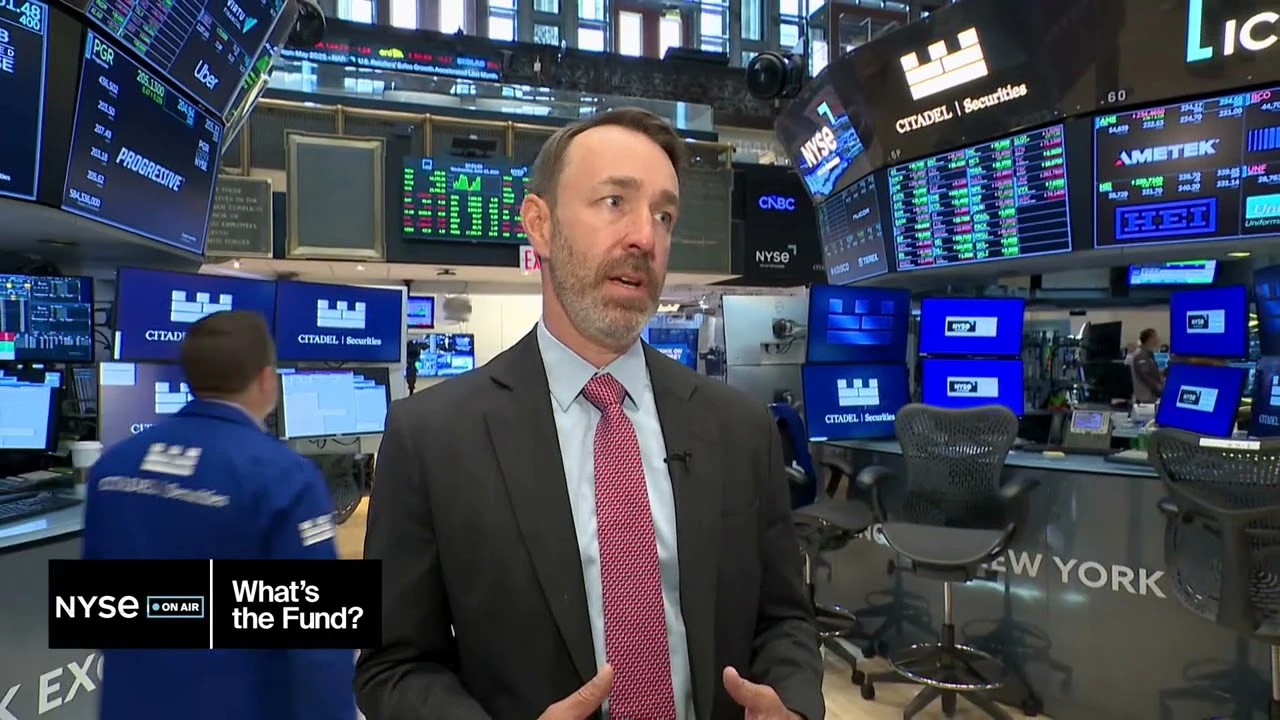
What's the Fund | Ocean Park Diversified Income ETF (DUKZ)
James St Aubin, Chief Investment Officer at Ocean Park Asset Management, discuss the DUKZ ETF, exposing investors to the whole spectrum of asset classes in the fixed income markets, through their rules-based process.

Browse all educational columns



Build and Analyze Your ETF Portfolio Like a Pro
Create your own ETF portfolio in minutes and instantly see allocations, exposures, performance, and risk. Visualize diversification across asset classes, regions, and sectors. Stress-test ideas, compare benchmarks, and refine your strategy with professional-grade analytics.