Open Now: The Global ETF Survey Take the Survey →



Silver Just Sent a Warning Signal the Market Can’t Ignore
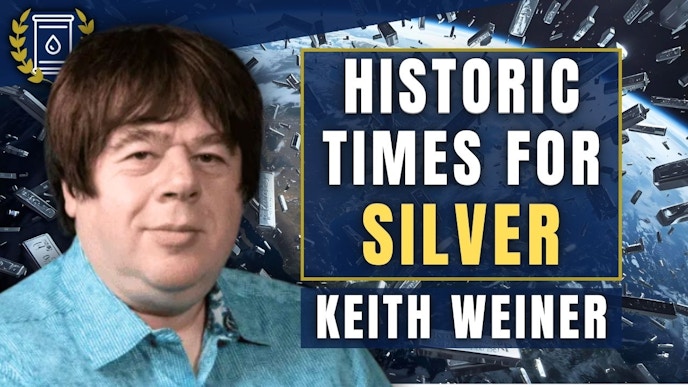
Keith Weiner says when silver goes into backwardation, it’s not just rare — it’s a flashing red light for the entire monetary system.

Keep up with what matters in ETFs
Get timely ETF insights, market trends, and top ideas straight to your inbox.
Your newsletter subscriptions with us are subject to ETF Central's Privacy Policy and Terms and Conditions.
Keith Weiner tells it like it is. As the CEO of Monetary Metals and a long-time advocate for sound money, he brings a sharp perspective to the current state of precious metals. In his latest conversation with Commodity Culture host Jesse Day, Keith opens with a revealing look at the unusual behavior in the silver market—specifically, the rare backwardation event—and what it signals about deeper problems in the global financial system.
Watch the full conversation or continue reading.
The ETF Industry Is Evolving Fast
From AI infrastructure to active strategies, the ETF landscape is shifting. Share your perspective in the 7th Annual Global ETF Survey and get exclusive early access to the final report.
Silver Backwardation: A Monetary Red Flag
Keith doesn’t hold back. When silver enters backwardation—meaning the spot price is higher than the futures price—something’s fundamentally wrong.
And that’s exactly what's happening in late 2025.
Weiner points to an October example where traders risked losing over $2.15 per ounce just by holding silver and selling it forward to December. That works out to a shocking 20% annualized loss.
Backwardation in silver is incredibly rare.
It signals extreme scarcity. People want the metal now because they’re not confident it will be available later. This time, demand was especially driven by Indian buyers, who swapped out of gold due to its high Diwali-season prices and turned to silver instead.
But despite strong demand, refiners weren’t buying.
They couldn’t hedge profitably, so they stopped accepting raw material. For Weiner, that’s a clear sign the system is breaking: supply is urgently needed, yet the economics are so distorted that producers are sitting on their hands.
Silver as Money: The West Forgot, the East Didn’t
Is silver still a monetary metal?
According to Weiner, absolutely. And he has stories to prove it. In much of the world, jewelry isn’t just adornment—it’s a form of savings. Walk into a gold shop in Dubai or Istanbul and you’ll see prices per gram listed alongside live market tickers.
The premium for craftsmanship is small, a far cry from Western designer stores where you might pay $17,000 for a few grams of gold in a fancy box.
Weiner says analysts often split demand into “jewelry” and “investment,” but in most of the world, they’re the same thing.
That’s what makes gold—and silver—real money. They’re liquid, trusted, and valuable in any culture.
Take his example from Monetary Metals. When they pay interest on metal leases, silver investors want their interest paid in silver.
But when they offered a platinum lease, every single client asked to be paid in gold instead. The message is clear: platinum isn’t money. Silver still is.
Gold vs. Silver: Don’t Trust the Ratio
The gold-to-silver ratio sits around 70:1, and many investors point to historical mining ratios—often cited at 7:1—to argue silver is dramatically undervalued.
Weiner doesn’t buy it. That kind of logic, he says, is just numerology.
Value isn’t determined by how much of something exists. If that were true, the U.S. dollar—with trillions in circulation—would be the least valuable currency in the world. He jokes that Keith Weiner paintings are ultra-rare, but you won’t see collectors lining up to buy one.
Markets price based on demand, not rarity. And while silver may be relatively abundant in nature, it trades like gold, not like copper or oil. That’s what counts in determining its role as a monetary asset.
Central Banks Are Buying Gold, But That’s Not the Whole Story
Yes, central banks are stacking gold in significant quantities. Some see it as a hedge against geopolitical risk, especially after the U.S. froze Russia’s foreign assets. Others believe it's part of an approaching monetary reset.
But Weiner urges caution.
Every buyer has a seller. If the Central Bank of Ireland bought seven tons of gold, that just means tens of thousands of private investors sold a few ounces each.
The real effect isn’t in the tonnage—it’s in the psychology. When people see their central bank buying gold, it gives them social and financial permission to follow suit. That ripple of individual demand is what moves markets, not central banks alone.
Mainstream Media Still Ignores Gold, and That’s Just Fine
Despite gold hitting all-time highs—now above $4,000 an ounce—it’s barely making headlines.
The media remains glued to AI stocks and the latest tech buzz. But Weiner is perfectly okay with that.
In fact, he warns that mainstream hype would bring chaos. Once hedge funds and speculators pile in, gold markets will experience wild price swings. Think up $400 one day, down $450 the next.
And if you’re stacking gold because you think the dollar’s headed for a crash, rising prices aren’t actually good news.
Unless you’re selling, they just make it harder to accumulate more. Higher prices help sellers, not long-term savers.
The Bigger Picture: Is the Monetary System Dying?
Here’s where Weiner gets stark. He believes the current monetary system is faltering—and silver’s recent market behavior is just one clue.
Gold is unique in that it’s not consumed. It accumulates. So when people stop offering gold in exchange for dollars, it’s not because more dollars exist, but because confidence is collapsing. That’s the true definition of hyperinflation: not runaway printing, but a loss of trust.
If that happens, Weiner warns, we could see massive breakdowns in energy and food production. Civilization doesn’t run without fuel and farming, and without sound money to support those sectors, we risk something far worse than a market crash.
Monetary Metals: Making Gold and Silver Work Again
Monetary Metals offers a different path: paying interest on gold and silver. Instead of locking it away and paying storage fees, investors can lease their metal to productive businesses and earn returns—paid in metal.
Weiner emphasizes this isn’t just about boosting returns. It’s about restoring monetary integrity. For gold to be a real alternative to fiat currency, it has to work within the market—circulating, earning yield, and financing productive enterprises.
Otherwise, it stays locked away, unable to challenge the broken system.
The Collapse Isn’t Inevitable—Yet
Weiner ends with a sobering message. If voters keep rewarding policies that inflate spending and debt, the system will eventually break. But the root problem isn’t just politicians—it’s public demand for “bread and circuses.”
That doesn’t mean collapse is guaranteed. There’s still time to rebuild a better system. Sound money—gold and silver that earn interest, circulate, and support real economic activity—is how civilizations have survived in the past.
Monetary Metals isn’t just another niche investment. It's a mission to bring sound money back before the fallout begins.
Watch the Full Conversation
This article is for informational purposes only and does not in any way constitute investment advice. The author may express their own opinions, which may not represent the opinions of ETF Central or its affiliated partners. It is essential that you seek advice from a registered financial professional prior to making any investment decisions.
Topics
See all
Mentioned ETFs
No specific ETFs were tagged
Further reading

Latest ETF News
See all ETF news








 Advantages of ETFs over Mutual Funds1/6
Lower Costs
In this guide, we'll explore the advantages of ETFs over mutual funds, giving you valuable insights into why ETFs have gained significant popularity among investors like yourself.
Leveraged ETFs: Unlocking the Potential for Amplified Returns1/6
Understanding Leveraged ETFs
Explore leveraged ETFs: potential for amplified returns & risks. 5 ETFs to consider across equities, commodities & fixed income.
What is a Leveraged ETF?1/6
Introducing Leveraged and Inverse ETFs
In this guide, we'll dive into the world of leveraged ETFs, exploring their definition, mechanics, potential risks, and rewards.
Recent educational content

ETF Trends
ETF Industry KPIs July 20, 2026
This week’s KPI data overview highlights key metrics and trends shaping the ETF landscape.

ETF Trends
ETF Industry KPIs July 13, 2026
This week’s KPI data overview highlights key metrics and trends shaping the ETF landscape.
First Look ETF
First Look ETF: Cash Deployment, Bond, and Hedged ETFs
In this season 6 episode of First Look ETF, Stephanie Stanton examines the latest ETF marketplace trends with NYSE and guests.

ETF Trends
ETF Industry KPIs July 6, 2026
This week’s KPI data overview highlights key metrics and trends shaping the ETF landscape.
Browse all educational columns



Active Trader Report: Use of Leveraged & Inverse ETFs Way Up
Direxion partnered with Compound Insights and Vanda to explore what’s driving the evolution of active trading — and how active traders are using leveraged and inverse funds across equities, single stocks, commodities, and volatility.