Explore professionally built ETF model portfolios. Discover now →



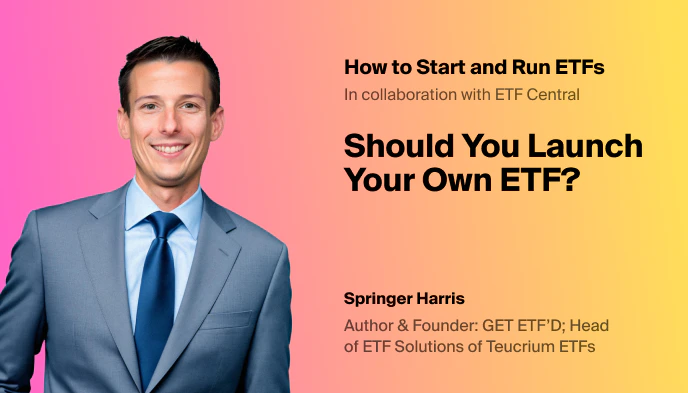
Should You Launch Your Own ETF?
Thinking about launching your own ETF? It's more accessible and cost-effective than ever! But before we dive in, let's answer the key question: is launching an ETF the right move for you?

Keep up with what matters in ETFs
Get timely ETF insights, market trends, and top ideas straight to your inbox.
Your newsletter subscriptions with us are subject to ETF Central's Privacy Policy and Terms and Conditions.
Although ETFs have been around for over 30 years—there are nearly 3,500 ETFs listed in the US alone — most people don’t know how they work or how to start one. We, the ETF industry, mainly taught investors and advisors the basic benefits of using ETFs. We did this selfishly to boost sales. But now, record numbers of entrepreneurs and asset managers want to turn their investment strategies into ETFs. Demand has never been higher.
Like what you're reading?
Stay in the loop — get the latest ETF insights: trends, analysis, and expert picks.
Deciding to Start an ETF
Before diving into the "how," consider whether you should start an ETF. This is a decision no amount of internet searches or AI assistance can make for you. However, I'm here to say: yes, you should. ETFs are arguably the best method to package and sell financial strategies. I foresee that ETFs will become the dominant form of pooled investment vehicles within the next decade. This is especially true given their lower fees, better access, and favorable tax treatments.
Profiles of Aspiring ETF Entrepreneurs
Anyone with a unique idea, some start-up capital, and a strong entrepreneurial spirit should consider launching an ETF. Starting an ETF is not just about financial management but also about entrepreneurship. Unlike mutual funds, ETFs offer a dynamic way for innovative thinkers to become leaders in the financial sector.
Let me introduce you to some common types of ETF entrepreneurs:
- The Student: This ETF entrepreneur is typically a standout finance student who has excelled in mock stock trading challenges and has developed a successful trading strategy through personal account management. Often preferring entrepreneurship over traditional roles in investment banking, they face the challenge of raising sufficient startup capital. Launching an ETF requires approximately $75,000, along with an additional $200,000 needed annually for operational costs. They must also establish themselves as a properly registered Investment Advisor. Finding a supportive financial partner who believes in their strategy can be a vital step in realizing their entrepreneurial dreams.
- The Wall Streeter: Having spent years in the corporate finance sector, this professional is ready to break away and apply their deep industry knowledge to their own ETFs. They understand investor challenges intimately and have solutions ready to be put into an ETF which can be launched in about 100 days. The main obstacles for them are leaving secure jobs and growing their ETF to a large enough scale. It needs about $100 million in assets to replace their former salary.
- The RIA (Registered Investment Advisor): This individual is already an entrepreneur but seeks further growth and efficiency. RIAs typically manage many separately managed accounts, a task that becomes harder as their client base grows. Transitioning these accounts into a single ETF can streamline their operations. However, they face the challenge of educating their clients about this new structure. They also must operate in a more tightly regulated environment. Despite these hurdles, the shift can greatly enhance both client service and business scalability. It's also an incredible marketing tool.
- The Legacy Fund Manager: Legacy fund managers may oversee mutual funds, hedge funds, or other traditional investment vehicles. As the ETF market expands, these managers face increasing pressure from the advantages that ETFs offer, such as lower costs and greater flexibility for investors. They need to decide whether to establish new ETFs that mirror their existing funds or to convert their current offerings into ETFs. They could also introduce new share-class options that might influence their strategic approach. Regardless, they risk cannibalization of their existing products and potentially lower revenues from the lower expense ratios of ETFs, but they have the opportunity to grow an even larger asset base and fight off competitors who are already launching ETFs.
Embracing the ETF Entrepreneurship Journey
Launching or pivoting to an ETF business is not merely a career move; it’s a statement of freedom. If you are asking yourself if you should start an ETF, the answer is an unequivocal yes. While it won't be easy—after all, anything truly worthwhile rarely is—the process is more accessible now than ever before, with abundant resources available to assist you.
I'm excited to have been invited by ETF Central to write for you, the aspiring ETF entrepreneur. My mission is to equip you with the knowledge and confidence to successfully enter the ETF market. Join me as we explore essential topics that will guide you on this promising journey. Together, we will unlock the potential of ETFs to transform your financial strategies into a successful ETF business.
About the Author
Springer Harris, author of "GET ETF’D: An Insider's Guide to Starting and Running an ETF," focuses on simplifying the complexities of launching and managing ETFs to empower entrepreneurs. He discusses the detailed processes and challenges of successfully introducing ETFs to the market in his writings. As Chief Operating Officer and Head of ETF Solutions at Teucrium ETFs, Springer has helped a broad spectrum of clients, from individuals to large asset managers, launch their ETFs efficiently. Connect with Springer on LinkedIn for more insights or help starting your ETF.
Latest ETF News
See all ETF newsAre ETFs Getting Too Complicated? Not Necessarily, But Complexity Has a Cost


Form 4 Has 20 Transaction Codes. None Say "Section 351 ETF Swap"


Who Really Owns a White-Label ETF?

What If a Futures-Based ETF Never Had to Roll Again?

How Do You Build a Winning ETF Business?

Losers Of Q2 2026 REIT Earnings Season



 Advantages of ETFs over Mutual Funds1/6
Lower Costs
In this guide, we'll explore the advantages of ETFs over mutual funds, giving you valuable insights into why ETFs have gained significant popularity among investors like yourself.
Leveraged ETFs: Unlocking the Potential for Amplified Returns1/6
Understanding Leveraged ETFs
Explore leveraged ETFs: potential for amplified returns & risks. 5 ETFs to consider across equities, commodities & fixed income.
What is a Leveraged ETF?1/6
Introducing Leveraged and Inverse ETFs
In this guide, we'll dive into the world of leveraged ETFs, exploring their definition, mechanics, potential risks, and rewards.
Recent educational content

ETF Trends
ETF Industry KPIs September 28, 2026
This week’s KPI data overview highlights key metrics and trends shaping the ETF landscape.

ETF Trends
ETF Industry KPIs September 22, 2026
This week’s KPI data overview highlights key metrics and trends shaping the ETF landscape.
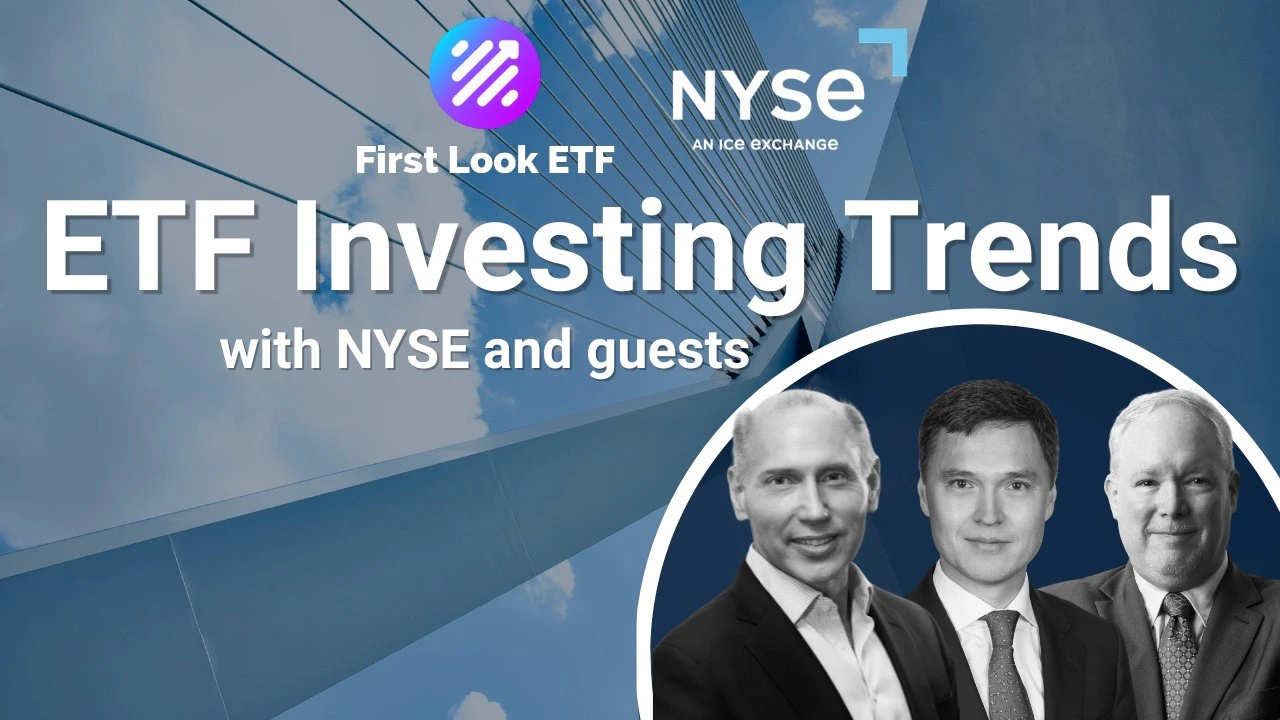
First Look ETF
First Look ETF: Income, Corporate Arbitrage, and Growth and Value Investing
First Look ETF September 2026: iCapital, Mast Investments and North Square unpack new ETFs targeting monthly income, merger arbitrage and complementary growth and value exposure.

ETF Trends
ETF Industry KPIs September 14, 2026
This week’s KPI data overview highlights key metrics and trends shaping the ETF landscape.
Browse all educational columns



Build and Analyze Your ETF Portfolio Like a Pro
Create your own ETF portfolio in minutes and instantly see allocations, exposures, performance, and risk. Visualize diversification across asset classes, regions, and sectors. Stress-test ideas, compare benchmarks, and refine your strategy with professional-grade analytics.