Keep tabs on your favorite ETFs with a personalized weekly tracker. Create a Watchlist now →



Short Squeeze Risk Ahead? When ETF Supply Gets Locked
What if the biggest risk in your ETF isn’t the market, but the machine behind it?


Keep up with what matters in ETFs
Get timely ETF insights, market trends, and top ideas straight to your inbox.
Your newsletter subscriptions with us are subject to ETF Central's Privacy Policy and Terms and Conditions.
When most investors think of risk in ETFs—especially leveraged and inverse products—they focus on market volatility, compounding effects, or the performance of the underlying assets. But what happens when the issue isn’t price movement, but structure?
That’s exactly what’s at play in the recent suspension of new share issuance for GraniteShares’ European leveraged ETPs. Due to an expired base prospectus, GraniteShares is currently barred from issuing new tranches of 65 ETPs in Europe until regulators approve updated documentation. Redemption is still allowed, but creations are frozen.
While this might seem like a temporary paperwork issue, it introduces a significant, yet often overlooked risk: a breakdown in the ETF arbitrage mechanism—and the potential for short squeezes or stark premiums to NAV.
Like what you're reading?
Stay in the loop — get the latest ETF insights: trends, analysis, and expert picks.
Why the Creation Mechanism Matters
The open-ended structure of ETFs relies on market makers and authorized participants (APs) being able to create or redeem shares to keep the ETF price aligned with its net asset value (NAV). But when creations are suspended, that mechanism is severed. Suddenly, supply is capped.
If market demand increases—whether organically or strategically from opportunistic buyers—this limited supply can quickly lead to price dislocations, especially in thinly traded, leveraged products with smaller asset bases.
A Short Squeeze in the Making?
In a scenario where available float is bought up, short sellers who are unaware of the creation suspension may find themselves unable to source shares to cover. The only option? Buy in the open market—at any price. That’s how squeezes begin.
This risk is amplified when other market structure components come into play—open interest, stock loan availability, and short positioning. With no ability to create new shares and uncertainty around when issuance will resume, price discovery can detach from fundamentals rapidly.
Historical Precedents: EGPT, RSX, ERUS
We’ve seen echoes of this before, albeit under different circumstances.
In 2011, during the Arab Spring, the VanEck Egypt ETF (EGPT) faced a market closure. With Egypt’s stock exchange shuttered for over a month, creations were suspended, and while redemptions were technically allowed, the fund couldn’t sell the underlying securities. This made it effectively impossible to process redemptions in practice.
Shares of EGPT continued to trade in the U.S., but diverged from fair value due to the inability to rebalance or manage flows through the normal creation/redemption process.
More recently, in 2022, the Russia-focused ETFs RSX (VanEck) and ERUS (iShares) experienced similar issues. When trading in Russian equities was halted due to sanctions and geopolitical fallout, creations were suspended.
Shares began to trade at deep discounts or premiums depending on market sentiment, with price discovery decoupled from fundamentals.
In each of these cases, the ETF structure functioned as designed given the circumstances—but when access to the underlying market is impaired or operational mechanisms break, liquidity becomes imbalanced and pricing can deviate sharply.
The Takeaway: A Fragile Balance That Demands Attention
When creations are suspended, ETFs that typically function as open-ended structures temporarily become closed systems. But it’s more nuanced than that.
Since redemptions are still allowed, the structure behaves much like a closed-end fund on the upside—prices can rise well above NAV when demand outpaces limited supply, because no new shares can be created to meet that demand.
At the same time, the potential for price dislocation grows when other market structure components come into play—open interest, stock loan availability, and short positioning.
If available float is constrained and short interest builds—especially in leveraged and inverse products—there’s real potential for dislocated pricing or even a short squeeze, particularly if it takes time to resolve the issue.
In this case, the lapse should never have happened. Renewing a base prospectus is a fundamental operational responsibility, and the fact that it wasn’t completed on time reflects poorly on the issuer. Now that it has occurred, it needs to be all hands on deck to fix it.
Capital markets professionals—especially those at the issuer and within lead market makers (LMMs)—need to be fully engaged. They should be actively monitoring secondary market trading, preparing for potential dislocations, and communicating transparently with investors and market participants.
ETF structure may be resilient, but it depends on functioning mechanisms. When those mechanisms break down, timely communication, risk management, and decisive action become critical to protecting investor confidence and maintaining orderly markets.
Footnote:
For more on the GraniteShares suspension, see the original Financial Times article:
https://www.ft.com/content/b92b7913-41d0-4aff-9467-761099da9917 – Financial Times, March 2025
About the Author
Nicholas Phillips | President of ETF Capital Markets Advisors LLC
With over 25 years of experience in ETF market making and capital markets, Nicholas Phillips is recognized as a subject matter expert in the ETF industry. He started his career spending the first ten years as a lead market maker for SIG and Goldman Sachs.
At the helm of MCAP LLC's ETF Desk, Nicholas built and scaled the division, enhancing its operations through innovative pricing and risk models, and robust relationships with market makers and issuers. His tenure at Van Eck Associates as Director of ETF Capital Markets further solidified his expertise, managing critical facets of operations and deepening connections within the trading community.
Beyond market making, Nicholas is an avid content creator, sharing insights that demystify complex market dynamics. He is keen on exploring board member roles that benefit from his extensive background and forward-thinking approach to ETF strategies. His dual US/Ireland citizenship complements his global perspective, enriching his professional endeavors in diverse markets.
Disclaimer
Please note that this article reflects the author's personal views and does not represent the opinions of the publication or its affiliates. It is for informational purposes only and does not constitute investment advice. It is essential to seek guidance from a registered financial professional before making any investment decisions.


Latest ETF News
See all ETF newsForm 4 Has 20 Transaction Codes. None Say "Section 351 ETF Swap"


Who Really Owns a White-Label ETF?

What If a Futures-Based ETF Never Had to Roll Again?

How Do You Build a Winning ETF Business?

Losers Of Q2 2026 REIT Earnings Season


Winners of Q2 2026 REIT Earnings Season


 Advantages of ETFs over Mutual Funds1/6
Lower Costs
In this guide, we'll explore the advantages of ETFs over mutual funds, giving you valuable insights into why ETFs have gained significant popularity among investors like yourself.
Leveraged ETFs: Unlocking the Potential for Amplified Returns1/6
Understanding Leveraged ETFs
Explore leveraged ETFs: potential for amplified returns & risks. 5 ETFs to consider across equities, commodities & fixed income.
What is a Leveraged ETF?1/6
Introducing Leveraged and Inverse ETFs
In this guide, we'll dive into the world of leveraged ETFs, exploring their definition, mechanics, potential risks, and rewards.
Recent educational content

ETF Trends
ETF Industry KPIs September 8, 2026
This week’s KPI data overview highlights key metrics and trends shaping the ETF landscape.

ETF Trends
ETF Industry KPIs August 31, 2026
This week’s KPI data overview highlights key metrics and trends shaping the ETF landscape.
ETF Trends
ETF Industry KPIs August 24, 2026
This week’s KPI data overview highlights key metrics and trends shaping the ETF landscape.
What’sTheFund
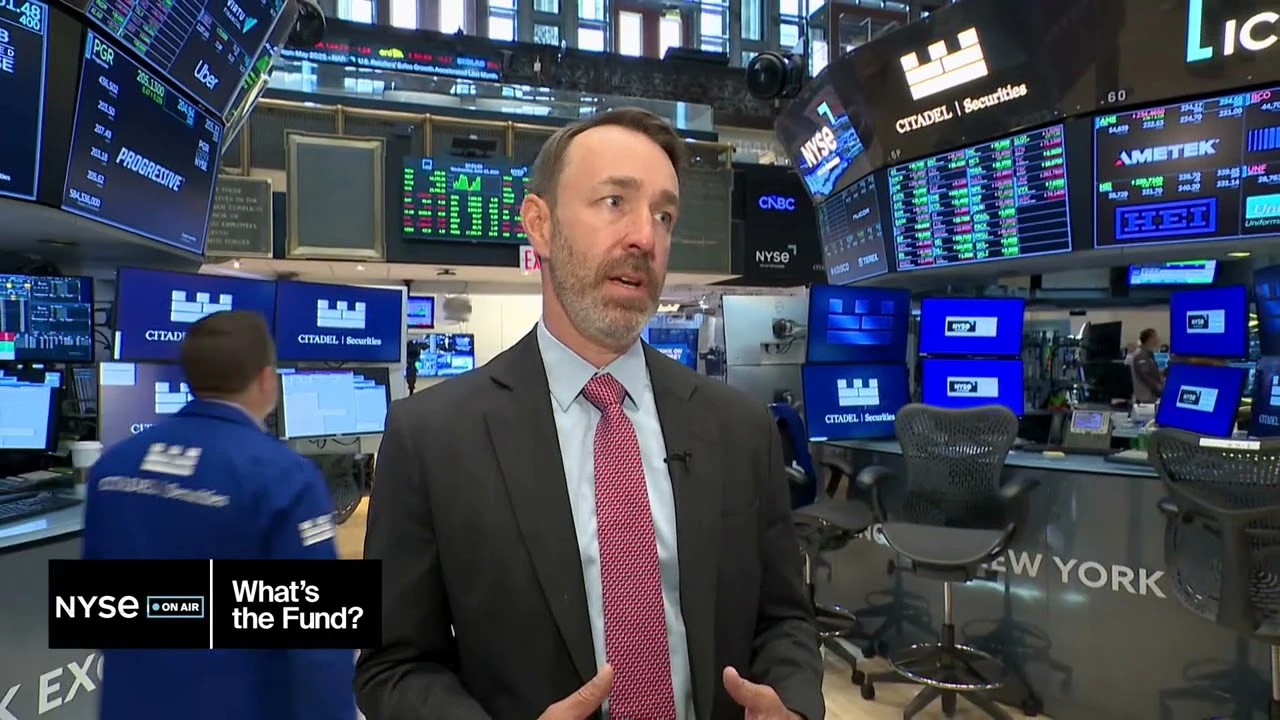
What's the Fund | Ocean Park Diversified Income ETF (DUKZ)
James St Aubin, Chief Investment Officer at Ocean Park Asset Management, discuss the DUKZ ETF, exposing investors to the whole spectrum of asset classes in the fixed income markets, through their rules-based process.

Browse all educational columns



Active Trader Report: Use of Leveraged & Inverse ETFs Way Up
Direxion partnered with Compound Insights and Vanda to explore what’s driving the evolution of active trading — and how active traders are using leveraged and inverse funds across equities, single stocks, commodities, and volatility.