Explore professionally built ETF model portfolios. Discover now →



A short primer to Hedge Fund ETFs
ETFs democratized hedge funds, allowing retail investors with smaller capital to gain access.


Keep up with what matters in ETFs
Get timely ETF insights, market trends, and top ideas straight to your inbox.
Your newsletter subscriptions with us are subject to ETF Central's Privacy Policy and Terms and Conditions.
Hedge funds are highly touted as “the most sophisticated investors,” with access to advanced investing and trading strategies, and are usually only available to individuals who have a high net worth. However, ETFs have democratized the space, allowing retail investors with smaller amounts of capital to gain access to hedge funds and their more complex strategies.
Like what you're reading?
Stay in the loop — get the latest ETF insights: trends, analysis, and expert picks.
What is a hedge fund?
Most people have heard of mutual funds – an institutional investor who collects capital from many individuals and invests on their behalf. This model works because not everyone has the time or expertise to make educated investing decisions and therefore hands the keys over to a professional investor who does have more time and expertise. In exchange, the professional money manager will collect a management fee from the individuals who provide the capital.
Now in most cases for a long-only mutual fund, they are attempting to beat a benchmark (usually an index of some sort, such as the S&P 500). Therefore, a mutual fund does not have to make money to be outperforming. For example, if the S&P 500’s value declines by 10%, however, a mutual fund whose benchmark is the S&P 500 only declines by 9%, the mutual fund has outperformed its benchmark by 1%. On the contrary, if the S&P 500 increases in value by 10%, however, the mutual fund only increases in value by 9%, it has underperformed by 1%.
Turning to hedge funds, they are very similar to mutual funds in that they collect money from people and invest on their behalf. The main difference is that they do not usually have a benchmark the way mutual funds do. Their main objective is to generate a return no matter what the market conditions. In this way, they are expected to perform even when the markets are down, hence the “hedge” in their name.
What are Hedge Fund ETFs?
As mentioned, hedge funds are typically only available to those with a high net worth since hedge funds use complex strategies that not everyone will understand. However, with the use of ETFs, more retail investors can gain access to the trading activity and investment strategies of traditional hedge funds.
A Hedge Fund ETF seeks to replicate trading and investment strategies of hedge funds, however, typically at a higher management fee given the complexity of the management.
Some common hedge fund strategies include:
- Long/short equity
- Market neutral
- Dedicated short bias
- Global macro
- Event-driven
- Merger arbitrage
- Distressed debt
It is important to consider that while retail investors have access to these advanced strategies, they may not want to use them due to the higher costs and higher risks/volatility associated with investing in Hedge Fund ETFs
Examples of Hedge Fund ETFs
There are a wide variety of hedge fund strategies available, and ETFs can either apply passive indexing to a hedge fund index or actively manage the ETF. The benefit of ETFs vs. mutual funds or actual hedge funds is their liquidity. Mutual funds only allow liquidation at the end of each trading day, and hedge funds may have lock-up periods for capital. However, ETFs allow investors to move in and out of positions throughout the trading day.
Some examples of hedge fund strategies are as follows:
RPAR (RPAR Risk Parity ETF)
- AUM: $1,260M
- Expense Ratio: 0.54%
- YTD performance: -19.8%
MNA (IQ Merger Arbitrage ETF)
- AUM: $533M
- Expense Ratio: 0.77%
- YTD performance: -3.5%
RLY (SPDR SSgA Multi-Asset Real Return ETF)
- AUM: $475M
- Expense Ratio: 0.50%
- YTD performance: +2.2%
DBMF (iMGP DBi Managed Futures Strategy ETF)
- AUM: $386M
- Expense Ratio: 0.85%
- YTD performance: +24.4%
Data for this article is as of July 5th, 2022.

Latest ETF News
See all ETF newsCould Water ETFs Be the Next AI Bottleneck Trade?


What is a Boomer Candy ETF?

ETF Comparison: NEOS Nasdaq-100 High Income ETF (QQQI) Versus Goldman Sachs Nasdaq-100 Premium Income ETF (GPIQ)





 Advantages of ETFs over Mutual Funds1/6
Lower Costs
In this guide, we'll explore the advantages of ETFs over mutual funds, giving you valuable insights into why ETFs have gained significant popularity among investors like yourself.
Leveraged ETFs: Unlocking the Potential for Amplified Returns1/6
Understanding Leveraged ETFs
Explore leveraged ETFs: potential for amplified returns & risks. 5 ETFs to consider across equities, commodities & fixed income.
What is a Leveraged ETF?1/6
Introducing Leveraged and Inverse ETFs
In this guide, we'll dive into the world of leveraged ETFs, exploring their definition, mechanics, potential risks, and rewards.
Recent educational content

ETF Trends
ETF Industry KPIs September 8, 2026
This week’s KPI data overview highlights key metrics and trends shaping the ETF landscape.

ETF Trends
ETF Industry KPIs August 31, 2026
This week’s KPI data overview highlights key metrics and trends shaping the ETF landscape.
ETF Trends
ETF Industry KPIs August 24, 2026
This week’s KPI data overview highlights key metrics and trends shaping the ETF landscape.
What’sTheFund
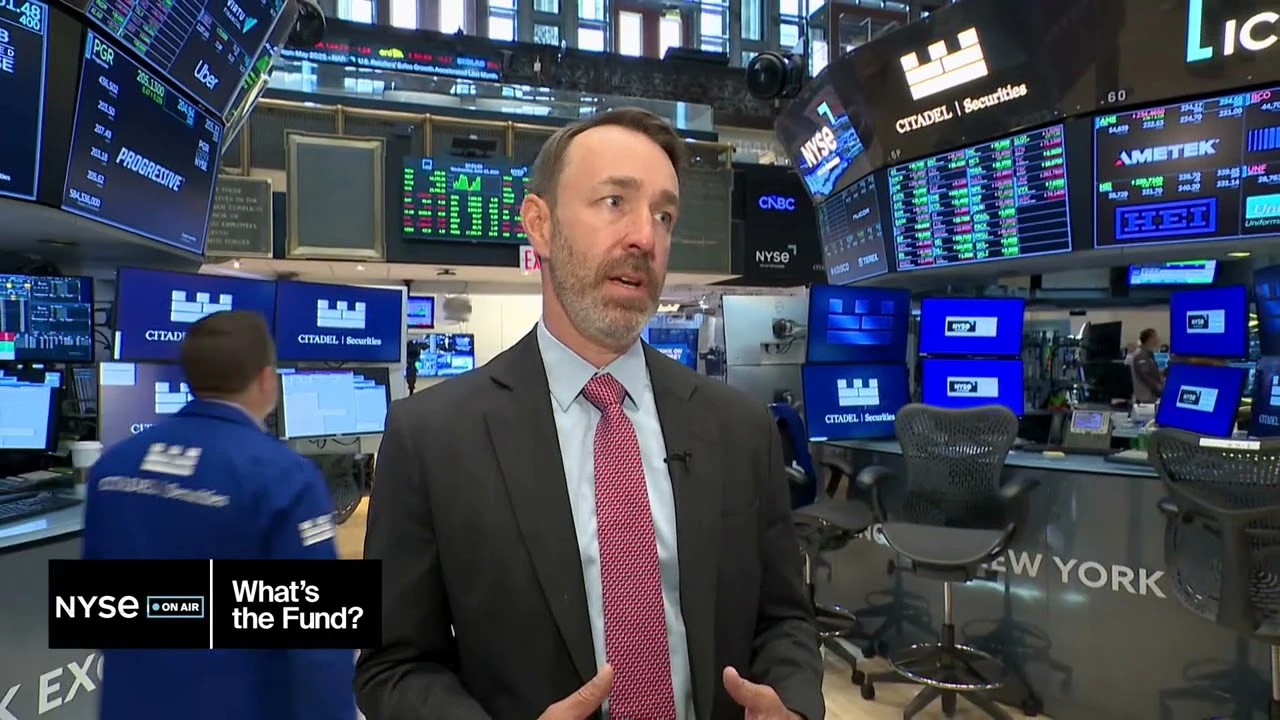
What's the Fund | Ocean Park Diversified Income ETF (DUKZ)
James St Aubin, Chief Investment Officer at Ocean Park Asset Management, discuss the DUKZ ETF, exposing investors to the whole spectrum of asset classes in the fixed income markets, through their rules-based process.

Browse all educational columns



Expert-Built ETF Portfolios, All in One Place
Don’t start from scratch. Discover ready-made ETF portfolios built by professionals to match different goals, timelines, and market views. Use them as inspiration or as a starting point for your own allocation.