ETF model portfolios designed for real investor needs. Discover →



Seek unique sources of excess return with Factor-Based ETFs
By using Factor-Based ETFs, investors can gain exposure to attractive factors efficiently and at a relatively low cost.


Keep up with what matters in ETFs
Get timely ETF insights, market trends, and top ideas straight to your inbox.
Your newsletter subscriptions with us are subject to ETF Central's Privacy Policy and Terms and Conditions.
Factor investing is an empirically proven method of investing which is based on seeking unique sources of excess return. This manifests itself in macroeconomic or style-based factors, which have become more popular and are attractive ETF investments for institutional and retail investors.
Like what you're reading?
Stay in the loop — get the latest ETF insights: trends, analysis, and expert picks.
What is factor-based investing?
Factor-based investing is an approach that targets specific return drivers across investments. Broadly speaking, there are two-factor types:
- Macroeconomic factors
- Style-based factors
Macroeconomic factors include the factors that drive return based on overall economic factors, such as:
- Economic growth – exposure to the economic cycle
- Interest rates – exposure to interest-rate movements
- Inflation – exposure to changes in price levels
- Credit – exposure to credit and default risk
- Emerging markets – exposure to developing economies
- Liquidity – exposure to illiquid assets
Style-based factors include the factors relating to companies, such as:
- Value – exposure to discounted stocks relative to their fundamentals
- Momentum – exposure to stocks with upward price movement trends
- Quality – exposure to companies with strong financial performance
- Growth – exposure to companies that are growing quickly
- Size – exposure to smaller companies
- Minimum volatility – exposure to stable and lower-risk stocks
Why invest in factors?
Factor investing is based upon academic research and is theoretically able to help:
- Improve portfolio diversification
- Generate above-average market returns
- Lower overall portfolio risk
In factor investing, investors will isolate specific factors that have been shown to generate returns historically.
The diversification provides a benefit in that at least one of the factors should outperform in any given market environment. For example, in an environment characterized by high uncertainty, minimum volatility, quality, and value style factors may have a higher likelihood of outperforming. However, momentum and growth stocks may have a higher probability of outperforming in an environment characterized by low uncertainty and high confidence.
Specific factors are isolated because of their historical track record of generating an excess return, that is, a return above the overall market. Combining this fact with the improved diversification of having exposure to multiple factors, factor investing is a highly viable investment strategy for improving overall returns and smoothing the volatility of returns.
Furthermore, by using ETFs, investors can gain exposure to attractive factors efficiently and at a relatively low cost. Factor investing utilizes security screens on essential metrics to invest in attractive securities. For example, a Value Factor ETF may screen for stocks with a lower price-to-earnings ratio or a lower price-to-book ratio. Another example is a Growth Factor ETF that may screen for stocks with higher revenue or higher earnings growth.
Examples of Factor-Based ETFs
Some examples of ETFs that have exposure to Factor-Based investing include:
VLUE (iShares MSCI USA Value Factor ETF)
Summary: Built to track the investment results of an index composed of U.S. large and mid-capitalization stocks with value characteristics and relatively low valuations.
AUM: $9,112M
Expense Ratio: 0.15%
YTD performance: -15.8%
VFMO (Vanguard U.S. Momentum Factor ETF)
Summary: Built to track the investment results of stocks with recent strong performance across a diverse mix of stocks, including small, mid, and large-capitalization stocks. Furthermore, stocks are diversified across different market sectors and industry groups.
AUM: $182M (as of April 30, 2022)
Expense Ratio: 0.13%
YTD performance: -17.6%
FQAL (Fidelity Quality Factor ETF)
Summary: Built to provide investment returns that relate to the performance of the Fidelity U.S. Quality Factor Index, which reflects the performance of large and mid-capitalization U.S. companies with a higher quality profile than the broader market.
AUM: $256M (as of May 31, 2022)
Expense Ratio: 0.29%
YTD performance: -21.5%
Data for this article is as of June 14, 2022.

Latest ETF News
See all ETF newsCould Water ETFs Be the Next AI Bottleneck Trade?


What is a Boomer Candy ETF?

ETF Comparison: NEOS Nasdaq-100 High Income ETF (QQQI) Versus Goldman Sachs Nasdaq-100 Premium Income ETF (GPIQ)





 Advantages of ETFs over Mutual Funds1/6
Lower Costs
In this guide, we'll explore the advantages of ETFs over mutual funds, giving you valuable insights into why ETFs have gained significant popularity among investors like yourself.
Leveraged ETFs: Unlocking the Potential for Amplified Returns1/6
Understanding Leveraged ETFs
Explore leveraged ETFs: potential for amplified returns & risks. 5 ETFs to consider across equities, commodities & fixed income.
What is a Leveraged ETF?1/6
Introducing Leveraged and Inverse ETFs
In this guide, we'll dive into the world of leveraged ETFs, exploring their definition, mechanics, potential risks, and rewards.
Recent educational content

ETF Trends
ETF Industry KPIs September 8, 2026
This week’s KPI data overview highlights key metrics and trends shaping the ETF landscape.

ETF Trends
ETF Industry KPIs August 31, 2026
This week’s KPI data overview highlights key metrics and trends shaping the ETF landscape.
ETF Trends
ETF Industry KPIs August 24, 2026
This week’s KPI data overview highlights key metrics and trends shaping the ETF landscape.
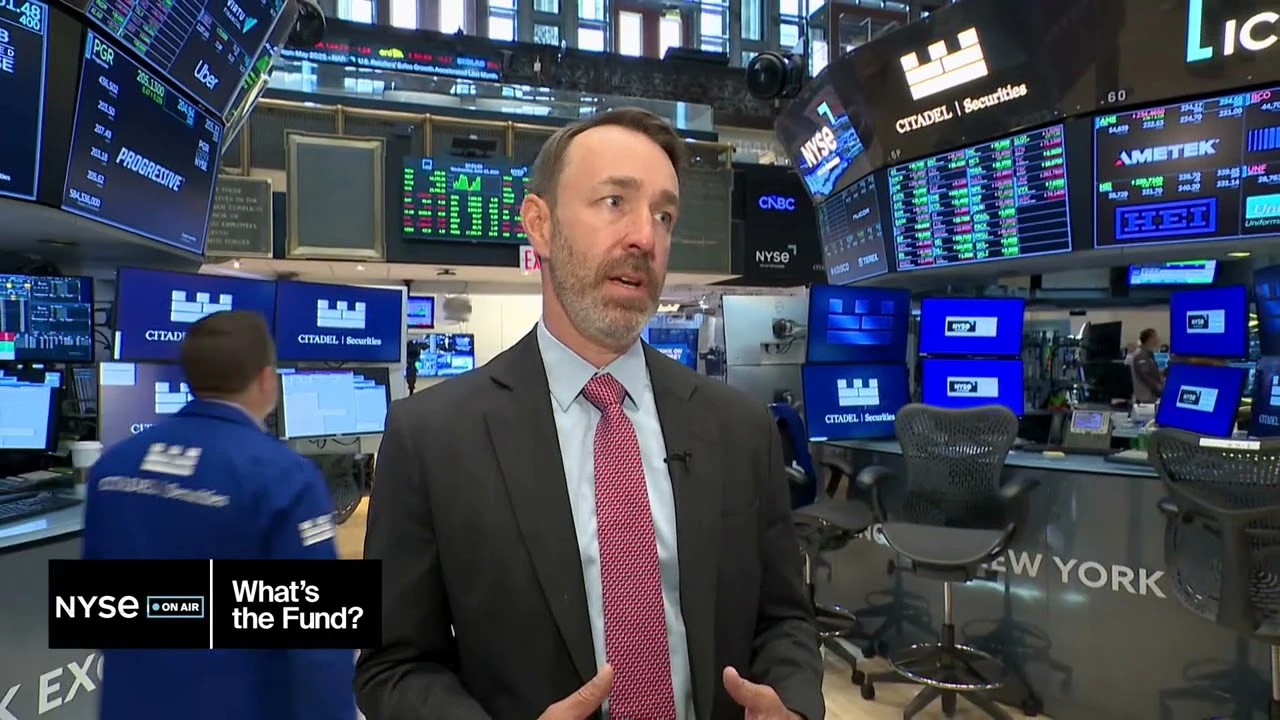
What’sTheFund
What's the Fund | Ocean Park Diversified Income ETF (DUKZ)
James St Aubin, Chief Investment Officer at Ocean Park Asset Management, discuss the DUKZ ETF, exposing investors to the whole spectrum of asset classes in the fixed income markets, through their rules-based process.

Browse all educational columns



Build and Analyze Your ETF Portfolio Like a Pro
Create your own ETF portfolio in minutes and instantly see allocations, exposures, performance, and risk. Visualize diversification across asset classes, regions, and sectors. Stress-test ideas, compare benchmarks, and refine your strategy with professional-grade analytics.