Create, analyze, optimize your ETF portfolio. Start now →



Sector ETFs that could outperform during a recession
Investors worried about a recession could consider tilting their portfolios via these defensive Sector ETFs.


Keep up with what matters in ETFs
Get timely ETF insights, market trends, and top ideas straight to your inbox.
Your newsletter subscriptions with us are subject to ETF Central's Privacy Policy and Terms and Conditions.
The U.S. Federal Reserve is attempting to engineer a "soft landing" for the economy in an attempt to rein in sky-high inflation without inducing a massive recession.
Recently, Consumer Price Index (CPI) inflation data showed prices jumping nearly 8.6% year-over-year for May, setting a new record over the last 40 years. Leading the surge was a major uptick in the price of energy, which is up 34.6% year-over-year, with prices at some pumps hitting over $7.25 per gallon (above the Federal minimum wage). Food prices also soared, albeit not by as much (10.1%).
Recently, the Fed hiked rates by an unprecedented 75 basis points (0.75%) after a previous series of 25- and 50-point hikes failed to dent inflation. Despite Chairman Jerome Powell's assertations, the question on everyone's minds is whether or not this increasingly hawkish monetary policy will induce a recession in the near future.
Like what you're reading?
Stay in the loop — get the latest ETF insights: trends, analysis, and expert picks.
Investing during a recession
A recession is generally defined as a general decline in economic activity. Indicators include a shrink in gross domestic product (GDP) for two consecutive calendar quarters, higher unemployment, and lower business earnings. Currently, real GDP decreased at an annual rate of 1.6% in Q1 2022. This less-than-positive sign has traders eagerly watching the next anticipated release from the Bureau of Economic Analysis (BEA).
Rate hikes can induce recessions as they curb consumer spending and make the cost of capital higher for businesses trying to pursue growth. The latter can translate into poorer revenues, margins, and earnings for companies, which tends to negatively impact their share prices. For growth stocks, a higher discount rate is applied to their valuations and future cash flows, which can severely lower their share price. This is why the technology sector, in particular, has been hard-hit lately.
However, not all stock market sectors are negatively impacted. More durable, defensive ones like utilities, healthcare, and consumer staples tend to weather recessions better. These sectors see a lesser fall-off in consumer spending thanks to the more essential nature of their products and services. Many also operate in heavily regulated, oligopolistic markets and have wider economic moats thanks to this.
Finally, many of these stocks in these sectors pay strong dividends and have a history of maintaining payments even during economic downturns, which can help offset losses during bear or sideways trading markets. Finally, these sectors tend to have a lower beta, which is a measure of sensitivity and volatility relative to the broader market (typically the S&P 500 Index).
Investors looking to tilt their portfolios towards these sectors can use the ETF Central screener to find a list of ETFs tracking them. I've provided a list of potential options below and a breakdown of their composition, fees, and strategy.
U.S. Healthcare ETFs
Health Sector Select Sector SPDR Fund (XLV)
- Strategy: Passively managed indexing
- Composition: 64 large-cap U.S. equities
- Expense ratio: 0.10%
- Distribution Yield: 1.49%
Vanguard Health Care ETF (VHT)
- Strategy: Passively managed indexing
- Composition: 465 large-cap U.S. equities
- Expense ratio: 0.10%
- Distribution Yield: 1.35%
U.S. Utilities ETFs
Utilities Sector Select Sector SPDR Fund (XLU)
- Strategy: Passively managed indexing
- Composition: 29 large-cap U.S. equities
- Expense ratio: 0.10%
- Distribution Yield: 2.92%
iShares U.S. Utilities Index ETF (IDU)
- Strategy: Passively managed indexing
- Composition: 44 large-cap U.S. equities
- Expense ratio: 0.41%
- Distribution Yield: 2.28%
U.S. Consumer Staples ETFs
Consumer Staples Sector Select Sector SPDR Fund (XLP)
- Strategy: Passively managed indexing
- Composition: 33 large-cap U.S. equities
- Expense ratio: 0.10%
- Distribution Yield: 2.48%
Invesco S&P 500 Equal Weight Consumer Staples ETF (RHS)
- Strategy: Passively managed indexing
- Composition: 34 large-cap U.S. equities
- Expense ratio: 0.40%
- Distribution Yield: 2.41%
Sector tilts – the final word
Investors should understand that a sector tilt is inherently an active management strategy, regardless of whether they implement it via stock-picking or index ETFs.
By tilting a portfolio toward a particular sector(s) beyond their market-cap weight, investors are making an active bet on that sector outperforming in the future. This depends on an investor’s ability to accurately forecast macro-economic events, which is difficult even for professional fund managers. Over long periods, this approach can underperform a passive buy-and-hold strategy using broad-market index funds.
Investors who do decide on a sector tilt must ensure they do sufficient research, have a well-thought-out investment thesis, and stick to their strategy even if it underperforms initially.

Latest ETF News
See all ETF newsCould Water ETFs Be the Next AI Bottleneck Trade?

What is a Boomer Candy ETF?

ETF Comparison: NEOS Nasdaq-100 High Income ETF (QQQI) Versus Goldman Sachs Nasdaq-100 Premium Income ETF (GPIQ)





 Advantages of ETFs over Mutual Funds1/6
Lower Costs
In this guide, we'll explore the advantages of ETFs over mutual funds, giving you valuable insights into why ETFs have gained significant popularity among investors like yourself.
Leveraged ETFs: Unlocking the Potential for Amplified Returns1/6
Understanding Leveraged ETFs
Explore leveraged ETFs: potential for amplified returns & risks. 5 ETFs to consider across equities, commodities & fixed income.
What is a Leveraged ETF?1/6
Introducing Leveraged and Inverse ETFs
In this guide, we'll dive into the world of leveraged ETFs, exploring their definition, mechanics, potential risks, and rewards.
Recent educational content

ETF Trends
ETF Industry KPIs September 8, 2026
This week’s KPI data overview highlights key metrics and trends shaping the ETF landscape.

ETF Trends
ETF Industry KPIs August 31, 2026
This week’s KPI data overview highlights key metrics and trends shaping the ETF landscape.
ETF Trends
ETF Industry KPIs August 24, 2026
This week’s KPI data overview highlights key metrics and trends shaping the ETF landscape.
What’sTheFund
What's the Fund | Ocean Park Diversified Income ETF (DUKZ)
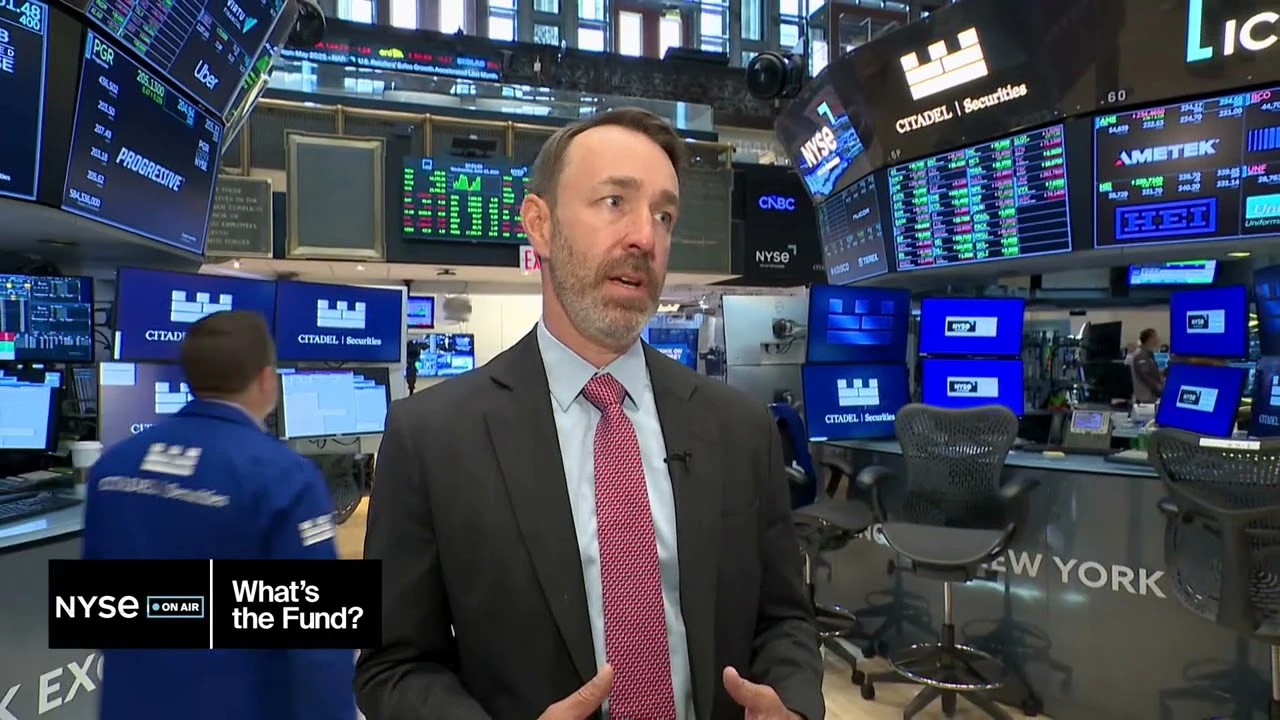
James St Aubin, Chief Investment Officer at Ocean Park Asset Management, discuss the DUKZ ETF, exposing investors to the whole spectrum of asset classes in the fixed income markets, through their rules-based process.

Browse all educational columns



Have you tried our ETF Compare tool?
Compare ETFs like a pro. Analyze fees, performance, exposure & holdings side-by-side.