NYSE CRTR Economy Event Watch the replay →



RUK Funds Launches Strategic Growth ETF Targeting Factor-Driven Outperformance
RUK Funds is stepping into U.S. equities with a rules-based ETF designed to challenge traditional large-cap exposure.

Keep up with what matters in ETFs
Get timely ETF insights, market trends, and top ideas straight to your inbox.
Your newsletter subscriptions with us are subject to ETF Central's Privacy Policy and Terms and Conditions.
RUK Funds is making its ETF debut with the launch of the Ruk Strategic Growth ETF (RKSG), stepping into a highly competitive U.S. equity space with a differentiated, rules-based approach.
Built to outperform traditional large-cap benchmarks over a full market cycle, RKSG is powered by a proprietary multi-factor index that systematically blends growth and value signals.
The ETF Industry Is Evolving Fast
From AI infrastructure to active strategies, the ETF landscape is shifting. Share your perspective in the 7th Annual Global ETF Survey and get exclusive early access to the final report.
How the RKSG ETF Works
RKSG is built on the Ruk Strategic Growth Index, a proprietary benchmark developed by Ruk Indexes LLC and calculated by VettaFi, using a fully systematic, data-driven process.
The strategy starts with the 1,000 largest U.S.-listed companies, creating a broad and liquid opportunity set, while excluding ADRs to maintain consistency.
From there, each company is put through a rigorous multi-factor screen that blends growth and value signals.
On the growth side, the model looks for forward momentum, evaluating price trends, revenue expansion, valuation metrics, profitability, and asset growth to identify companies with strong upside potential.
At the same time, the value framework anchors the strategy in fundamentals, assessing cash flow efficiency and EBITDA relative to enterprise value to ensure companies are not just growing, but doing so efficiently.
These insights are then combined into a single composite score, with a deliberate tilt toward higher-growth names.
The final step is where the strategy differentiates further.
A proprietary weighting model integrates volatility controls, aiming to capture growth while smoothing the ride through different market environments.
Portfolio Construction and Sector Exposure
RKSG follows a passive replication approach, investing at least 80% of its assets in index constituents, while retaining the flexibility to use representative sampling to enhance efficiency when needed.
The portfolio closely tracks the index’s sector and industry exposures, with a notable tilt toward Information Technology, which represents nearly 38% of the index, reflecting the sector’s leadership among high-growth large-cap equities.
At launch, the fund holds 233 securities, led by NVIDIA (12.8%), Apple (9.3%), and Alphabet (8.1%), alongside Microsoft and Broadcom. Other top names include Johnson & Johnson, Merck, and Lockheed Martin.
The fund trades on the NYSE and has expense ratio of 0.50%
The Investment Case: Why Consider RKSG?
RKSG provides a rules-based approach to U.S. large-cap investing, systematically screening the 1,000 largest listed companies across a blend of growth and value factors, removing the behavioral biases often seen in traditional stock selection.
Its multi-factor framework pairs disciplined screening with a volatility-aware portfolio construction process, designed to navigate different phases of the economic cycle.
The result is a consistent, data-driven strategy focused on high-quality companies, offering investors a compelling option for long-term growth and diversified large-cap exposure.
About RUK Funds
RUK Funds is an emerging ETF company and index developer founded by practitioners with deep expertise in quantitative research, data engineering, and financial product development dedicated to bringing differentiated, rules-based factor strategies to market. RUK Funds is built on the belief that disciplined, systematic investing should be accessible to all investors.
Our approach combines rigorous index construction with a long-term vision for factor-based investing, grounded in established financial models and researched investment principles. Looking ahead, we are committed to expanding our suite of ETFs designed for long-term relevance, implementing strategies built to deliver consistent, transparent exposure across market cycles to align with the evolving needs of today's investors.
Please note this article is for information purposes only and does not in any way constitute investment advice. It is essential that you seek advice from a registered financial professional prior to making any investment decision.
Segments
See all
No specific market segments were tagged
Mentioned ETFs
No specific ETFs were tagged
Further reading








 Advantages of ETFs over Mutual Funds1/6
Lower Costs
In this guide, we'll explore the advantages of ETFs over mutual funds, giving you valuable insights into why ETFs have gained significant popularity among investors like yourself.
Leveraged ETFs: Unlocking the Potential for Amplified Returns1/6
Understanding Leveraged ETFs
Explore leveraged ETFs: potential for amplified returns & risks. 5 ETFs to consider across equities, commodities & fixed income.
What is a Leveraged ETF?1/6
Introducing Leveraged and Inverse ETFs
In this guide, we'll dive into the world of leveraged ETFs, exploring their definition, mechanics, potential risks, and rewards.
Recent educational content
Asset TV
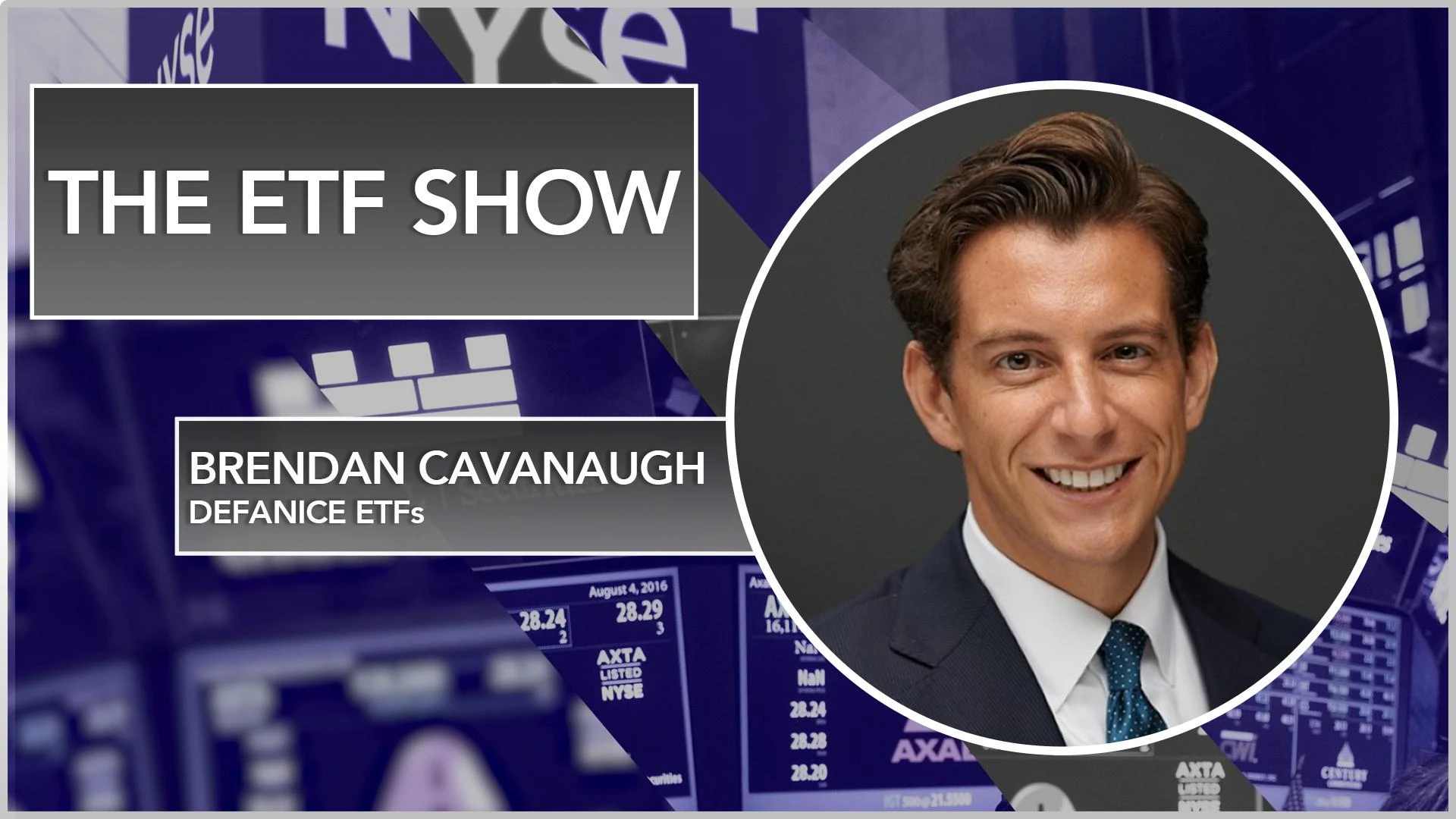
The ETF Show - New Autism-Impact ETF Launched
Defiance ETFs has launched the first ETF, $ASD, focused on the autism ecosystem, investing in companies that provide services, products, and research related to autism and neurodivergence.


ETF Trends
ETF Industry KPIs June 1, 2026
The ETF Industry saw 22 New Launches, 1 Ticker Change and 1 closure last week.

ETF Trends
ETF Industry KPIs May 20, 2026
The ETF Industry saw 44 New Launches, 3 Mutual Fund Conversions and 9 closures last week.
Asset TV
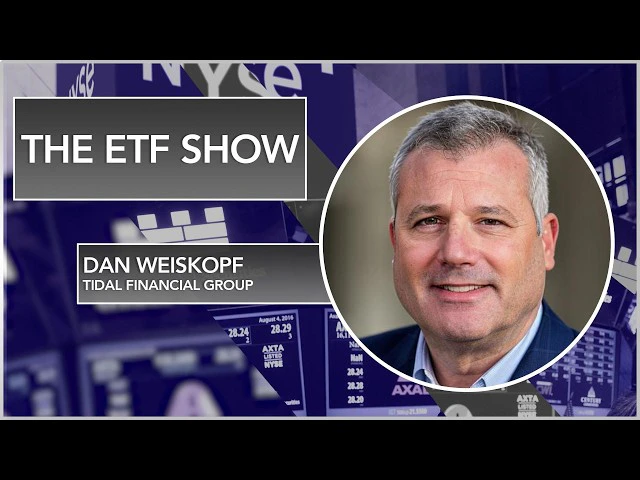
The ETF Show - Politics Becomes Investable Trade through ETFs
Dan Weiskopf, Senior Portfolio Manager at Tidal Financial Group spoke with the ETF Show about Subversive ETFs that help investors trade like politicians.
Browse all educational columns



Active Trader Report: Use of Leveraged & Inverse ETFs Way Up
Direxion partnered with Compound Insights and Vanda to explore what’s driving the evolution of active trading — and how active traders are using leveraged and inverse funds across equities, single stocks, commodities, and volatility.