Keep tabs on your favorite ETFs with a personalized weekly tracker. Create a Watchlist now →



Rescheduling Is Real: What the DOJ’s Cannabis Order Means for MSOS Investors and the Broader Sector
Federal cannabis rescheduling may mark the biggest structural shift for cannabis ETFs in years, improving taxes, banking access, and investment potential.

Keep up with what matters in ETFs
Get timely ETF insights, market trends, and top ideas straight to your inbox.
Your newsletter subscriptions with us are subject to ETF Central's Privacy Policy and Terms and Conditions.
The main constraint on U.S. cannabis has not been demand, revenue, or workforce scale, it was federal policy. Under Schedule I of the Controlled Substances Act (CSA), substances are defined as having no accepted medical use and a high potential for abuse. This classification limited scientific research and prevented most institutional capital from investing in it.
On April 23, 2026, the Acting Attorney General Todd Blanche and the Drug Enforcement Agency (DEA) issued a final order, effective immediately, moving FDA-approved cannabis drugs and state-licensed medical cannabis to Schedule III under the CSA. Schedule III includes substances with accepted medical use and a lower potential for abuse, subject to regulation and prescription oversight, following the Executive Order President Donald J. Trump signed on December 18, 2025.
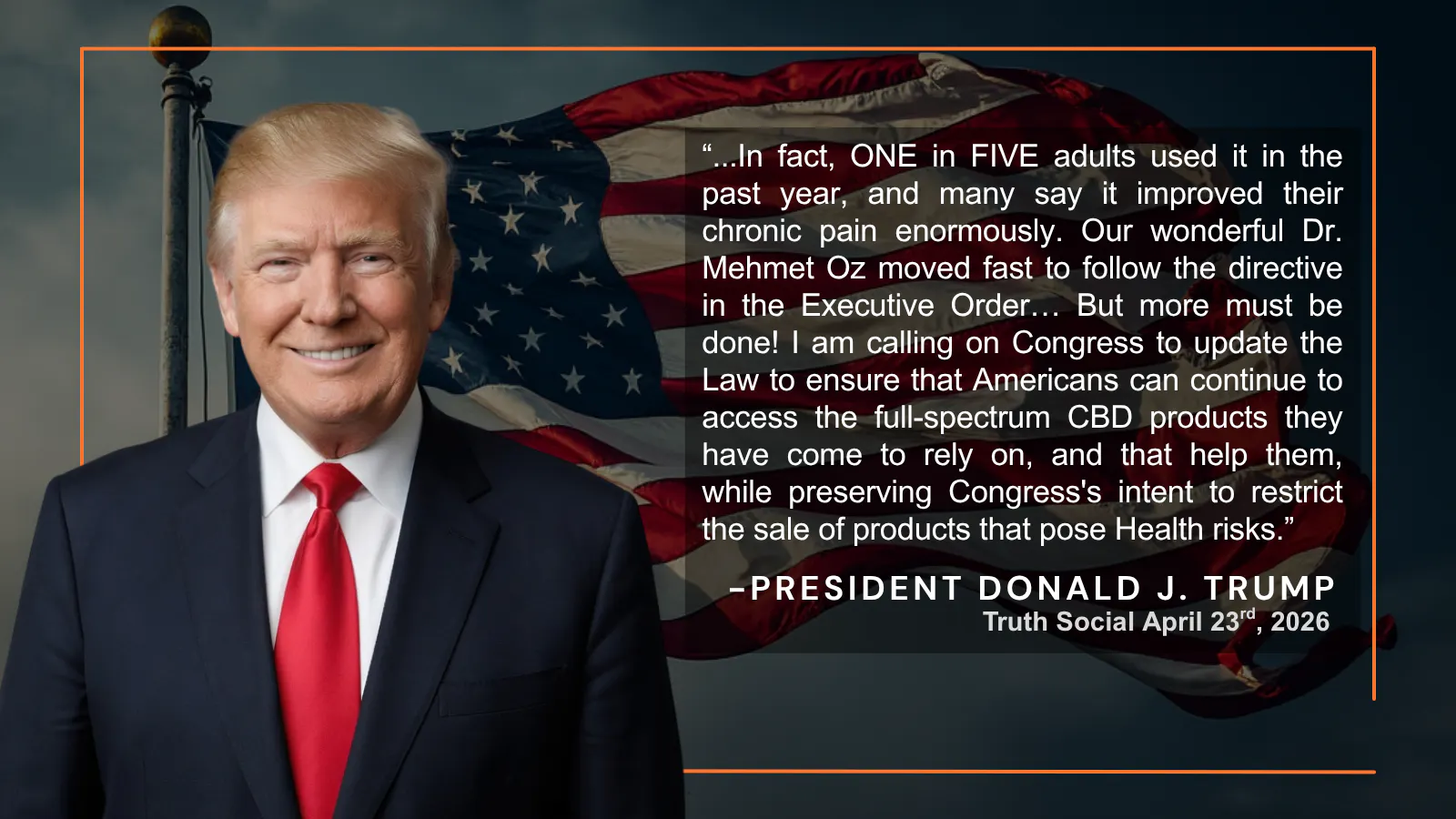
At the same time, the Department of Justice (DOJ) and the DEA scheduled an expedited administrative hearing beginning June 29, 2026, to evaluate full Schedule III treatment for all cannabis, including adult-use.
Financial markets reacted quickly, trading volumes spiked sharply on April 22nd and 23rd before settling back to above-average levels on April 24th. State licensed muli-state operators (MSOs) displayed expected volatility (“buy the rumor-sell the news”) but closed the week higher. U.S. cannabis companies performance was more positively impacted by the rescheduling news and Canadian names with U.S. exposure, like Tilray and Canopy, followed similar patterns.
Like what you're reading?
Stay in the loop — get the latest ETF insights: trends, analysis, and expert picks.
Immediate 280E Relief for Qualifying Operators
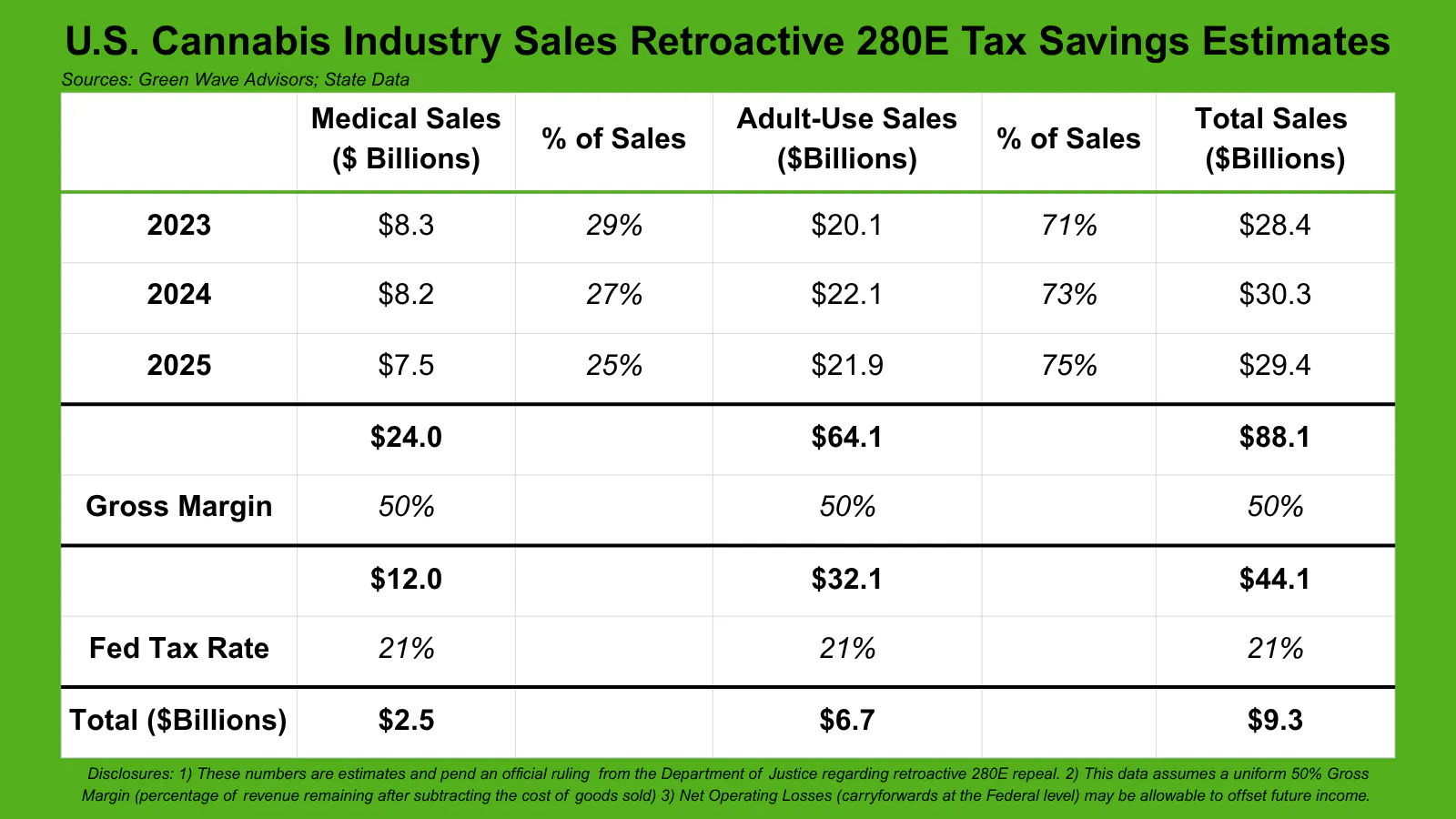
The most immediate impact from cannabis’s rescheduling is on Section 280E of IRS Tax Code. With Schedule III status, state-licensed medical operators are no longer subject to the rule that disallowed standard business deductions and pushed their effective tax rates above 70%.
The Acting Attorney General also directed the Treasury Department to explore retroactive relief. While IRS guidance is still pending, the direction is clear and already improving cash flow expectations for compliant medicinal operators.
Operators with both medical and adult-use state licenses will face added accounting complexity, but this change allows capital to be retained for growth rather than lost to punitive taxation.
Banking, Uplisting, and Capital Access: Progress Without Full Resolution
Schedule III does not fully resolve banking. Adult-use cannabis remains in Schedule I, and the Bank Secrecy Act and the Anti-Money Laundering Act requirements still apply. However, risk perception is shifting. Financial institutions are expected to gradually expand services to cannabis companies as non-cash payment infrastructure continues to grow. Projections, from Whitney Economics, suggest roughly 42% of transactions could move off cash rails in 2026, adding much needed safety to those working in cannabis businesses.
For uplisting, Schedule III removes a key federal barrier for plant-touching medical operators, who have only been able to list on Canadian or OTC exchanges. This increases the likelihood of policy updates from NYSE and Nasdaq, which could improve liquidity, index inclusion, and access for retirement vehicles. Some cannabis operators are already positioning for this transition.
Institutional mandates that previously barred cannabis exposure based on classification now have a clearer path forward for medical cannabis companies.
Hemp Convergence
Regulation of intoxicating hemp products is tightening. The Continuing Appropriations and Extensions Act of 2026 shifts the definition of hemp to total THC concentration, sets stricter limits, and places many delta-8, THCA, and high-potency products back under Schedule I treatment starting in November 2026.
States are already enforcing these changes, pushing sales back into licensed channels.
For regulated MSOs, this reduces unregulated competition, potential health risks for consumers, supports pricing power, and accelerates consolidation across the industry, rewarding licensed cannabis businesses that have shown discipline under strict rules and regulations.
State-Level Ripples and Broader Economic Scale
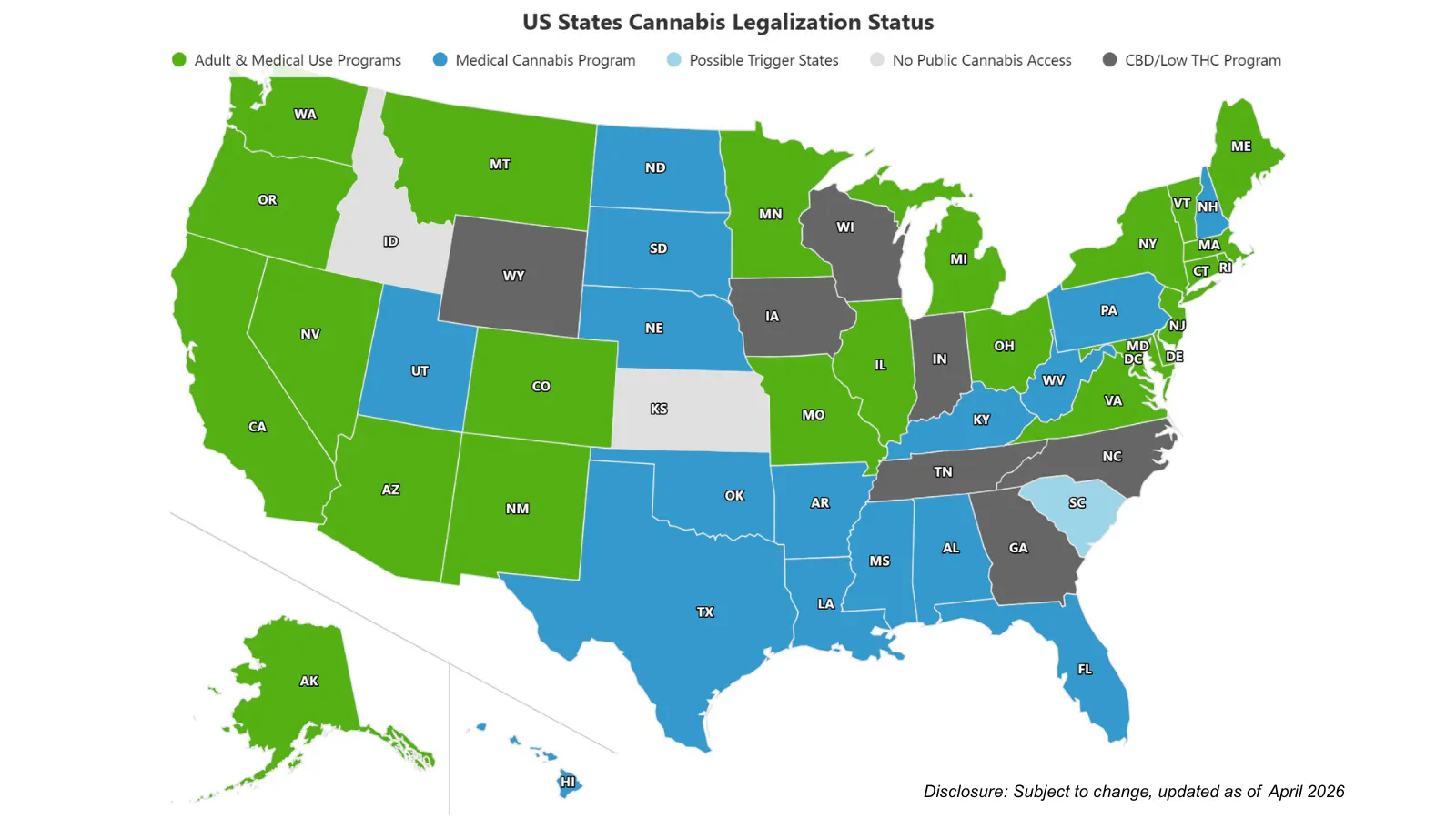
The federal rescheduling of medical cannabis validates the 40+ existing state medical programs rather than disrupting them and allows certain states to have the option to enact trigger laws, designed for states to automatically reflect the changes made in federal laws. South Carolina may look at activating its 1980 Therapeutic Research Act, and other states are watching closely and likely to follow.
The U.S. cannabis industry currently supports about 425,000 jobs, per National Law Review, and generates tens of billions in revenue and tax receipts. With tax relief, better capital access, and tighter hemp regulation, growth projections toward 800,000 jobs by 2029 appear more grounded.
The Investment Case
While medical cannabis was moved to Schedule III, Adult-use cannabis remains in Schedule I. Operators with both medical and adult-use licenses will face structural complexity when separating their operations. The outcome of the DEA’s June 29th hearing, along with any related legal challenges, will be particularly important for the adult-use segment of the industry.
In the near term, the benefits are more direct for medical-focused and operationally disciplined companies with strong compliance infrastructure.
For investors, an actively managed ETF structure may provide a more flexible way to navigate these dynamics. Active management allows for adjustments to portfolio exposures as regulatory developments unfold, differences emerge across state markets, and company-specific risks evolve. It may also potentially help manage concentration risk and reduce reliance on any single issuer within a still-developing industry.
Near-term risks remain, including litigation, the timing of IRS guidance, and lingering state and illicit market dynamics, but the intermediate-term outlook has improved dramatically.
Markets appear to be treating rescheduling as the foundation for a gradual structural shift rather than a short-term catalyst. Execution and fundamentals are likely to matter more than policy speculation going forward.
Expectations for Policy Change
The federal government has formally acknowledged medical cannabis has accepted uses and belongs in Schedule III, aligning policy more closely with existing state frameworks.
The combination of 280E tax relief, a defined path toward broader rescheduling for adult-use, and tighter hemp regulation may help the industry move across a major barrier that has limited institutional participation.
The punitive tax burden, cash-heavy operating drag, and limited exchange access were all symptoms of the old policy, which has now made one of the biggest shifts in decades.
Rescheduling creates a more investable landscape, where operational performance is likely to drive outcomes more than regulatory uncertainty. The June 29th hearing will provide further clarity on the path for adult-use cannabis.
The opinions expressed in this publication are those of the authors and are subject to change. They do not purport to reflect the opinions or views of ETF Central or its members. ETF Central does not guarantee the accuracy, completeness, or reliability of the information provided.
Sources
- U.S. Department of Justice / DEA Final Order. April 22, 2026. Published April 23, 2026.
- Foley Hoag LLP. "DOJ Immediately Reschedules State-Licensed Medical Cannabis to Schedule III." April 23, 2026.
- Morningstar Direct
- Duane Morris Cannabis Industry. "Relief, Finally? DEA Issues Order." April 23, 2026.
- Whitney Economics. "Cannabis Industry Economic Analysis: Section 280E Impact." April 2026.
- CNN Politics. "Justice Department Reclassifies State-Licensed Medical Marijuana." April 23, 2026.
- Pillsbury Law. "The Times, They Are a-Changin': Maximizing Tax Benefits from Cannabis Rescheduling."
- Cannabis Business Times. "Cannabis Rescheduling Won't Solve Industry Banking Problems."
- Arent, Fox, Schiff. "Top Issues in the Cannabis Industry for 2026." February 17, 2026.
- CBS News. "Justice Department Eases Restrictions on Some Marijuana Products." April 23, 2026.
- Flowhub / Vangst. "2026 Cannabis Industry Statistics." February 2026.
- Cannabiz Team. "U.S. Cannabis Employment Projections." 2026.
- Vicente LLP. "Cannabis Rescheduling Explained." Updated April 2026.
- CNBC. "Trump Administration Moves to Reclassify Cannabis in Major Shift." April 23, 2026.
- Cannabis Regulations. "Schedule III and Cannabis Banking." March 19, 2026.
- NPR. "Marijuana Rescheduling: Trump Eases Rules on Medical Cannabis." April 23, 2026.
- High Times. "Cannabis Has Been Rescheduled to Schedule III." April 23, 2026.
- GreenWave Advisors. "Cannabis as a Schedule III Drug: Investor Class." 2025-2026.
- High Rock Accounting / Melissa Diaz, CPA. "280E Tax Marijuana Rescheduling: Critical 2026 DOJ Impact Guide." April 23, 2026.
- Verdant Strategies. "Cannabis Rescheduling: What This Means for the Industry." December 2025.
- Chapters Data. "Cannabis Banking 2026: Dispensary Options Guide."
- Herb.co. "The SAFE Banking Act Explained." March 5, 2026.
- Abrigo. "Marijuana Reclassification: What It Means for Financial Institutions." March 11, 2026.
- Fresh from Florida. "The SAFE Banking Act Explained."
- STS Capital. "Trump's Executive Order Rescheduling Cannabis." December 23, 2025.
- Cannabis Business Times. "Cannabis Industry Outlook: 2026."
- National Law Review. "Cannabis and Employment Law: The Year Ahead in 2026." January 12, 2026.
Segments
See all
Mentioned ETFs
No specific ETFs were tagged
Further reading
Latest ETF News
See all ETF newsHow Much ETF Infrastructure Do You Really Need?


Are ETFs Getting Too Complicated? Not Necessarily, But Complexity Has a Cost

Form 4 Has 20 Transaction Codes. None Say "Section 351 ETF Swap"


Who Really Owns a White-Label ETF?

What If a Futures-Based ETF Never Had to Roll Again?

How Do You Build a Winning ETF Business?


 Advantages of ETFs over Mutual Funds1/6
Lower Costs
In this guide, we'll explore the advantages of ETFs over mutual funds, giving you valuable insights into why ETFs have gained significant popularity among investors like yourself.
Leveraged ETFs: Unlocking the Potential for Amplified Returns1/6
Understanding Leveraged ETFs
Explore leveraged ETFs: potential for amplified returns & risks. 5 ETFs to consider across equities, commodities & fixed income.
What is a Leveraged ETF?1/6
Introducing Leveraged and Inverse ETFs
In this guide, we'll dive into the world of leveraged ETFs, exploring their definition, mechanics, potential risks, and rewards.
Recent educational content

ETF Trends
ETF Industry KPIs September 28, 2026
This week’s KPI data overview highlights key metrics and trends shaping the ETF landscape.

ETF Trends
ETF Industry KPIs September 22, 2026
This week’s KPI data overview highlights key metrics and trends shaping the ETF landscape.

First Look ETF
First Look ETF: Income, Corporate Arbitrage, and Growth and Value Investing
First Look ETF September 2026: iCapital, Mast Investments and North Square unpack new ETFs targeting monthly income, merger arbitrage and complementary growth and value exposure.

ETF Trends
ETF Industry KPIs September 14, 2026
This week’s KPI data overview highlights key metrics and trends shaping the ETF landscape.
Browse all educational columns



Expert-Built ETF Portfolios, All in One Place
Don’t start from scratch. Discover ready-made ETF portfolios built by professionals to match different goals, timelines, and market views. Use them as inspiration or as a starting point for your own allocation.