Open Now: The Global ETF Survey Take the Survey →



REIT Q2 2024 Earnings Season: Winners and Losers
David Auerbach from Hoya Capital reviews the winners and losers of the REIT earnings season.


Keep up with what matters in ETFs
Get timely ETF insights, market trends, and top ideas straight to your inbox.
Your newsletter subscriptions with us are subject to ETF Central's Privacy Policy and Terms and Conditions.
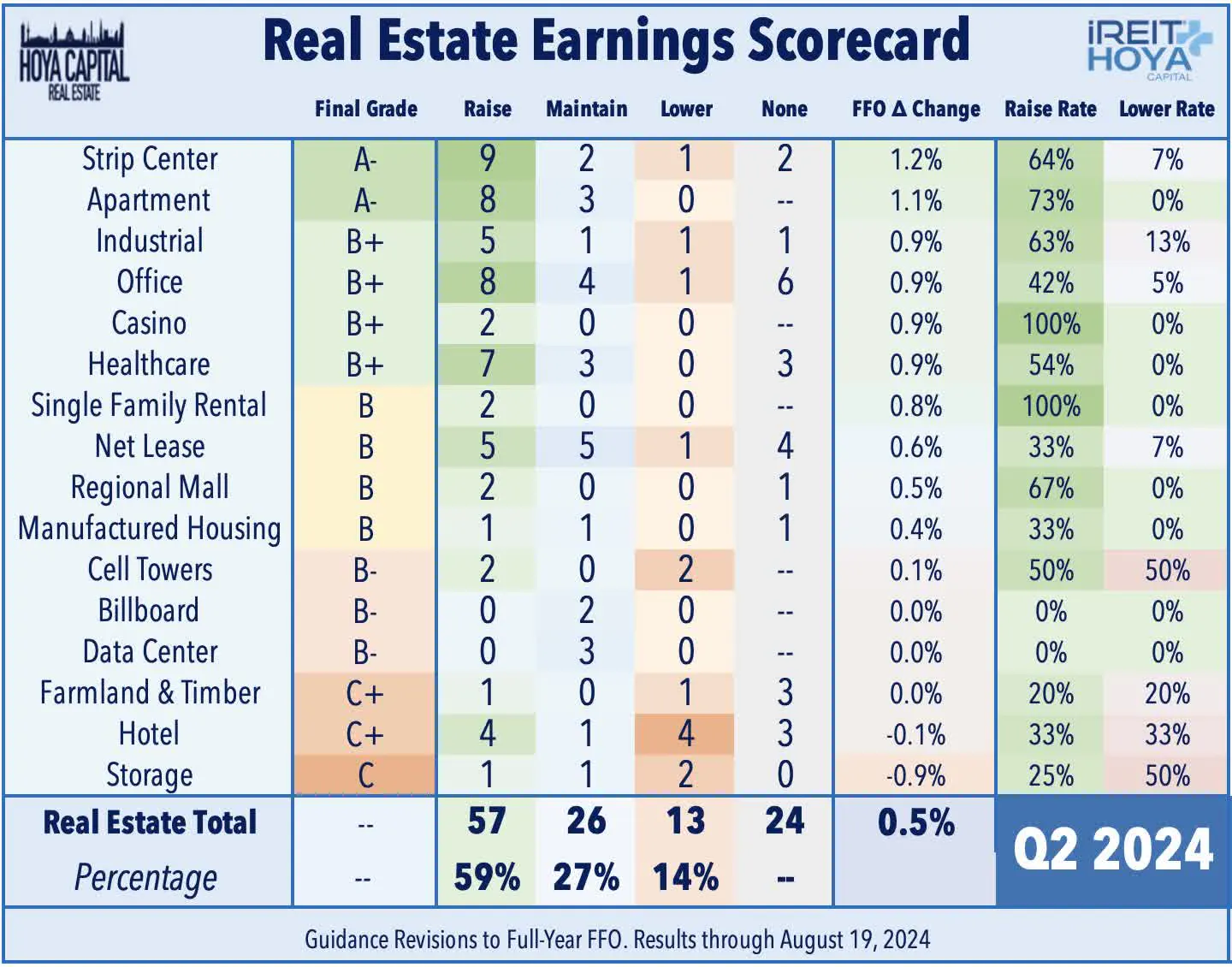
In our Earnings Recap report last week, we presented a comprehensive scorecard for each of the major REIT property sectors, highlighting some incremental positives and negatives we observed this earnings season. As mentioned, in an otherwise underwhelming earnings season across the broader equity market, real estate earnings results exceeded expectations, contributing to a broader REIT rebound that was further supported by a long-awaited decline in benchmark interest rates. Among the 96 equity REITs that provided full-year FFO guidance, 57 (59%) raised their outlook, while 13 (14%) lowered it—significantly higher than the historical second-quarter average "raise rate" of 40-45%. In comparison, FactSet reports that 53% of the 272 S&P 500 companies that provided Earnings Per Share ("EPS") guidance issued a positive revision. During the first-quarter earnings season, 41% of REITs raised their full-year FFO outlook, while 11% lowered their guidance.
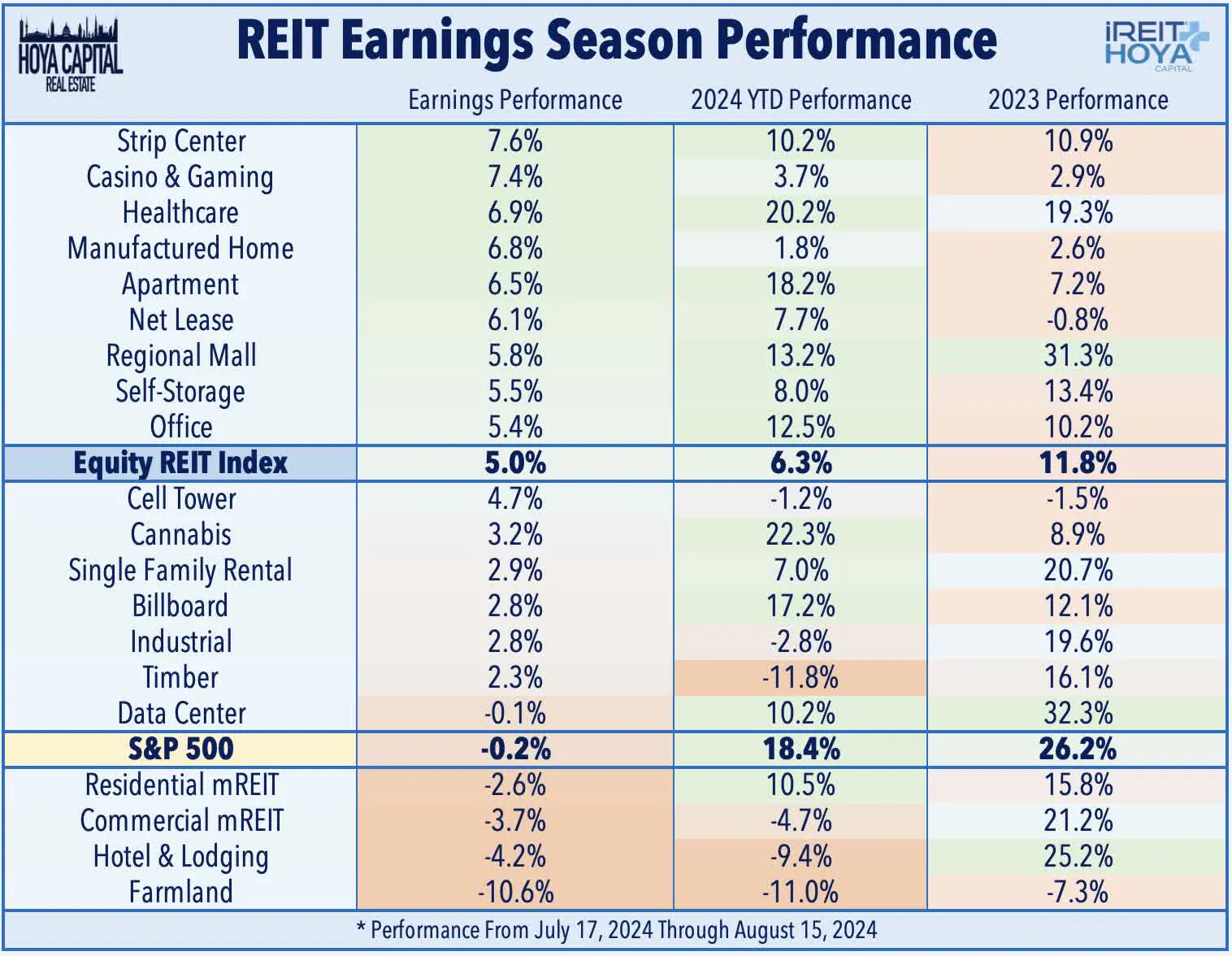
Since the earnings season began in mid-July, REITs have significantly outperformed the broader equity market. The Equity REIT Index (VNQ) has risen by 5.0% during this period, surpassing the S&P 500's return of -0.2%, a period that also saw the benchmark 10-Year Treasury Yield fall by approximately 50 basis points from 4.30% to 3.80%. Generally, price performance across various property sectors has aligned with the quality of earnings reports: Strip Center REITs have led the gains, followed by Casino, Manufactured Housing, and Apartment REITs. On the other hand, Farmland REITs have lagged with double-digit percentage declines, followed by Hotel, Mortgage, and Data Center REITs. Self-storage REITs were a notable exception, outperforming the REIT Index despite disappointing results. Conversely, Industrial REITs underperformed despite delivering surprisingly strong results.
The ETF Industry Is Evolving Fast
From AI infrastructure to active strategies, the ETF landscape is shifting. Share your perspective in the 7th Annual Global ETF Survey and get exclusive early access to the final report.
Winners of REIT Earnings Season
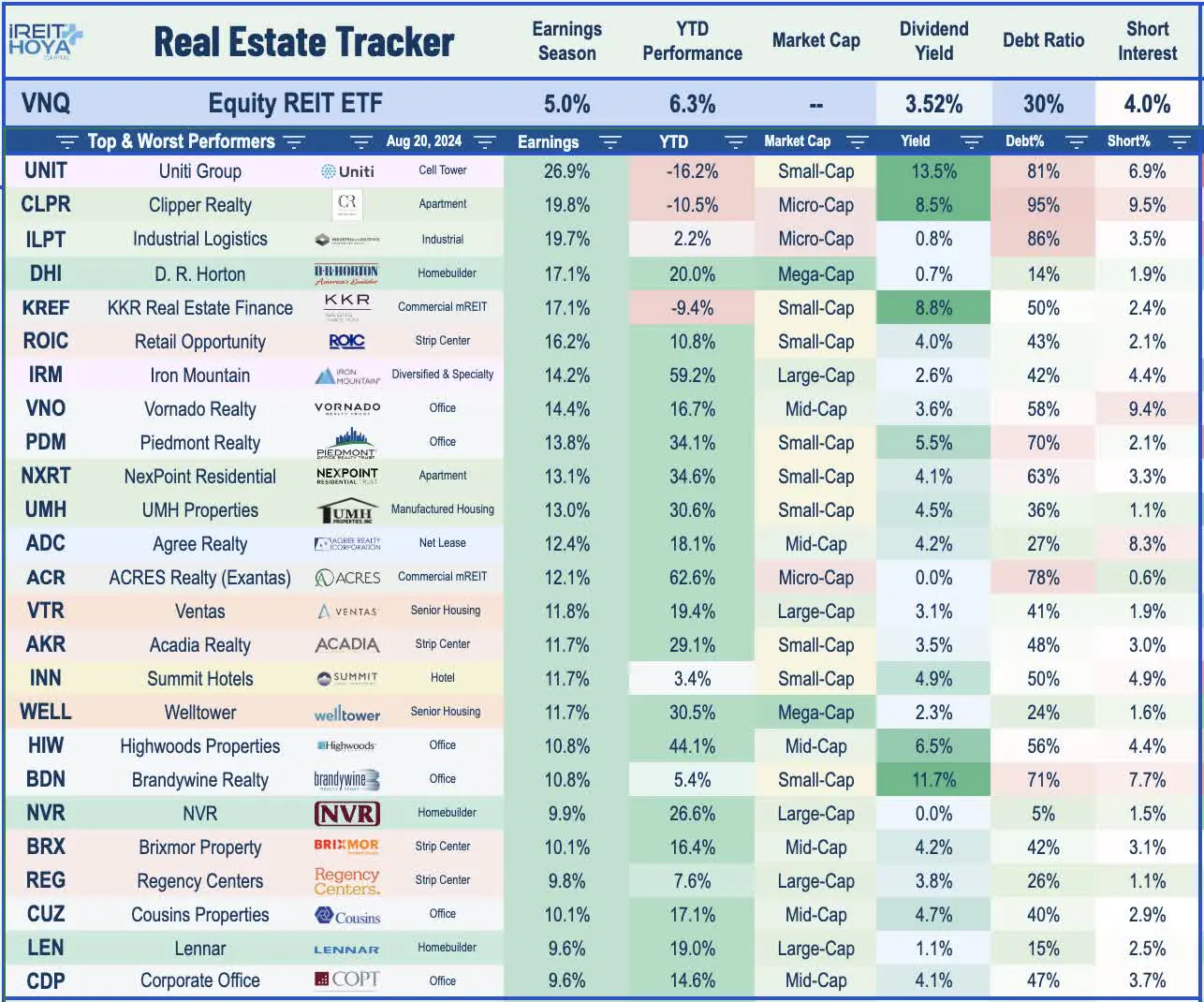
At the individual level, fiber-optic network owner Uniti Group (UNIT) surged nearly 30% after reporting exceptionally strong bookings driven by hyperscale and AI-focused demand, and providing Pro Forma financials related to its pending merger with its former parent firm, Windstream, which alleviated some investor concerns. Micro-cap apartment REIT Clipper Realty (CLPR) was the second-best performer, with gains of nearly 20% following the report of particularly strong leasing performance in its New York City-focused portfolio and the maintenance of its dividend, which represents an 8.5% yield. Among mid and large-cap REITs, business storage REIT Iron Mountain (IRM) led the performance after reporting impressive leasing activity in its rapidly growing data center business, prompting a 10% increase in its quarterly dividend—one of 60 REITs that have raised their dividend this year. Retail Opportunity (ROIC), a small-cap strip center REIT that owns 94 strip centers on the West Coast, also jumped more than 15% this earnings season following reports that private equity firm Blackstone (BX) is in early-stage talks to acquire the firm. Further details were scarce, and sources informed Reuters that "no deal is certain and another bidder for ROIC could emerge." If successful, ROIC would become the eighth REIT taken private by Blackstone and its affiliates since the start of 2021, and the third this year.
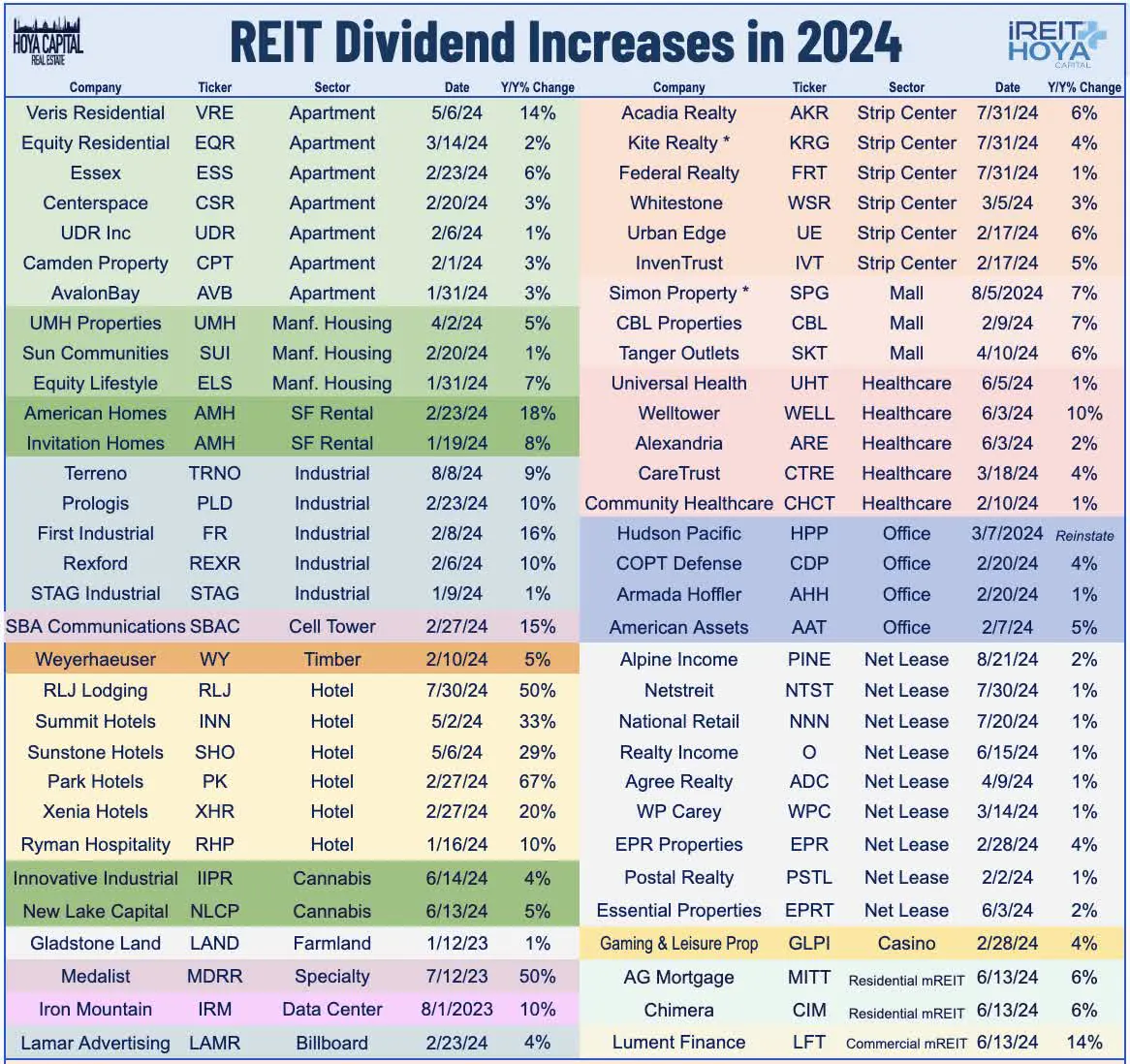
Upside surprises at the property-sector level included Retail, Sunbelt Apartment, NYC/Sunbelt Office, Senior Housing, and Industrial REITs. These gains were driven by favorable expense trends (disinflation) and moderating supply growth, which provided additional upside. Ten REITs announced dividend increases this earnings season—led by a trio of strip center and net lease REITs—bringing the full-year total across the sector to 62. As we’ll discuss in our State of the REIT Nation report later this week, the average REIT dividend payout ratio was 69% in the second quarter, an improvement from 78% in the first quarter and well below the historical average dividend payout ratio of around 80%. Below, we outline the five property sectors that emerged as winners this earnings season.
Winner #1: Strip Center REITs
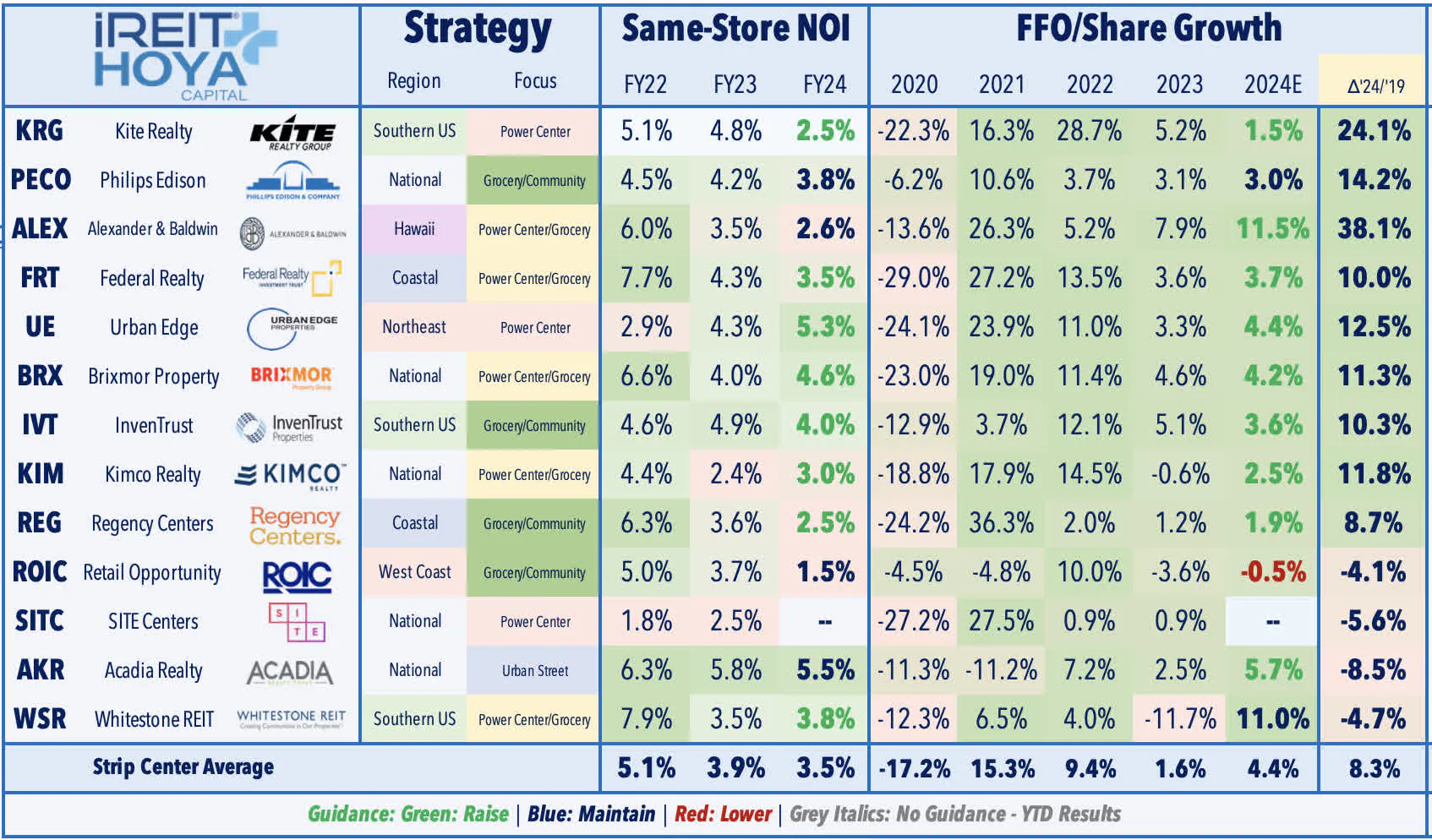
Strip Centers: (Final Grade: A-) Strip Center REITs emerged as a notable upside standout, with an almost flawless record of upward guidance revisions and several dividend increases. Record-high occupancy rates, driven by a decade of limited new development, fueled another quarter of double-digit rental rate spreads. Continuing a trend of better-than-expected results that began in late 2021, nine strip center REITs raised their full-year FFO outlook, while only one lowered its FFO target. This positive performance occurred despite several recent high-profile retail bankruptcies, as demand for "big box" space has far exceeded the available supply. Strip Center REITs reported that blended rent spreads averaged 16.0% in Q2—the strongest on record—while occupancy rates also reached new record highs at 95.6%. These REITs continue to see strong demand for the vacated Bed Bath locations, which are generally on the upper end of the 'quality' spectrum, with some REITs highlighting re-leasing rent spreads of over 50% for this space. Additionally, small-shop occupancy, which had lagged since the pandemic, improved across the board, with several REITs identifying this as a key area of focus and a catalyst for future growth.
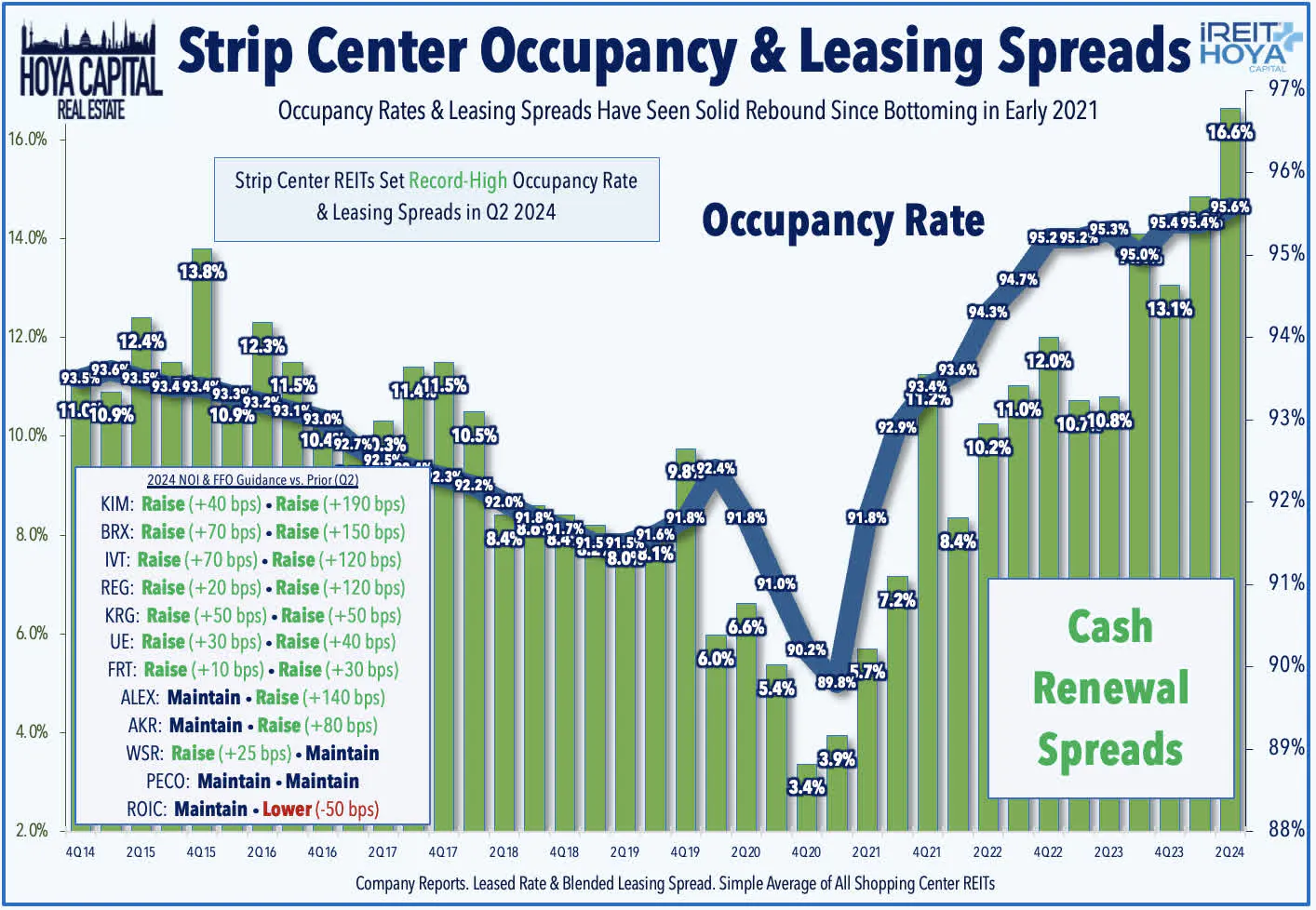
- FFO Guidance: 9 Raise, 2 Maintain, 1 Lower (+120bps Average)
- NOI Guidance: 7 Raise, 4 Maintain (+30bps Average)
- Positives: Robust leasing activity, renewal spreads near record highs
- Negatives: External growth muted, REITs remain net sellers
- Notable Winners: Acadia Realty (AKR), Kite Realty (KRG)
- Notable Losers: Whitestone (WSR), Saul Centers (BFS)
Winner #2: Apartment REITs
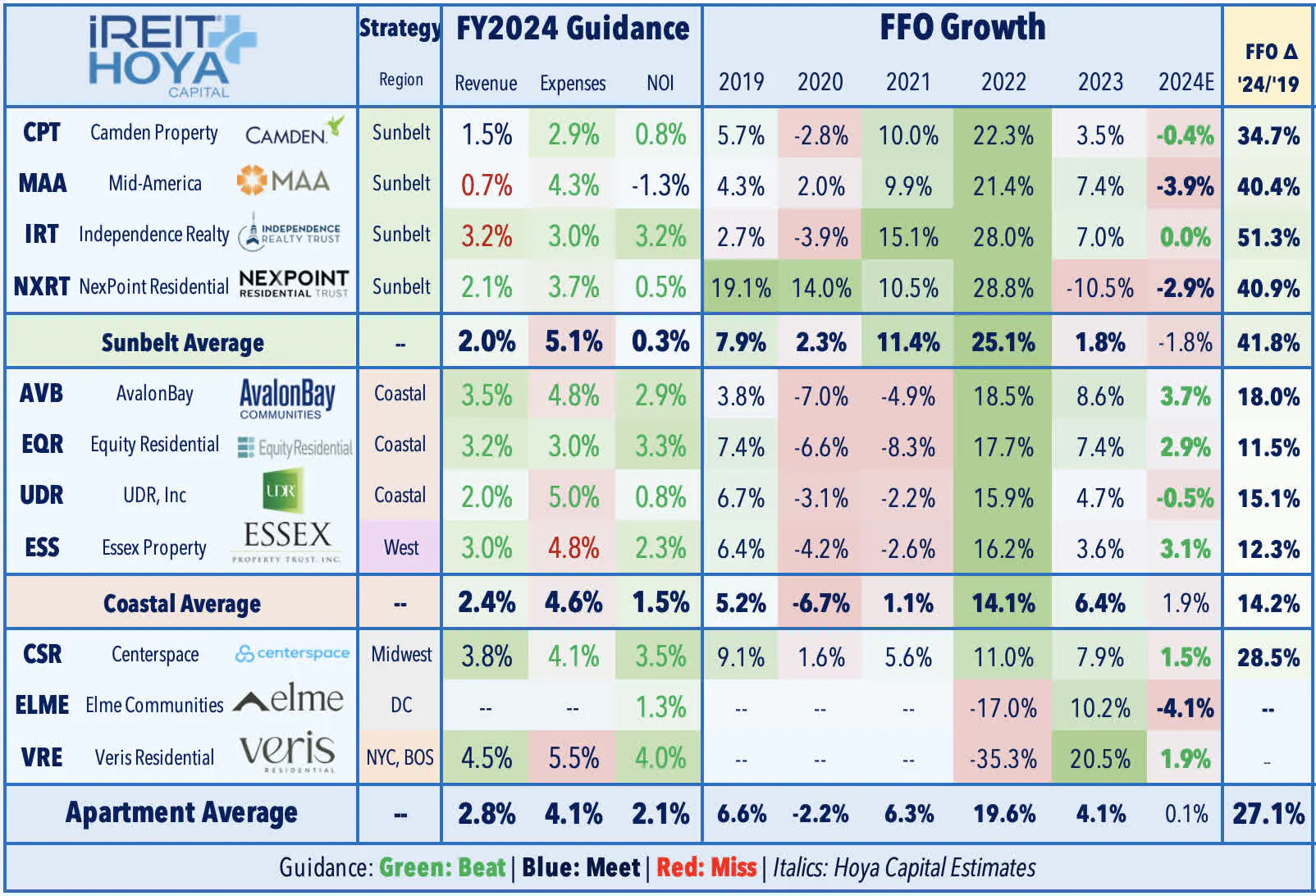
Apartment: (Final Grade: A-) Expectations were high for multifamily REITs this earnings season following a very strong first quarter, and although rent growth metrics were slightly disappointing, it was still an impressive quarter overall, with 8 of the 11 REITs raising their full-year outlook. Mid-single-digit rent growth on renewals (+4.3% in Q2 and +4.1% in July) and relatively stable occupancy trends helped mitigate the impact of lower new lease rates. Even the new lease spreads, which were once expected to be sharply negative, remained fairly stable (0.0% in Q2 and -0.6% in July), resulting in blended rent growth of 1.4% in both Q2 and July. Notably, while strong rents contributed to the upside, expense pressures—especially from insurance renewals and property tax assessments—seem to be finally easing after several quarters of persistent negative surprises. Ten of the eleven REITs that provide same-store Net Operating Income guidance positively revised their outlook, primarily due to lower same-store expenses. Sunbelt-focused REITs were the upside surprises, as their rent growth trends were only slightly softer than those of their coastal peers, despite record-setting levels of supply growth in recent months.
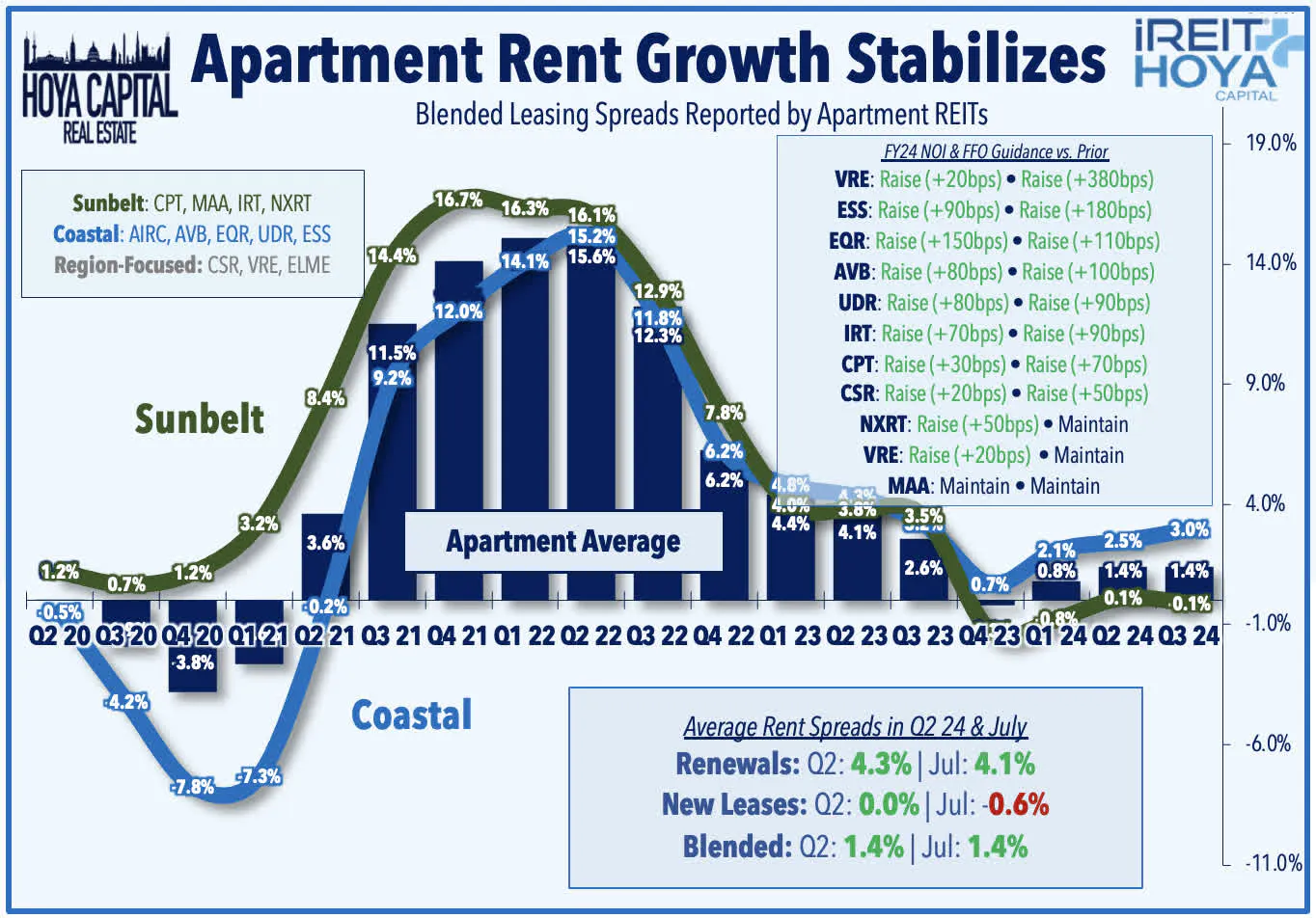
- FFO Guidance: 8 Raise, 3 Maintain (+110bps Average)
- NOI Guidance: 9 Raise, 1 Maintain (+60bps Average)
- Positives: Favorable expense trends, Sunbelt stronger than feared
- Negatives: New rent growth moderating again after early-2024 rebound
- Notable Winners: NexPoint Residential (NXRT), Camden Property (CPT)
- Notable Losers: BRT Apartments (BRT), Apartment Investment and Management Company (AIV)
Winner #3: Industrial REITs
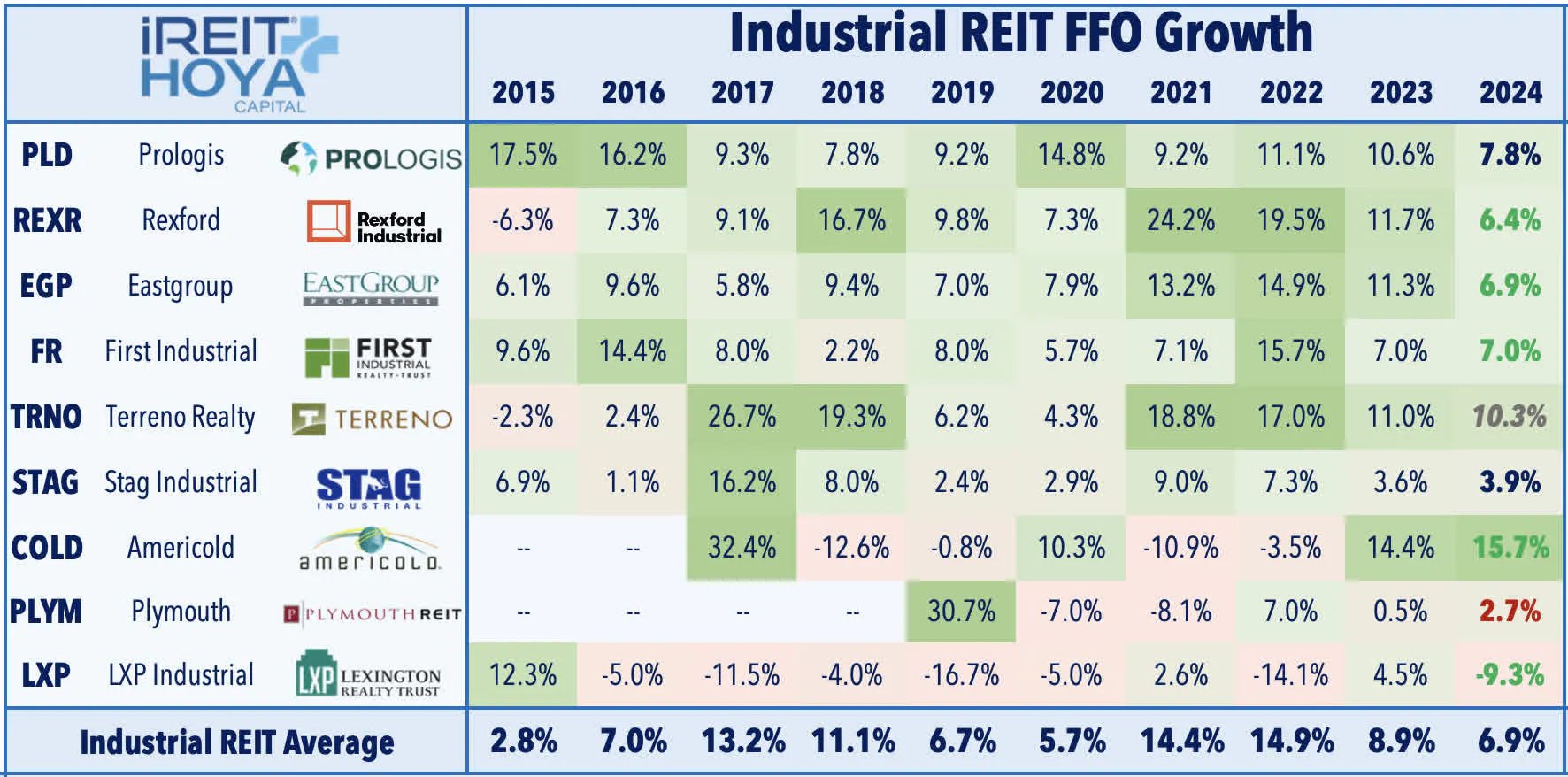
Industrial: (Final Grade: B+) Following an uncharacteristically weak earnings season in Q1, industrial REITs delivered surprisingly strong results in Q2, with five of the eight REITs raising their full-year FFO outlook. Leasing spreads showed a slight acceleration, reaching around 40%, although on somewhat lower volumes. Prologis (PLD), the largest industrial property owner in the country, noted “subdued but improving” demand in logistics, coupled with a moderation in supply growth. On the macro front, Prologis estimated that global market rents declined by 2% during the quarter, attributing 75% of this decline to weakness in Southern California. Sunbelt-focused First Industrial (FR) was the standout performer, reporting unexpectedly strong results and raising its full-year NOI and FFO outlook. FR noted that "fundamentals are slowly improving, although, as expected, market vacancy ticked up... decision-making remains fairly deliberate. It's still early to determine the resiliency and the pace of demand, even though we see today, indicators are pointing in the right direction." EastGroup (EGP) also reported robust results and increased its full-year outlook, citing an improved outlook on both the demand and supply sides. EGP commented, "The leasing environment is slowly improving... It hasn’t been a U-turn, but kind of month by month slowly improving."
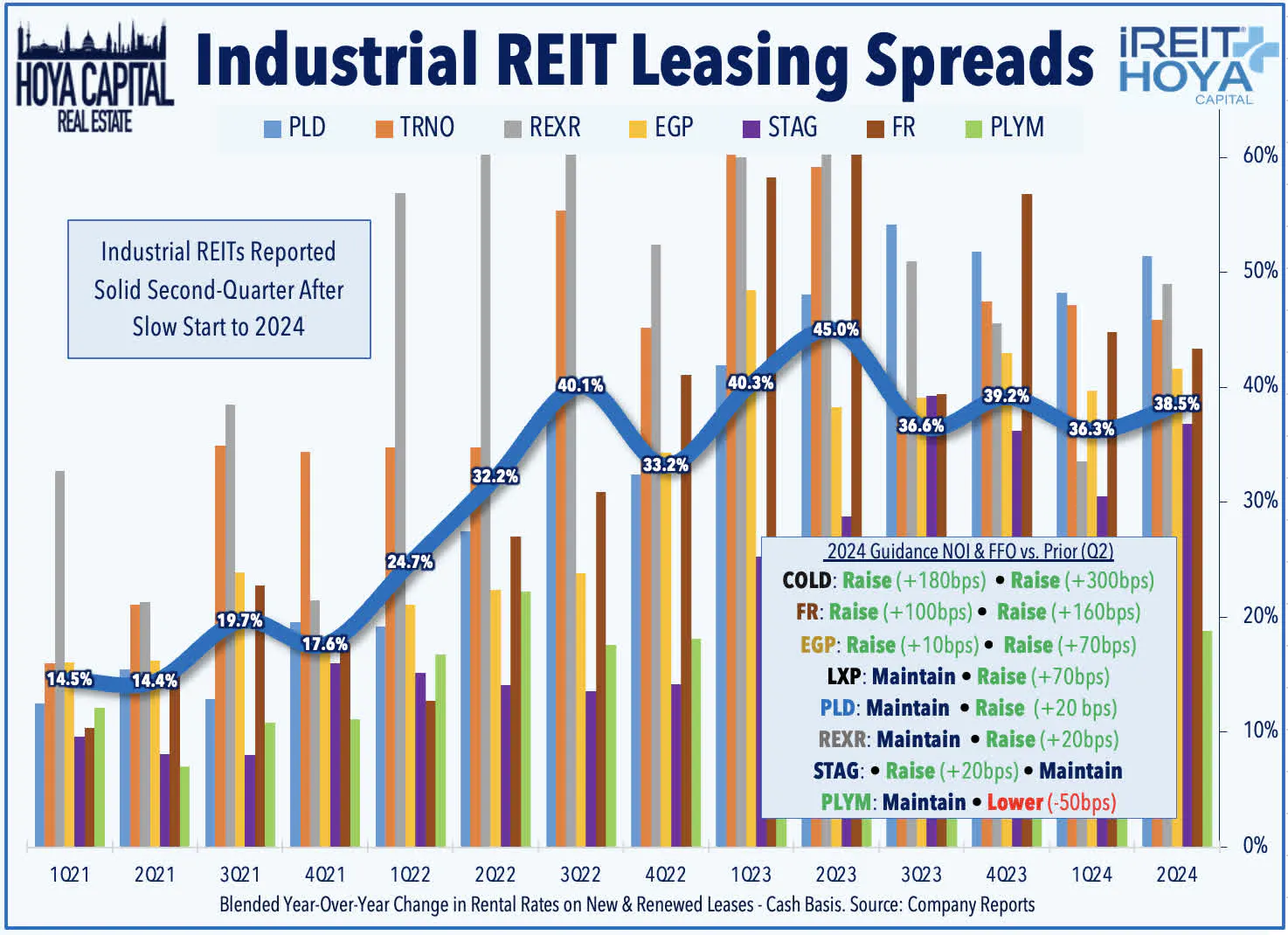
- FFO Guidance: 5 Raise, 2 Maintain, 1 Lower (+85 bps Average)
- NOI Guidance: 4 Raise, 4 Maintain (+30 bps Average)
- Positives: Impressive leasing activity after a weak first-quarter
- Negatives: Supply headwinds lingering until early 2025
- Notable Winners: First Industrial (FR), Americold (COLD)
- Notable Loser: LXP Industrial (LXP)
Winner #4: Office REITs
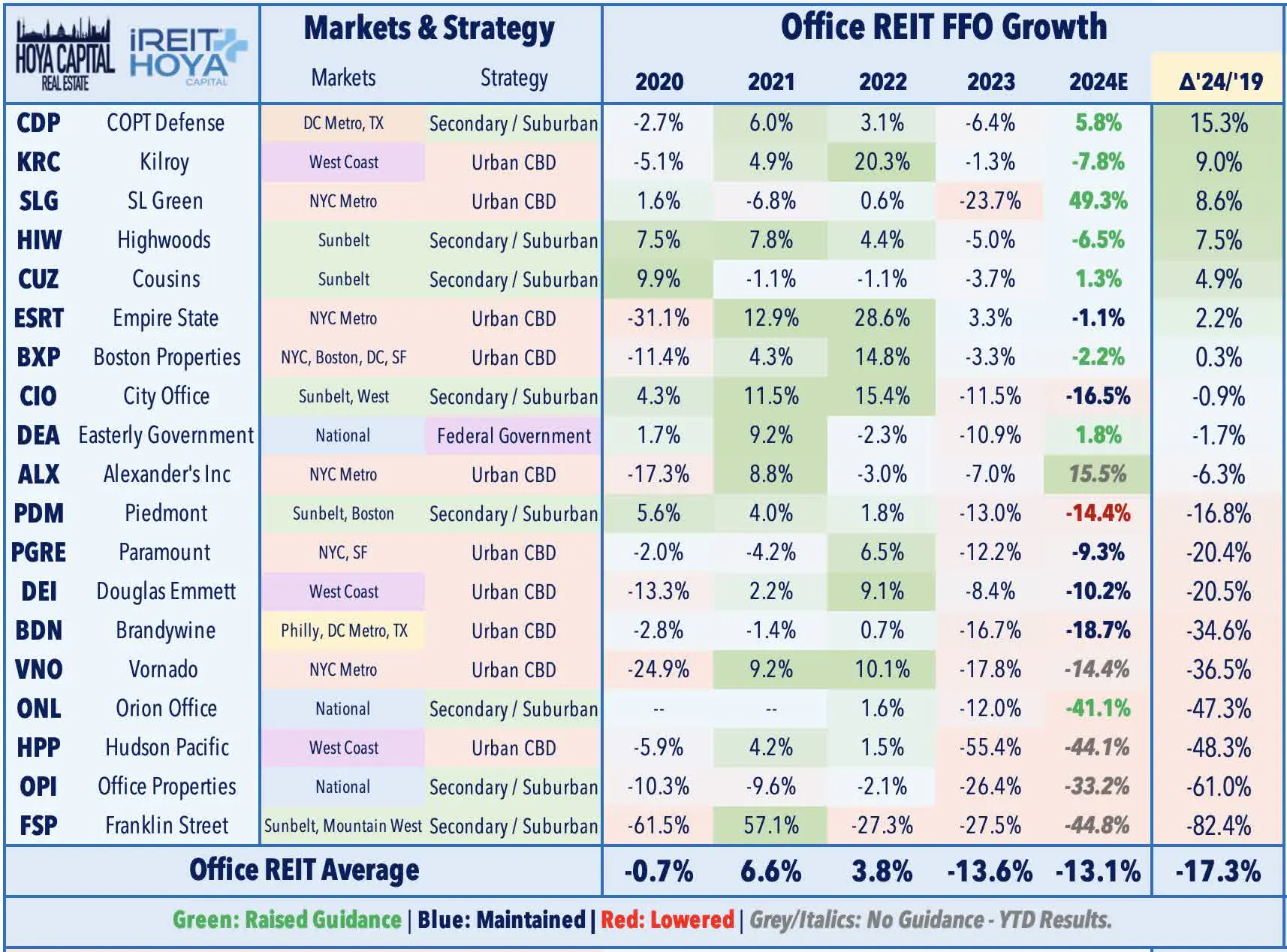
Office: (Final Grade: B+) The battered office sector experienced a relatively strong earnings season, showing an encouraging rebound in leasing demand across many major markets outside of the tech-heavy West Coast. Among the office REITs that provide full-year FFO guidance, 8 out of 12 raised their full-year outlook. Although daily utilization rates of office properties remain 20-40% below pre-pandemic levels, they have continued to improve nationwide. This improvement has been supported by a softening labor market, which has given employers some leverage to bring workers back into the office. Following a relatively disappointing Q1, REIT leasing activity increased by approximately 10% in Q2, bringing it to levels only 10% below the average pre-pandemic activity from 2017-2019. This uptick in activity helped to reverse negative trends in rent spreads, while the downward pressure on occupancy rates also appeared to be easing. While trends in Sunbelt markets have been more stable throughout the pandemic than in Coastal markets, the recent rebound has been driven primarily by New York City. NYC-focused Vornado Realty (VNO), the second-largest office REIT, reported particularly strong results, as did Sunbelt-focused Cousins (CUZ).
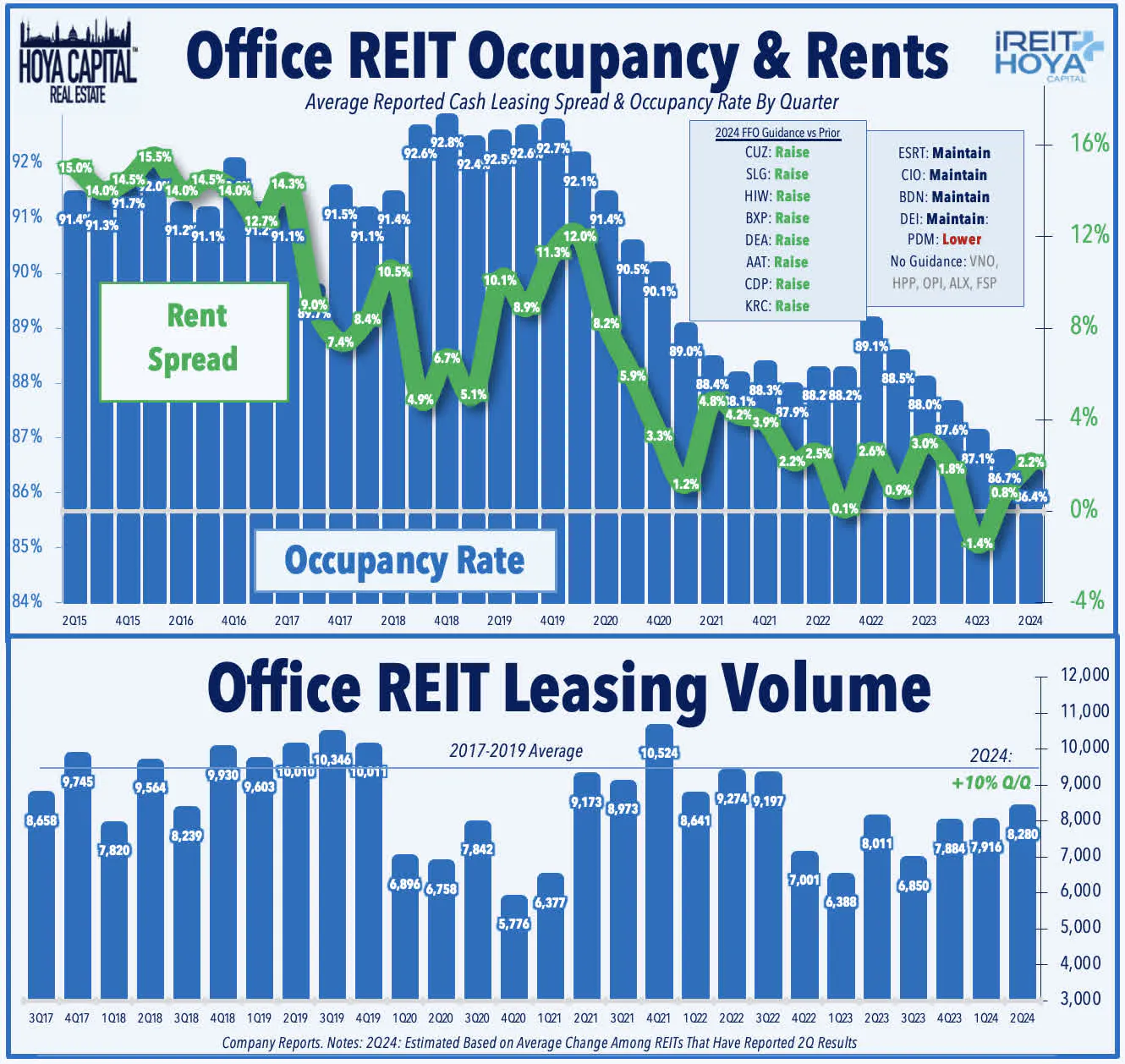
- FFO Guidance: 8 Raise, 4 Maintain, 1 Lower (+50 bps)
- Positives: Leasing activity rebound, rents firming, Sunbelt strength
- Negatives: West Coast weakness, Not enough to change the narrative
- Notable Winners: Vornado, Cousins Properties
- Notable Losers: Hudson Pacific (HPP), Paramount Group (PGRE)
Winner #5: Healthcare REITs
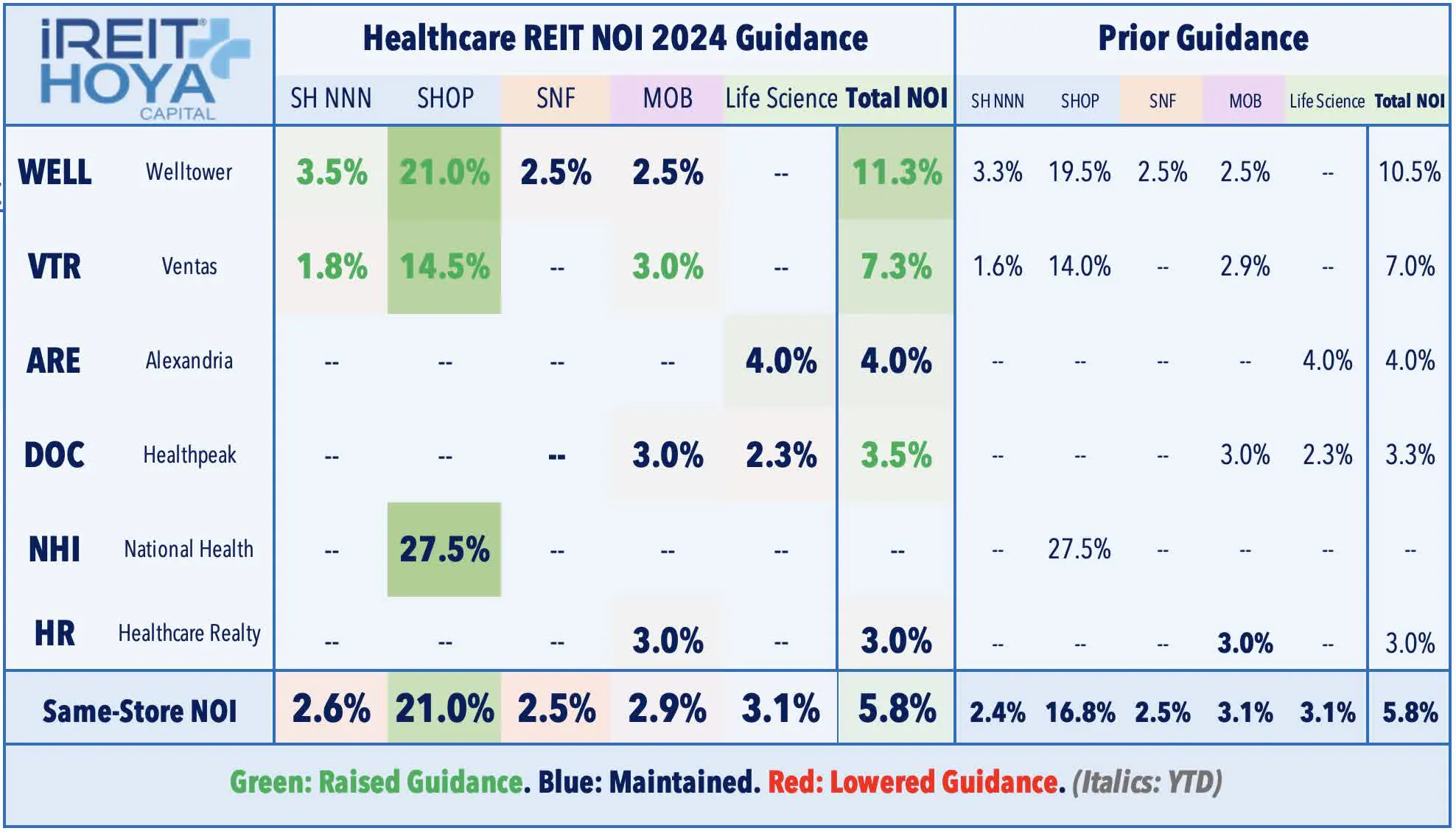
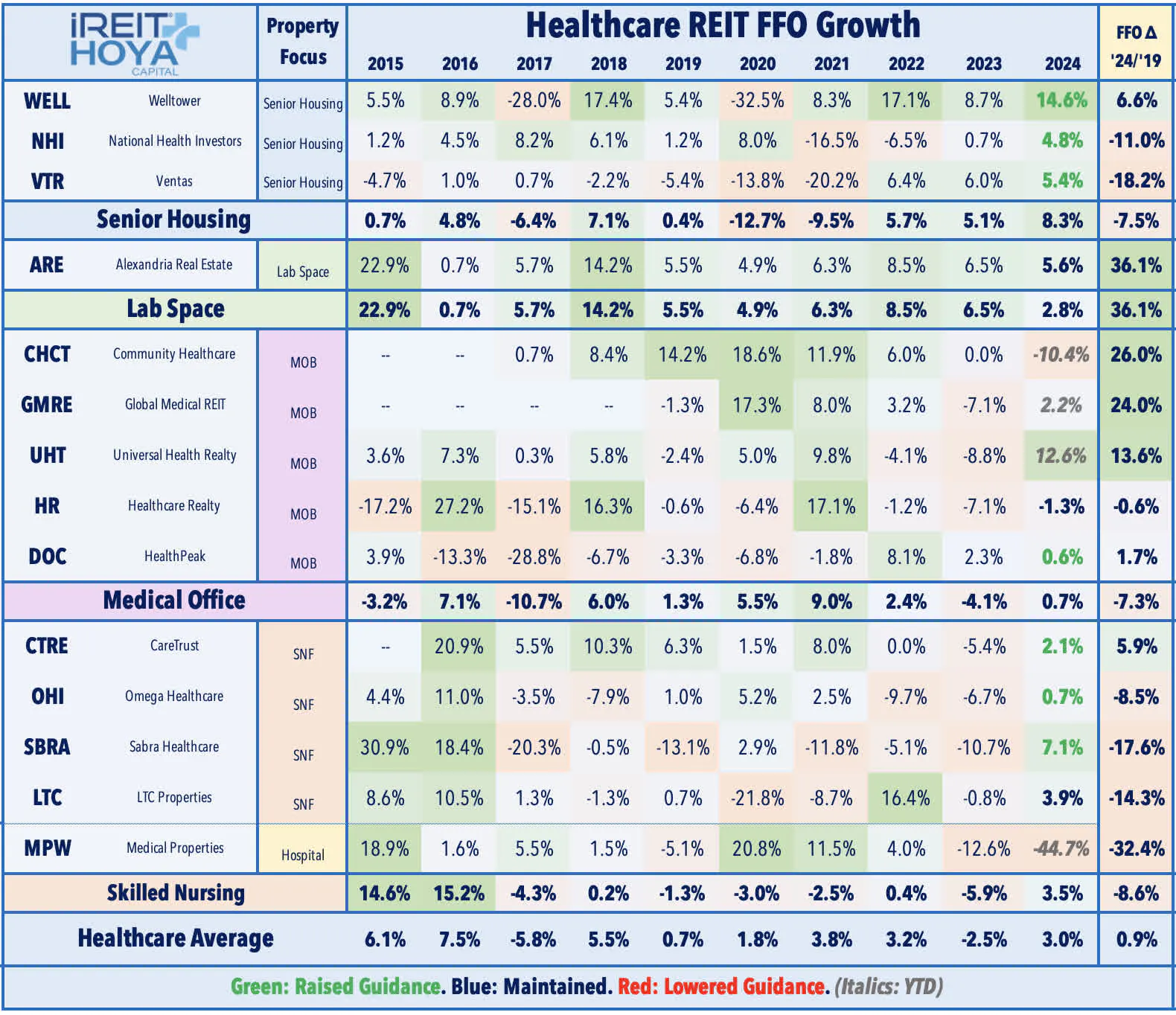
Healthcare: (Final Grade: B+) Continued record-setting rent growth in senior housing and stabilization in tenant operator health within the skilled nursing segments were the key takeaways from a relatively impressive set of reports from healthcare REITs. Seven of the ten REITs that provide full-year FFO guidance raised their outlook, marking the most guidance increases since before the pandemic. Benefiting from COLA increases, pricing power remains strong across the "private pay" space, and when combined with moderating expense pressures, senior housing REITs have reported "unprecedented" same-store NOI growth. All three senior housing REITs—Welltower (WELL), Ventas (VTR), and National Health Investors (NHI)—raised their full-year FFO outlook, as did three of the four skilled nursing REITs. Welltower now anticipates full-year FFO growth of 14.6%, driven by its seventh consecutive quarter of 20%+ NOI growth in its senior housing segment. Skilled nursing trends have also shown improvement over the past several quarters, although some smaller operators continue to face challenges. Sabra Healthcare (SBRA), which owns a mix of skilled nursing and senior housing facilities, was an upside standout, noting that skilled nursing facility (SNF) occupancy increased by 150 basis points in Q2 to 79.0%, which helped to boost tenant rent coverage to 1.85x from 1.79x in the previous quarter. Results from Medical Office Building (MOB) and Life Science-focused REITs were generally in line with expectations, while results from hospital-focused Medical Properties (MPW) were less dire than some had feared.
- FFO Guidance: 7 Raise, 3 Maintain (+70 bps Average)
- NOI Guidance: 3 Raise, 2 Maintain (+50 bps Average)
- Positives: Senior Housing, Skilled Nursing recovery continues
- Negatives: Lingering operator issues, especially "public-pay" exposure
- Notable Winners: Welltower, Ventas
- Notable Loser: Community Healthcare (CHCT)
Losers of REIT Earnings Season
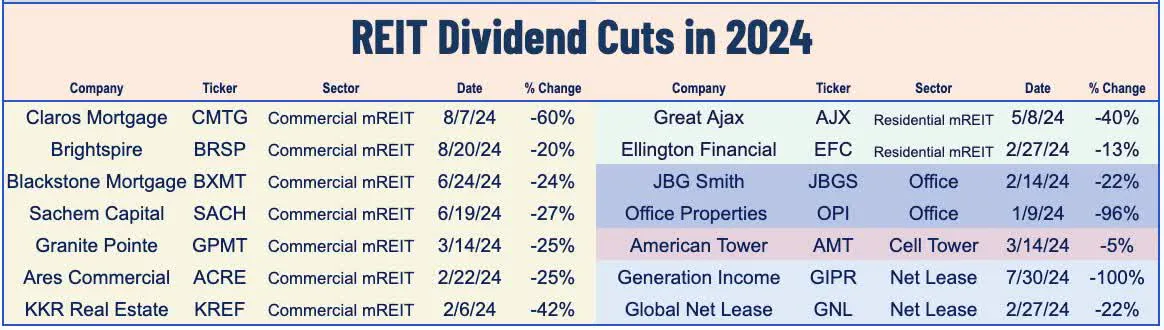
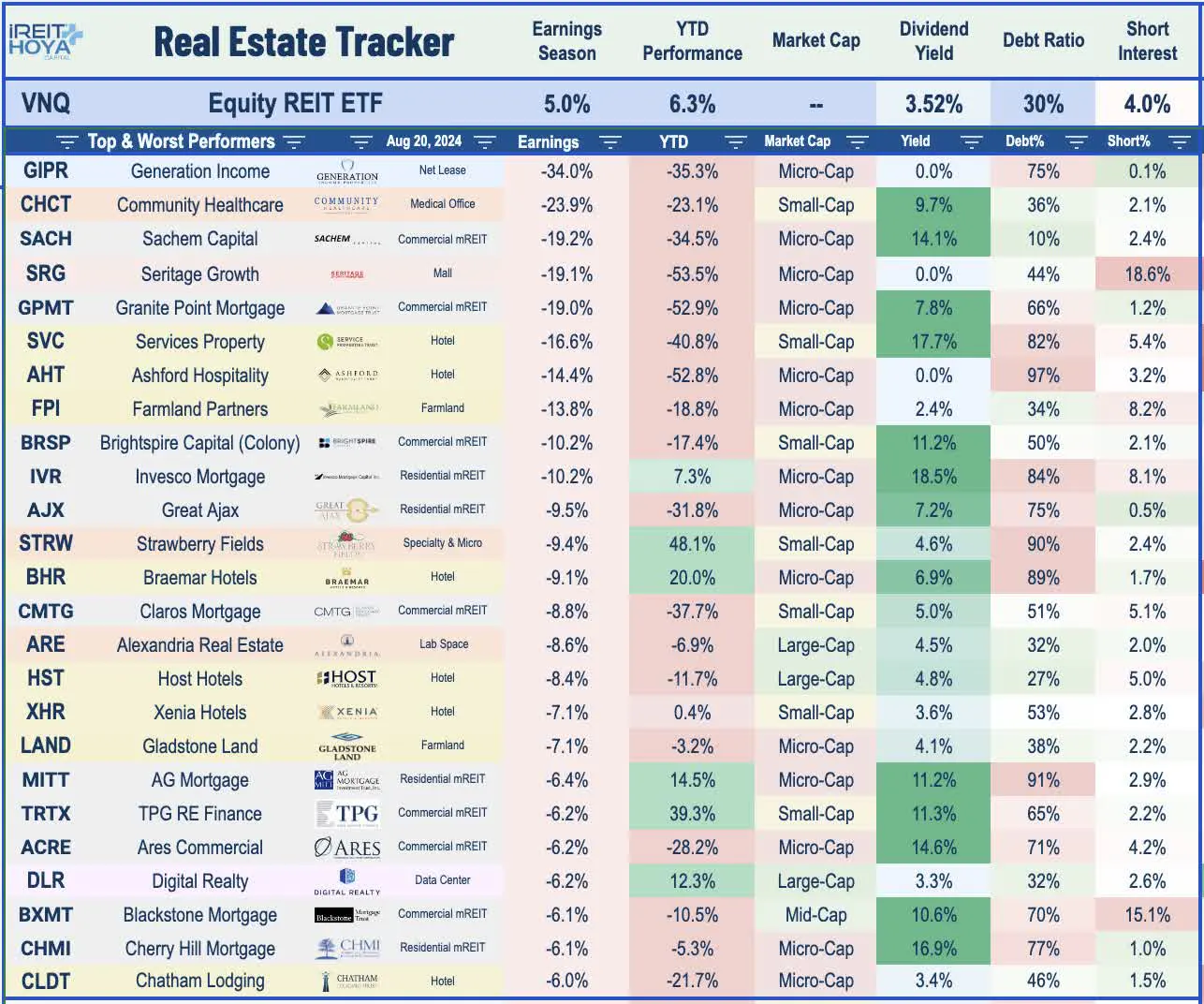
There were few major "bombshells" this earnings season, but we did observe ongoing pockets of distress among some of the most highly leveraged small-cap REITs, which entered the rising-rate environment with significant variable rate debt exposure. Micro-cap net lease REIT Generation Income (GIPR) saw its interest expense surge from roughly 40% of its net operating income to 65% of its NOI, leading to a nearly 35% drop in its stock after it slashed its dividend "to conserve cash during what we continue to expect will be a tumultuous economic period." GIPR was one of four REITs to reduce its dividend this earnings season, joined by four commercial mortgage REITs—Blackstone Mortgage (BXMT), Claros Mortgage (CMTG), Brightspire (BRSP), and micro-cap Sachem Capital (SACH). So far this year, 14 REITs have reduced their dividend, nine of which have been mortgage REITs.
In terms of distress, mall owner Seritage Growth (SRG)—a former REIT that emerged from the Sears bankruptcy—dropped another 20% this earnings season after reporting second-quarter results that showed continued slow progress on its years-long liquidation, which began in early 2022. Elsewhere, small-cap Community Healthcare, which owns a mix of medical office and hospital facilities, fell nearly 25% after reporting rent collection issues from one of its larger hospital tenants—an unsurprising development given the ongoing tenant problems reported by embattled hospital REIT Medical Properties Trust (MPW). The West Coast, particularly California, was a region of notable weakness, especially within the office sector. Below, we discuss the five property sectors that were winners this earnings season.
Loser #1: Self-Storage REITs
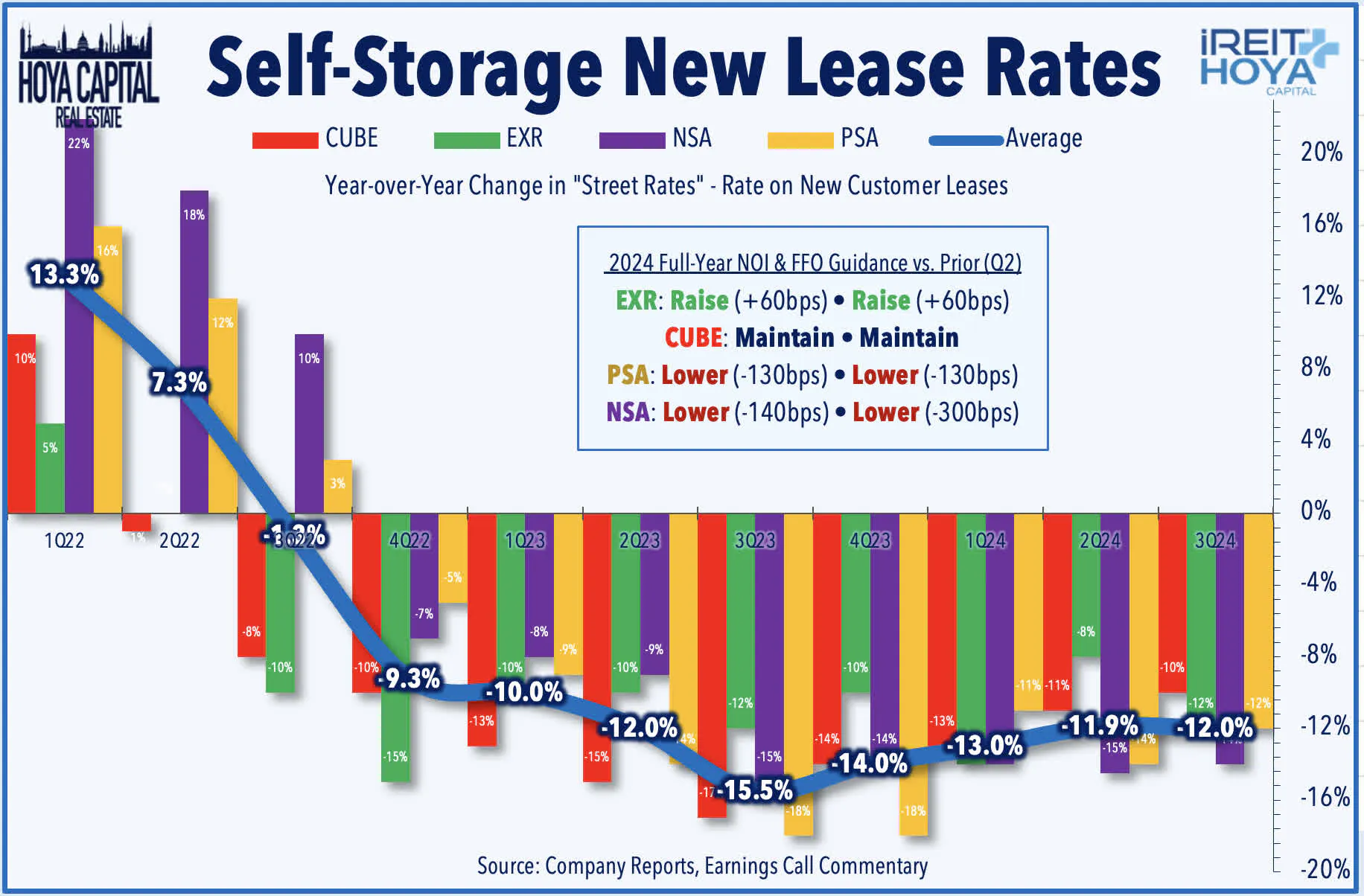
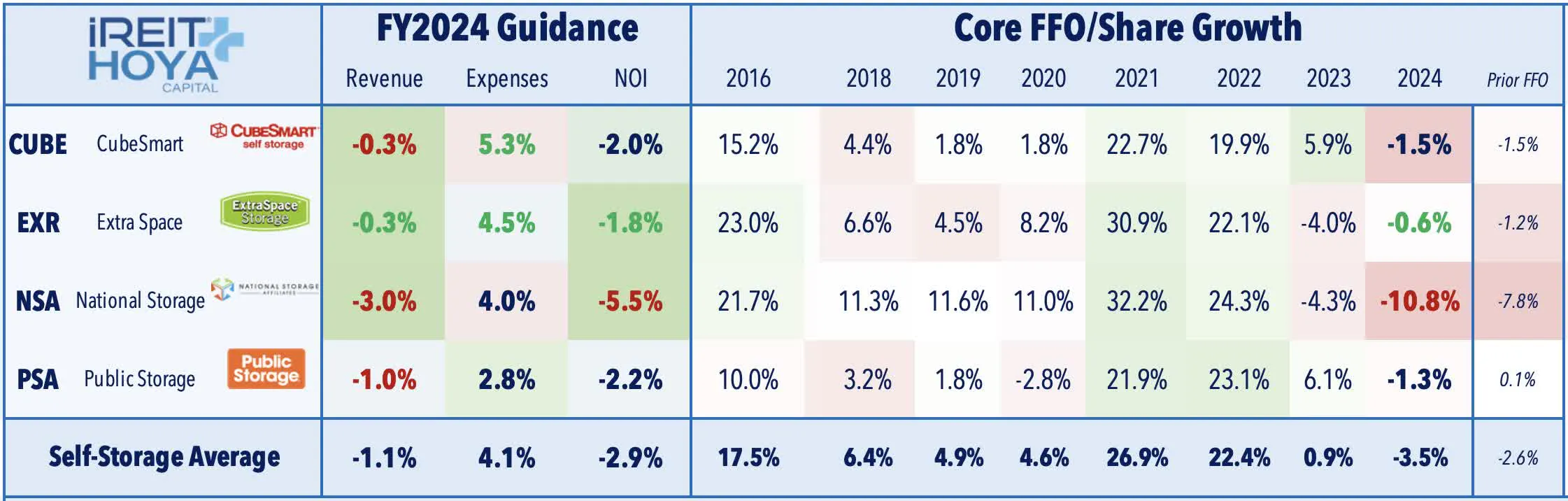
Self-Storage: (Final Grade: C) Results from self-storage REITs indicated that weak fundamentals persisted into the second quarter and July, as muted housing market activity and elevated supply growth continued to exert downward pressure on new lease rates. While muted move-out activity and relatively buoyant low-single-digit rent growth among existing tenants helped offset some of the weakness in new lease rates, overall performance remained soft. Despite these results, there was some optimism due to the sudden dip in mortgage rates, which sparked hopes of a potential rebound in housing activity.
ExtraSpace (EXR) was the only storage REIT to raise its outlook, supported by a slight rebound in its occupancy rate, sticky renewal rents, and favorable improvements in expense projections. However, pricing trends remained weak, with EXR noting that "Street Rates"—effectively new lease rent changes—were down by -8% year-over-year in the second quarter, marking the ninth consecutive quarter of negative spreads, and they weakened further to -12% in July. CubeSmart (CUBE) maintained its outlook and reported the "least bad" Street Rate trends among the group, with new lease rates down -11% in Q2 but improving slightly to -10% in July. In contrast, both Public Storage (PSA) and National Storage (NSA) lowered their full-year outlooks and reported very soft pricing trends. PSA noted that "Street Rates" were down -14% year-over-year in Q2 and -12% in July, while NSA reported declines of -15% and -14%, respectively.
- FFO Guidance: 1 Raise, 1 Maintain, 2 Lower (-90bps Average)
- NOI Guidance: 1 Raise, 1 Maintain, 2 Lower (-90bps Average)
- Positives: Steady renewal rents, modest move-out activity
- Negatives: Still highly competitive - weak occupancy and "Street rates"
- Notable Winner: ExtraSpace (EXR)
- Notable Loser: National Storage (NSA)
Loser #2: Hotel REITs
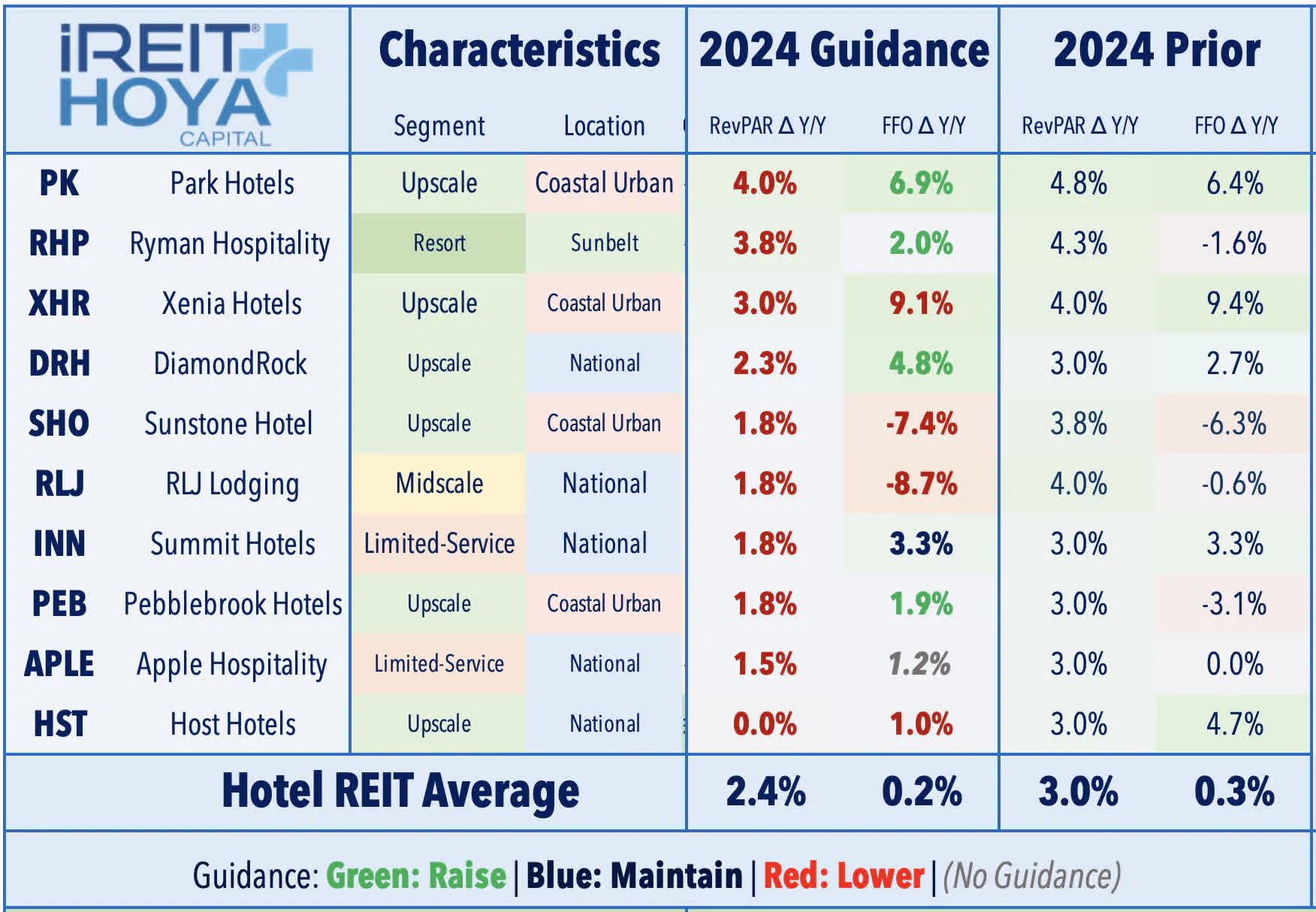
Hotels: (Final Grade: C+) After entering earnings season as one of the top-performing sectors over the past two years, hotel REITs underperformed as reports indicated clear signs of softening leisure-oriented demand, leading to a downgrade in the Revenue Per Available Room (RevPAR) outlook following a banner year in 2023. Ten of the eleven hotel REITs lowered their full-year RevPAR outlook, and four REITs reduced their full-year FFO outlook. Hotel data provider STR reported that industry-wide RevPAR was down by -0.5% year-over-year in July, continuing a trend of moderation in recent months after a strong start to 2024. TSA Checkpoint data also showed that domestic throughput cooled to around 4% above 2019 levels in July, the softest month since mid-2023.
Host Hotels (HST), the largest hotel REIT, trimmed its full-year FFO and RevPAR outlook, citing "moderating leisure transient demand." Park Hotels (PK) similarly lowered its RevPAR forecast, noting softer leisure trends but solid performance in its group business. Like other hotel REITs, favorable margin trends and accretive external growth have helped offset the moderation in organic RevPAR growth, with Park actually raising its full-year FFO growth outlook. Sunbelt-focused Ryman Hospitality (RHP) and small-cap Sotherly Hotels (SOHO) were the upside standouts. RHP significantly raised its full-year FFO outlook "to reflect the change in Tennessee franchise tax law and estimated cash interest expense savings from the OEG refinancing." However, like its peers, RHP trimmed its RevPAR outlook, citing "continued leisure transient softness."
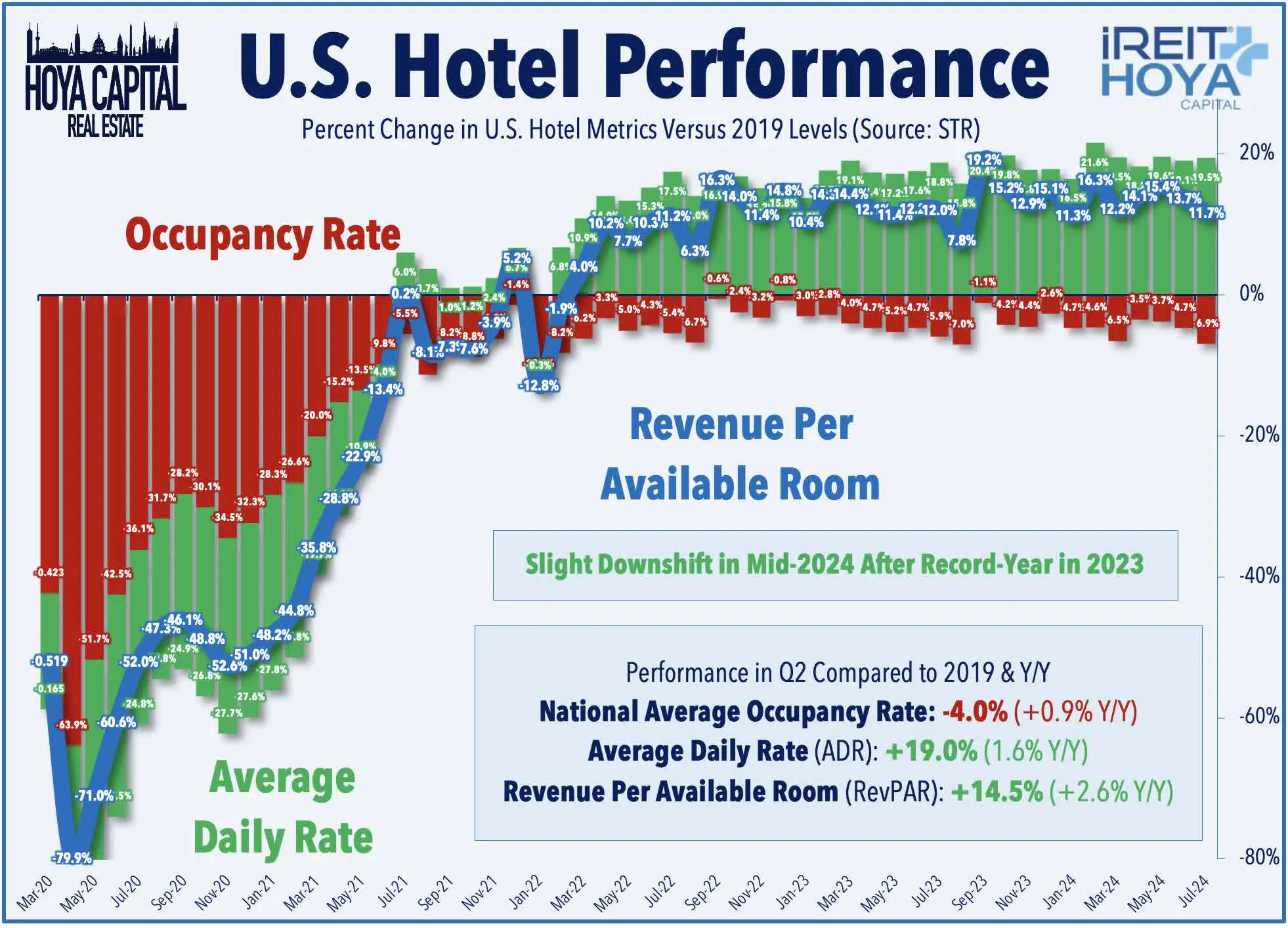
- FFO Guidance: 4 Raise, 1 Maintain, 4 Lower (-10bps Average)
- RevPAR Guidance: 10 Lower (-60bps Average)
- Positives: Favorable expense/margin trends, Accretive external growth
- Negatives: Clear signs of moderating leisure demand and softer pricing
- Notable Winners: Ryman Hospitality (RHP), Sotherly Hotels (SOHO)
- Notable Losers: Ashford Hotels (AHT), Xenia Hotels (XHR)
Loser #3: Mortgage REITs
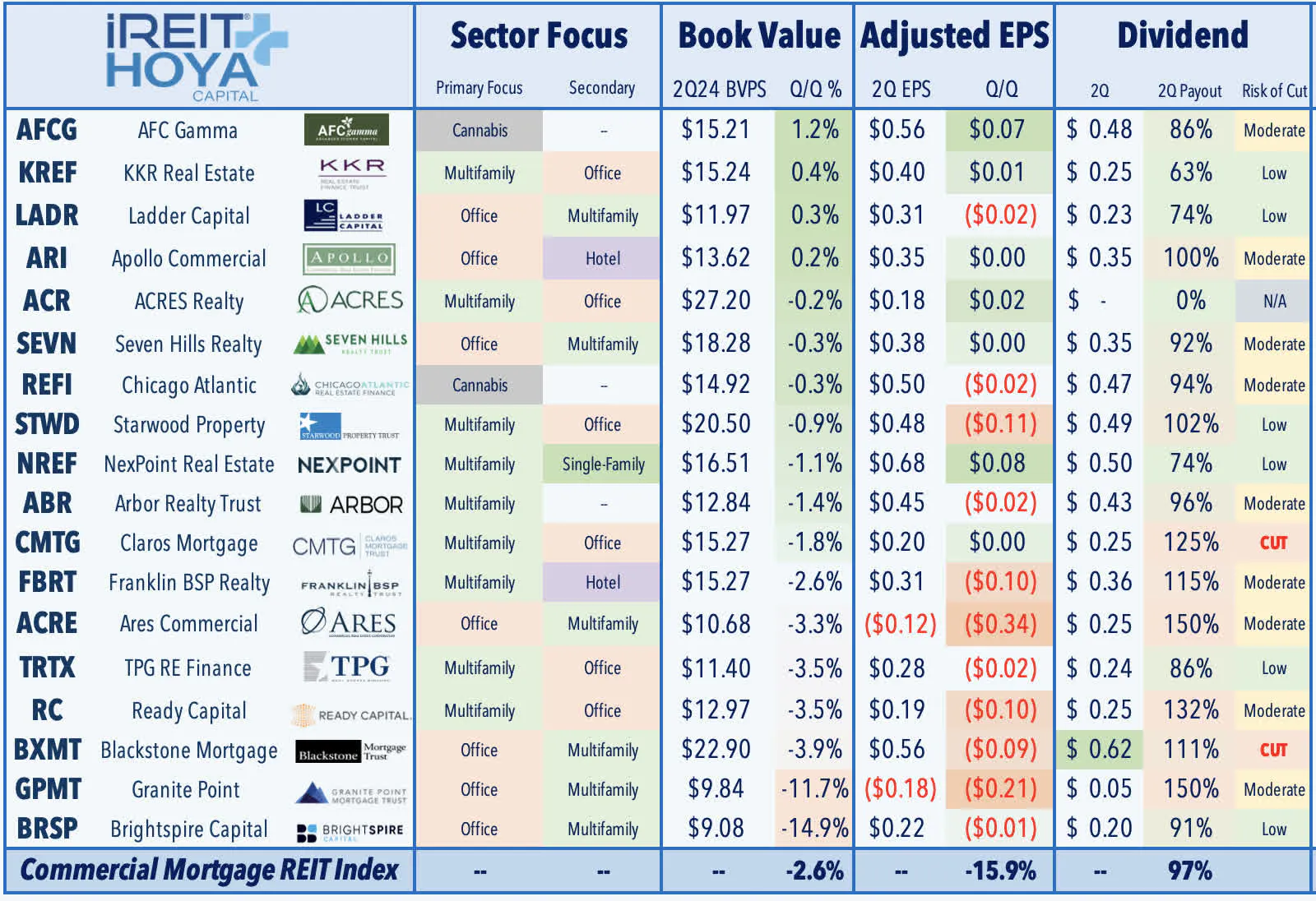
Commercial mREITs: (Final Grade: C+) After delivering relatively solid results throughout 2023, with surprisingly limited loan distress, commercial mREITs showed signs of marginal acceleration in office loan delinquencies in the latest quarter. While widespread distress remains largely confined to office assets, the results indicated that no property sector is necessarily "safe" if rate-driven downward pressure on property values continues. Weighed down by the most office-exposed mREITs, the sector reported an average 2.6% decline in Book Value Per Share (BVPS) in Q2, marking the steepest decline since late 2020. Four commercial mREITs announced dividend reductions this quarter. Blackstone Mortgage (BXMT), the second-largest commercial mREIT, announced a 24% reduction in its quarterly dividend, citing a desire to "strategically deploy more capital and generate incremental earnings." BXMT reported that its portfolio was 90% performing in Q2, down from 92% in Q1. Claros Mortgage (CMTG) also reported particularly disappointing results and reduced its dividend by 60%. Granite Point (GPMT) and Brightspire (BRSP), two of the most office-exposed mREITs, saw significant declines after reporting sharp drops in their BVPS due to the downgrade of additional office loans. On the upside, KKR Real Estate (KREF), which had been among the weaker performers this year, surged after reporting a 0.4% increase in its BVPS during the quarter to $15.24, as its CECL reserves covered the realized losses.
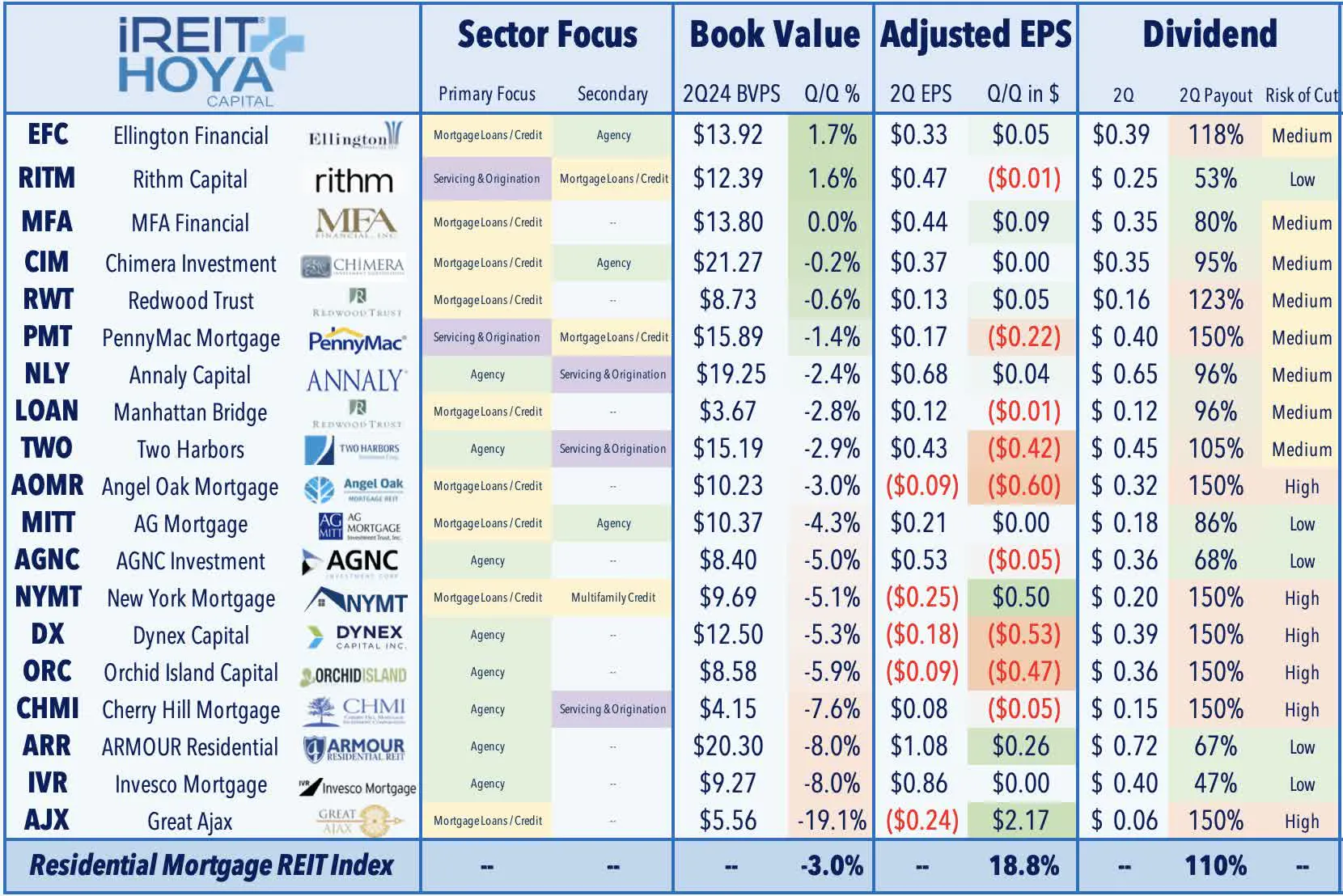
Residential mREITs: (Final Grade: C+) Results from residential mREITs were mildly disappointing, considering the relatively stable interest rate environment during the second quarter, where valuations of Mortgage-Backed Securities (MBS) remained remarkably steady. Annaly Capital (NLY), the largest residential mREIT, reported in-line results, noting a 2.4% decline in its BVPS in Q2, as rate volatility and modestly higher Treasury rates negatively impacted its agency MBS portfolio, offsetting strength in its MSR portfolio. Similar themes emerged from other agency-focused mREITs, with hedging costs and equity issuance weighing on Book Values. However, credit-focused mREITs delivered stronger results, with modest book value increases reported by MFA Financial (MFA) and Ellington Financial (EFC). Mortgage Servicing Rights (MSR) also provided a boost in the first quarter, contributing to a solid BVPS increase from Rithm Capital (RITM), which was the best-performing mREIT during the rate-hiking cycle.
Loser #4: Farmland REITs
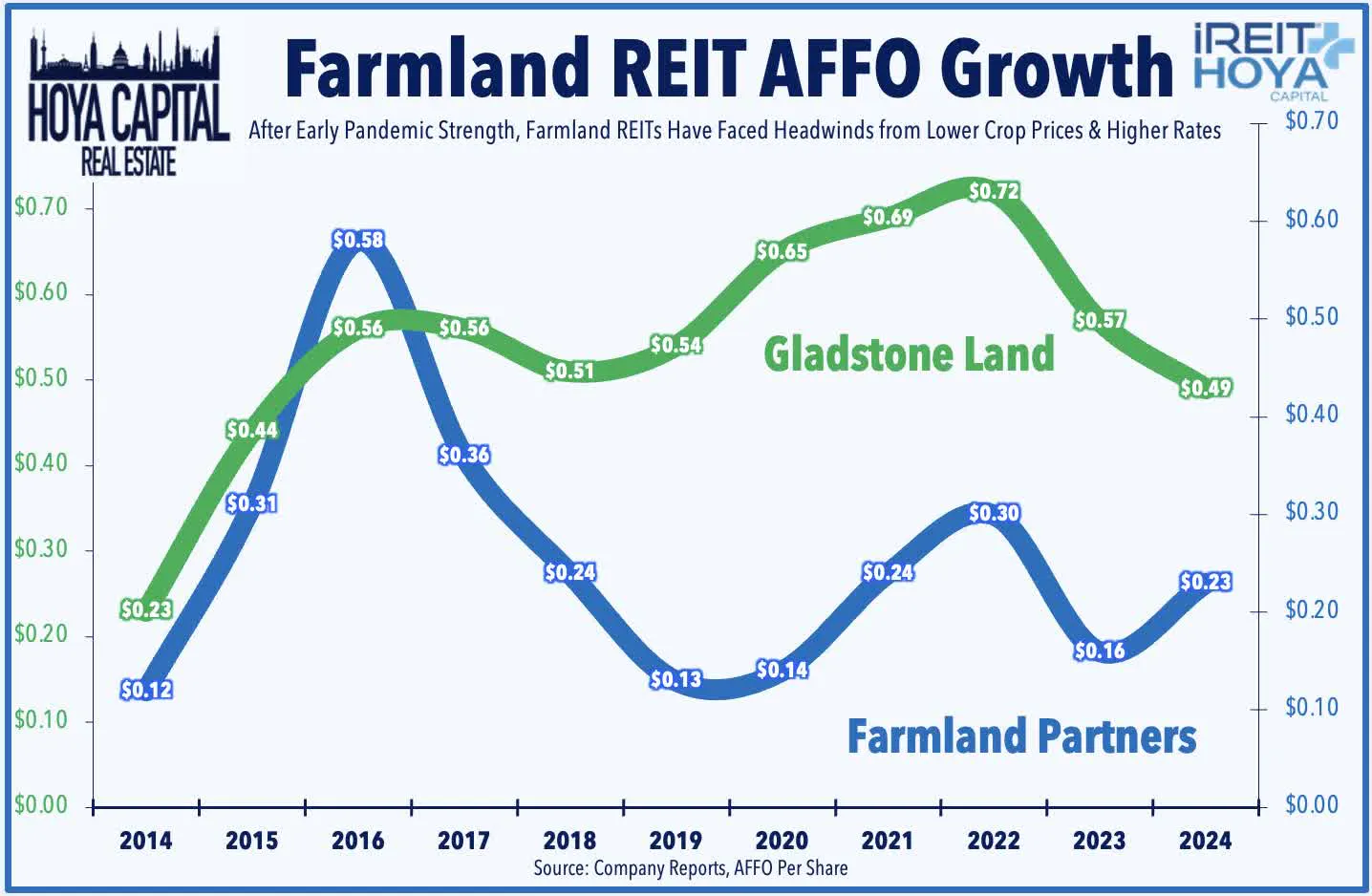
Farmland: (Final Grade: C+) Sluggish trends on the "goods" side of the economy were evident in the soft results from farmland REITs, which have been squeezed by a "triple whammy" of lower crop prices, lower crop yields, and higher interest rates. Farmland Partners (FPI) declined more than 12% this earnings season despite marginally raising its full-year FFO outlook, as commentary highlighted ongoing concerns about tenant distress. FPI noted "certain challenges for farmers in terms of their cash flow and the strength of their balance sheets... [but] by no means a crisis. There are a few farmers facing gradual levels of distress" due to lower row crop prices. Gladstone Land (LAND) reported similar tenant issues, noting that it currently has one farm vacant and an additional 12 farms that are now "directly operated" following tenant defaults, consistent with the vacancy rate in the prior quarter. On a positive note, the once-dire water constraints in California have eased following a multi-year drought, although this improvement comes after LAND made significant investments in water resources in the region in recent years. LAND commented, "The current problem facing our farms is not water. [The problem is] lower prices for the permanent crops, and the farmers are making some money, but they're not making enough to make it worthwhile."
Takeaway: REITs Rebound As Rates Retreat
After two years of persistent rate-driven pressure on residential and commercial real estate markets, relief finally seems to be on the horizon as the worst of the pandemic-era inflationary pressures begin to subside. This "light-at-the-end-of-the-tunnel" appears just as commercial property values were nearing a critical 20% drawdown level—a threshold that could trigger cascading distress affecting more than just the weakest players. Although real estate markets are not entirely out of the woods—especially with ongoing recession concerns—earnings results were notably better than expected, contributing to a broader REIT rebound, further supported by a long-awaited decline in benchmark interest rates.
Upside surprises at the property-sector level included Strip Center Retail, Sunbelt Apartment, NYC/Sunbelt Office, Senior Housing, and Industrial REITs. Much of this positive momentum was driven by favorable expense trends (disinflation) and moderating supply growth. While there were no major "bombshells" this earnings season, pockets of distress persisted among some of the most highly leveraged small-cap REITs, which entered the rising-rate environment with significant variable rate debt exposure. On the downside, sectors like Self-Storage, Hotel, Farmland, and Mortgage REITs lagged behind. The West Coast—particularly California—stood out as a region of notable weakness. Although external growth remained limited, there are emerging signs that market enthusiasm is starting to return.
About the Author
David Auerbach boasts over two decades of experience in the securities industry, specializing as an institutional trader with a focus on Real Estate Investment Trusts (REITs), Equity and Preferred stocks, MLPs, ETFs, and Closed End Funds.
Based in Dallas, TX throughout his entire career, David currently serves as the Chief Investment Officer for Hoya Capital, managing the Hoya Housing 100 ETF (Ticker: HOMZ) and The High Yield Dividend ETF (Ticker: RIET). Previously, David held the position of Managing Director at Armada ETF Advisors, the sub-advisor for the Residential REIT ETF (Ticker: HAUS) and The Private Real Estate Strategy via Liquid REITs ETF (Ticker: PRVT).
Additionally, he acts as a consultant with IRRealized, LLC, focusing on corporate access in the REIT industry. David's industry journey includes roles at World Equity Group, Esposito Securities, and Green Street Advisors where he got his start in the REIT industry.
At Esposito Securities, he played a crucial role in building the REIT/Real Estate platform and worked extensively with institutional investors, Equity REITs, and ETF issuers.
Throughout his career, David has been quoted by reputable publications such as Bloomberg, WSJ, Financial Times, REIT.com, and GlobeSt.com. He has also made notable appearances as a featured guest on networks like Yahoo Finance, TD Ameritrade, and Bloomberg.
David holds a BBA in Finance from the University of Texas at Austin (May 1999) and an MBA in Finance from Southern Methodist University (May 2005). He maintains FINRA Series 7, 24, 55, and 63 registrations.
In his leisure time, David is an avid traveler, often found crisscrossing the country in pursuit of attending as many Phish concerts as possible.
Disclaimer
Please note this article is for information purposes only and does not in any way constitute investment advice. It is essential that you seek advice from a registered financial professional prior to making any investment decision.
Segments
See all
Mentioned ETFs
No specific ETFs were tagged
Further reading
Latest ETF News
See all ETF news








 Advantages of ETFs over Mutual Funds1/6
Lower Costs
In this guide, we'll explore the advantages of ETFs over mutual funds, giving you valuable insights into why ETFs have gained significant popularity among investors like yourself.
Leveraged ETFs: Unlocking the Potential for Amplified Returns1/6
Understanding Leveraged ETFs
Explore leveraged ETFs: potential for amplified returns & risks. 5 ETFs to consider across equities, commodities & fixed income.
What is a Leveraged ETF?1/6
Introducing Leveraged and Inverse ETFs
In this guide, we'll dive into the world of leveraged ETFs, exploring their definition, mechanics, potential risks, and rewards.
Recent educational content

ETF Trends
ETF Industry KPIs July 13, 2026
This week’s KPI data overview highlights key metrics and trends shaping the ETF landscape.


First Look ETF
First Look ETF: Cash Deployment, Bond, and Hedged ETFs
In this season 6 episode of First Look ETF, Stephanie Stanton examines the latest ETF marketplace trends with NYSE and guests.

ETF Trends
ETF Industry KPIs July 6, 2026
This week’s KPI data overview highlights key metrics and trends shaping the ETF landscape.

Asset TV
The ETF Show - The Evolution of Leveraged & Inverse ETFs
Leveraged and inverse ETFs have exploded in popularity over the past decade capturing more assets as retail traders seek to capture volatility.

Browse all educational columns



The ETF Industry Is Evolving Fast
From AI infrastructure to active strategies, the ETF landscape is shifting. Share your perspective in the 7th Annual Global ETF Survey and get exclusive early access to the final report.