Explore professionally built ETF model portfolios. Discover now →



Regional Bank Crisis: The NYCB Effect and Market Fallout
A deep dive into the recent turmoil in US regional banks, triggered by New York Community Bancorp's financial challenge and heightened fears in the commercial real estate sector.


Keep up with what matters in ETFs
Get timely ETF insights, market trends, and top ideas straight to your inbox.
Your newsletter subscriptions with us are subject to ETF Central's Privacy Policy and Terms and Conditions.
The question of US regional banks’ financial stability resurfaces as New York Community Bancorp (NYCB) has revealed significant strains in its commercial real estate portfolio. The news once again raises the question of the viability of regional lenders. In a startling turn of events, NYCB stocks experienced a record single-day drop of 37.67% on Wednesday (down -42% over the week), sending shockwaves throughout the regional bank sector. This drastic decline has underscored the growing anxieties surrounding the commercial real estate portfolio's health, renewing fears about broader industry implications.
Like what you're reading?
Stay in the loop — get the latest ETF insights: trends, analysis, and expert picks.
NYCB reveals accounting difficulties
Compounding these challenges, NYCB's strategic move to acquire assets from the now-defunct Signature Bank propelled its balance sheet beyond the critical $100 billion threshold. This transition into a higher regulatory bracket has subjected NYCB to more stringent capital and liquidity requirements, forcing the bank into a precarious position that necessitated slashing its dividend to conserve cash. NYCB also disclosed a $185 million loss, a direct result of provisioning for two non-performing loans tied to a cooperative and an office property. This substantial loss highlights the tangible impact of the stress within its commercial real estate portfolio, further unsettling market players and stakeholders.
Echoes of Silicon Valley Bank's collapse
The current situation bears an eerie resemblance to the turmoil experienced nearly a year ago, following the collapse of Silicon Valley Bank in March 2023. High interest rates and resulting losses on bond investments triggered a catastrophic deposit run, leading to the failure of Signature Bank shortly thereafter. This historical context adds depth to the current unease surrounding NYCB and its implications for the lending industry.
Impact on Other Regional Banks
The tremors from NYCB’s fallout have reverberated across the regional banking sector, with notable players experiencing significant stock declines. Western Alliance Bancorp (WAL), Valley National Bancorp (VLY), and Comerica's (CMA) shares fell 10.59%, 10.93%, and 6.26% for the week respectively. These declines illustrate the widespread market apprehension and the interconnected nature of the banking sector's current challenges.
ETFs Tracking the Banking Sector
When investors are looking at the unpredictable regional banking sector, it's crucial to be cautious and spread their investments wisely. Exchange-traded funds (ETFs) that cover a wide range of financial institutions, including those in the regional banking sector, can be a helpful tool in dealing with this uncertainty. ETFs allow investors to get involved in a mix of different financial companies, which can help soften the impact of sudden drops in individual stocks like NYCB. Especially in times of economic uncertainty, these investment options offer a more balanced way to participate in a sector that's at the forefront of economic discussions.For investors eying the tumultuous regional banking sector, prudence and strategic diversification become paramount. ETFs that focus on the broader financial landscape, including regional banks, offer a way to navigate such volatility. Through ETFs, investors can gain exposure to a diversified portfolio of financial entities, potentially cushioning against the sharp declines seen in individual stocks like NYCB. Against a backdrop of economic uncertainty, such investment vehicles may provide a more balanced approach to engaging with a sector at the heart of economic discourse.
Group Data
Index Data
Funds Specific Data
Please note this article is for information purposes only and does not in any way constitute investment advice. It is essential that you seek advice from a registered financial professional prior to making any investment decision.

Latest ETF News
See all ETF newsMoneyShow Chart of the Day 9/4/26: Don't Just Watch Oil. Watch THESE.


Chart of the Day 8/14/26: The Great "Hot Money" Migration

MoneyShow Chart of the Day 7/29/26: Now, THAT's What I Call Market Rotation!

MoneyShow Chart of the Day 7/16/26: Good News/Bad News on Inflation (and the Fed)




 Advantages of ETFs over Mutual Funds1/6
Lower Costs
In this guide, we'll explore the advantages of ETFs over mutual funds, giving you valuable insights into why ETFs have gained significant popularity among investors like yourself.
Leveraged ETFs: Unlocking the Potential for Amplified Returns1/6
Understanding Leveraged ETFs
Explore leveraged ETFs: potential for amplified returns & risks. 5 ETFs to consider across equities, commodities & fixed income.
What is a Leveraged ETF?1/6
Introducing Leveraged and Inverse ETFs
In this guide, we'll dive into the world of leveraged ETFs, exploring their definition, mechanics, potential risks, and rewards.
Recent educational content

ETF Trends
ETF Industry KPIs September 8, 2026
This week’s KPI data overview highlights key metrics and trends shaping the ETF landscape.

ETF Trends
ETF Industry KPIs August 31, 2026
This week’s KPI data overview highlights key metrics and trends shaping the ETF landscape.
ETF Trends
ETF Industry KPIs August 24, 2026
This week’s KPI data overview highlights key metrics and trends shaping the ETF landscape.
What’sTheFund
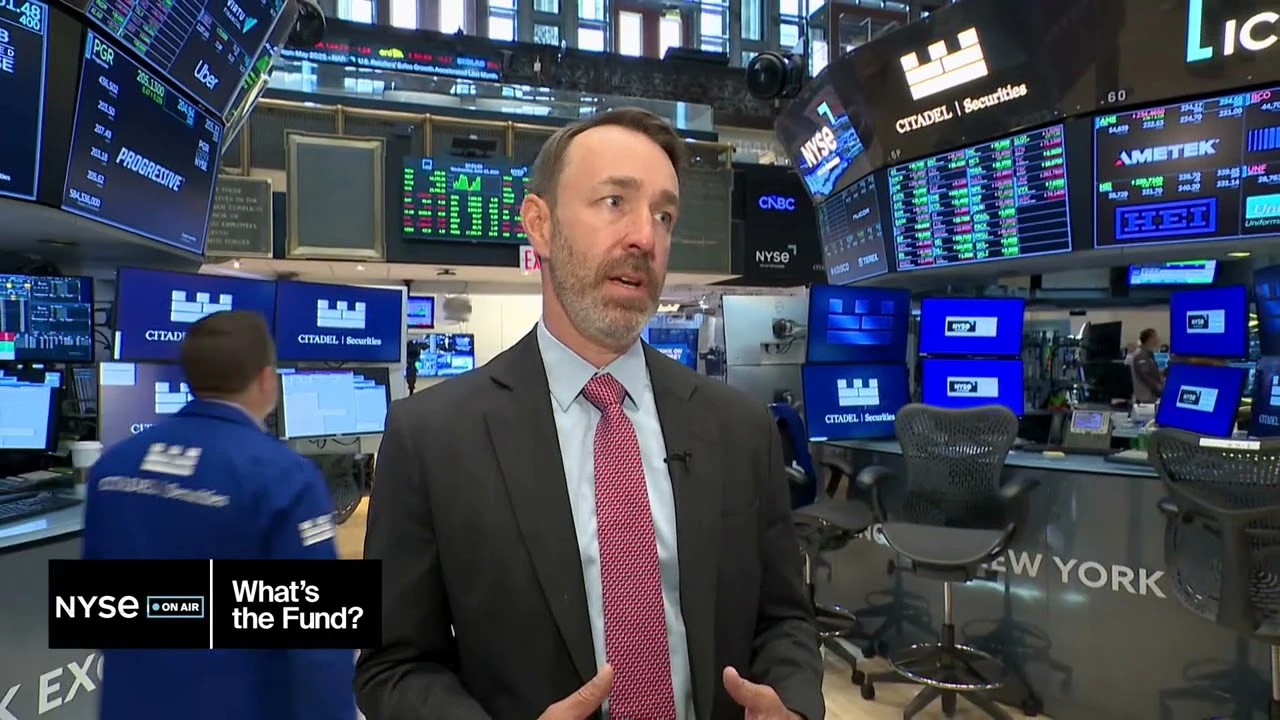
What's the Fund | Ocean Park Diversified Income ETF (DUKZ)
James St Aubin, Chief Investment Officer at Ocean Park Asset Management, discuss the DUKZ ETF, exposing investors to the whole spectrum of asset classes in the fixed income markets, through their rules-based process.

Browse all educational columns



Active Trader Report: Use of Leveraged & Inverse ETFs Way Up
Direxion partnered with Compound Insights and Vanda to explore what’s driving the evolution of active trading — and how active traders are using leveraged and inverse funds across equities, single stocks, commodities, and volatility.