ETF model portfolios designed for real investor needs. Discover →



Real Estate ETFs: What’s set to grow, and what to avoid
Let’s look at where investors should focus their attention when it comes to specific real estate ETFs. Both in terms of where to invest, and where to avoid.


Keep up with what matters in ETFs
Get timely ETF insights, market trends, and top ideas straight to your inbox.
Your newsletter subscriptions with us are subject to ETF Central's Privacy Policy and Terms and Conditions.
Exchange-traded funds (ETFs) in the real estate sector continued to boom during the past few months, as investors seek out passive income to make up for the losses felt in the market.
However, not all real estate ETFs are equal. In fact, while some shares are up this year, others continue to fall. This would be especially true in markets tied to consumer spending, such as retail real estate investment trusts.
With that in mind, let’s look at where investors should focus their attention when it comes to specific real estate ETFs. Both in terms of where to invest, and where to avoid.
Like what you're reading?
Stay in the loop — get the latest ETF insights: trends, analysis, and expert picks.
Vanguard Real Estate Index Fund (VNQ)
The Vanguard Real Estate Index Fund (VNQ) has been a top choice for years for those seeking to invest in real estate. The key to this fund is diversification, which offers a wide range of real estate exposure creating steady cash flow.
The fund currently has around 160 real estate companies in its portfolio, which provides that sought-after diversification. The top 10 holdings, however, take up about 40% of the fund. So it’s definitely not without risk. That being said, for those seeking access to a diversified set of United States real estate trusts, VNQ is a solid choice.
Right now, however, the ETF is down about 32% year-to-date. While you get a 3.07% dividend yield and an incredibly cheap 0.12% expense ratio, it could be that shares drop further in the near term. Such is the beast of investing in a diversified portfolio during this downturn.
Goldman Sachs Future Real Estate and Infrastructure Equity ETF (GREI)
The Goldman Sachs Future Real Estate and Infrastructure Equity ETF (GREI) is another strong option and provides even more diversification. This time, it aims at focusing on the growing and stable area of infrastructure, providing diversification through a global portfolio.
The ETF is also actively managed to shift its focus during times of change. This is what it was founded on, with environmental sustainability and social sustainability part of its key focus. Yet the fund will also shift its investments based on innovation, experiences over things, and demographic changes on a global scale.
The risk here isn’t exactly clear since we don’t have a lot of historical data on the ETF. However, we can see that shares are down about 31% year-to-date as of writing. Further, GREI offers a more expensive expense ratio at 0.75%.
Virtus Real Asset Income ETF (VRAI)
Yet the ETF that could potentially do the best during this market volatility has to be Virtus Real Asset Income ETF (VRAI). VRAI is different because it focuses on income. Rather than investing in sectors, infrastructure, residential properties or whatever the case is, it focuses on real estate companies that are just doing well.
This allows VRAI to create growth opportunities time and again, as well as shift during volatile market periods. That includes now, where the ETF could provide investors with protection against inflation and a dropping market.
Right now, VRAI invests in real estate funds involved mainly in basic materials, real estate in general, energy, utilities, and communication services. This has allowed the company to continue with a solid dividend yield of 3.88% as of writing.
In fact, VRAI also boasts a year-to-date return of about 4%! That market-beating performance shows exactly why investors have considered the ETF. And with an expense ratio at 0.55%, it falls just down the middle of the previously mentioned ETFs.
Bottom line
All three of these ETFs could be strong choices for investors seeking exposure to the growth potential of the real estate sector. However, as with any investment, it is important that personal considerations are taken into account when making a selection, including risk appetite and time horizon. ETF Central’s fund screener is a great way to find a suitable fund and currently identifies 49 ETFs within the real estate sector.
Please note this article is for information purposes only and does not constitute investment advice.

Latest ETF News
See all ETF newsCould Water ETFs Be the Next AI Bottleneck Trade?


What is a Boomer Candy ETF?

ETF Comparison: NEOS Nasdaq-100 High Income ETF (QQQI) Versus Goldman Sachs Nasdaq-100 Premium Income ETF (GPIQ)





 Advantages of ETFs over Mutual Funds1/6
Lower Costs
In this guide, we'll explore the advantages of ETFs over mutual funds, giving you valuable insights into why ETFs have gained significant popularity among investors like yourself.
Leveraged ETFs: Unlocking the Potential for Amplified Returns1/6
Understanding Leveraged ETFs
Explore leveraged ETFs: potential for amplified returns & risks. 5 ETFs to consider across equities, commodities & fixed income.
What is a Leveraged ETF?1/6
Introducing Leveraged and Inverse ETFs
In this guide, we'll dive into the world of leveraged ETFs, exploring their definition, mechanics, potential risks, and rewards.
Recent educational content

ETF Trends
ETF Industry KPIs September 8, 2026
This week’s KPI data overview highlights key metrics and trends shaping the ETF landscape.

ETF Trends
ETF Industry KPIs August 31, 2026
This week’s KPI data overview highlights key metrics and trends shaping the ETF landscape.
ETF Trends
ETF Industry KPIs August 24, 2026
This week’s KPI data overview highlights key metrics and trends shaping the ETF landscape.
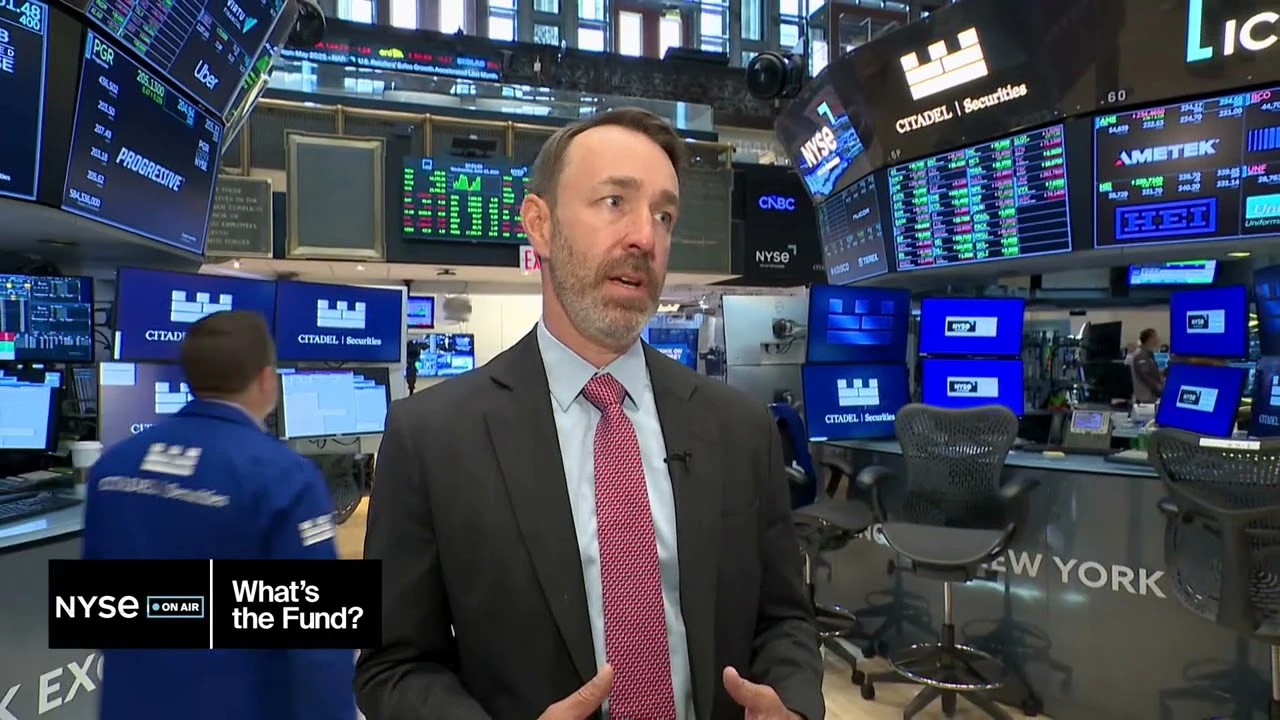
What’sTheFund
What's the Fund | Ocean Park Diversified Income ETF (DUKZ)
James St Aubin, Chief Investment Officer at Ocean Park Asset Management, discuss the DUKZ ETF, exposing investors to the whole spectrum of asset classes in the fixed income markets, through their rules-based process.

Browse all educational columns



Build and Analyze Your ETF Portfolio Like a Pro
Create your own ETF portfolio in minutes and instantly see allocations, exposures, performance, and risk. Visualize diversification across asset classes, regions, and sectors. Stress-test ideas, compare benchmarks, and refine your strategy with professional-grade analytics.