NYSE CRTR Economy Event Watch the replay →



Real Estate Earnings Surge: Are REITs Set for a Revival?
Earnings Preview: A REIT Revival? Insights into real estate earnings, sector trends, M&A prospects, and dividend policies as Fed rate cuts may boost REIT momentum.


Keep up with what matters in ETFs
Get timely ETF insights, market trends, and top ideas straight to your inbox.
Your newsletter subscriptions with us are subject to ETF Central's Privacy Policy and Terms and Conditions.
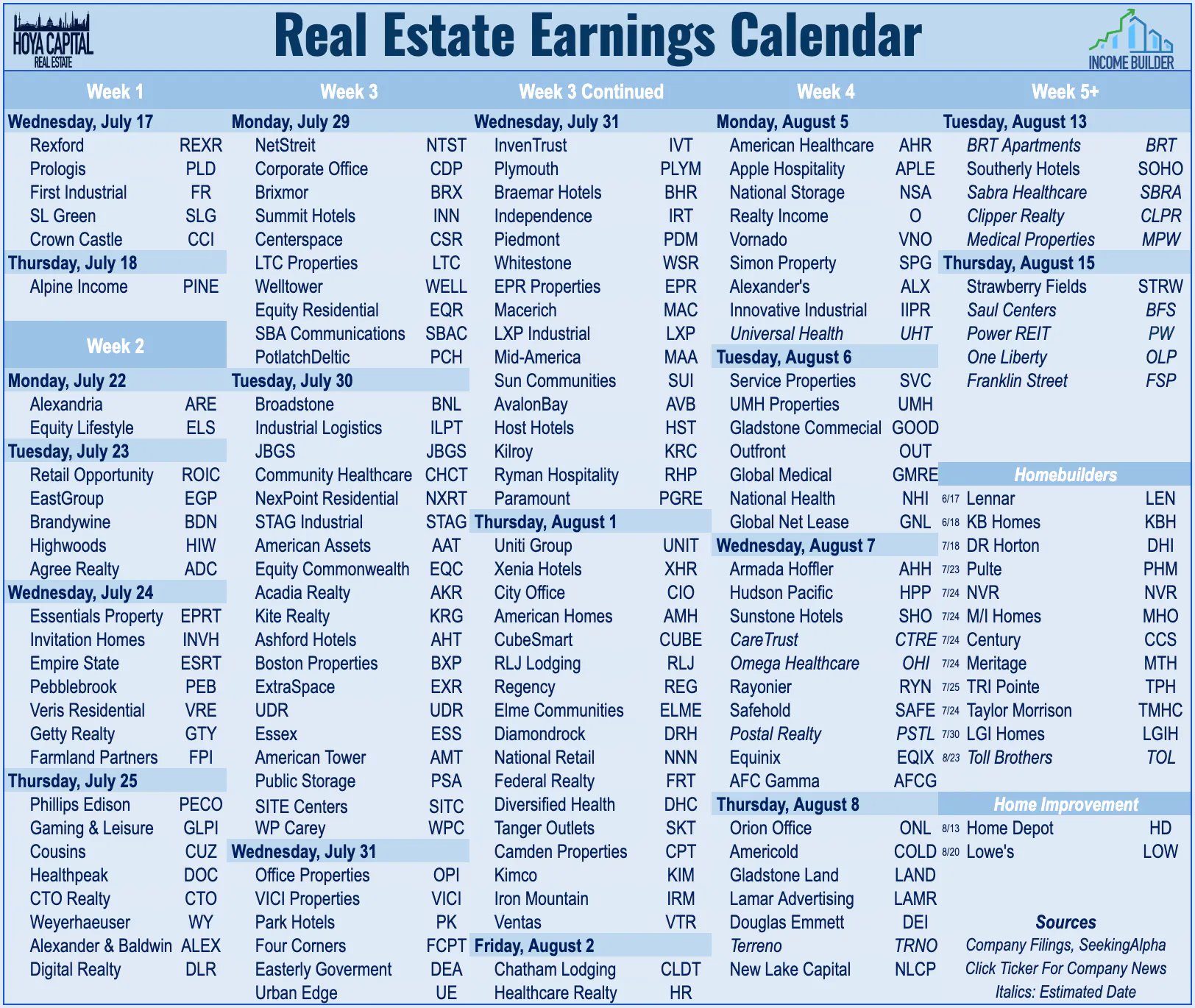
Real estate earnings season started this week. Over the next month, results from more than 175 equity REITs, 40 mortgage REITs, and dozens of housing industry companies will offer crucial insights into how the sector is adapting to the changing interest rate environment. This report highlights the key themes and metrics to monitor across various real estate property sectors this earnings season. Below, we’ve compiled the earnings calendar for equity REITs and homebuilders.
Like what you're reading?
Stay in the loop — get the latest ETF insights: trends, analysis, and expert picks.
Impact of Rising Interest Rates
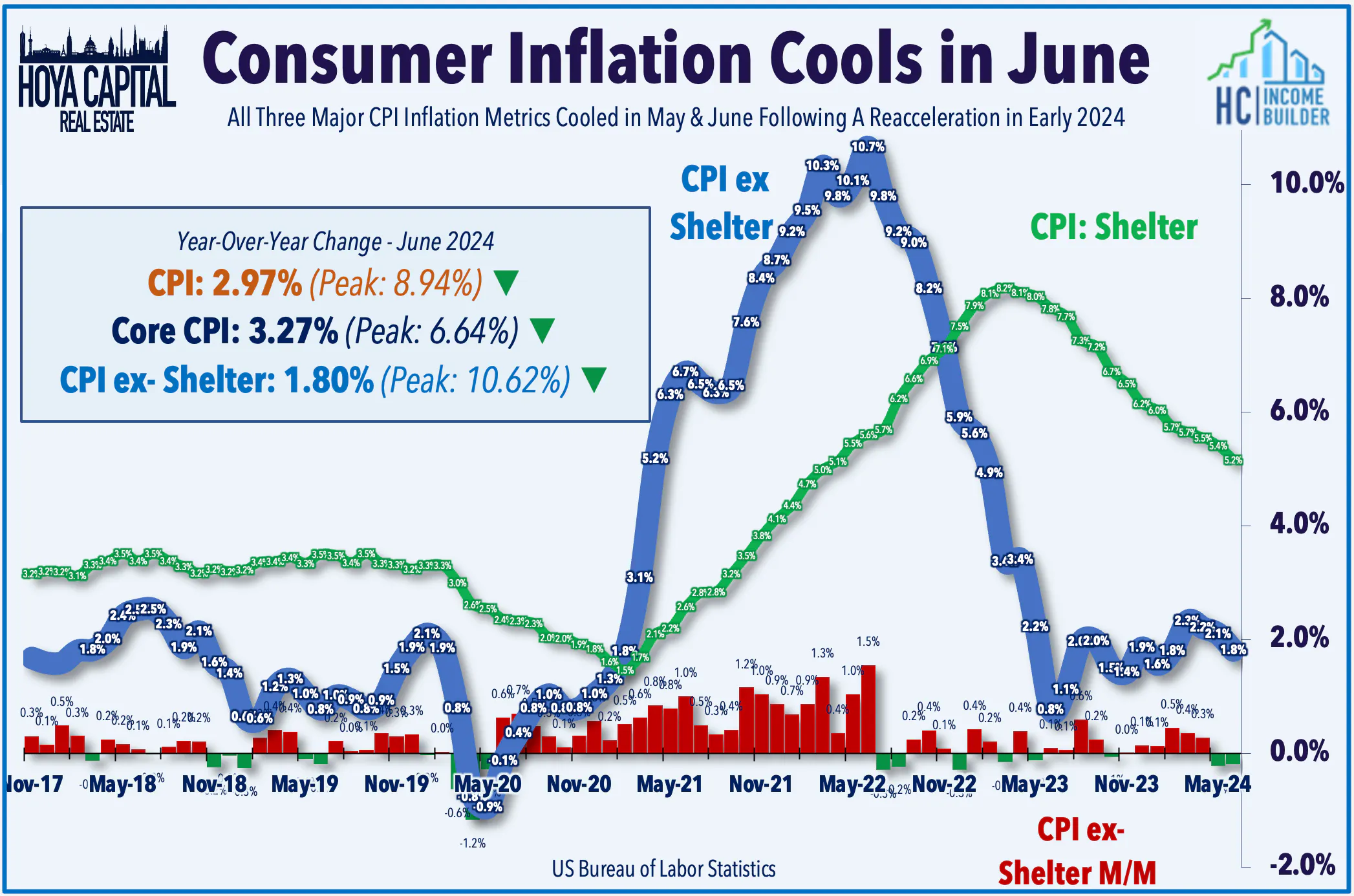
Even the most financially robust public REITs with low debt levels could not avoid the impact of the "higher for longer" interest rate narrative. The survival of many heavily-leveraged private market players is in significant doubt as the refinancing clock ticks louder. Sentiment and macroeconomic conditions have shifted considerably in the past three months, fueled by several months of encouraging inflation data, hinting again at a "soft landing" for the U.S. economy. This shift has changed the central bank's focus from "how many rate hikes" to "how many rate cuts?" Swaps markets now price in a 98% probability that the Fed will cut rates in September, implying 2.52 rate cuts in 2024 - the most "dovish" interest rate environment since early this year.
REITs' Recent Performance and Potential Upside
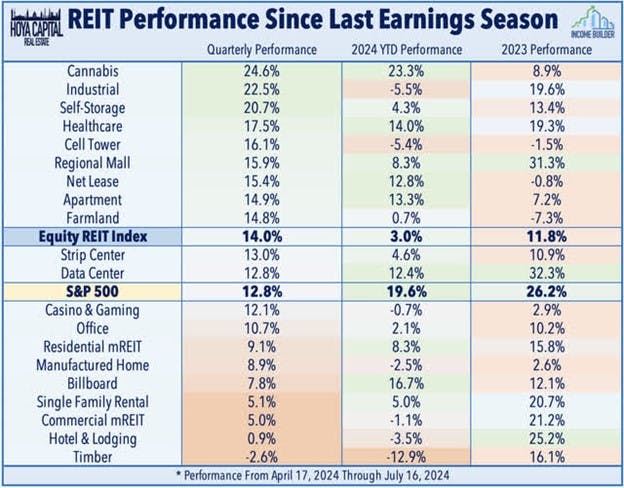
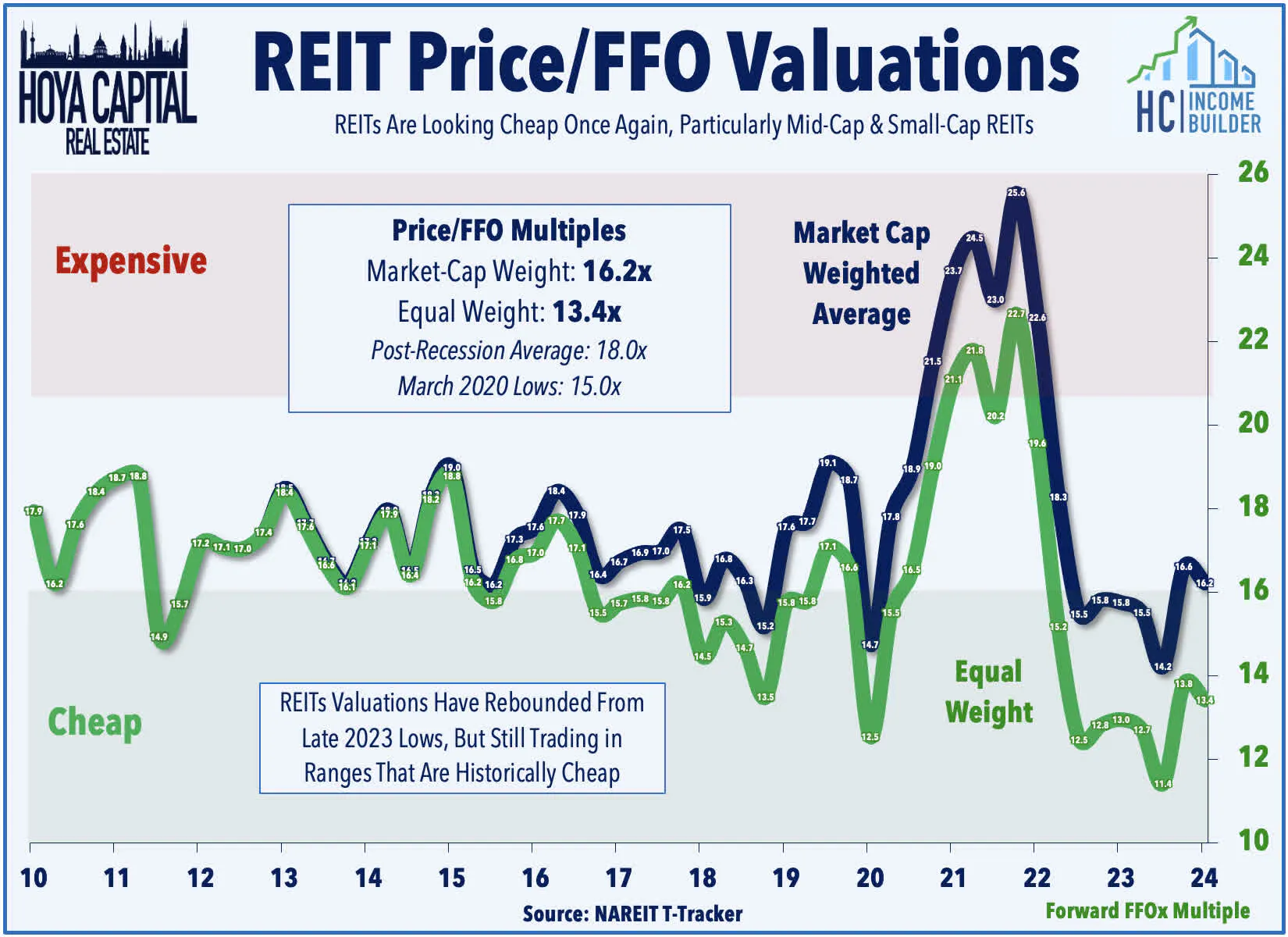
The sector that stands to gain the most from Federal Reserve rate cuts, REITs, enter this earnings season with positive momentum after a challenging two-year period, during which they underperformed the broader S&P 500 (SPY) by roughly 50 percentage points. Since the start of the Fed's rate hiking cycle in March 2022, this significant underperformance gap has surpassed that of the Great Financial Crisis, despite a relatively stable environment for most property sectors outside the troubled office sector. Last earnings season in April marked the low point for the real estate sector, with the Equity REIT Index (VNQ) trading at its lowest of the year, having given back all of the late-2023 rebound. Since mid-April, the Equity REIT Index has gained 14.0%, outpacing the S&P 500's 12.8% gains, with the bulk of this increase occurring in the past two weeks.
Key Themes for This Earnings Season
Before diving into the specific sector-by-sector metrics we're focused on this earnings season, let's discuss the four higher-level themes:
Calling a Bottom? - Macro Commentary
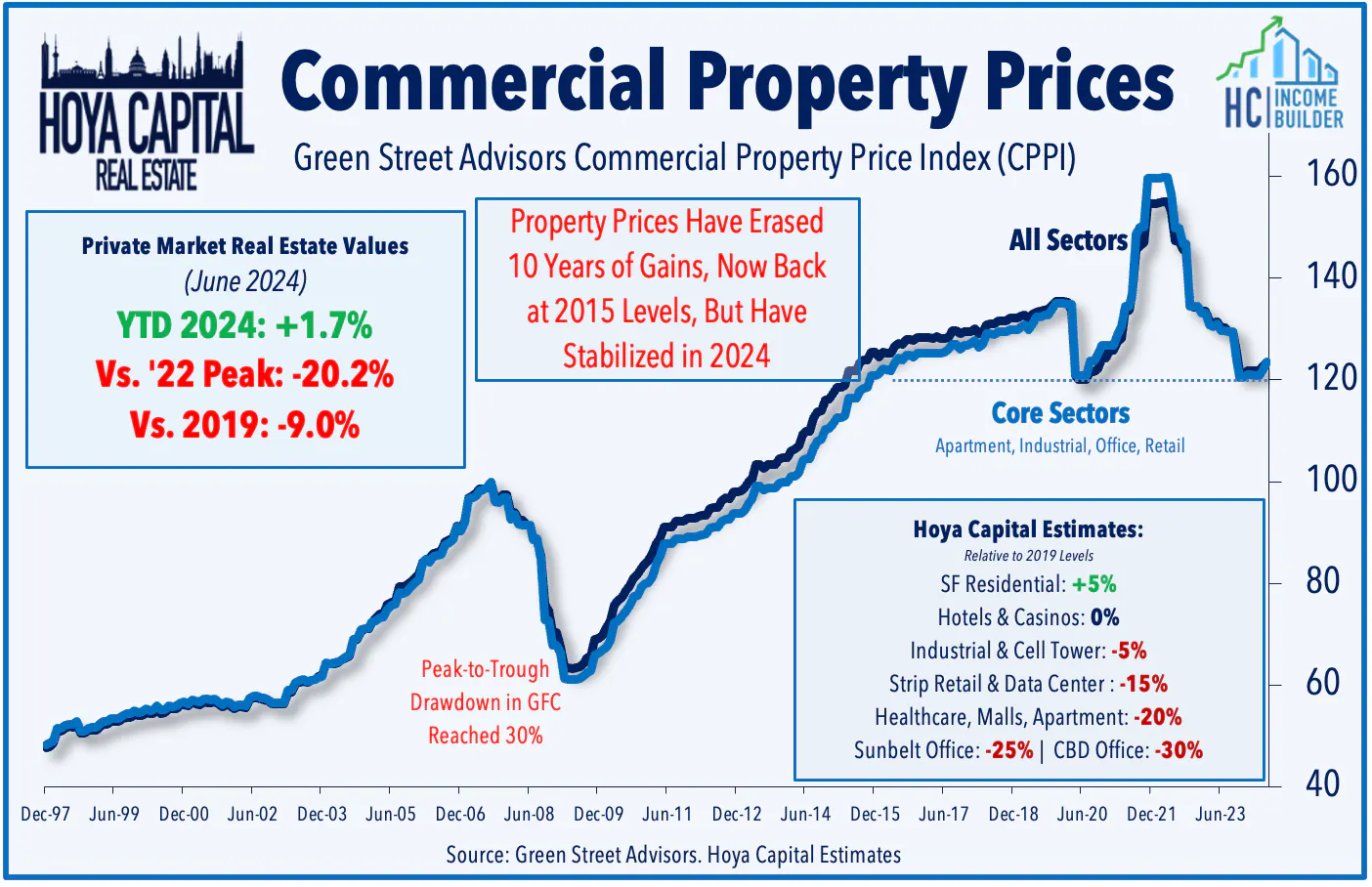
Even before the rate retreat sparked a "REIT revival" in recent weeks, there were signs of a "bottoming" in private market real estate valuations in late Spring and early Summer. Green Street Advisors released its monthly Commercial Property Price Index (CPPI) last week, showing back-to-back monthly increases in private-market CRE valuations for the first time since 2021. The CPPI, which had dropped over 20% from its peak in 2022 to its lows in early 2024, rose 0.7% in June after a similar 0.7% increase in May, bringing the year-to-date increase in CRE values to 1.4%. We've seen a few "false starts" over the past two years in the public markets where hopes of easing monetary policy sparked short-lived REIT rebounds. However, a bottoming in private market valuations suggests this rebound might have more staying power. We're closely watching macro commentary from REITs regarding this "bottom" call.
M&A Environment: Animal Spirits Back?
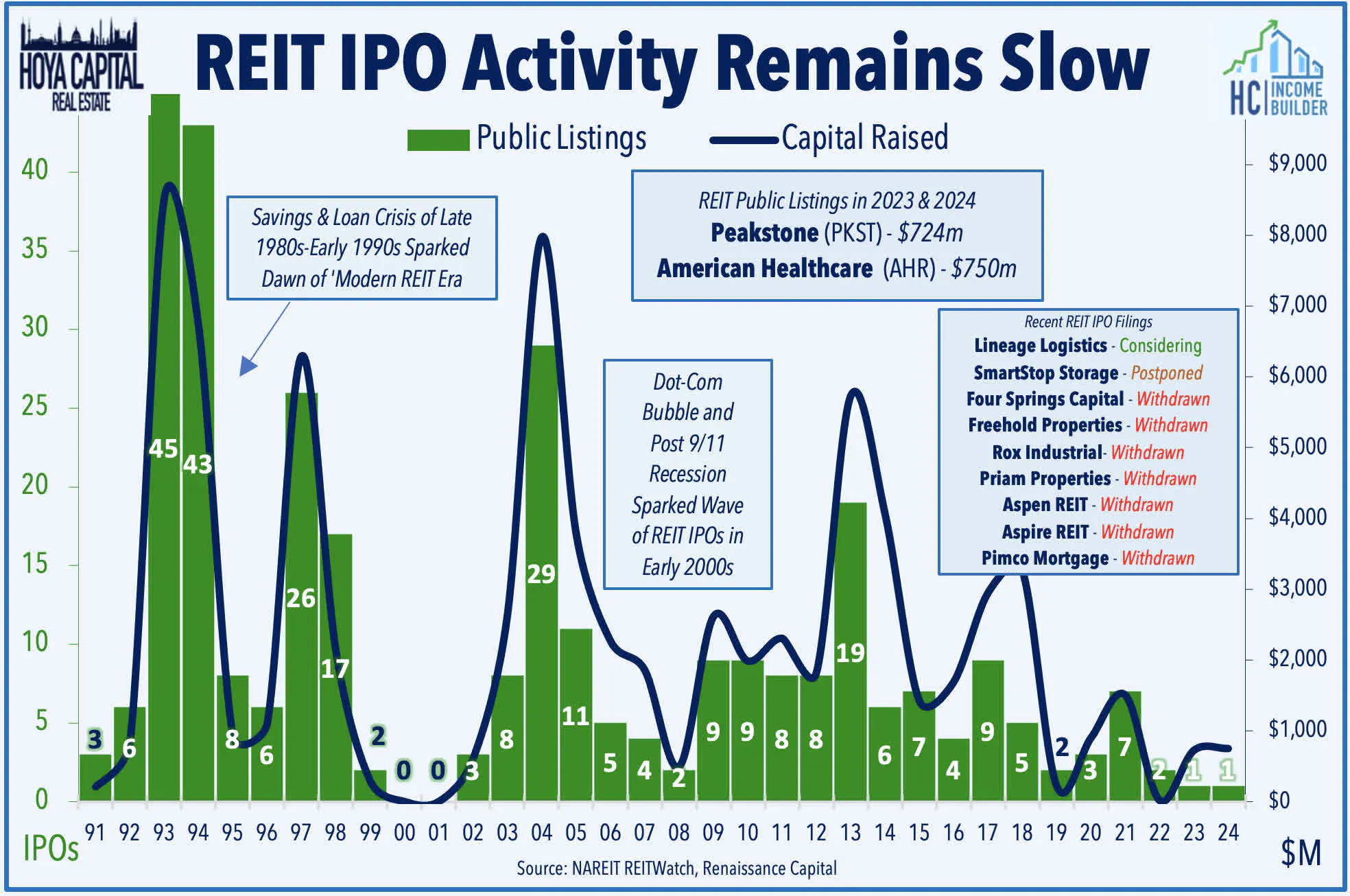
Macroeconomic conditions are finally aligning in a way that could revive the long-dormant "animal spirits" for public REITs through IPOs and acquisitions of debt-burdened private portfolios. Following a historically quiet period of REIT IPO activity since early 2022, cold storage operator Lineage Logistics (LINE) filed SEC paperwork this week for a planned $3.85 billion initial public offering, potentially the largest IPO this year within the REIT sector and U.S. equity markets. Lineage, the world’s largest cold storage operator with a network of roughly 480 facilities totaling over 84.1 million square feet across North America, Europe, and Asia-Pacific, plans to list on Nasdaq under ticker "LINE" and use the IPO proceeds to pay down debt. This strategy could become more common if REIT equity valuations maintain a premium to private markets.
For debt-dependent entities, conditions have moved from highly restrictive to moderately restrictive. Fitch reported last week that U.S. CMBS delinquency rates rose to 2.33% in June, up 42 basis points from last year. Trepp reported a more significant rise, with U.S. CMBS delinquency rates increasing to 5.35% in June, up 145 basis points from last year. Most of this increase is due to ongoing office distress, but investors are also closely monitoring the multifamily space given its skew towards smaller "mom and pop" investors who lack the financing options of institutional players. Consolidation opportunities for REITs may arise from debt-burdened private portfolios.
Updated Full-Year 2024 Outlook
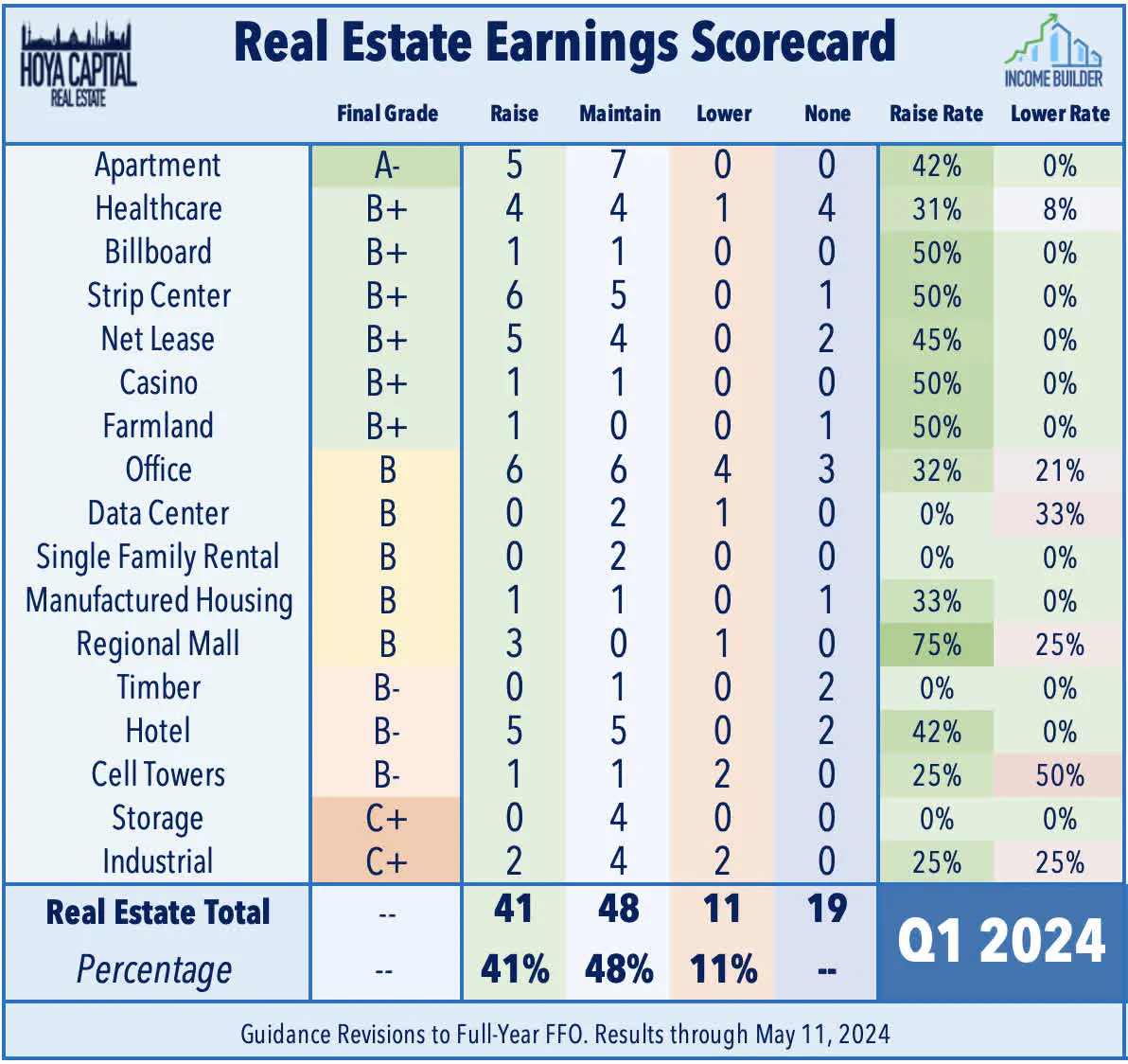
We're focused on these REITs' updated 2024 guidance, particularly any changes in property-level fundamentals, which have remained surprisingly resilient across most property sectors during the Fed's aggressive rate-hiking cycle. Notable 'green shoots' observed in recent commentary and industry data include: 1) surprising strength in office leasing activity; 2) continued firming in residential rents, especially in limited-supply markets and sub-sectors; 3) a "bottoming" in logistics-related demand amid a rebound in manufacturing activity; 4) a slight cooldown in consumer-oriented trends including retail and travel demand; and 5) still-limited appetite for new ground-up development across all property sectors. The REIT sector is coming off a solid first-quarter earnings season with a 41% FFO "raise rate," slightly above the historical REIT sector average for Q1. A similar raise rate in the second quarter would be well received by the market.
Dividend Policy: Office In Focus
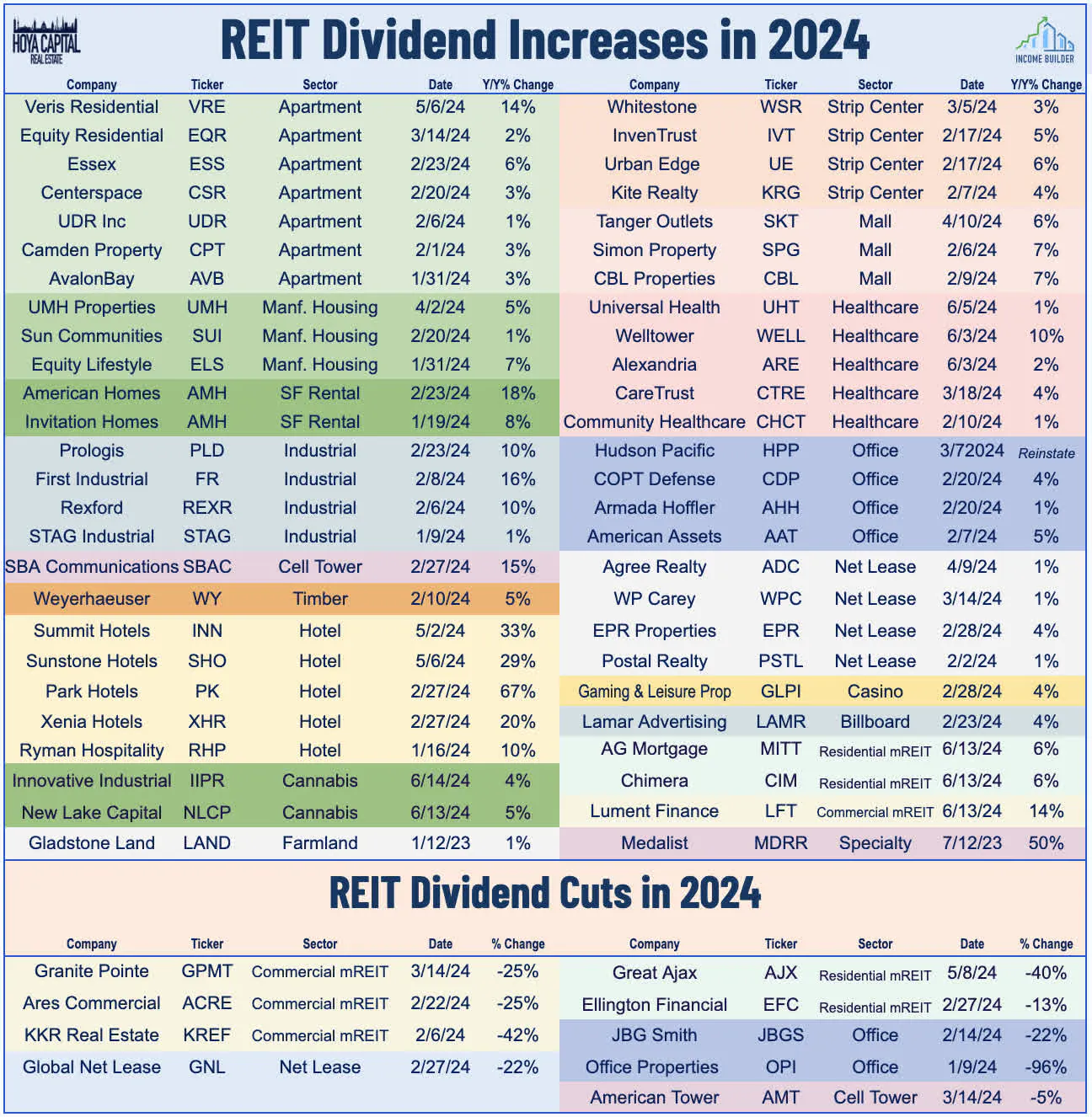
So far this year, 52 REITs have raised their dividends, while 9 REITs have reduced their payouts. On a market-cap-weighted basis, equity REITs pay an average dividend yield of 3.6% - a sizable premium to the S&P 500's 1.3% yield. While sector-level dividend coverage ratios remain healthy, with an average payout ratio of around 70% - slightly below the long-term historical average - dividend commentary will remain a major focus for office and mortgage REITs. These sectors have been responsible for nearly all recent dividend reductions across the REIT sector over the past two years. We believe the "bleeding" from dividend cuts in these sectors is largely contained, and we foresee some dividend increases from office REITs over the next quarter or two, which could boost investor confidence.
Office & Hotel REIT Earnings Preview
Office REITs
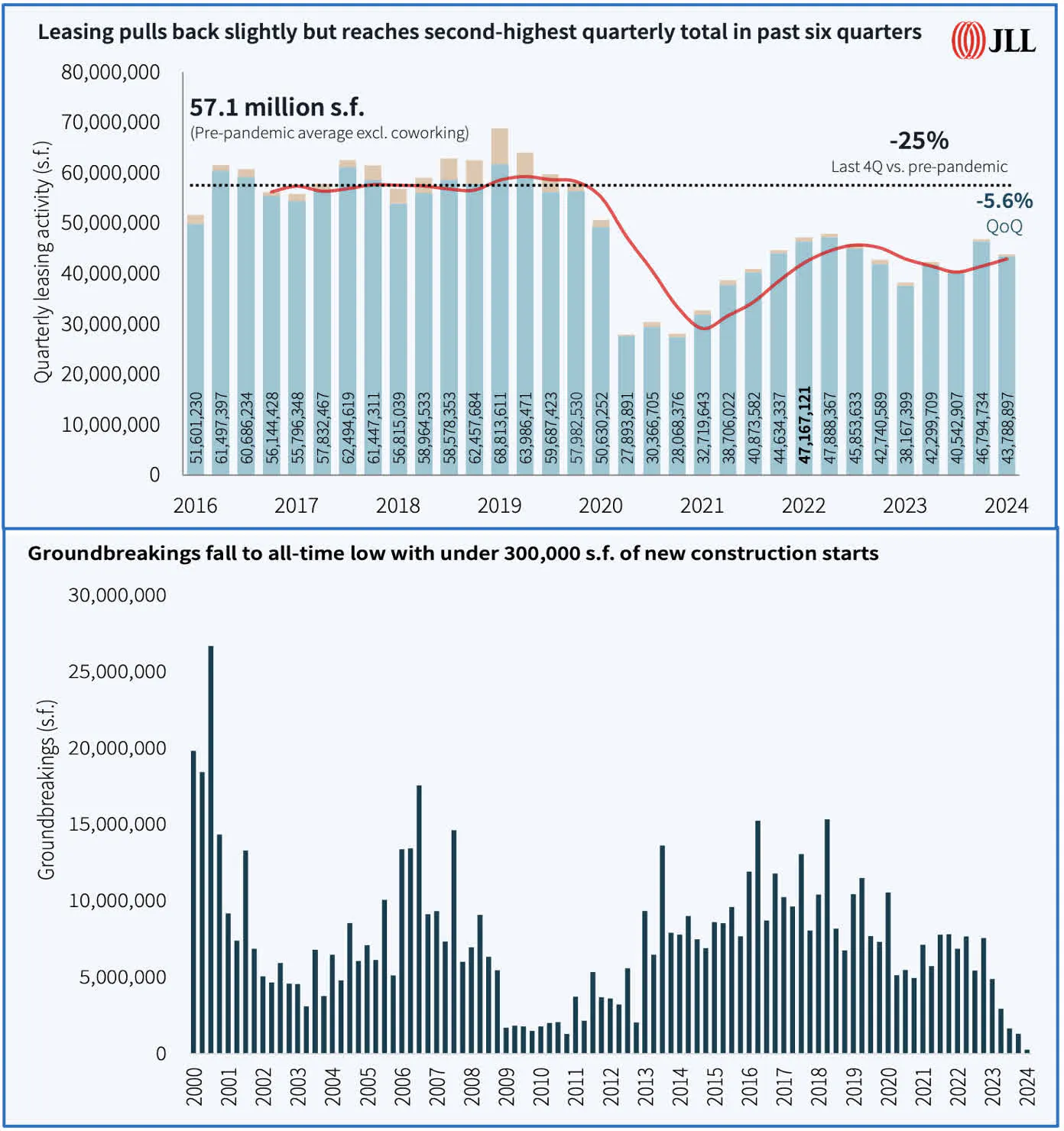
Despite universal pessimism about the office sector, recent months have shown surprisingly positive trends. Brokerage firm JLL Inc (JLL) released its quarterly office update this week, revealing very encouraging signs for the struggling office sector. National second-quarter leasing volume jumped 15% from the first quarter to 50.2 million square feet, the highest level in over four years and up 7% from a year ago. This activity level is within 10% of pre-pandemic levels, lifting the trailing twelve-month average to within about 20% of pre-pandemic averages. JLL notes a growing volume of larger transactions above 100,000 square feet, with nearly double the activity of large-volume leases in Q2 compared to a year earlier. Forward-looking metrics suggest that this elevated activity level will be sustained over the next several quarters. This quarter, we’re focused on whether this steadying of fundamentals will be enough to stabilize the sector.
Hotel REITs
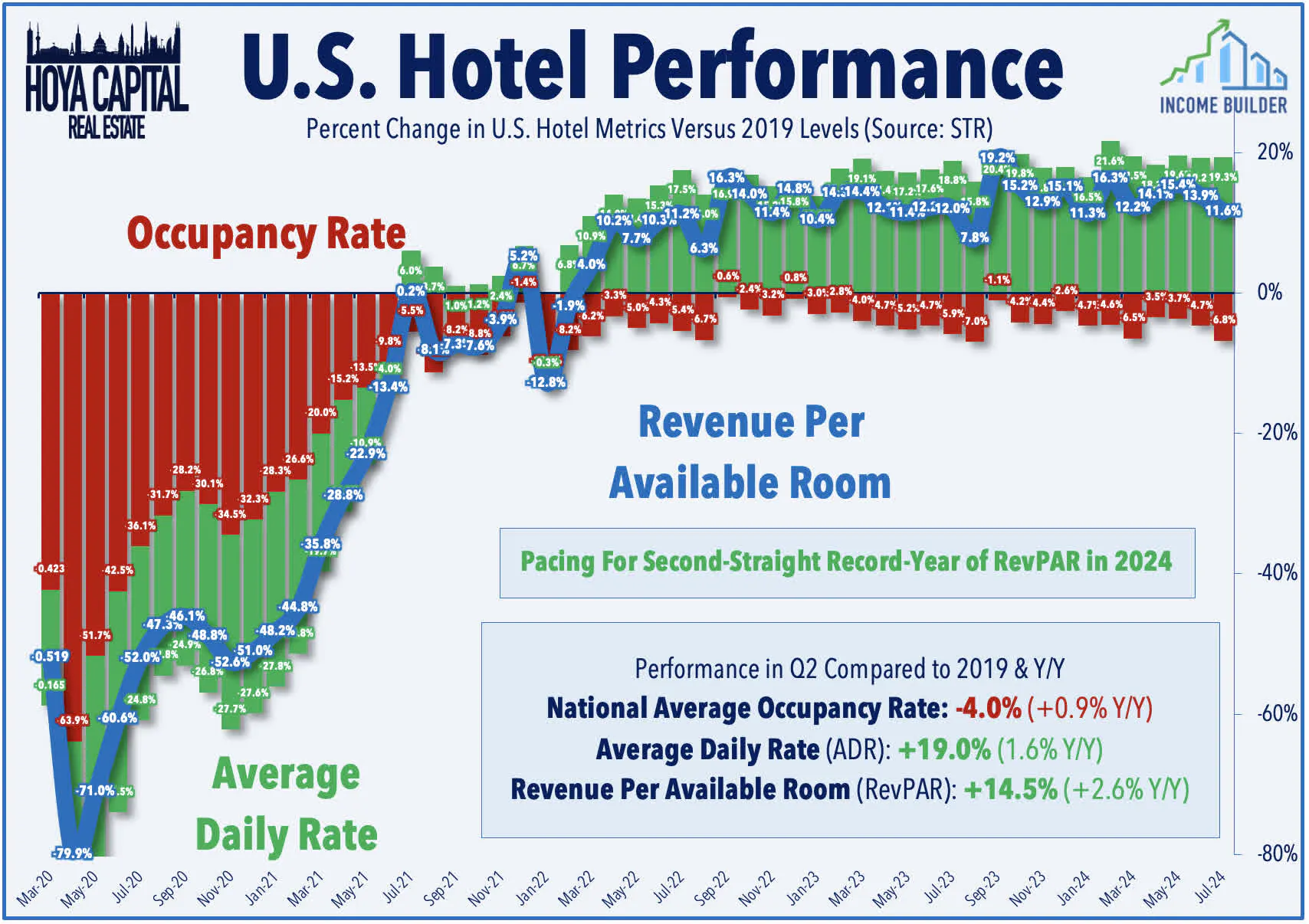
On the opposite end of the spectrum, the U.S. hotel industry had a record-setting year of operating performance in 2023, with travel demand exceeding pre-pandemic levels by 5-10%. After a strong first quarter, there has been a slight moderation in travel demand in the second quarter across various high-frequency metrics. TSA Checkpoint data shows that passenger throughput was roughly 3% above 2019 levels in July - a mild slowdown from the 8% comparable increase in Q1 and 6% increase in Q2. Hotel data provider STR reports that industry-wide Revenue Per Available Room (RevPAR) was 14% above 2019 levels in Q2, steady with Q1 trends, as solid pricing trends offset some recent weakness in occupancy rates. Despite the slight demand moderation, we expect another solid quarter from hotel REITs and anticipate these REITs to be leaders in dividend growth again in 2024.
Residential Real Estate Earnings Preview
Apartments
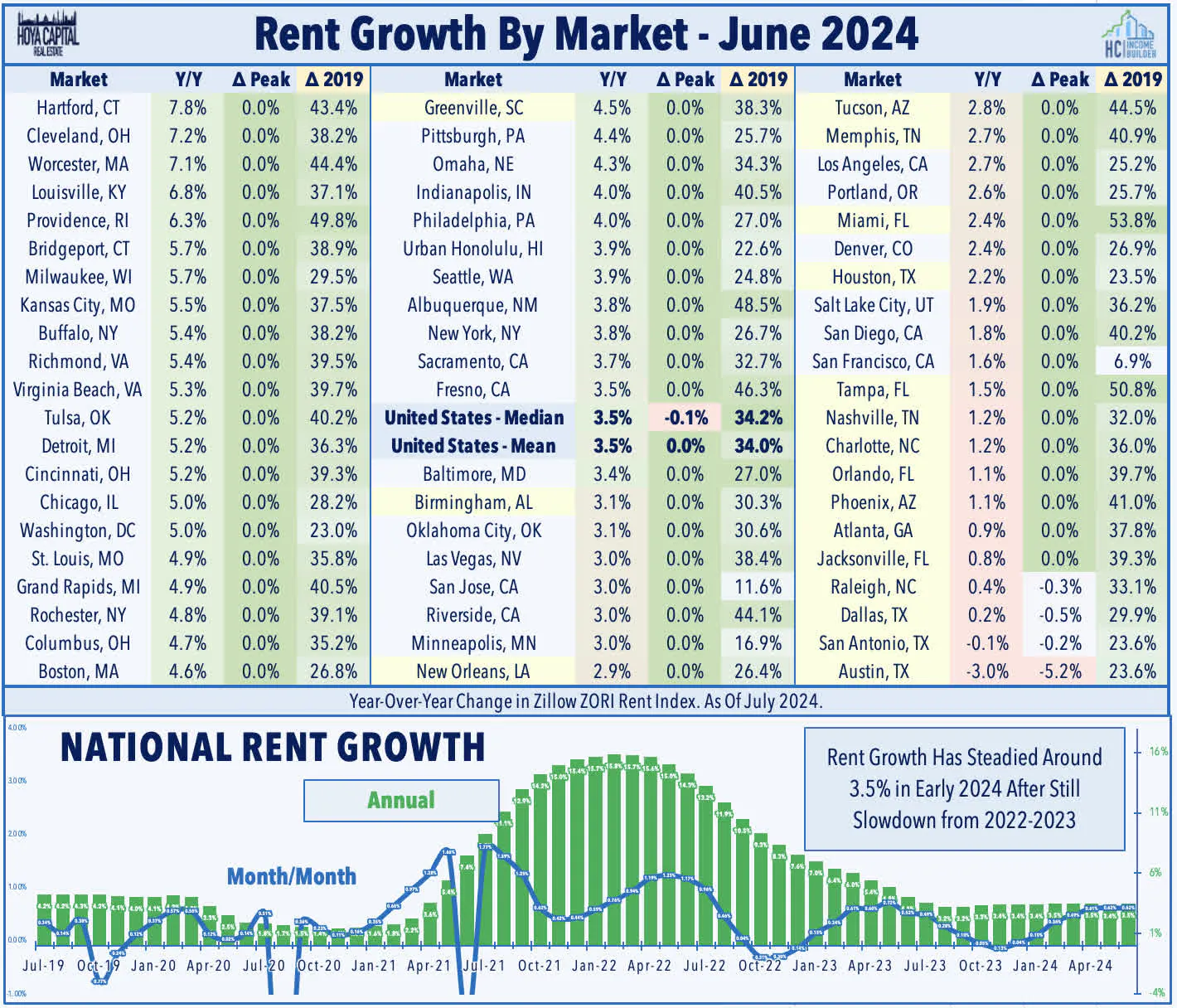
For multifamily housing, oversupply concerns have eased recently as new construction starts have slowed while demand has been robust. RealPage reported last week that apartment demand "surged" in the second quarter, rapidly closing the supply-demand gap. Some 390,000 apartment units were absorbed over the past 12 months, ranking as the eighth-largest figure on record. This demand surge comes at a critical time for the multifamily market, which has seen a record number of new units delivered - over half a million - in the past twelve months, with this pace expected to continue until early 2025 before moderating into 2026. Strong demand has prevented a further deterioration in rental rates, which remained marginally positive year-over-year in June, with 0.1% annual growth nationally. RealPage highlights a strong correlation between rent growth and supply levels, with high-supply cities like Austin, Atlanta, and Dallas seeing rents decline, while limited-supply cities posted mid-single-digit rent increases. We’ll closely watch rent growth metrics on new and renewed leases, commentary on supply conditions, and any signs of external growth appetite.
Single-Family Rentals
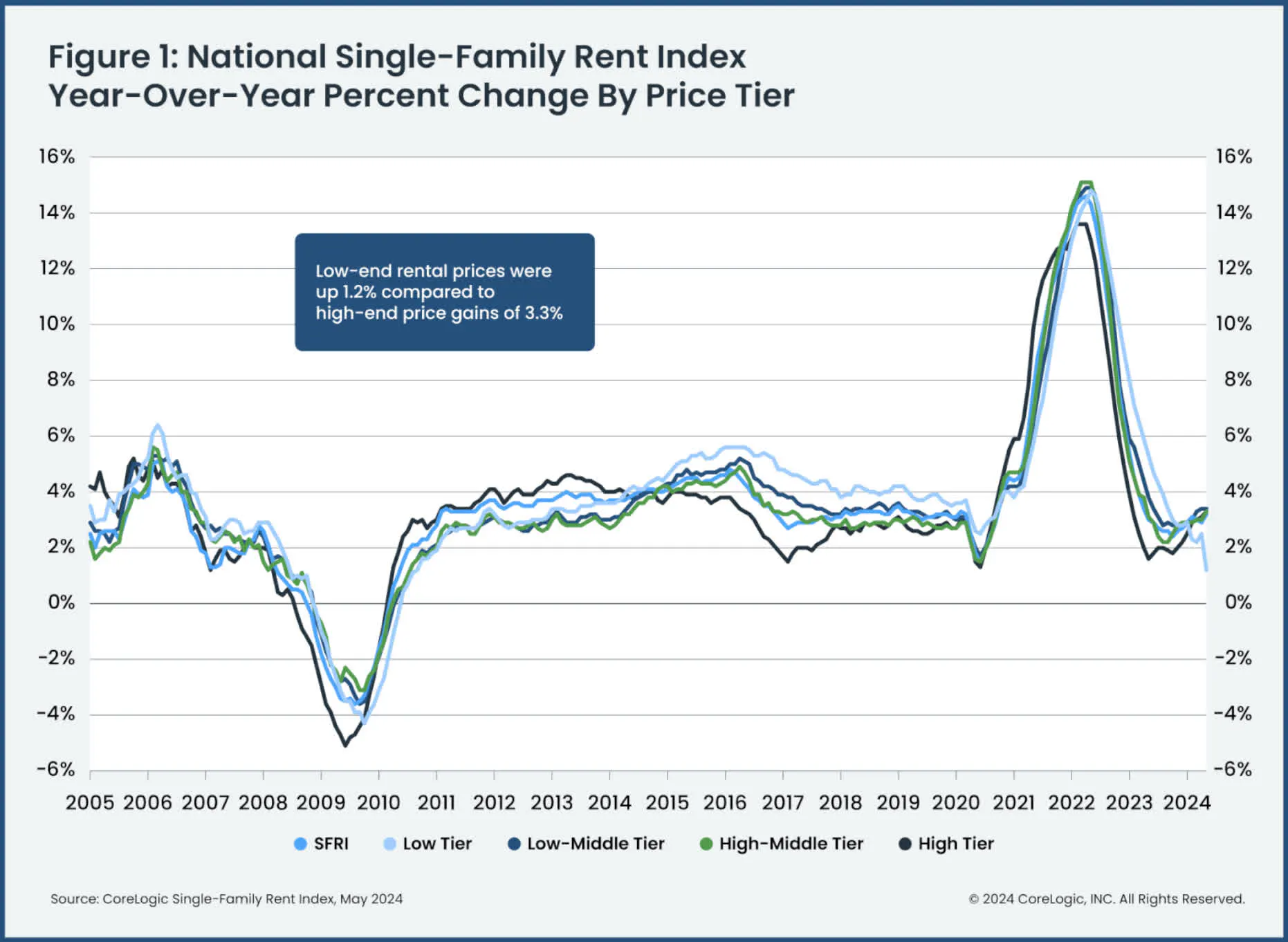
Supply growth has remained more contained in single-family rentals, keeping rent growth buoyant throughout the rent cooldown. The latest CoreLogic report showed that single-family rental (SFR) rent growth strengthened throughout the second quarter to a 3.2% annual rate in May, the highest annual growth rate since April 2023. With rents likely to settle in the "inflation-plus" range of 3-5% over the next several quarters, expenses, especially insurance and property taxes, will be the "wild card." Double-digit percentage increases in insurance premiums and property taxes were common last year, driven by a "catch-up" effect reflecting the roughly 25% increase in home values over the past two years. The brief period of negative home price appreciation in 2023 and tighter credit conditions quickly neutralized speculative housing market activity, including "fix-and-flips" and highly-leveraged short-term rental startups. These more challenging operating and financing conditions should provide institutional operators with easier pathways to expand their portfolios. Alongside rent growth metrics, we're looking for insights on external growth opportunities, particularly whether these REITs are noticing any areas of private-market distress that might present acquisition opportunities. This is especially relevant given Blackstone's recent privatization of Tricon Residential earlier this year.
Homebuilders
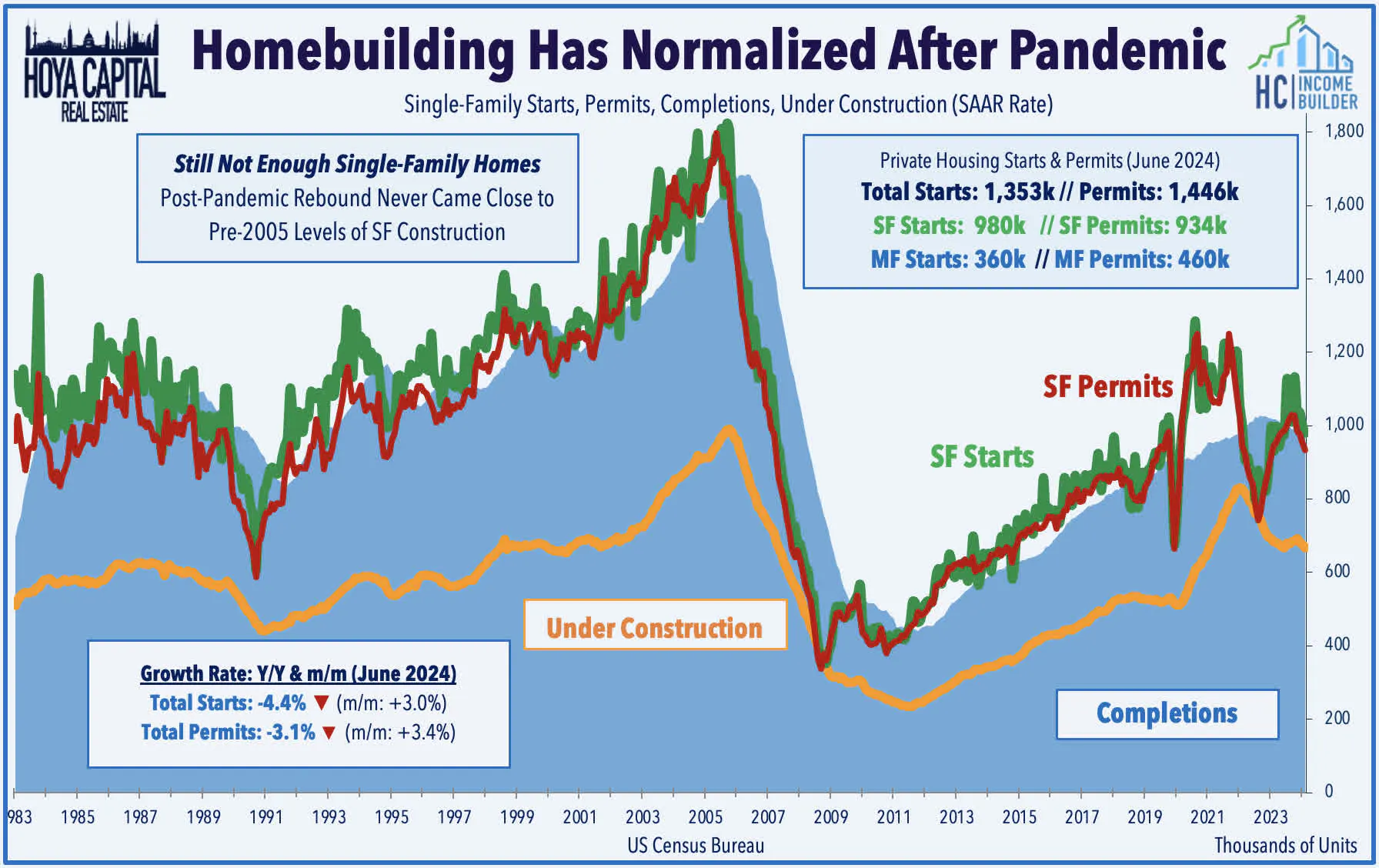
For homebuilders, it’s all about rates. Early this year, the U.S. homebuilding sector appeared poised to thaw from its deep freeze induced by aggressive monetary tightening, but the mid-year mortgage rate resurgence again pushed affordability limits for prospective buyers and prompted a pullback in speculative development. Despite this, the higher mortgage rates have only delayed - not permanently altered - the secular fundamentals supporting the single-family market: a "lost decade" of single-family construction. Public builders have sustained relatively solid activity levels throughout this two-year deep freeze by gaining market share from smaller competitors lacking the scale to compete in the ultra-competitive environment. Following an incredible rally of nearly 90% in 2023 and further gains of 20% in 2024, builders face a high bar. We’re focused on net orders, expecting a modest positive inflection this quarter after roughly two years of year-over-year declines, along with cancellation rates and gross margins. With builders no longer trading at deep discounts, further upside will require operational excellence.
Tech and Industrial REITs Earnings Preview
Industrial REITs
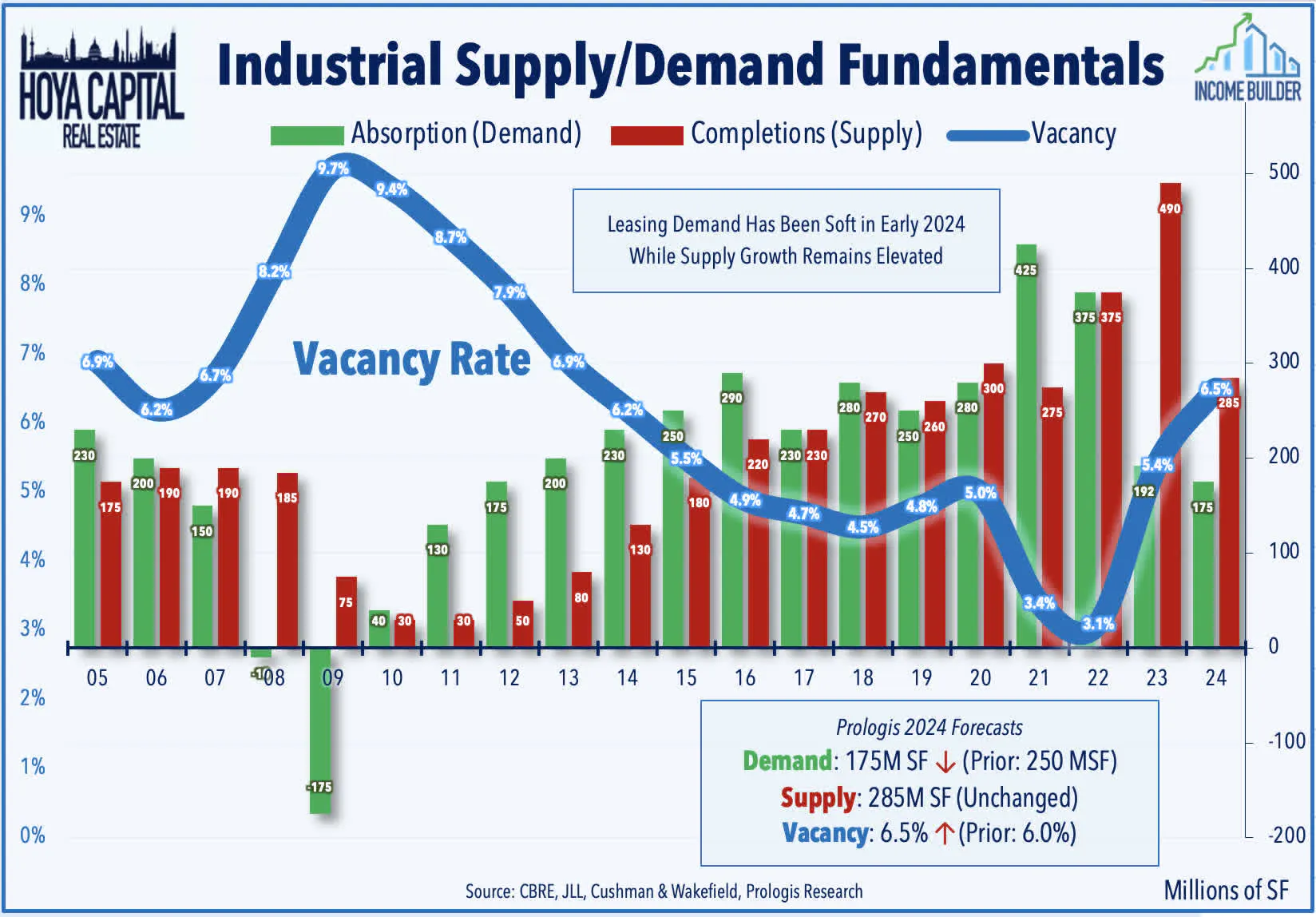
Among the "losers" of first-quarter earnings season, industrial REITs are off to a surprisingly solid start to the second quarter, with initial results indicating a bottoming in fundamentals and solid demand trends in recent months. Logistics stalwart Prologis (PLD) called a bottom in market vacancy, noting “subdued but improving” demand logistics alongside a moderation in supply growth. Prologis estimated that global market rents declined 2% during the quarter, with Southern California accounting for 75% of this decline. Rexford (REXR), which focuses exclusively on this region, noted that Southern California market rents fell another 2% during the quarter and were roughly 5% lower from a year earlier, but it achieved mark-to-market rent increases of 49% on a cash basis in Q2, a modest acceleration from the prior quarter but below the 60% increases on its leases from 2022-2023. Sunbelt-focused First Industrial (FR) delivered strong results and boosted its full-year NOI and FFO outlook due to strong leasing activity in its speculative developments. FR commented that "fundamentals are slowly improving, although market vacancy ticked up as expected and decision-making remains deliberate." We’re interested in whether other industrial REITs share this outlook on supply-demand fundamentals and any commentary on prospects for private market acquisition activity.
Cell Towers
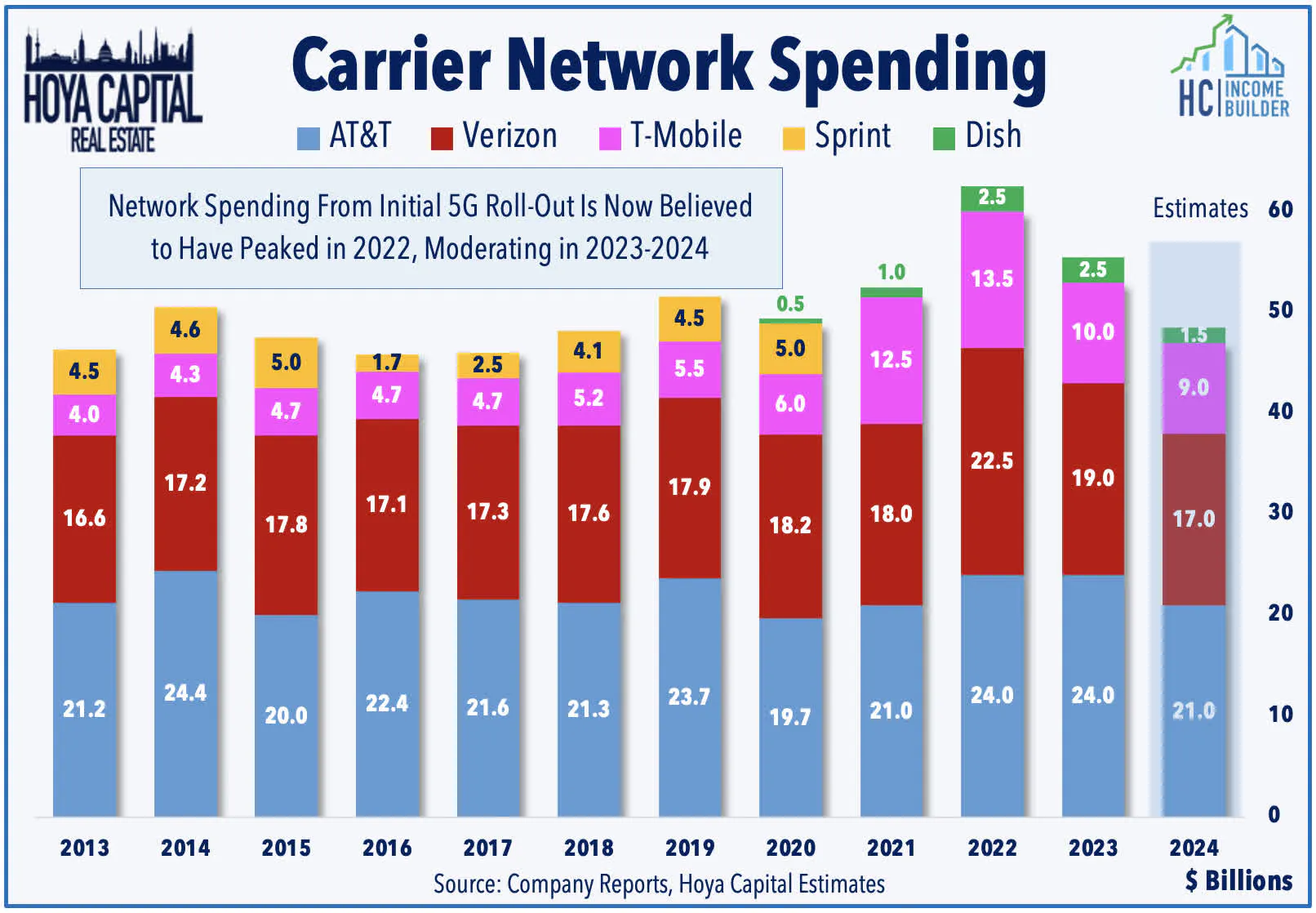
Cell tower REITs have been the weakest-performing property sector since early 2022, lagging even the battered office sector, amid a telecommunications industry-wide slump exacerbated by tight monetary conditions. Cellular carriers have reduced their capital-intensive network expansion plans following significant investment and tower equipment upgrades from 2019-2022 to deploy nationwide 5G networks. Crown Castle (CCI) kicked off the earnings slate this week with a solid report, maintaining the full-year outlook provided in last month’s interim business update. Commentary on carrier demand was marginally more upbeat than recent quarters, with CCI noting that demand is "steady state" following a significant decline in network spending last year, which "gives us optimism that our revenue growth forecast is directionally correct." CCI’s small-cell and fiber segments were the bright spots of Q2 results, with small-cell organic growth of 10.9% and fiber growth of 3.2%, each above the prior forecast, while tower organic growth was in line with expectations at 4.4%. American Tower (AMT) is also undergoing a strategic shake-up, having exited the Indian market earlier this year. We’re focused on strategy shifts and expectations for network spending.
Data Centers
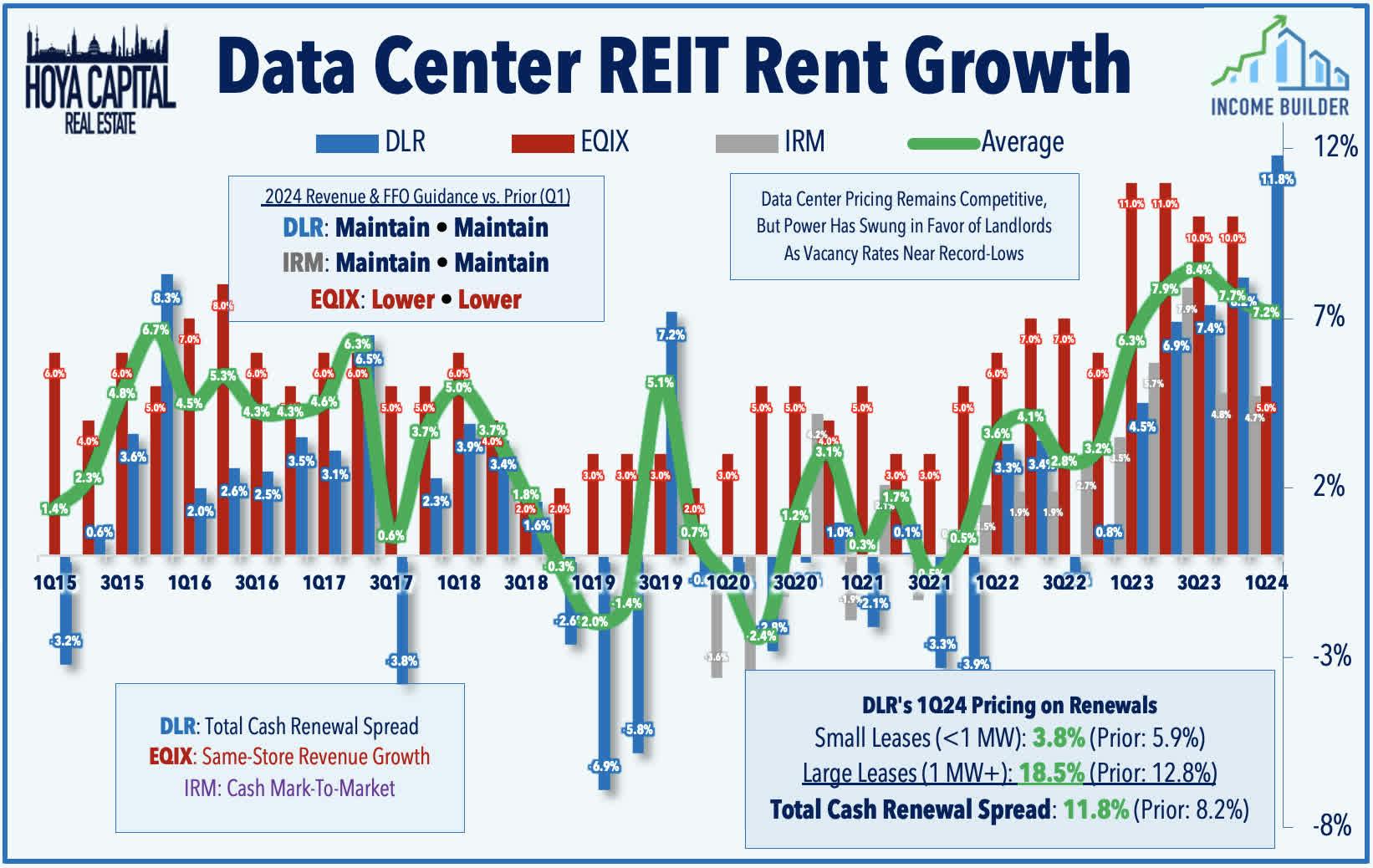
Data center REITs, the top-performing property sector last year, have continued their strong relative performance in 2024, driven by the AI boom and elevated leasing activity. CBRE's latest report last month noted strong trends, with North American data center vacancy rates hitting new lows across major markets due to robust absorption by public cloud providers and AI companies. The report also highlighted significant acceleration in data center pricing due to supply shortages and high demand, with average asking rates for typical 250- to 500-kW requirements across major North American markets surging by 20% year-over-year, the highest global increase. Ironically, these REITs' improved competitive positioning and rent growth surge came just as they became a trend "short" play. The now-infamous short report from Chanos & Company in July 2022 came at the "bottom" of a half-decade-long slump in rental rates. Equinix (EQIX) will be closely watched after being targeted by a short report from Hindenburg earlier this year. We’re also focused on renewal pricing trends and leasing volumes this quarter.
Healthcare REIT Earnings Preview
Senior Housing
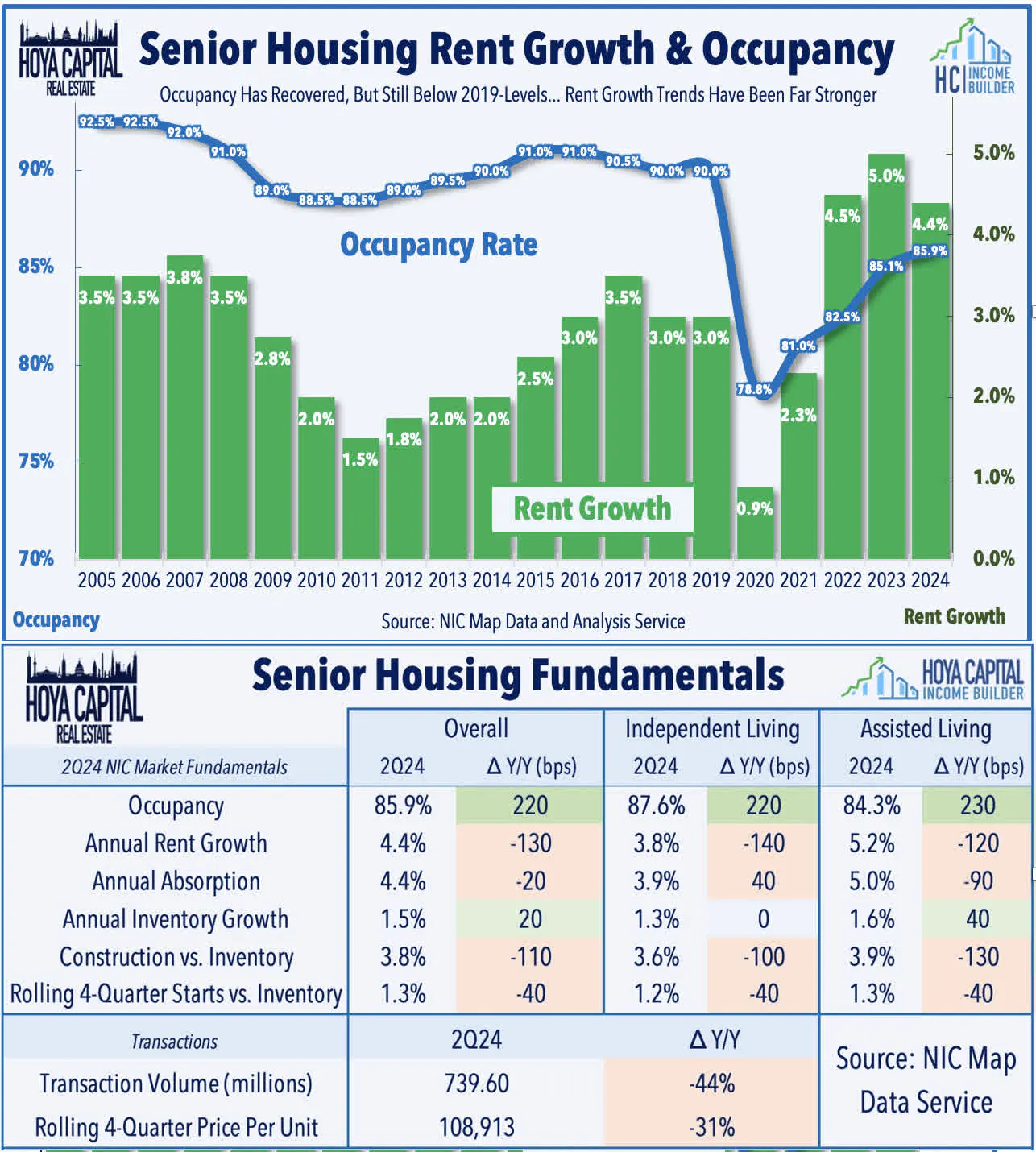
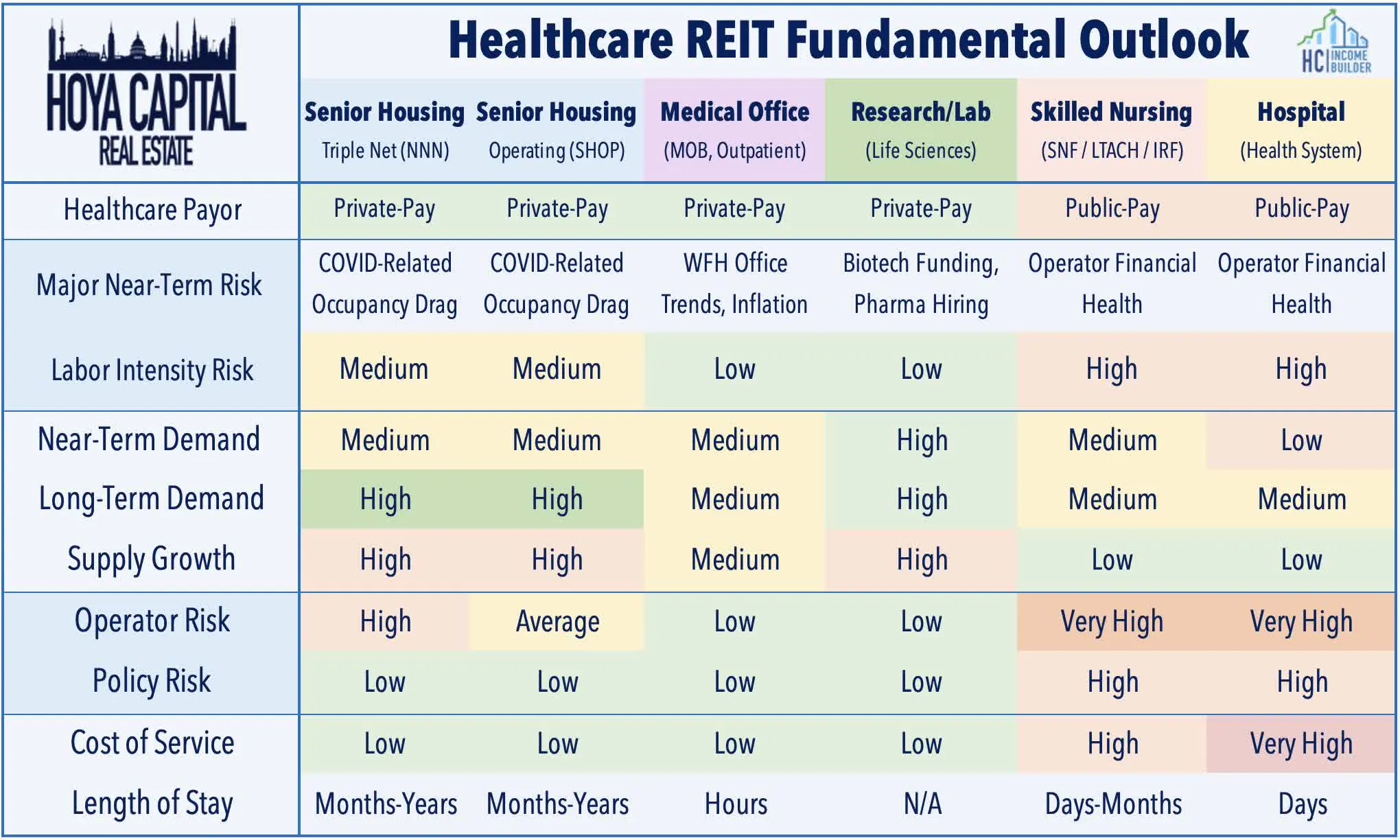
Continuing their strong performance from last year, Senior Housing and Skilled Nursing REITs have been among the leaders this year as recent data shows a continued recovery in occupancy rates alongside historically strong rent growth. Earlier this month, industry data provider NIC published its quarterly Market Fundamentals report, showing that senior housing occupancy rates increased for the 12th consecutive quarter to 85.9%, 8.2 percentage points above its pandemic low of 77.8% in Q2 2021. The skilled nursing occupancy rate rose to 84.3%, up 9.6 percentage points from its pandemic low of 74.7%. Fueled by record-setting COLA adjustments in 2023, rent growth across both Senior Housing and Skilled Nursing facilities remained historically strong in early 2024, each rising by 4.4%. Supply growth remains muted, with NIC noting that the rolling four-quarter average for construction starts is 1.50% of total inventory, near the lowest since 2010. These tailwinds bode well for tenant financial health and rent coverage, the primary focus of earnings season for senior housing and skilled nursing REITs.
Medical Office Buildings
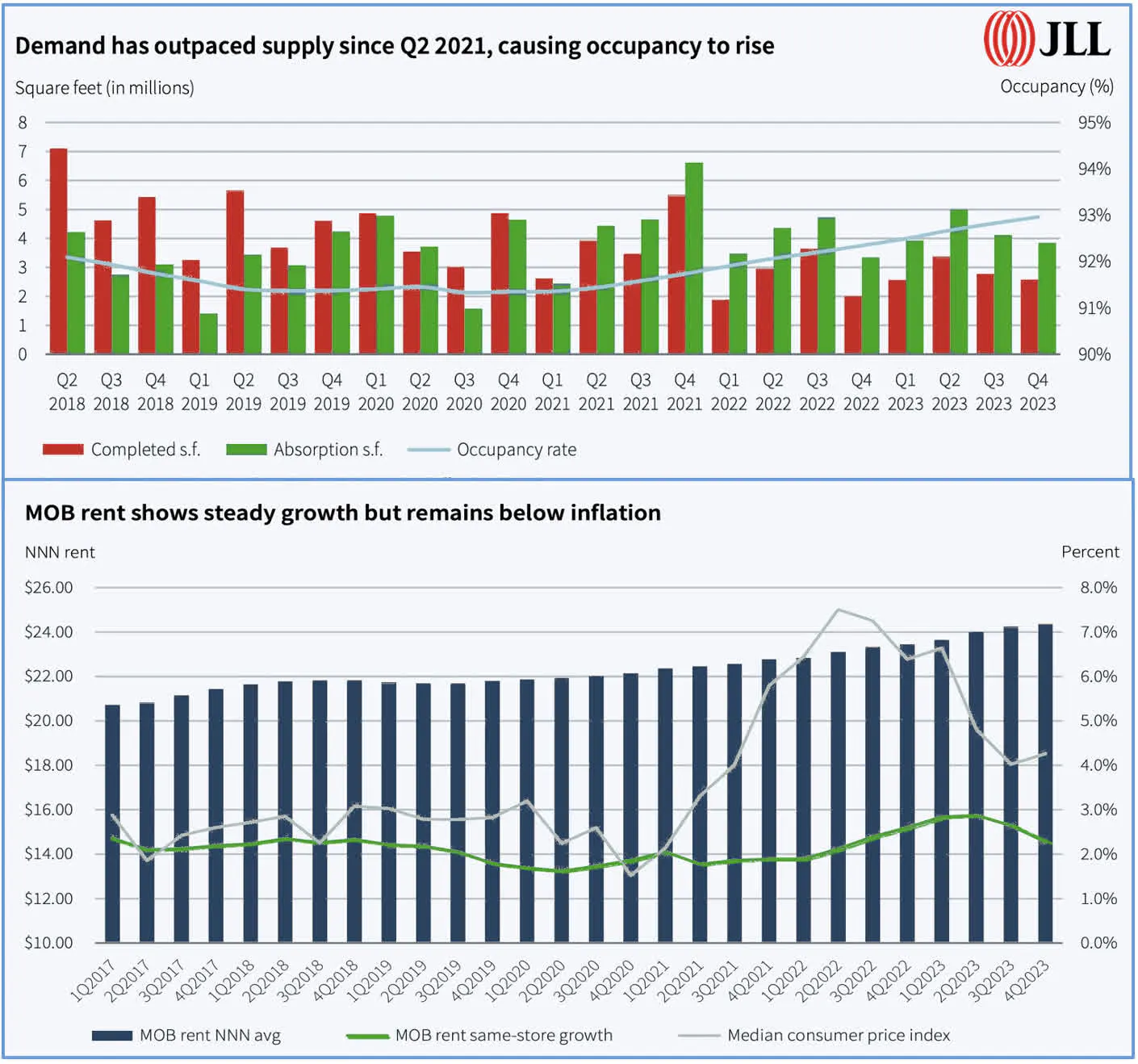
Even more "unloved" than traditional office, medical office building (MOB) REITs enter earnings season as the worst-performing sub-sector this year, now trading at average Price-to-FFO valuations below that of traditional office REITs. Despite their rate sensitivity, the poor performance is surprising given the strong property-level fundamentals. JLL's latest report last quarter noted that MOB fundamentals remain strong, with construction starts remaining slow, positioning medical outpatient buildings for increasing occupancy and rental rate growth, driving increased capital allocation from other asset classes. Absorption has outpaced construction every quarter since Q2 2021, with completions slowing and demand accelerating, driving occupancy up from 91.4% at the end of 2020 to 93.0% in Q4 2023. Despite steady demand, construction starts for MOBs have remained below pre-pandemic averages for the past three years. MOB REITs have a relatively low hurdle to meet this earnings season, and we’ll be looking for progress on recent merger activity from the two largest MOB REITs.
Hospitals
Medical Properties Trust (MPW), the most heavily shorted REIT, will be closely watched this earnings season after its largest tenant, Steward Healthcare, filed for Chapter 11 bankruptcy in May. Prior to the renewed scrutiny on Steward, MPW had reported solid progress in its planned liquidity transactions for this year, including a $1.1 billion portfolio sale of five hospitals in April, and maintained its quarterly dividend. MPW recently closed on the sale of five facilities in California and New Jersey to Prime Healthcare for $350 million, bringing its total portfolio sales to $1.6 billion, 80% of its initial FY 2024 target. MPW plans to replace Steward in many of its hospitals by September 30, aiming to mitigate the impact of Steward’s bankruptcy.
Retail REITs Earnings Preview
Strip Centers
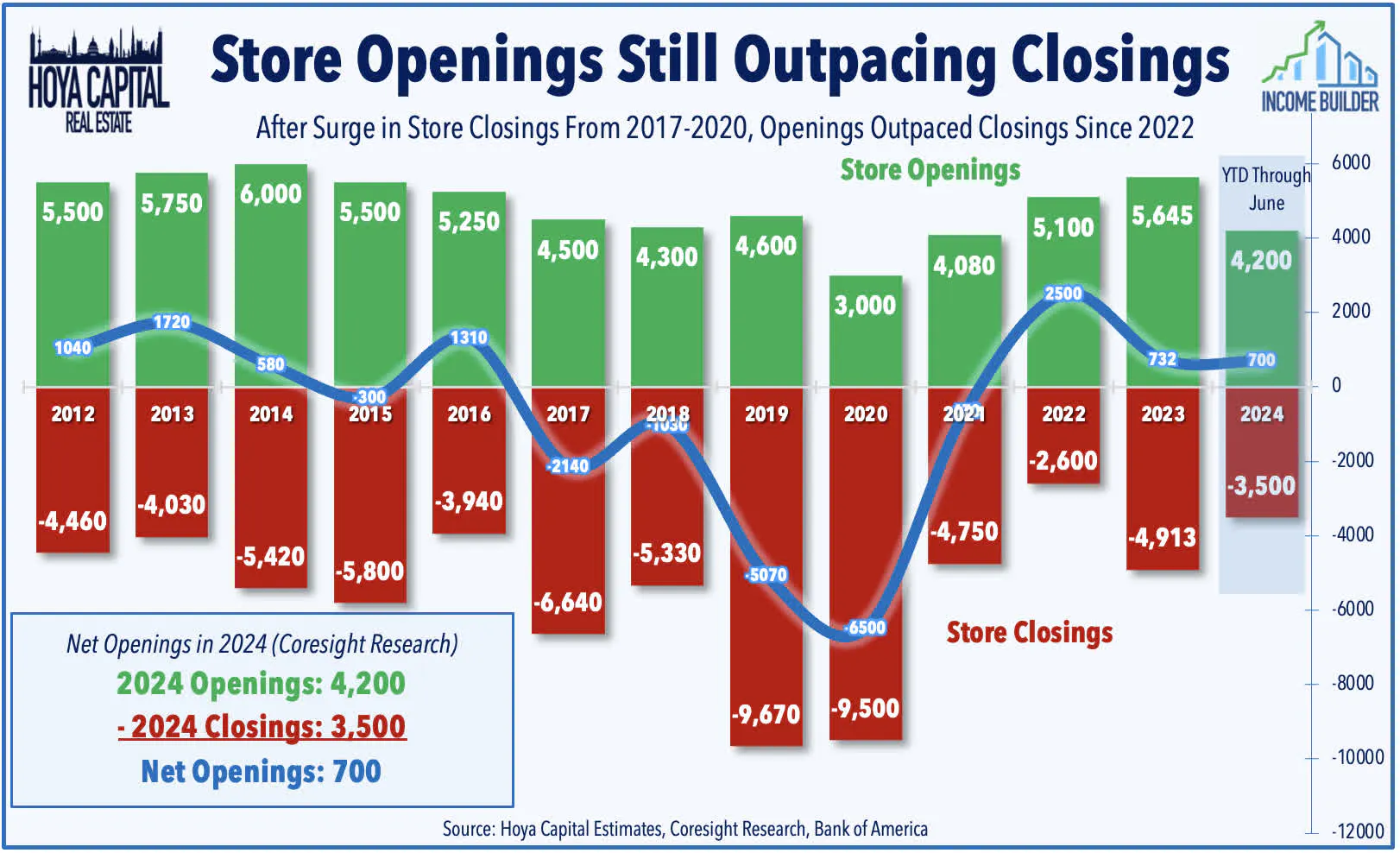
Retail REIT fundamentals have improved significantly over the past eighteen months and continue to be underappreciated due to the decade-long "retail apocalypse" narrative. Near-zero new development and positive net store openings since 2021 have driven occupancy rates to record highs, giving Strip Center and Mall REITs long-awaited pricing power. Despite several high-profile retail bankruptcies last year, including Bed Bath & Beyond and Party City, store openings outpaced closures by about 10% in 2023. Recent data from Coresight shows this positive momentum continued into mid-2024, with planned and announced U.S. store openings totaling more than 4,200 through June, outpacing closures by 20% and resulting in nearly 78 million square feet of new retail space. We’ll focus on leasing spreads, occupancy rate trends, and updates on re-lease progress at vacated Bed Bath and Party City locations.
Malls
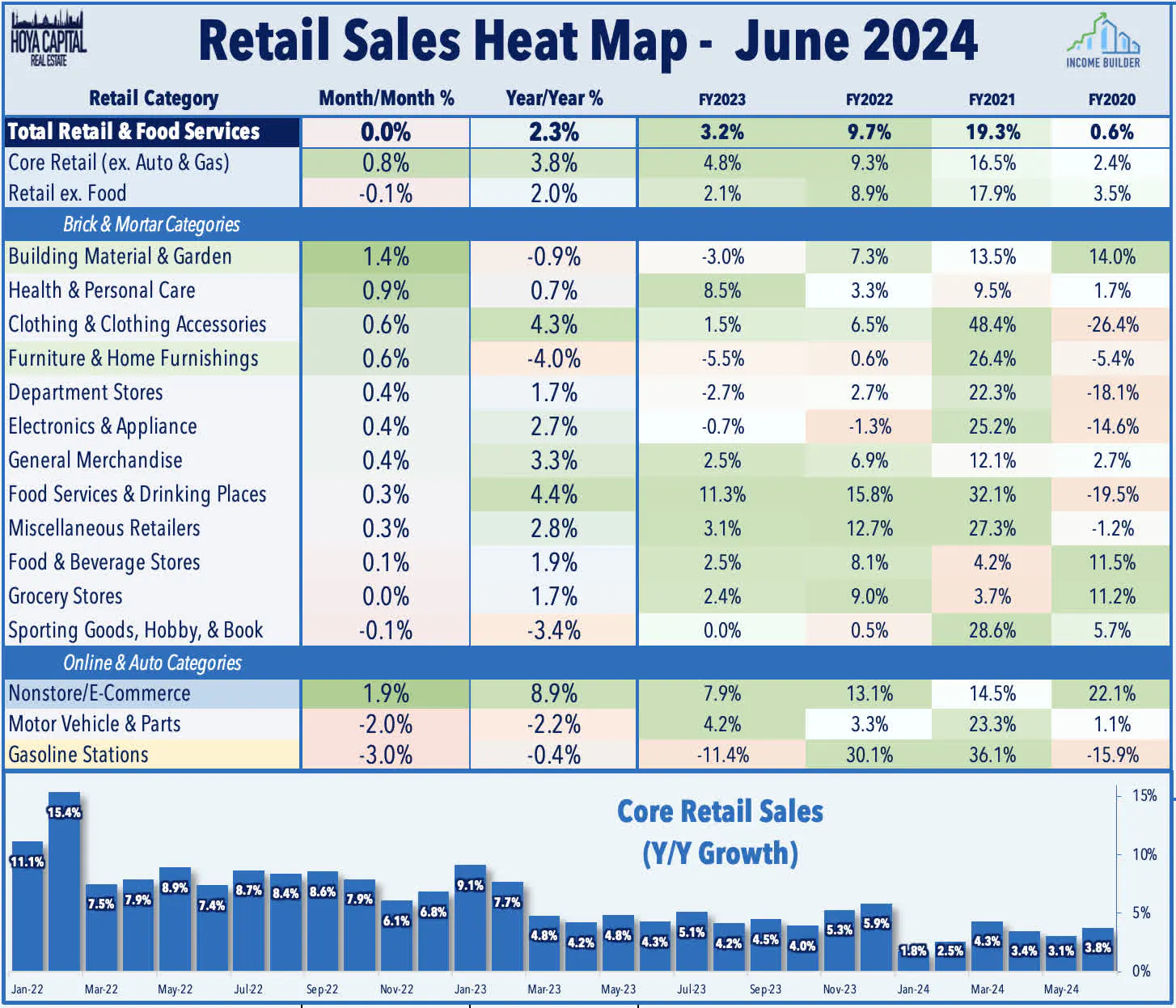
With distress in office markets seizing headlines, Mall REITs are no longer the "Problem Child" of the REIT sector, especially after weaker players and lower-tier malls closed. Following three years of rental rate and occupancy declines, the supply-demand dynamic has recently favored retail landlords, helping mall REITs regain footing and repair balance sheets. Traffic and sales levels at higher-end mall properties have returned to pre-pandemic levels since late 2023, with retail sales data indicating continued consumer spending. June's stronger-than-expected Retail Sales posted an acceleration in annual growth for the first time since February. We’ll focus on same-store occupancy rates and renewal rent growth.
Net Lease
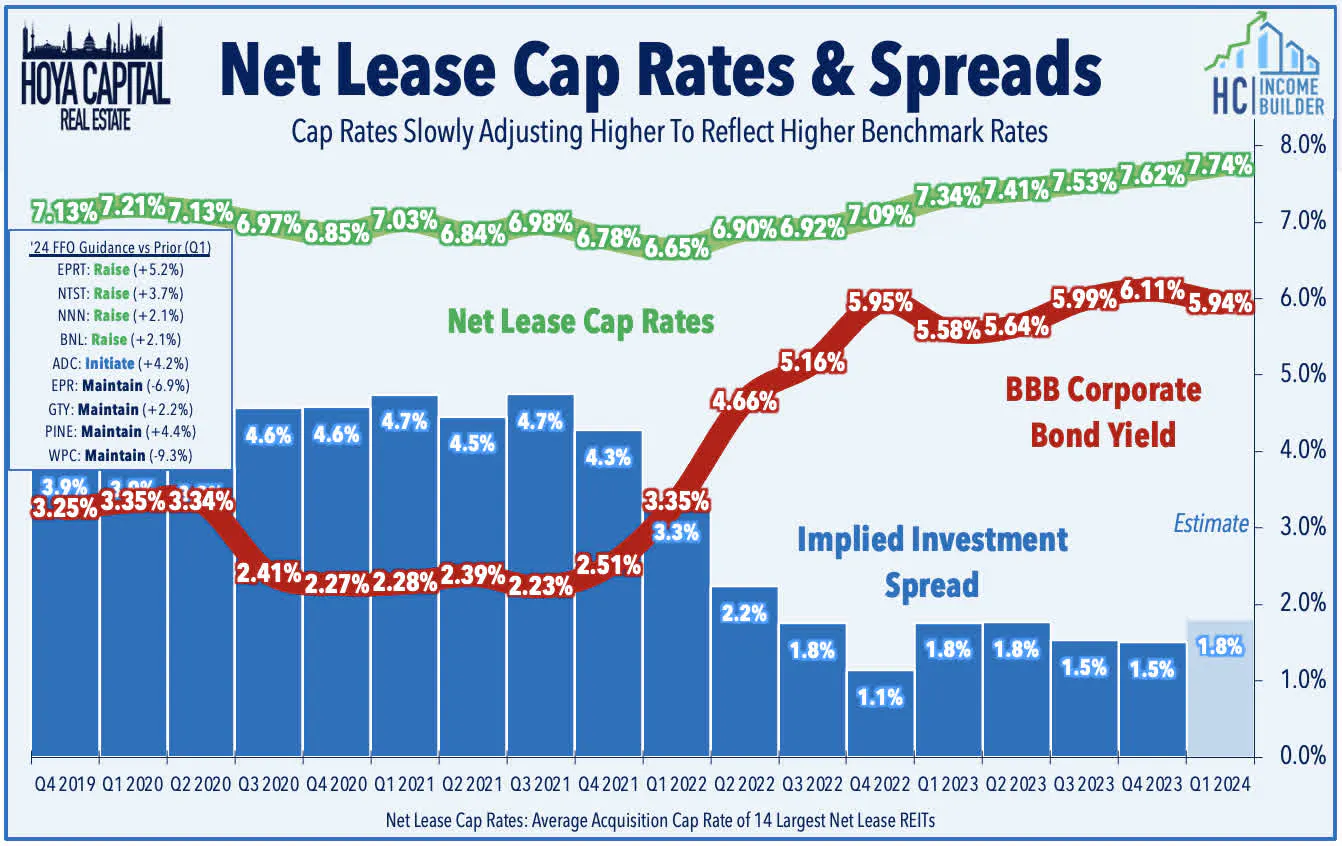
The most "bond-like" and interest-rate-sensitive property sector, the recent pullback in benchmark rates has restored positive sentiment in the net lease sector. Thriving in the "lower forever" environment, the industry has been slow to adjust to the higher-rate regime, keeping private-market values and cap rates surprisingly "sticky," resulting in compressed investment spreads. Strong balance sheets and minimal variable rate debt exposure position net lease REITs to be aggressors as over-levered private players seek exits. However, these REITs can afford to wait for the right price. We’re keyed in on commentary regarding cap rate movements in mid-2024 and whether the Q2 rebound in interest rates, followed by a pullback in early July, has changed the outlook for activity in 2024.
Key Takeaways: Real Estate Earnings Preview
Real estate earnings season kicked off this week, and over the next month, we'll hear results from 175 equity REITs, 40 mortgage REITs, and dozens of housing industry companies. The sector with the most to gain from Fed rate cuts, REITs enter earnings season with upside momentum after a tough two-year stretch, including 50 percentage points of market underperformance. Has the REIT Revival begun? REITs have posted double-digit gains over the past two weeks, as encouraging inflation data has put the Fed on course to cut rates in September. Even before the rate retreat sparked a "REIT revival" in recent weeks, there appeared to be some "bottoming" in private market real estate valuations in late Spring and early summer. It took a while, but macroeconomic conditions are finally aligning such that the long-dormant "animal spirits" could come alive for public REITs through IPOs and acquisitions of debt-burdened private portfolios.
About the Author
David Auerbach boasts over two decades of experience in the securities industry, specializing as an institutional trader with a focus on Real Estate Investment Trusts (REITs), Equity and Preferred stocks, MLPs, ETFs, and Closed End Funds.
Based in Dallas, TX throughout his entire career, David currently serves as the Chief Investment Officer for Hoya Capital, managing the Hoya Housing 100 ETF (Ticker: HOMZ) and The High Yield Dividend ETF (Ticker: RIET). Previously, David held the position of Managing Director at Armada ETF Advisors, the sub-advisor for the Residential REIT ETF (Ticker: HAUS) and The Private Real Estate Strategy via Liquid REITs ETF (Ticker: PRVT).
Additionally, he acts as a consultant with IRRealized, LLC, focusing on corporate access in the REIT industry. David's industry journey includes roles at World Equity Group, Esposito Securities, and Green Street Advisors where he got his start in the REIT industry.
At Esposito Securities, he played a crucial role in building the REIT/Real Estate platform and worked extensively with institutional investors, Equity REITs, and ETF issuers.
Throughout his career, David has been quoted by reputable publications such as Bloomberg, WSJ, Financial Times, REIT.com, and GlobeSt.com. He has also made notable appearances as a featured guest on networks like Yahoo Finance, TD Ameritrade, and Bloomberg.
David holds a BBA in Finance from the University of Texas at Austin (May 1999) and an MBA in Finance from Southern Methodist University (May 2005). He maintains FINRA Series 7, 24, 55, and 63 registrations.
In his leisure time, David is an avid traveler, often found crisscrossing the country in pursuit of attending as many Phish concerts as possible.
Disclaimer
Please note this article is for information purposes only and does not in any way constitute investment advice. It is essential that you seek advice from a registered financial professional prior to making any investment decision.
Segments
See all
Mentioned ETFs
No specific ETFs were tagged
Further reading

Latest ETF News
See all ETF newsAt What Point Does an ETF Become the Market?


Rescheduling Is Real: What the DOJ’s Cannabis Order Means for MSOS Investors and the Broader Sector


Is high yield high risk?







 Advantages of ETFs over Mutual Funds1/6
Lower Costs
In this guide, we'll explore the advantages of ETFs over mutual funds, giving you valuable insights into why ETFs have gained significant popularity among investors like yourself.
Leveraged ETFs: Unlocking the Potential for Amplified Returns1/6
Understanding Leveraged ETFs
Explore leveraged ETFs: potential for amplified returns & risks. 5 ETFs to consider across equities, commodities & fixed income.
What is a Leveraged ETF?1/6
Introducing Leveraged and Inverse ETFs
In this guide, we'll dive into the world of leveraged ETFs, exploring their definition, mechanics, potential risks, and rewards.
Recent educational content
Asset TV
The ETF Show - Volatile Markets Boost Options-Income ETFs
Mike Khouw, Chief Strategist for YieldMax ETFS joins The ETF Show to discuss the boom in options-income ETFs and where they sit in investor portfolios.


ETF Trends
ETF Industry KPIs May 5, 2026
The ETF Industry saw 16 New Launches, 3 Ticker Changes and 9 closures last week.

Asset TV
The ETF Show - The ETF Innovations Driving Demand in 2026
Aga Kuplinska, Senior Vice President of Product Development at Tidal Financial Group joined The ETF Show to discuss the latest product developments in the ETF space and what new innovations investors can expect for the remainder of the year.
What’sTheFund
What's the Fund | State Street SPDR IG Public & Private Credit ETF (Ticker: PRIV)
Matthew Bartolini, Global Head of Research Strategists, at State Street Investment Management, joins Ethan Hertzfeld on the New York Stock Exchange Floor to discuss PRIV, the State Street SPDR IG Public & Private Credit ETF.

Browse all educational columns



Active Trader Report: Use of Leveraged & Inverse ETFs Way Up
Direxion partnered with Compound Insights and Vanda to explore what’s driving the evolution of active trading — and how active traders are using leveraged and inverse funds across equities, single stocks, commodities, and volatility.