Explore professionally built ETF model portfolios. Discover now →



ProShares' Simeon Hyman Busts the “Crypto = Risk” Myth
What looks like risk on the surface may actually be one of the market’s best diversifiers.

Keep up with what matters in ETFs
Get timely ETF insights, market trends, and top ideas straight to your inbox.
Your newsletter subscriptions with us are subject to ETF Central's Privacy Policy and Terms and Conditions.
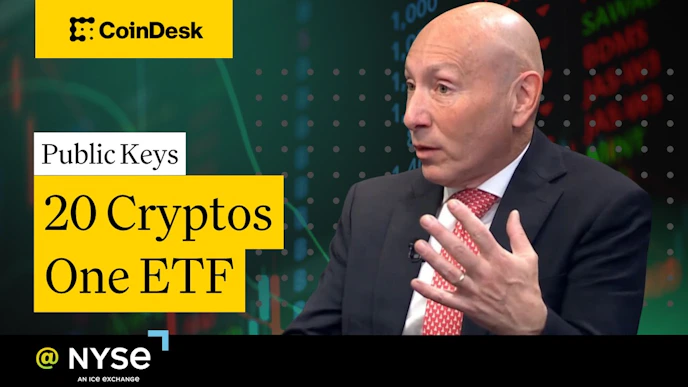
For years, crypto has been boxed into a simple narrative: high risk, high volatility, proceed with caution. But according to ProShares Global Investment Strategist Simeon Hyman, that framing misses the bigger picture and more importantly, the math.
Speaking on CoinDesk’s Public Keys from the New York Stock Exchange floor, Hyman challenged what he calls a “false narrative.” Crypto is not just another risky asset. It is something far more interesting: a potential portfolio diversifier hiding in plain sight.
Global ETF Survey 2026 is Live!
With 1,790 new products launched by July 2026, choosing is harder than ever. Our Global ETF Survey 2026, built on 620 professional investors and allocators, shows how active, fixed income, options-based and thematic ETFs are reshaping fund selection.
The Correlation Myth Gets a Reality Check
Let’s start with the numbers, the kind portfolio managers actually care about.
Hyman points out that when you run correlation analysis, crypto does not behave the way people assume. It is not tightly linked to equities. It is not closely tied to fixed income either. That alone is noteworthy.
But here is the curveball. It is also not strongly correlated with traditional safe havens like gold and silver.
That is a big deal.
In portfolio construction, correlation matters as much as returns. Assets that move differently from one another can smooth volatility and improve overall efficiency. So even if crypto is volatile on its own, its low correlation means it can actually reduce risk at the portfolio level if used strategically.
Hyman’s takeaway is refreshingly straightforward. If you have an asset that is volatile but uncorrelated, adding a small allocation can improve your portfolio’s risk return profile. Not eliminate risk, just make it work smarter.
KRYP and the Case for One-Click Crypto Exposure
Knowing crypto has diversification potential is one thing. Actually investing in it without turning into a full-time token analyst is another.
That is where ProShares’ new ETF, the ProShares CoinDesk 20 Crypto ETF (KRYP), comes in.
The fund tracks the CoinDesk 20 Index, offering exposure to the top 20 cryptocurrencies in a single product.
Think of it as the crypto version of a broad market index fund. Instead of picking winners and losers, investors get a rules-based slice of the market.
The structure is simple but intentional.
It is modified market cap weighted, meaning larger assets like Bitcoin and Ethereum still dominate but do not overwhelm the portfolio.
Together, they make up about 50 percent of the index. Left unchecked, they would be closer to 90 percent.
Even more important, the index evolves. It is rebalanced and reconstituted every quarter, allowing new assets to enter and others to fall out as the crypto landscape shifts.
The pitch is clear. One product, broad exposure, no guesswork.
Do Investors Really Need to Understand Every Coin?
As crypto expands beyond Bitcoin and Ethereum, the education challenge grows.
Investors are now faced with a mix of assets, some acting as stores of value, others powering blockchain applications.
So do institutional investors actually understand all of this?
Hyman’s answer is blunt: Not really.
And they do not necessarily need to.
He draws a parallel to the S&P 500.
Most investors cannot explain what every company in the index does, but they still understand the broad idea and benefit from diversified exposure.
The same logic applies here.
That said, a baseline understanding helps. Investors should know that the index excludes stablecoins, includes both utility-driven and store-of-value assets, and reflects a range of use cases within crypto. Knowing that Bitcoin is primarily seen as a store of value while Ethereum enables applications gets you most of the way there.
The rest can be handled by the index.
Crypto in the Real World: Not Just a Risk Trade
One of the more compelling parts of Hyman’s argument is how crypto behaves during periods of stress.
He points to past episodes where crypto did not follow the script. During the collapse of crypto-focused banks, Bitcoin actually rose. More recently, amid geopolitical tensions in the Middle East, Bitcoin has outperformed both gold and equities.
That is not what you would expect from a pure risk asset.
It suggests something more nuanced. Crypto may react differently depending on the environment, sometimes behaving like a risk asset, other times like an alternative store of value.
This variability strengthens the diversification argument. If an asset does not consistently move in lockstep with traditional markets, it can play a unique role in a portfolio.
The Bigger Picture: Efficiency Over Hype
Hyman’s broader message is not about chasing returns or making bold predictions about crypto’s future. It is about portfolio construction.
The goal is not to go all in on crypto. It is to use it thoughtfully.
A small allocation to an uncorrelated asset can improve efficiency. That means potentially better returns for a given level of risk, or lower risk for the same expected return. It is not flashy, but it is powerful.
And that is where the “false narrative” starts to break down. Labeling crypto as purely speculative misses its potential role as a complementary asset.
Markets Move Fast, but Principles Hold
As the conversation wrapped, Hyman zoomed out to the broader market environment. With geopolitical tensions in focus, he noted that history tends to show a pattern. Market disruptions are often sharp but short-lived, followed by recovery.
From the Gulf Wars to more recent conflicts, equities and other markets have typically rebounded once uncertainty fades.
The lesson for investors is not to ignore headlines, but to keep perspective. Short-term volatility does not necessarily change long-term fundamentals.
That same mindset applies to crypto.
It is volatile. It is evolving. But when viewed through the lens of diversification and correlation, it may deserve a more permanent seat at the table.
Please note this article is for information purposes only and does not in any way constitute investment advice. It is essential that you seek advice from a registered financial professional prior to making any investment decision.


Latest ETF News
See all ETF news






 Advantages of ETFs over Mutual Funds1/6
Lower Costs
In this guide, we'll explore the advantages of ETFs over mutual funds, giving you valuable insights into why ETFs have gained significant popularity among investors like yourself.
Leveraged ETFs: Unlocking the Potential for Amplified Returns1/6
Understanding Leveraged ETFs
Explore leveraged ETFs: potential for amplified returns & risks. 5 ETFs to consider across equities, commodities & fixed income.
What is a Leveraged ETF?1/6
Introducing Leveraged and Inverse ETFs
In this guide, we'll dive into the world of leveraged ETFs, exploring their definition, mechanics, potential risks, and rewards.
Recent educational content
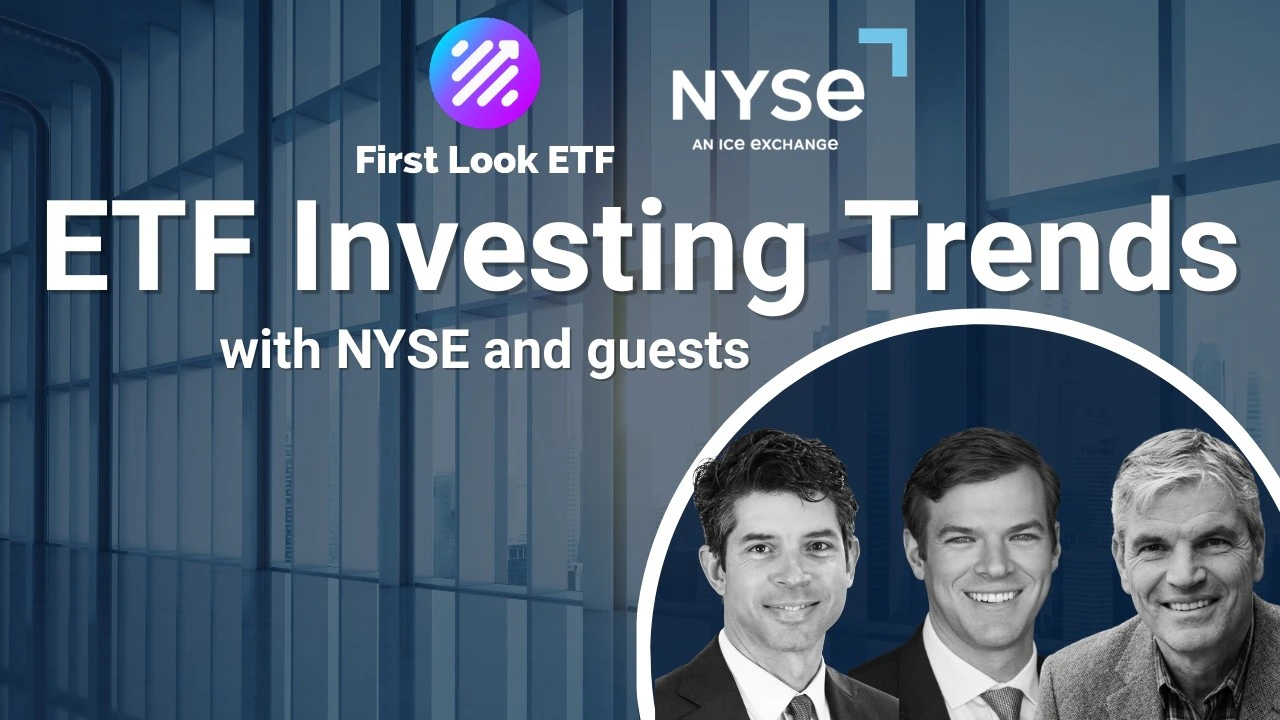
First Look ETF
First Look ETF: Income, International, and Cash Flow ETFs
In this season 6 episode of First Look ETF, Stephanie Stanton @etfguide examines the latest ETF marketplace trends with NYSE and guests.


ETF Trends
ETF Industry KPIs October 5, 2026
This week’s KPI data overview highlights key metrics and trends shaping the ETF landscape.

ETF Trends
ETF Industry KPIs September 28, 2026
This week’s KPI data overview highlights key metrics and trends shaping the ETF landscape.
ETF Trends
ETF Industry KPIs September 22, 2026
This week’s KPI data overview highlights key metrics and trends shaping the ETF landscape.
Browse all educational columns



ETFs’ Next Act: From Access to Selection
With 1,790 new products launched by July 2026, choosing is harder than ever. Our Global ETF Survey 2026, built on 620 professional investors and allocators, shows how active, fixed income, options-based and thematic ETFs are reshaping fund selection.