From idea to ETF portfolio in minutes. Build yours now →



The Power of Diversification in ETF Investing: Beyond Just Asset Allocation
How diversifying across ETF issuers, custodians, fund managers, and strategies can potentially enhance your portfolio's resilience, reduce risk, and unlock new opportunities for superior returns.


Keep up with what matters in ETFs
Get timely ETF insights, market trends, and top ideas straight to your inbox.
Your newsletter subscriptions with us are subject to ETF Central's Privacy Policy and Terms and Conditions.
When investors think of "diversification," they often focus on spreading assets across various stocks, bonds, and other securities to mitigate risk. However, within the ETF ecosystem, there's another critical layer of diversification—diversifying across issuers, custodians, fund managers, and investment strategies. This broader approach to diversification significantly enhances portfolio resilience, offering a more robust and dynamic strategy to navigate the complexities of the market.
Like what you're reading?
Stay in the loop — get the latest ETF insights: trends, analysis, and expert picks.
Diversifying Across ETF Issuers and Custodians: Why It Matters
Investing with different ETF issuers is akin to diversifying your stock holdings. The market isn’t just dominated by the big players; there are many great issuers out there, each offering a unique perspective, area of strength, and safety by ensuring that not all your eggs are in one basket. Similarly, diversifying custodians adds another layer of protection, keeping your assets from clumping into one basket of risk.
For example, on August 7, Morgan Stanley announced that its 15,000 brokers could suggest allocations to two spot bitcoin ETFs from BlackRock Inc. and Fidelity Investments. While these issuers are giants, it begs the question: Why aren't ETFs from VanEck or 21Shares also being offered?
VanEck and 21Shares have more history and expertise in the digital asset space, with respectable custodians and similar fees. Interestingly, one of BlackRock's custodians is the same as VanEck's, which raises further questions.
Is this a concerted effort to favor the larger players, leaving smaller, equally capable issuers at a disadvantage? By relying solely on the biggest names, investors might inadvertently miss out on innovative products and strategies from other experienced issuers.
The Benefits of Mixing Active and Passive ETFs in Your Portfolio
The ETF landscape isn't just about passive index funds that track a benchmark. Actively managed ETFs are gaining traction, offering investors the chance to benefit from the expertise of seasoned fund managers who can make strategic decisions to potentially outperform the market. For instance, wouldn’t you prefer investing in the best 100 stocks of the S&P 500 rather than the entire index? Or perhaps a strategy that takes short positions in underperforming stocks?
Mixing active and passive ETFs across different issuers and custodians can create a more resilient investment strategy. A well-rounded portfolio might include passive ETFs for broad market exposure while using actively managed ETFs to target specific sectors, themes, or market inefficiencies. This approach leverages the strengths of both strategies, offering a more nuanced and adaptable investment framework.
The Importance of Diversifying Across Fund Managers
Within the same issuer, fund managers can have vastly different approaches, strategies, and expertise. Diversifying across various fund managers allows investors to benefit from these diverse perspectives, reducing reliance on a single manager's decisions. By doing so, you ensure your portfolio benefits from the best expertise across multiple domains, potentially enhancing overall performance and reducing managerial risk.
Sector and Thematic Diversification: A Balanced Approach
Diversification should also extend across different sectors and themes within the ETF ecosystem. Investing in ETFs that cover various sectors—such as semiconductors, healthcare, or LNG—spreads risk across different economic areas. Thematic ETFs, focusing on specific trends like technology or energy, offer targeted exposure to high-growth areas. Including these in your portfolio can capture specific opportunities that may not be reflected in broader market indices. However, balancing sector and thematic exposure requires careful consideration to avoid over-concentration in any one area.
Maximizing Returns Through Comprehensive ETF Diversification
True diversification in ETF investing goes beyond traditional asset allocation. By diversifying across issuers, custodians, fund managers, and investment strategies, investors can create a more resilient and dynamic portfolio. This approach not only spreads risk but also opens up opportunities for enhanced returns, better market alignment, and a more stable investment experience. In an increasingly complex and competitive market, these strategies offer a way to navigate uncertainty and achieve long-term success.
About the Author
Nicholas Phillips | President of ETF Capital Markets Advisors LLC
With over 25 years of experience in ETF market making and capital markets, Nicholas Phillips is recognized as a subject matter expert in the ETF industry. He started his career spending the first ten years as a lead market maker for SIG and Goldman Sachs. At the helm of MCAP LLC's ETF Desk, Nicholas built and scaled the division, enhancing its operations through innovative pricing and risk models, and robust relationships with market makers and issuers. His tenure at Van Eck Associates as Director of ETF Capital Markets further solidified his expertise, managing critical facets of operations and deepening connections within the trading community. Beyond market making, Nicholas is an avid content creator, sharing insights that demystify complex market dynamics. He is keen on exploring board member roles that benefit from his extensive background and forward-thinking approach to ETF strategies. His dual US/Ireland citizenship complements his global perspective, enriching his professional endeavors in diverse markets.
Disclaimer
Please note this article is for information purposes only and does not in any way constitute investment advice. It is essential that you seek advice from a registered financial professional prior to making any investment decision.
Latest ETF News
See all ETF newsForm 4 Has 20 Transaction Codes. None Say "Section 351 ETF Swap"


Who Really Owns a White-Label ETF?

What If a Futures-Based ETF Never Had to Roll Again?

How Do You Build a Winning ETF Business?

Losers Of Q2 2026 REIT Earnings Season


Winners of Q2 2026 REIT Earnings Season


 Advantages of ETFs over Mutual Funds1/6
Lower Costs
In this guide, we'll explore the advantages of ETFs over mutual funds, giving you valuable insights into why ETFs have gained significant popularity among investors like yourself.
Leveraged ETFs: Unlocking the Potential for Amplified Returns1/6
Understanding Leveraged ETFs
Explore leveraged ETFs: potential for amplified returns & risks. 5 ETFs to consider across equities, commodities & fixed income.
What is a Leveraged ETF?1/6
Introducing Leveraged and Inverse ETFs
In this guide, we'll dive into the world of leveraged ETFs, exploring their definition, mechanics, potential risks, and rewards.
Recent educational content

ETF Trends
ETF Industry KPIs September 8, 2026
This week’s KPI data overview highlights key metrics and trends shaping the ETF landscape.

ETF Trends
ETF Industry KPIs August 31, 2026
This week’s KPI data overview highlights key metrics and trends shaping the ETF landscape.
ETF Trends
ETF Industry KPIs August 24, 2026
This week’s KPI data overview highlights key metrics and trends shaping the ETF landscape.
What’sTheFund
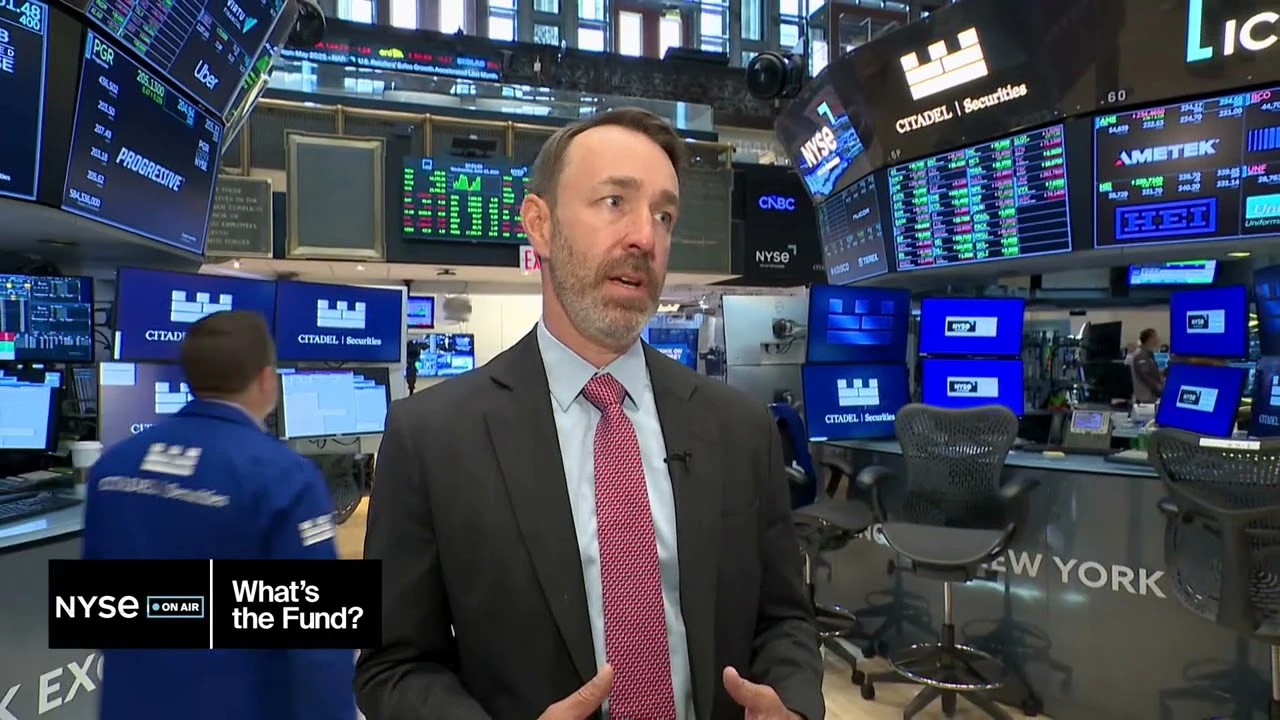
What's the Fund | Ocean Park Diversified Income ETF (DUKZ)
James St Aubin, Chief Investment Officer at Ocean Park Asset Management, discuss the DUKZ ETF, exposing investors to the whole spectrum of asset classes in the fixed income markets, through their rules-based process.

Browse all educational columns



Expert-Built ETF Portfolios, All in One Place
Don’t start from scratch. Discover ready-made ETF portfolios built by professionals to match different goals, timelines, and market views. Use them as inspiration or as a starting point for your own allocation.