NYSE CRTR Economy Event Watch the replay →



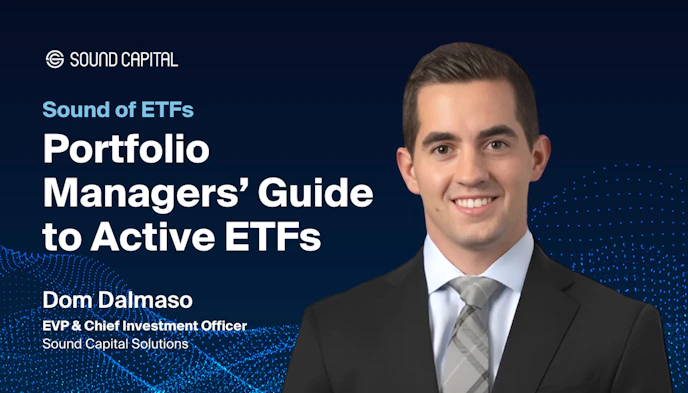
Portfolio Managers’ Guide to Active ETFs
In this new article of the Sound of ETFs series, I dive into why active ETFs are gaining fresh attention, uncovering surprising advantages that appeal to a broad range of investors.

Keep up with what matters in ETFs
Get timely ETF insights, market trends, and top ideas straight to your inbox.
Your newsletter subscriptions with us are subject to ETF Central's Privacy Policy and Terms and Conditions.
ETFs have faced multiple misconceptions within the investment industry since the first US launch in 1993, but the product has persevered! Commonly known as a passive investment for retail investors, creative issuers and managers have found innovative use cases to solve new needs from institutional to individual investors.
Through September of 2024, it has been reported that 337 new active ETFs launched during the year and more have come to market since. This wave of ETFs entering the market has led active portfolio managers to ask – why would I consider putting my active strategy in an ETF? Along with exchange listing and tax-efficient portfolio management tools, we’ll explore the extensive benefits active strategies within an ETF wrapper provide, as well as potential drawbacks relative to other investment wrappers.
Like what you're reading?
Stay in the loop — get the latest ETF insights: trends, analysis, and expert picks.
Access and Liquidity
Let’s hit the low hanging fruit…Unlike mutual funds, hedge funds, or SMAs, ETFs are publicly listed on exchanges (hence the ‘E’) that can be bought and sold by Advisors and investors within qualified broker accounts. Each brokerage platform may of course have an approval process for each ETF prior to making it available to Advisors and individual investors. The democratization of these financial products has opened access to a greater number of potential investors by offering increased liquidity and lower minimum investment relative to other wrappers. The majority of ETFs provide daily disclosure, but some do so at less frequent set intervals. Transparency regarding an ETFs holdings can provide valuable insight for the most diligent investors.
While the above benefits are viewed as additive for investors with ETF issuers reaching a broader investment base, some managers may still have pause. Giving up the “Secret Sauce” which active managers use to both deliver alpha and justify higher fees can be a concern. In addition, managers who utilize less liquid securities in their portfolios may be concerned about front-running during rebalances and may need to find more liquid alternatives that provide similar exposure or risk metrics.
Thoughtful portfolio construction, while not exclusive to ETFs, is a key component to a successful ETF. A capital markets partner that aids in the process of making an efficient market with a tight spread for your ETF needs to be in your corner – i.e., The Lead Market Maker
Capital Markets Considerations
Lead market makers (LMM) and the capital market community play a critical role in the launch and viability of ETFs. These firms may specialize in a single or few asset classes, or may cover all, as a LMM for your ETF. The listing and trading of ETF shares on an exchange is a unique feature relative to other product wrappers. Capital markets participants not only provide an efficient market on exchange, but they can also help ETF portfolio management teams with the optimization of ETF strategies to ensure an ETF has the best possible liquidity and bid-ask spread. Many capital markets firms also have affiliated agency brokerage desks to help ETF portfolio managers execute trades and perform custom rebalances to further enhance their relationship with the ETF issuer.
There are an abundance of value-add services capital markets desk can deliver, but the relationship isn’t a one-way street. Consultation in the portfolio management process often leads active managers to the realization that they may not be able to run the portfolio in the exact way they anticipated, particularly tilting towards more liquid holdings. High turnover of portfolio holdings also makes it difficult for market makers to effectively hedge their positions of ETF shares held in inventory as they make a market in your ETF – leading to potentially wider bid-ask spreads for the product.
Among the many benefits a capital markets partner brings to the table, their ability to help facilitate the tax-efficient management of an ETF may take the cake.
Tax Efficiency
The in-kind creation/redemption mechanism is one of the biggest draws for an active manager in their consideration of launching an ETF. Facilitated by authorized participants (AP’s), ETF managers can exchange ETF holdings with a different or same security. This in-kind exchange does not result in a taxable event at the portfolio level and is often utilized to diversify overly concentrated positions, exchange holdings that have reached a calculated price target, or even establish a new cost basis.
If something seems too good to be true, it probably is…The in-kind creation/redemption of securities results in a tax-deferral from the ETF portfolio level to the ETF share price. Gains from underlying securities in the ETF, and the taxes owed on them, do not just disappear as this is NOT a “tax-dodge”. When an investor sells their shares of the ETF, resulting in a gain to the investor for example, they will pay tax on the gains associated with the increase in price of the ETF shares.
The moral of the story – active managers should consider an ETF as a viable option to reach a broader investor base. While there are many benefits, there are additional ETF specific regulatory requirements and capital markets implications to consider. It’s important to consult individuals within the ETF ecosystem who can help you decide if your unique active strategy fits well within the ETF wrapper.
About the Author
Dom Dalmaso, CFA, CAIA is the CIO and co-founder of Sound Capital Solutions – an Investment Adviser offering both White Label services and a unique Solutions Provider offering that provides clients with the tools to act as their own ETF Adviser. He began his career in investment sales before his current role as the primary investment professional aiding in product development and management, complementing areas of expertise and knowledge with partners at Sound Capital Solutions.
Please note this article is for information purposes only and does not in any way constitute investment advice. It is essential that you seek advice from a registered financial professional prior to making any investment decision.

Latest ETF News
See all ETF news

Why ETF Spreads Often Mislead Investors








 Advantages of ETFs over Mutual Funds1/6
Lower Costs
In this guide, we'll explore the advantages of ETFs over mutual funds, giving you valuable insights into why ETFs have gained significant popularity among investors like yourself.
Leveraged ETFs: Unlocking the Potential for Amplified Returns1/6
Understanding Leveraged ETFs
Explore leveraged ETFs: potential for amplified returns & risks. 5 ETFs to consider across equities, commodities & fixed income.
What is a Leveraged ETF?1/6
Introducing Leveraged and Inverse ETFs
In this guide, we'll dive into the world of leveraged ETFs, exploring their definition, mechanics, potential risks, and rewards.
Recent educational content
Asset TV
The ETF Show - New Autism-Impact ETF Launched
Defiance ETFs has launched the first ETF, $ASD, focused on the autism ecosystem, investing in companies that provide services, products, and research related to autism and neurodivergence.


ETF Trends
ETF Industry KPIs June 1, 2026
The ETF Industry saw 22 New Launches, 1 Ticker Change and 1 closure last week.

ETF Trends
ETF Industry KPIs May 20, 2026
The ETF Industry saw 44 New Launches, 3 Mutual Fund Conversions and 9 closures last week.
Asset TV
The ETF Show - Politics Becomes Investable Trade through ETFs
Dan Weiskopf, Senior Portfolio Manager at Tidal Financial Group spoke with the ETF Show about Subversive ETFs that help investors trade like politicians.
Browse all educational columns



Expert-Built ETF Portfolios, All in One Place
Don’t start from scratch. Discover ready-made ETF portfolios built by professionals to match different goals, timelines, and market views. Use them as inspiration or as a starting point for your own allocation.