Open Now: The Global ETF Survey Take the Survey →



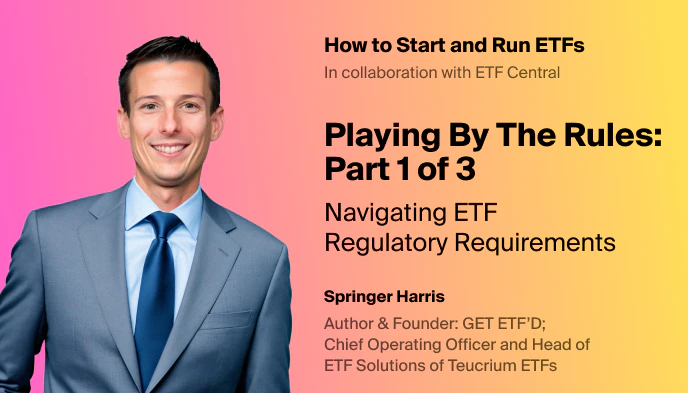
Playing By The Rules: Part 1 of 3 - Navigating ETF Regulatory Requirements
Launching an ETF requires navigating a complex regulatory environment governed by the SEC and FINRA. Understanding compliance, Rule 6c-11, and building robust systems is key for success.

Keep up with what matters in ETFs
Get timely ETF insights, market trends, and top ideas straight to your inbox.
Your newsletter subscriptions with us are subject to ETF Central's Privacy Policy and Terms and Conditions.
Hot off the heels of my last three-part series, "Building your ETF Dream Team" I'm excited to bring you the first installment of another three-part series on the regulatory aspects of starting an Exchange-Traded Fund. In this series, we'll delve into the complexities of ETF regulations, governance, and operational considerations. This article sets the foundation by exploring the key regulatory bodies and requirements you need to understand. Stay tuned for Parts 2 and 3, where we'll build upon this knowledge by referencing all the documents you'll need for launch, who can help you, how long it will take, and how to set yourself up for operational excellence post-launch.
Launching an ETF is an ambitious endeavor that offers the potential for significant rewards. That's why so many advisors are embracing the wrapper and concluding they have no choice but to change their thinking—from learning how to make ETFs work for their client portfolios to learning how to make ETFs for themselves as entrepreneurs. That's where I come in.
Talk with anyone in the ETF industry long enough, and the conversation will eventually turn to complaining about the regulatory environment that dictates all our lives in what I affectionately call ETF-Landia. And I get it; everything about complying with regulation in this industry is incredibly difficult, but what else should be expected? We aren't selling sneakers. We're managing client money and doing so within an extremely complex structure.
Starting an ETF comes with a maze of regulatory requirements that can be daunting for newcomers. It's also difficult to find good help in demystifying this web of regulators and requirements. The rules and guidelines governing ETFs are continually evolving, adding layers of complexity that can act as barriers to entry. While established firms may have the advantage of experience, new issuers can turn these challenges into opportunities by becoming well-versed in the regulatory landscape and leveraging it to innovate.
Get data on 14,000+ ETFs
Access Trackinsight's reliable and comprehensive data with 500M+ points on 14,000+ ETFs.
Understanding Compliance in the ETF Industry
So it's safe to say we can all agree compliance is more than just a checkbox exercise; it's the backbone of a trustworthy and sustainable ETF. It involves adhering to stringent regulatory requirements set forth by authorities, including meticulous documentation during the registration process, board approval, and eventually implementing detailed operational procedures. Regulations also dictate specific website disclosures and necessitate robust monitoring tools to ensure ongoing compliance. By embracing these requirements, new issuers not only meet legal obligations but also build credibility with investors.
The Key Regulatory Bodies: SEC and FINRA
To navigate the regulatory landscape effectively, you must first understand the primary regulatory bodies governing ETFs in the United States: the U.S. Securities and Exchange Commission and the Financial Industry Regulatory Authority.
The U.S. Securities and Exchange Commission
The SEC serves as the primary regulator of ETFs in the United States. Its mission is to protect investors, maintain fair and efficient markets, and facilitate capital formation.
For ETF issuers, the SEC oversees several critical areas:
- Registration: ETFs must register under the Investment Company Act of 1940. This act governs the structure, operations, and disclosure requirements for investment companies, including ETFs.
- Disclosure and Reporting: Transparency is paramount. ETFs are required to provide detailed information to investors through prospectuses, annual and semi-annual reports, and other regulatory filings. The SEC reviews these documents to ensure they meet disclosure requirements and protect investor interests.
- Rulemaking: The SEC creates and enforces rules that govern ETF operations. A significant example is Rule 6c-11, commonly known as the ETF Rule, which modernizes the regulatory framework for ETFs.
- Examinations and Enforcement: The SEC conducts examinations of ETF issuers and their service providers to assess compliance with securities laws. It also investigates potential violations, which can result in penalties or other corrective actions.
What does this mean for you, the new ETF issuer? Well, the SEC is going to be a part of your life for a long time, more so than they already are if you happen to be an SEC-registered advisor. If you aren't, you're going to need to become one. The SEC is going to determine if you get to launch your ETF, and periodically along the way, they'll decide if you get to keep operating it. They do this through periodic audits and the requirements for ongoing updates. We'll dive into what an SEC audit looks like in a future series.
The Financial Industry Regulatory Authority (FINRA)
FINRA is a self-regulatory organization authorized by Congress to oversee brokerage firms and their registered representatives. While it's not a government agency, FINRA plays a crucial role in protecting investors by ensuring that member firms operate fairly and honestly. For ETF issuers, FINRA's oversight includes:
- Trading and Marketing Practices: FINRA monitors trading activities and reviews marketing materials to ensure adherence to rules and regulations. This includes conducting audits and enforcing standards for promotional content.
- Licensing and Education: FINRA is responsible for the licensing and qualification of registered representatives involved in the sale and trading of ETFs. It provides educational resources and training programs to ensure these professionals understand the unique features and risks of ETFs.
- Rulemaking: FINRA establishes and enforces rules governing the conduct of its member firms, including those related to ETF trading and marketing practices. It works closely with the SEC to ensure consistency with federal securities laws.
FINRA takes care of the details that the SEC doesn't. The SEC is interested in the disclosure of your funds, their continual oversight by the board, and many, if not all, of your operational procedures. Meanwhile, FINRA is there to monitor your conduct and communications with the public. Much of your interaction with FINRA will come via the firm you hire as your distributor.
What is Rule 6c-11? A Game Changer
One of the most significant developments in ETF regulation is the introduction of Rule 6c-11, often referred to as the ETF Rule. Many say it lowered entry barriers, but I feel it did a better job of clearly laying out what specific obligations issuers are required to meet.
I was speaking to a university researcher the other day who was asking me about the ETF Rule, and I compared it to my hometown in Burlington, VT. When I was on the development review board, we switched from board review of almost all projects to a form-based code where almost everything became codified. The city didn't make development "easier" per se, but they did make the process of seeking approval more transparent and, as a result, cheaper, which incentivizes more development. This is exactly what happened in ETF-Landia. The SEC made the rules clear and applicable to all at the same level. Therefore, many more ETFs have been launched.
Some Key Requirements Under Rule 6c-11
- Elimination of Exemptive Relief: One of the most significant changes brought by Rule 6c-11 is that new ETFs no longer need to obtain individual exemptive relief from the SEC to launch. This streamlines the process, reduces costs, and speeds up the time to market.
- Daily Portfolio Disclosure: ETFs must disclose their complete portfolio holdings daily on their website. This transparency helps investors make informed decisions and enhances market integrity.
- Additional Website Disclosures: Beyond portfolio holdings, ETFs are required to disclose daily information such as the Net Asset Value (NAV) per share, market price, and any premiums or discounts to the NAV.
- Marketing Materials and Prospectus: Issuers must ensure that all marketing materials and the prospectus include standardized information as mandated by the ETF Rule.
- Recordkeeping: Detailed records of all agreements with authorized participants (APs) and their transactions must be maintained.
- Policies and Procedures: ETFs must develop and maintain comprehensive written policies to ensure they are managed in compliance with applicable laws.
- Code of Ethics: Establishing a code of ethics is essential. This code sets standards for personal investing and addresses potential conflicts of interest, such as trading ahead or using insider information.
- Risk Management: Implementing effective risk management strategies is crucial to address market, credit, liquidity, and operational risks associated with ETF operations.
Preparing for Compliance
Understanding these regulatory requirements is the first step in launching a successful ETF. Here are some practical steps to help you navigate this complex environment:
- Hire a Guide: Many new ETF issuers rely on the support from the service providers they hire—and why not? It's free. Unfortunately, as the number of ETFs being launched continues to increase, these professionals don't have the time to give information away for free the way they used to. So, the best thing to do is hire someone to work directly on your behalf. I can help. This is also why many advisors are opting for white-label solutions. It just makes the path that much easier. I can help with that too.
- Engage Experienced Legal Counsel: Having a great lawyer is one of the best things you can have. But don't rely on them for your full education; it'll be one of the most expensive you have ever had.
- Develop Robust Internal Systems: Throughout the entire launch process, you should be looking to establish your post-launch procedures and monitoring tools to ensure ongoing compliance with all regulatory obligations. Getting to launch is only the first step—we'll cover more of this in Part 3.
- Educate Your Team: Ensure that all team members understand the regulatory landscape and their roles in maintaining compliance. Not only is this helpful—it's actually a requirement. You will have many instances throughout the year to document the training you have done with your team.
- Stay Informed: Regulations can change, so it's essential to keep abreast of any updates or amendments to existing laws and rules. Sign up for industry updates from service providers and lawyers. This is a great resource for free information on upcoming changes to the regulatory environment.
This concludes Part 1 of our series on navigating ETF regulatory requirements. In the next article, we'll delve into the roles and responsibilities of the Board of Trustees and explore the essential legal documents needed for ETF registration.
Please note this article is for information purposes only and does not in any way constitute investment advice. It is essential that you seek advice from a registered financial professional prior to making any investment decision.

Latest ETF News
See all ETF news


Should You Avoid a Small ETF?




Why ETF Spreads Often Mislead Investors


 Advantages of ETFs over Mutual Funds1/6
Lower Costs
In this guide, we'll explore the advantages of ETFs over mutual funds, giving you valuable insights into why ETFs have gained significant popularity among investors like yourself.
Leveraged ETFs: Unlocking the Potential for Amplified Returns1/6
Understanding Leveraged ETFs
Explore leveraged ETFs: potential for amplified returns & risks. 5 ETFs to consider across equities, commodities & fixed income.
What is a Leveraged ETF?1/6
Introducing Leveraged and Inverse ETFs
In this guide, we'll dive into the world of leveraged ETFs, exploring their definition, mechanics, potential risks, and rewards.
Recent educational content

ETF Trends
ETF Industry KPIs June 22, 2026
The ETF Industry saw 40 New Launches and 23 closures last week.

Asset TV
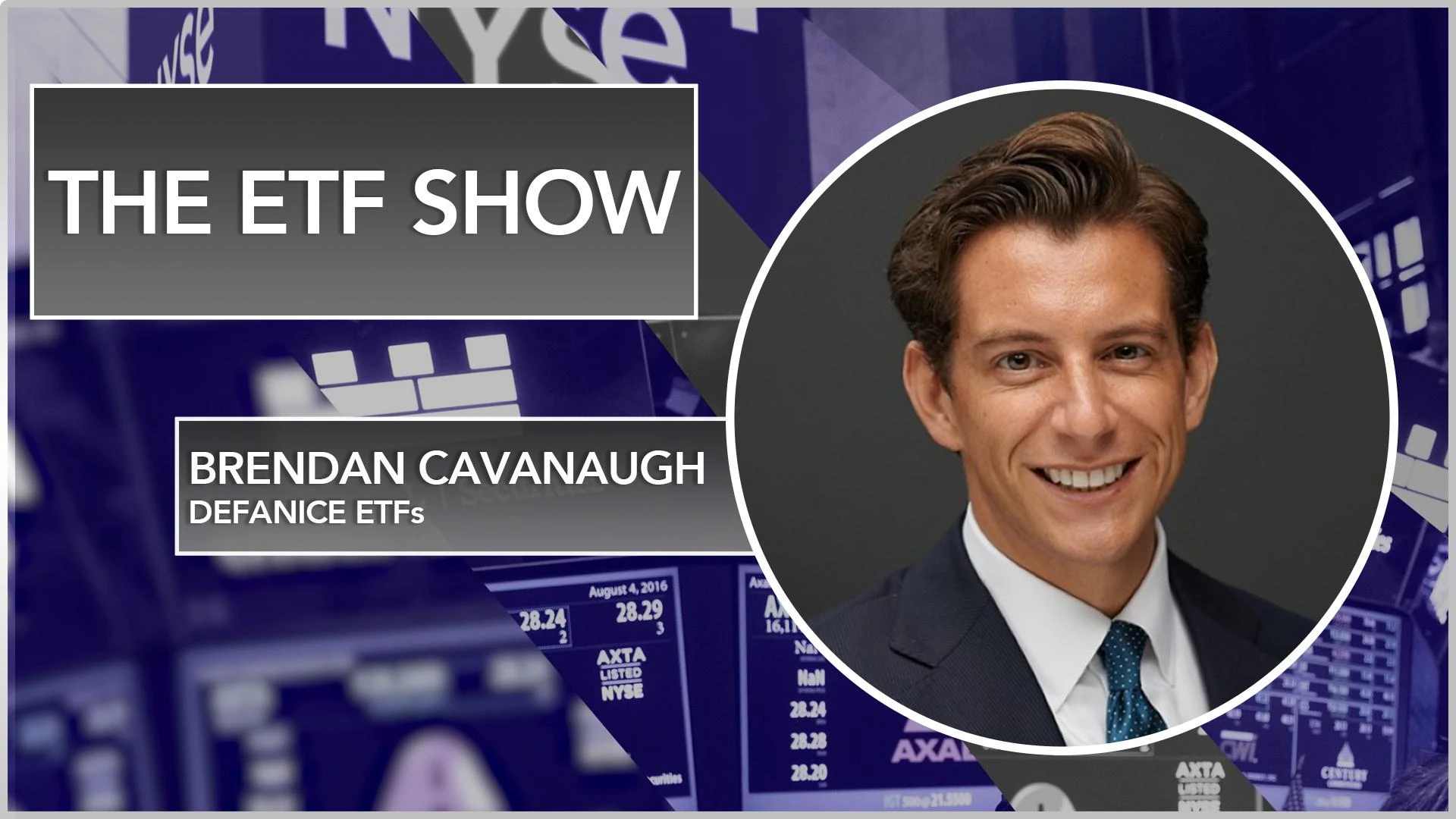
The ETF Show - New Autism-Impact ETF Launched
Defiance ETFs has launched the first ETF, $ASD, focused on the autism ecosystem, investing in companies that provide services, products, and research related to autism and neurodivergence.

ETF Trends
ETF Industry KPIs June 1, 2026
The ETF Industry saw 22 New Launches, 1 Ticker Change and 1 closure last week.
ETF Trends
ETF Industry KPIs May 20, 2026
The ETF Industry saw 44 New Launches, 3 Mutual Fund Conversions and 9 closures last week.
Browse all educational columns



Expert-Built ETF Portfolios, All in One Place
Don’t start from scratch. Discover ready-made ETF portfolios built by professionals to match different goals, timelines, and market views. Use them as inspiration or as a starting point for your own allocation.