NYSE CRTR Economy Event Watch the replay →



Plans are Worthless, but Planning is Everything
As we enter a new year, new investment plans are being formulated. Let’s consider some key questions that should be asked as we evaluate the 2023 landscape.


Keep up with what matters in ETFs
Get timely ETF insights, market trends, and top ideas straight to your inbox.
Your newsletter subscriptions with us are subject to ETF Central's Privacy Policy and Terms and Conditions.
Most of us are familiar with the phrase, “Everyone has a plan, until they get hit in the face”, well, as the market data shows – we all got walloped in 2022. For many investors, the portfolio strategies they implemented at the start of, or during, the year failed to materialize as they desired; largely due to market uncertainty and macroeconomic forces. But a failed plan does not mean that the thought exercise behind it is worthless.
As we enter a new year, new investment plans are being formulated, but many of 2022’s themes are still ever present. So, let’s consider some key questions that should be asked as we evaluate the 2023 landscape.
The ETF Industry Is Evolving Fast
From AI infrastructure to active strategies, the ETF landscape is shifting. Share your perspective in the 7th Annual Global ETF Survey and get exclusive early access to the final report.
What is the current state of the market?
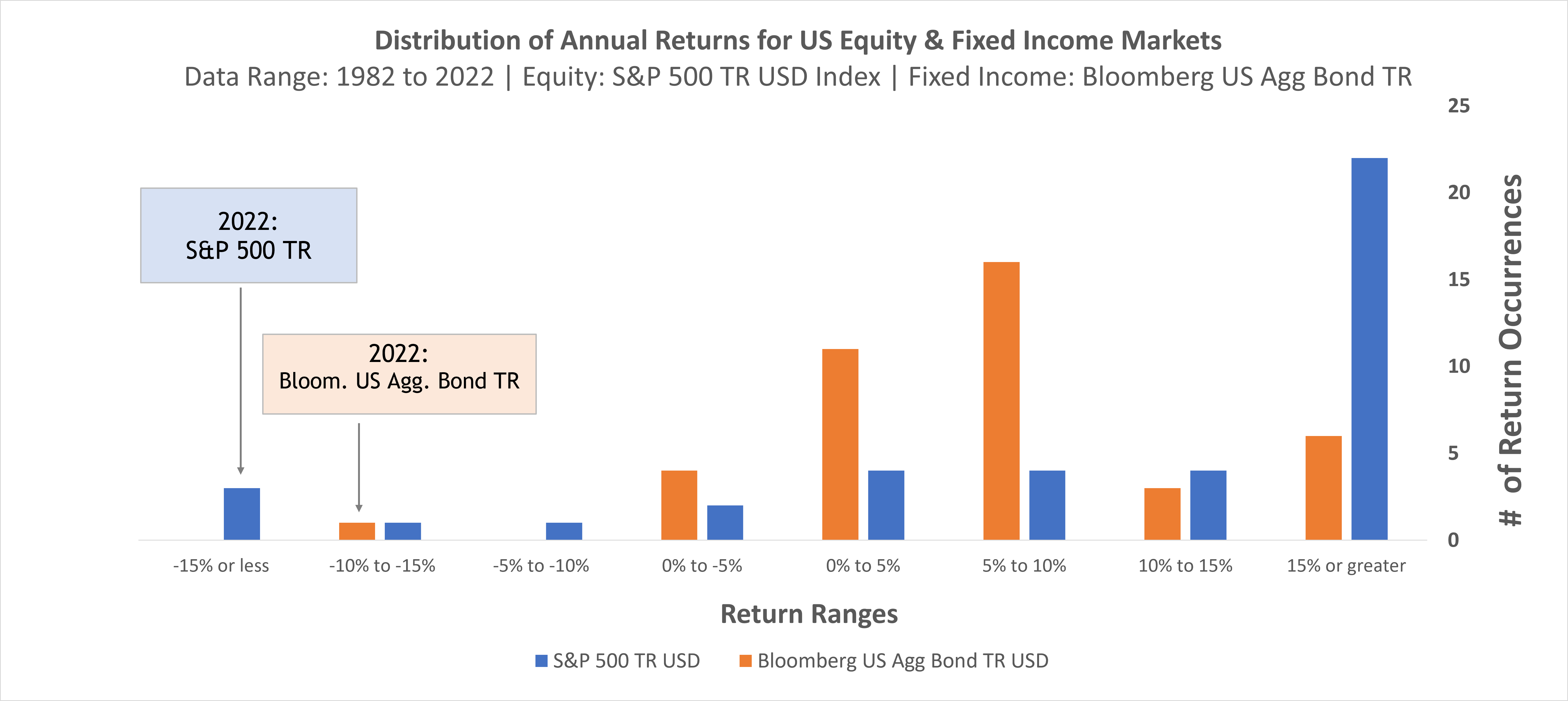
To end the year, all major asset classes underperformed, an indication of how pervasive market uncertainty was throughout 2022. The most salient proof of this being the simultaneous negative performance of both bond and equity markets – a phenomenon that last occurred in 1969, during a period of runaway inflation.

While the headline shock of negative returns may cause trepidation, having a relative perspective is key. Large market downturns are quite rare, and their occurrence should be put into proper context. For 2022, the returns of the S&P 500 Index and the Bloomberg US Aggregate Bond Index were -18.11% and -13.01%, respectively, far below their historical expected performance range. Simply put, 2022 was an exceptional year, not the norm of what investors can expect over a long investment cycle; understanding this fact is essential to any portfolio planning that occurs.
What has been influencing markets?
Inflation was the overarching theme of 2022 and will remain a focal concern for central bankers in 2023. In the US, policymakers have forecasted that their short-term rates will reach a range of 5% to 5.25% by the end of 2023. So, what does this mean? In a rising rate environment, where the cost of money (i.e., interest) is higher, we can reasonably expect large- and small-scale businesses to be more judicious as to how they raise and use capital. Furthermore, many firms may consider cutting back on expenses as a means of managing their balance sheet.
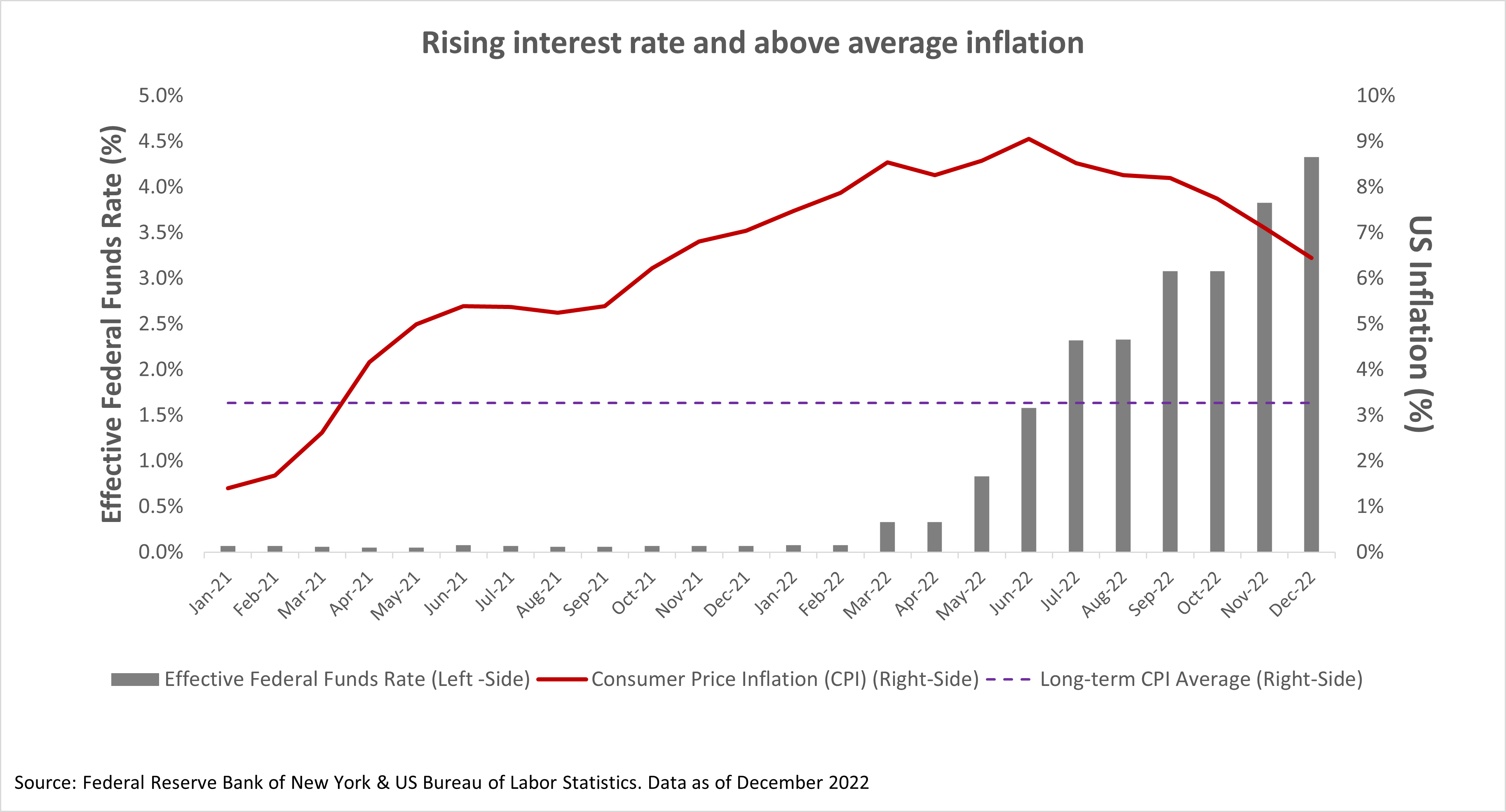
From a consumer standpoint, individuals will become more mindful of how they direct their spending, ensuring that necessities are covered, and sufficient savings are put away, before any disposable spending takes place. As businesses and individuals enter a phase of curtailment, the reduced flow of dollars among both entities will shape the attractiveness of industries and asset classes across the investment landscape.
What is the outlook for the future?
The outlook for the future is always unknown, but opportunity resides in the present.
In any market environment, investors should have a pragmatic outlook. A pragmatic investor would view this market environment as an opportunity to acquire assets at a deep discount and benefit from their resurgence. In reviewing the historical performance of index-tracking ETFs over the past decade, their long-run performance has largely been positive.

Data as of December 2022
For investors that are looking to better position themselves in the future, creating and/or having a diversified portfolio allows for broad exposure to different asset classes, leaving them less susceptible to a market downturn in any one particular investment space; while also allowing them to participate and benefit from the growth in other areas.
What are your investment goals?
Investment goals may remain unchanged from year to year or new ones may arise, but it is important that one knows the answer to this question; as it will guide decisions such as, what asset classes or strategies you invest in, or how much risk you are willing to accept. Above all, knowing your investment goals allows you to maintain perspective; remember you are investing for the long-term, and though there is uncertainty in the present, planning and positioning your portfolio towards fulfilling your future investment goals should always be top of mind.
Please note this article is for information purposes only and does not in any way constitute investment advice. It is essential that you seek advice from a registered financial professional prior to making any investment decision.

Latest ETF News
See all ETF newsETF Contrarian Corner: Two Unloved Segments That Investors Are Ignoring


The Super El Niño Trade: Two Potential ETF Winners and Losers


The SpaceX (SPCX) IPO: Here's Which ETFs Already Own it



 Advantages of ETFs over Mutual Funds1/6
Lower Costs
In this guide, we'll explore the advantages of ETFs over mutual funds, giving you valuable insights into why ETFs have gained significant popularity among investors like yourself.
Leveraged ETFs: Unlocking the Potential for Amplified Returns1/6
Understanding Leveraged ETFs
Explore leveraged ETFs: potential for amplified returns & risks. 5 ETFs to consider across equities, commodities & fixed income.
What is a Leveraged ETF?1/6
Introducing Leveraged and Inverse ETFs
In this guide, we'll dive into the world of leveraged ETFs, exploring their definition, mechanics, potential risks, and rewards.
Recent educational content
Asset TV
The ETF Show - New Autism-Impact ETF Launched
Defiance ETFs has launched the first ETF, $ASD, focused on the autism ecosystem, investing in companies that provide services, products, and research related to autism and neurodivergence.


ETF Trends
ETF Industry KPIs June 1, 2026
The ETF Industry saw 22 New Launches, 1 Ticker Change and 1 closure last week.

ETF Trends
ETF Industry KPIs May 20, 2026
The ETF Industry saw 44 New Launches, 3 Mutual Fund Conversions and 9 closures last week.
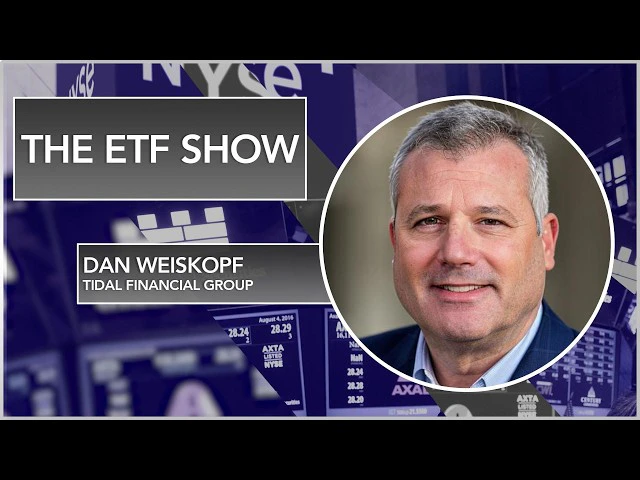
Asset TV
The ETF Show - Politics Becomes Investable Trade through ETFs
Dan Weiskopf, Senior Portfolio Manager at Tidal Financial Group spoke with the ETF Show about Subversive ETFs that help investors trade like politicians.
Browse all educational columns



Have you tried our ETF Compare tool?
Compare ETFs like a pro. Analyze fees, performance, exposure & holdings side-by-side.