Ready-made ETF portfolios built for real investor needs. Explore now →



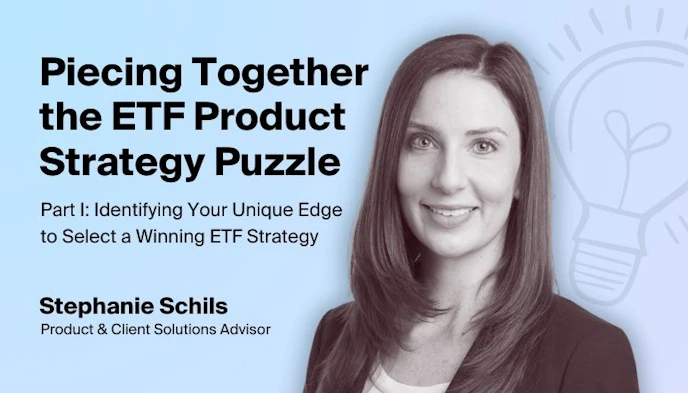
Piecing Together the Product Strategy Puzzle Part I: Identifying Your Unique Edge to Select a Winning ETF Strategy
Building a successful ETF business requires a deep understanding of your investment strengths, client demand, and the competitive landscape. Here's my playbook.

Keep up with what matters in ETFs
Get timely ETF insights, market trends, and top ideas straight to your inbox.
Your newsletter subscriptions with us are subject to ETF Central's Privacy Policy and Terms and Conditions.
Welcome! This is Stephanie Schils, Product & Client Solutions Advisor. I’ve built a 15+ year track record commercializing investment product platforms to build and scale businesses. My deep understanding of the ETF ecosystem comes from working in ETF roles that span distribution (institutional and wealth), product (go-to-market strategy and client-facing subject matter expert), and capital markets at BlackRock and Neuberger Berman.
In this multi-part series, I guide you through the foundational pillars you’ll need to navigate when building an ETF business from the ground up.
A successful ETF launch requires close collaboration across product strategy, capital markets, distribution, marketing, investment, legal and compliance, technology, and operations teams within a firm.
I begin by diving into product strategy, specifically the idea generation process, to build and narrow down a product pipeline. Your ideal ETF strategy lies at the nexus of your investment strengths, client demand, the role your ETF plays in client portfolios, market dynamics, the competitive landscape, and your product launch approach.
Get data on 14,000+ ETFs
Access Trackinsight's reliable and comprehensive data with 500M+ points on 14,000+ ETFs.
Lean into Your Investment Strengths
An ETF strategy should leverage or further build on existing investment strengths. Across your platform, identify which investment capabilities have:
- A competitive performance history within their asset class or category
- Brand recognition in the market
- A differentiated exposure or investment approach
Be mindful that unlike mutual funds, ETFs cannot be gated to inflows or outflows, so not all strategies are appropriate for an ETF wrapper. To measure a strategy’s ETF appropriateness, conduct a risk analysis to measure liquidity thresholds, tradability, and capacity constraints of securities in the strategy’s investable universe.
Assess Client Demand
To set yourself up for success during the ETF fundraising process, engage potential early adopters and target distribution channels to assess the viability of an investment strategy. These early conversations offer perspective on:
- The investment challenges in focus for clients and which of these could be solved more efficiently
- How clients may implement your proposed ETF strategy in a portfolio
- How differentiated the strategy is versus competitor ETFs on their radar
- Nonstarters in the diligence process for platform approvals
In an ideal scenario, a client may even seed an ETF designed in partnership with your firm, ensuring initial traction and visibility. While this is more of the exception than the norm, your firm still has a fiduciary responsibility to consider the strategy’s broader client eligibility. Investor concentration risk could impact future fundraising potential.
Thoughtfully gathering client feedback early also contributes to a robust ETF business case in support of the fund board approval process.
A word to the wise, be mindful of the timeline of preliminary client conversations relative to when ETF filings are made with the SEC. Ensure you comply with regulatory communication restrictions, in other words, the “quiet period”.
Understand the Role of ETFs in Client Portfolios
The ETF wrapper, given its tradability on an exchange, is particularly nimble as a tool to implement both strategic and tactical asset allocation views, build a portfolio liquidity sleeve, use for investment transition management, and act as a trading vehicle (for larger ETFs).
When selecting your ETF strategy, consider how your target client base builds their asset allocation to align with investment priorities. The average investor holding period of the strategy often depends on whether it lends itself to a longer-term strategic allocation or a more tactical exposure.
The asset allocation sleeve in which your ETF strategy is placed impacts its potential position sizing and therefore the fundraising strategy you build. Some strategies may have characteristics that fit within multiple allocation sleeves, meeting more than one the investment need and expanding its use cases.
ETF strategies within CORE Asset Classes
- Have a greater portfolio weight, creating an opportunity to capture a higher percentage of client assets, but often mean greater competition and product availability.
- To best position your ETF strategy, be clear on how a client segments a core allocation sleeve into sub-asset classes, for example, by style (value/growth), market cap (large/mid/small), or outcome (income, low volatility).
- Clients may diversify across a greater number of managers given the larger weight.
ETF strategies within SATELLITE or Niche Asset Classes
- By nature tend to be a smaller portfolio allocation and may have fewer competing products available, depending on how narrowly those product strategies are categorized.
- Clients may concentrate on a single or few managers given the smaller weight.
Work with Market Dynamics at Play
Anticipating macro market dynamics in the future 6-to-18-month period is the most challenging aspect of selecting your ETF strategy. We all know the story of the proverbial crystal ball…if we had one…well, you can fill in the blank!
There are two product approaches to navigate the macro environment:
- Focus on meeting structural investor needs, like risk diversification or income generation, which have a place in portfolio allocations throughout market cycles.
- Align your strategy with potential market tailwinds and manage for headwinds. ETF strategies in market when macro trends turn in their favor have the potential to do well.
Favorable market timing within the first 6 months of launch is particularly important for niche or tactically oriented ETF strategies and impacts your product launch approach (i.e. ETF conversion versus a new strategy) to hit the ground running.
Analyze the Competitive Landscape
With an ever-expanding number of ETFs in the industry, differentiating your firm and ETF strategies with clients requires strategic analysis of the competitive landscape. As you contribute to ETF industry growth, analyze competition at three levels: ETF issuer, ETF strategy, the client perspective.
ETF Issuer
As a firm, the immediate inclination is to identify your peers to both benchmark yourself and understand what has and has not led to their success. Given the range of participants and their approaches to growing in the ETF industry, identifying a perfect peer can be a challenge. A good starting point is to account for:
- Firm assets under management/advisement (small, medium, or large)
- Firm distribution structure and reach (captive distribution network, direct digital distribution, a presence in client channels including RIA, broker/dealer, banks, wirehouse, family office, or institutional)
- ETF assets under management/advisement (size and maturity of their platform)
- The number of ETFs in their existing product offering (and how their product offering evolved)
- Firm investment capabilities across asset classes (performance and length of track record)
- Model portfolio capabilities (in-house or through model marketplace presence)
ETF Strategy
To select and position the right ETF strategy for your firm, consider:
- How crowded the ETF landscape is within your strategy’s product segment. In doing so, identify investment categories in which you have outstanding performance or a unique strategy in an underserved segment.
- Understand ETF flow trends across asset classes and in your target product category. ETF flows tend to follow performance.
- Identify competitors based on active or passive investment style and narrowed product classification category.
- The range of fees charged by competitors and how your strategy is priced.
ETF Central offers an ETF screener to help analyze the ETF investment universe.
Client Perspectives When Making ETF Product Selections
- Clients prioritize the exposure gained through an ETF strategy, its fee (there high price sensitivity in both active and passive ETFs), firm reputation, ease of access, assets under management, and liquidity*.
- You may compete with ETFs classified in a slightly different category, but implemented by clients to meet the same portfolio need.
*The formal ETF due diligence process encompasses a broader and more comprehensive set of criteria and information.
Determine Your Product Launch Approach
Consider the product structures currently used to deliver your investment capabilities, where they can or cannot be leveraged in the ETF wrapper, and as a result, how you approach each ETF launch to position yourself for fundraising success. I outline the high-level benefits and challenges to each approach here.
New Strategy
Benefits: Opportunity to expand investor reach via a differentiated ETF strategy or one not yet delivered in a comingled vehicle within your firm.
Challenges: When launching an ETF starting with seed capital, you need to prepare for a potentially slow asset gathering process and be patient while building the minimum performance track record needed for platform approvals.
Mutual Fund to ETF Conversion
Benefits: From day one you have an established performance track record (carries over from the mutual fund) and an established asset base.
- Mutual funds considered small in size (for example, $100mn) already reach many minimum asset requirements for platform approvals. A $10 or 20mn mutual fund may see less immediate impact as an ETF.
- They are large enough to generate more initial secondary market trading activity.
- Expands the investment use cases for the strategy.
Challenges: Smaller mutual funds don’t magically grow through conversion to an ETF.
- Analyze the existing client composition to gauge potential asset loss upon conversion, for example, investments within 401k accounts or a high number of direct investors (requires more hand holding to ensure they provide brokerage account details).
- Before converting to an ETF, understand why a smaller mutual fund strategy didn’t gather more assets.
- Be prepared to renew marketing commitment to fundraise for the strategy in an ETF wrapper.
SMA to ETF Conversion
Benefits: Similar to a mutual fund to ETF conversion, you have a built-in track record (if certain criteria are met across included SMA accounts) and an established asset base.
Challenges: Not all SMAs meet the criteria for a Section 351 conversion to an ETF. There’s a heavy operational lift to execute the conversion and high degree of coordination and buy-in required across existing SMA investors.
Mutual Fund Clone
Benefits: You can leverage client familiarity with the portfolio management team and the investment strategy.
Challenges: Client platforms have varying comfort levels with ETF clones of mutual funds.
- There’s an open question about which vehicle is capturing a manager’s best alpha insights (for active strategies)
- To approve new strategies on their platform, some clients want to see greater distinction from their existing platform strategies.
ETF as a Mutual Fund Share Class
It's not currently available in the US (has been approved in Europe). Over 40+ asset managers have filed with the SEC to participate in the review and comment process as this structure is explored for broader market adoption following Vanguard’s patent expiration.
There’s an open question about normalizing the share class structure across the industry in the US given the number of open operational questions and how to ensure fiduciary standards are met for ETF holders.
Tying it Together
Each piece of the product strategy puzzle will hold greater weight depending on your firm dynamics; however, they all play a crucial role in building a winning ETF product pipeline.
Please reach out through LinkedIn or my personal website if you are interested in learning more.
Disclaimer
This material is provided for informational and general investment education purposes only and nothing herein constitutes investment, legal, accounting, or tax advice, or a recommendation to buy, sell, or hold a security. It is essential that you seek advice from a registered financial professional prior to making any investment decision.


Latest ETF News
See all ETF newsForm 4 Has 20 Transaction Codes. None Say "Section 351 ETF Swap"


Who Really Owns a White-Label ETF?


What If a Futures-Based ETF Never Had to Roll Again?

How Do You Build a Winning ETF Business?

Losers Of Q2 2026 REIT Earnings Season


Winners of Q2 2026 REIT Earnings Season


 Advantages of ETFs over Mutual Funds1/6
Lower Costs
In this guide, we'll explore the advantages of ETFs over mutual funds, giving you valuable insights into why ETFs have gained significant popularity among investors like yourself.
Leveraged ETFs: Unlocking the Potential for Amplified Returns1/6
Understanding Leveraged ETFs
Explore leveraged ETFs: potential for amplified returns & risks. 5 ETFs to consider across equities, commodities & fixed income.
What is a Leveraged ETF?1/6
Introducing Leveraged and Inverse ETFs
In this guide, we'll dive into the world of leveraged ETFs, exploring their definition, mechanics, potential risks, and rewards.
Recent educational content

ETF Trends
ETF Industry KPIs September 8, 2026
This week’s KPI data overview highlights key metrics and trends shaping the ETF landscape.

ETF Trends
ETF Industry KPIs August 31, 2026
This week’s KPI data overview highlights key metrics and trends shaping the ETF landscape.
ETF Trends
ETF Industry KPIs August 24, 2026
This week’s KPI data overview highlights key metrics and trends shaping the ETF landscape.
What’sTheFund
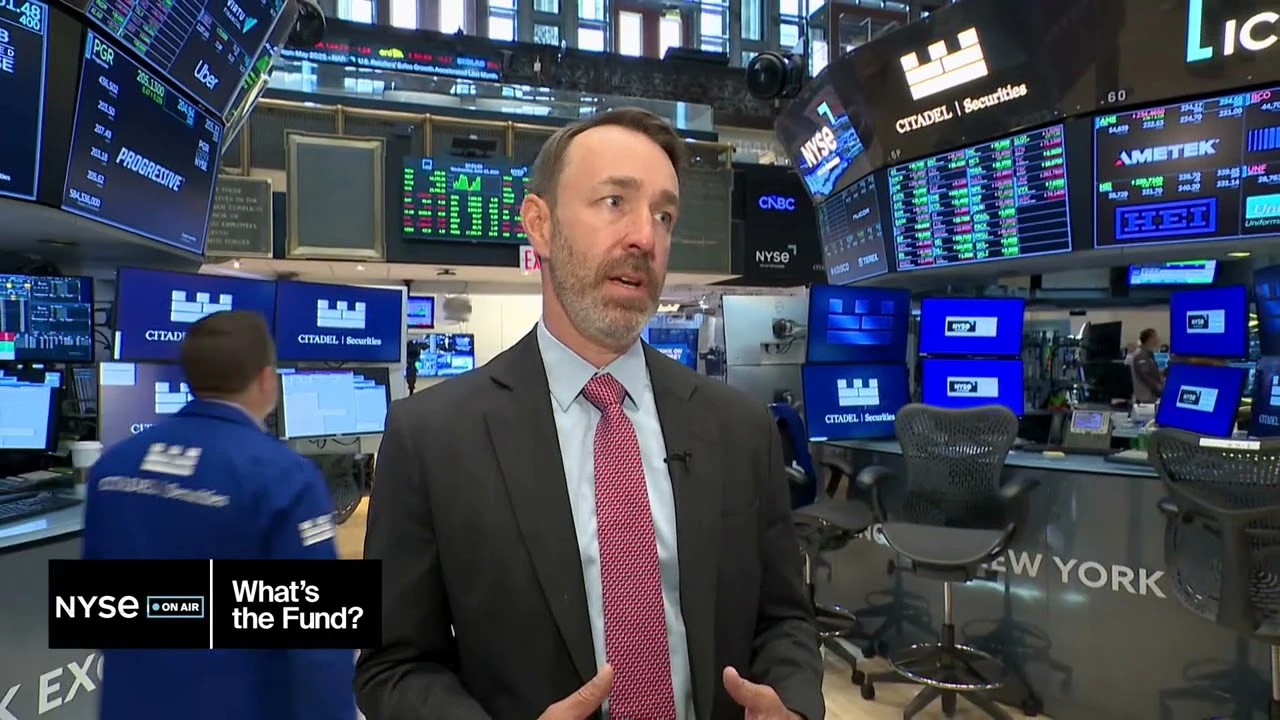
What's the Fund | Ocean Park Diversified Income ETF (DUKZ)
James St Aubin, Chief Investment Officer at Ocean Park Asset Management, discuss the DUKZ ETF, exposing investors to the whole spectrum of asset classes in the fixed income markets, through their rules-based process.

Browse all educational columns



Have you tried our ETF Compare tool?
Compare ETFs like a pro. Analyze fees, performance, exposure & holdings side-by-side.