Open Now: The Global ETF Survey Take the Survey →



Passive vs. Active ETFs: Thoughts from an ETF Industry Veteran
In his second article for ETF Central, Nicholas Phillips, President of ETF Capital Markets Advisors and an ETF industry veteran, discusses the importance of understanding the expectations and performance metrics of passive and active ETFs to achieve investment goals.


Keep up with what matters in ETFs
Get timely ETF insights, market trends, and top ideas straight to your inbox.
Your newsletter subscriptions with us are subject to ETF Central's Privacy Policy and Terms and Conditions.
Exchange-traded funds (ETFs) have become a cornerstone in the portfolios of many investors, prized for their liquidity and diversity. When evaluating ETFs, understanding the differences between Passive and Active ETFs is crucial, as each caters to different investment goals and risk tolerances.
The ETF Industry Is Evolving Fast
From AI infrastructure to active strategies, the ETF landscape is shifting. Share your perspective in the 7th Annual Global ETF Survey and get exclusive early access to the final report.
Passive ETFs: The Benchmark Mirrors
Passive ETFs aim to replicate the performance of a specific benchmark or index. The primary goal for these funds is not to outperform their benchmarks but to match them as closely as possible.
This approach typically benefits investors through lower fees and minimal tracking error—the difference between the ETF’s performance and that of its benchmark. A Passive ETF that maintains a low tracking error while minimizing expenses is considered to have fulfilled its objective effectively.
Investors favor these ETFs for their predictability and straightforward strategy, providing a clear exposure to particular market segments.
Active ETFs: Seeking to Outperform
In contrast, Active ETFs strive to beat the market or their specific benchmarks. Managed by skilled professionals who make strategic decisions about buying and selling securities, these ETFs often incur higher fees due to more complex trading strategies and frequent rebalancing.
The key measure of success for an Active ETF is its ability to generate returns that exceed its benchmark, after accounting for all costs. This pursuit of excess returns, however, introduces a greater risk and potential for deviation from expected performance patterns.
Costs: A Critical Factor in Satisfaction
One cannot discuss ETF satisfaction without addressing costs. Passive ETFs generally boast lower fees, enhancing investor satisfaction through reduced cost drag on returns. Active ETFs, while more expensive, justify their fees through the potential for higher returns. Beyond management fees, investors must also consider trading costs and tax efficiency, which can significantly affect overall investment returns.
Issuer Strategies: Balancing Act between Innovation and Demand
ETF issuers play a pivotal role in shaping investor satisfaction by determining which products to bring to market. The decision to launch an ETF involves analyzing market demand, potential for asset accumulation, and alignment with the issuer's strategic objectives.
Issuers must balance these factors against the costs of managing and marketing the ETF, aiming to increase assets under management (AUM) while meeting investor expectations.
Case Study: Misunderstanding Performance Metrics
A common misconception about ETFs can be highlighted through an anecdote from a recent interaction on LinkedIn. A few weeks ago, I came across a post where an investor expressed dissatisfaction with ETF XYZ, labeling it as "terrible" simply because its value had decreased. This prompted me to engage and clarify a crucial point about ETFs.
The key to evaluating an ETF’s success is understanding whether it has achieved what it was designed to do. In the case of ETF XYZ, it was designed to mirror a specific market index, which had indeed declined in value.
The ETF performed precisely as expected—it accurately tracked its benchmark. The issue was not with the ETF but with the investor's timing or choice of investment. For those expecting downturns, options like shorting the ETF or choosing a different investment timing might have been more appropriate strategies.
Another Perspective: The Lifecycle of ETF Usage
Early in my career at an ETF issuer, I witnessed a significant redemption event in one of our ETFs, which initially seemed alarming. Curious, I brought this up with my boss, who provided a reassuring perspective on ETF utility and investor satisfaction. He explained that this particular ETF was frequently used by hedge funds to hedge specific trades.
Once their strategic needs were met, these funds would redeem their positions. However, the critical insight was that these hedge funds were not dissatisfied; rather, they found the ETF effective for their purposes and would likely use it again.
He emphasized that the true measure of an ETF's success was not just its ability to attract and retain assets but also the satisfaction of its users with the entry and exit process. As long as investors had a positive experience—where the ETF met their strategic needs smoothly and efficiently—they would return. This interaction taught me an invaluable lesson about the dynamic ways ETFs are used and the importance of user experience in measuring an ETF's success.
Looking Ahead: The Future of ETFs
As technology advances and investor preferences evolve, the ETF landscape continues to change. Innovations in trading technology and algorithmic management are likely to refine both Passive and Active ETF strategies, potentially reducing costs and improving performance alignment with investor expectations.
In conclusion, whether investors choose Passive or Active ETFs, understanding the inherent expectations and performance metrics of each is essential. By aligning these factors with their investment goals, investors can enhance their satisfaction and achieve their financial objectives.
About the Author
Nicholas Phillips | President of ETF Capital Markets Advisors LLC
With over 25 years of experience in ETF market making and capital markets, Nicholas Phillips is recognized as a subject matter expert in the ETF industry. He started his career spending the first ten years as a lead market maker for SIG and Goldman Sachs. At the helm of MCAP LLC's ETF Desk, Nicholas built and scaled the division, enhancing its operations through innovative pricing and risk models, and robust relationships with market makers and issuers. His tenure at Van Eck Associates as Director of ETF Capital Markets further solidified his expertise, managing critical facets of operations and deepening connections within the trading community. Beyond market making, Nicholas is an avid content creator, sharing insights that demystify complex market dynamics. He is keen on exploring board member roles that benefit from his extensive background and forward-thinking approach to ETF strategies. His dual US/Ireland citizenship complements his global perspective, enriching his professional endeavors in diverse markets.
Disclaimer
Please note this article is for information purposes only and does not in any way constitute investment advice. It is essential that you seek advice from a registered financial professional prior to making any investment decision.

Latest ETF News
See all ETF news








 Advantages of ETFs over Mutual Funds1/6
Lower Costs
In this guide, we'll explore the advantages of ETFs over mutual funds, giving you valuable insights into why ETFs have gained significant popularity among investors like yourself.
Leveraged ETFs: Unlocking the Potential for Amplified Returns1/6
Understanding Leveraged ETFs
Explore leveraged ETFs: potential for amplified returns & risks. 5 ETFs to consider across equities, commodities & fixed income.
What is a Leveraged ETF?1/6
Introducing Leveraged and Inverse ETFs
In this guide, we'll dive into the world of leveraged ETFs, exploring their definition, mechanics, potential risks, and rewards.
Recent educational content

ETF Trends
ETF Industry KPIs July 20, 2026
This week’s KPI data overview highlights key metrics and trends shaping the ETF landscape.

ETF Trends
ETF Industry KPIs July 13, 2026
This week’s KPI data overview highlights key metrics and trends shaping the ETF landscape.
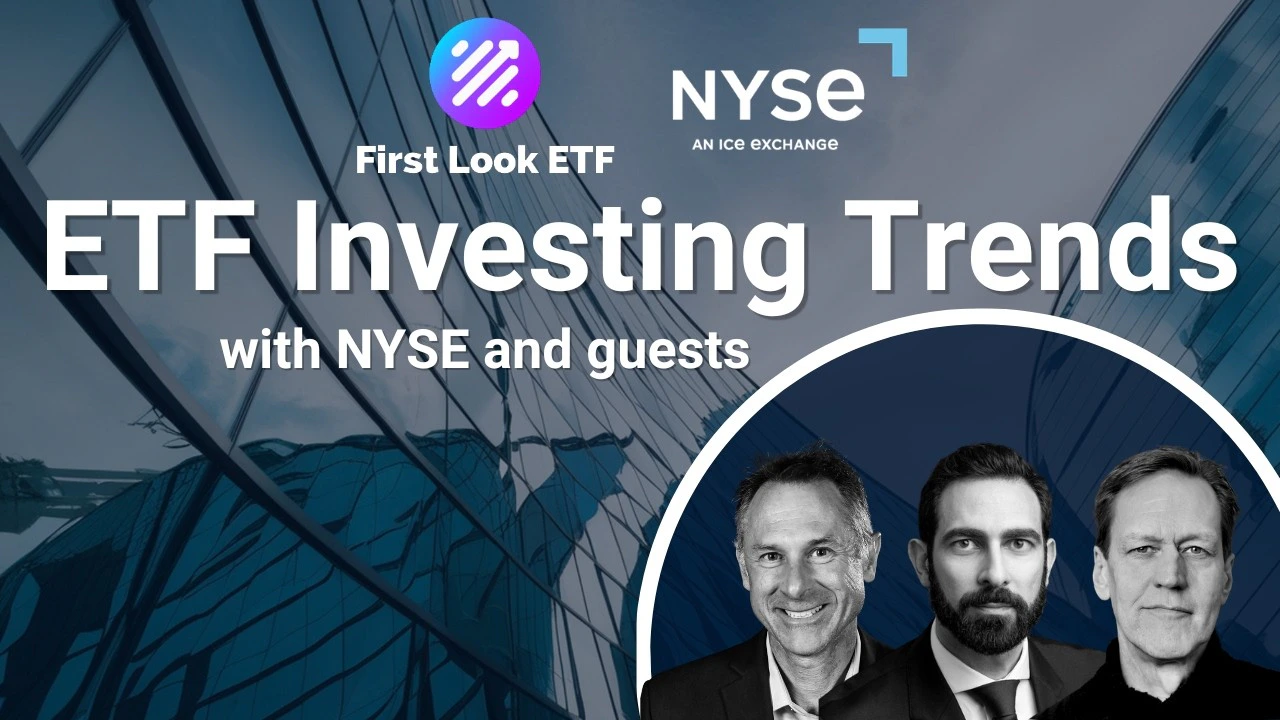
First Look ETF
First Look ETF: Cash Deployment, Bond, and Hedged ETFs
In this season 6 episode of First Look ETF, Stephanie Stanton examines the latest ETF marketplace trends with NYSE and guests.

ETF Trends
ETF Industry KPIs July 6, 2026
This week’s KPI data overview highlights key metrics and trends shaping the ETF landscape.
Browse all educational columns



Expert-Built ETF Portfolios, All in One Place
Don’t start from scratch. Discover ready-made ETF portfolios built by professionals to match different goals, timelines, and market views. Use them as inspiration or as a starting point for your own allocation.