Explore professionally built ETF model portfolios. Discover now →



NYSE x ETF Central ETF Education Series
The inaugural episode in this series kicked off earlier this month with a 2024 market outlook. Don't miss these webinars!


Keep up with what matters in ETFs
Get timely ETF insights, market trends, and top ideas straight to your inbox.
Your newsletter subscriptions with us are subject to ETF Central's Privacy Policy and Terms and Conditions.
The New York Stock Exchange, in collaboration with ETF Central and various industry experts, has launched an ETF Education Series designed to enhance accessibility to high-quality content for a broad audience. This initiative aims to deliver a series of webinars throughout 2024, packed with valuable insights and expertise from leading figures in the ETF landscape.
The series commenced with an episode that offered a comprehensive market outlook for 2024. Distinguished speakers including Douglas Yones, Head of Exchange-Traded Products at the NYSE, alongside David Jones, Director of iShares Investment Strategy and Market Coverage at BlackRock, Matthew Bartolini, Managing Director at State Street Global Advisors, and Meera Pandit, Global Market Strategist at JPMorgan, shared their perspectives.
The inaugural session, lasting nearly an hour, delved into a variety of critical topics including:
- The implications of evolving global monetary policies.
- The advantages and challenges posed by moderating inflation on portfolio construction.
- An analysis of potential impacts stemming from the U.S. presidential election, advancements in artificial intelligence, and ongoing regional conflicts on the global market landscape.
For those who couldn't attend, or for those of you who prefer a written format, here's a thorough recap of the key takeaways. However, don't worry if you missed this session; many more insightful webinars are planned for the upcoming months.
Like what you're reading?
Stay in the loop — get the latest ETF insights: trends, analysis, and expert picks.
On global monetary policy
The panel delved into recent developments regarding the Federal Reserve's stance on interest rates and their impact on the equity markets. There was a consensus that, despite some expectations, a March rate cut by the Fed seems unlikely.
However, the March meeting is anticipated to be pivotal in clarifying the Fed's future monetary policy path and pace. This meeting marks two years since the aggressive rate hiking began, aligning with Federal Reserve research suggesting a two-year lag for the full effect of monetary policy adjustments.
Expectations for a softening or dovish shift in language during the March meeting were highlighted, with comparisons drawn to the July 2019 meeting, which preceded rate cuts. The panel speculated that rate cuts could commence as early as May or June, emphasizing the importance of upcoming meetings.
Despite initial market reactions to potential delays in rate cuts, the panelists agreed that any adjustments would likely spur near-term volatility, especially with the market currently anticipating up to six rate cuts. A recalibration of expectations towards three to four cuts was deemed more realistic, particularly given the potential for election-related volatility to influence market sentiment later in the year.
The discussion also touched upon the concentrated nature of market returns and its implications for market breadth. The "magnificent seven" stocks have dominated earnings growth, but broader earnings growth across sectors is expected to become more prominent by the second and third quarters.
The panelists suggested that this shift, combined with lower rates, could create favorable conditions for cyclical industries, small caps, value stocks, and sectors closely tied to consumer spending, such as homebuilders.
The panel also touched on JP Morgan's outlook for 2024, summarized neatly with the prediction "2024": expecting 2% real GDP growth, zero recessions, 2% inflation by year-end, and about 4% unemployment.
The discussion highlighted that the economy has been growing above the trend for six consecutive quarters, with a slowdown expected back to the usual 2% growth rate. The absence of negative indicators in current data suggests a full-blown recession is unlikely for 2024, leading to a stable job market, which in turn supports consumer spending and overall growth.
Inflation is anticipated to reach the Fed's 2% target, primarily because the remaining inflation factors, such as rents and auto insurance, are concentrated and lagging indicators, expected to adjust back to the target by year-end. This analysis supports the Fed's capacity to initiate rate cuts.
On earnings, after potentially a flat year in 2023, expectations are set for around 11% growth for 2024. This figure is seen as optimistic, but even half of that growth, paired with a benign economic environment, could create a constructive setting for equities.
On portfolio construction
In the discussion on portfolio construction, the panel emphasized the current opportunity to move out of cash and into investments. With a record $1.3 trillion flowing into money market funds in 2023, raising the assets under management to nearly $6 trillion, the sentiment across retail, institutional, and hedge fund investors has been a heavy overweight in cash.
The consensus advice is to deploy this cash, especially considering the Federal Reserve's likely direction towards a rate cut later in the year, though not as soon as March and not as much as the market initially priced in.
Historically, the period between the Fed's last rate hike and its first rate cut has been when investors see the best returns, making it an optimal time to reallocate from cash into fixed income, specifically into the 3 to 7-year part of the curve and to prioritize high-quality investments anticipating a slowdown in growth in the latter half of the year.
Regarding equities, given the high valuations, the recommendation is to seek out "The Lovable Laggards" – sectors and industries that haven't participated in the rally but share characteristics with high-flying tech stocks, such as strong free cash flow, low operating leverage, and stable earnings growth, essentially looking for quality.
Financials, particularly large banks and exchanges, are highlighted as likely to benefit from a steeper curve and lower rates, anticipating a resurgence in investment banking business due to more attractive financing conditions as the Fed's rate hikes pause.
The discussion then shifted to the impact of potential rate cuts in 2024 on the bond markets. The panel highlighted that the Federal Reserve is being cautious and has not yet declared a "soft landing," maintaining a watchful approach to inflation and growth dynamics.
The consensus is that while inflation is expected to return to the Fed's 2% target, the path and timing of Fed rate cuts remain central to market expectations and ensuing volatility. The prediction leans towards fewer and later rate cuts, with an anticipation of three to four adjustments starting around May or June.
As for yield trajectories, a significant drop in the last months of the previous year led to a reassessment, suggesting that yields might remain range-bound in the first half of the year and potentially drift lower as the Fed begins to cut rates.
From a bond investment strategy standpoint, a mix of short-duration (two to three years) and medium-duration (five to seven years) bonds could offer benefits amidst the rate uncertainty and an inverted yield curve.
While a dramatic fall in yields and substantial capital appreciation might not be in the cards, the current bond market positioning offers significant protection and income opportunities for investors.
On geopolitical risks
The discussion on geopolitical risks highlighted the importance of considering external events and their potential impact on the bond markets. In addressing geopolitical risks, the panel discussed how such events, being exogenous shocks, are unpredictable and can impact markets in unforeseen ways.
In general, David emphasized the importance of portfolio protection against such shocks, suggesting strategies like buffer strategies for equities that look expensive at the index level. He recommended providing downside protection through ETFs that offer a buffer strategy, highlighting that current low equity volatility makes such protection relatively affordable.
Matt, responding to questions about international market risks and the outlook for 2024, noted the perennial optimism for international markets that often ends with the U.S. market outperforming. He observed that, despite expectations, the U.S. continues to exhibit strong GDP numbers and is one of the few developed markets with projected double-digit earnings growth.
Matt advised maintaining an overweight bias towards the U.S. and a cautious approach towards the EU due to mixed valuations and weaker earnings quality. He suggested a neutral stance on Japan and an overweight position in emerging markets, funded by underweight positions in the EU, due to favorable valuations and improving earnings sentiment in emerging markets.
While the U.S. presidential election cycle and AI advancements were mentioned as potential sources of uncertainty, the panel emphasized that historically, equity market returns based on political party views are random and create only short-term volatility.
The consensus was that long-term investors should not make drastic changes to their strategic asset allocations simply because it's an election year, as such decisions historically lead to underperformance. In the bond space, the panel agreed on the benefits of moving up in duration, suggesting a shift away from ultra-short duration government bond ETFs and money market funds towards areas like mortgages.
The mortgage sector was highlighted as particularly interesting in 2023 due to the FED's dovish signals and the resulting performance boost from mortgage-backed securities.
The panel advocated for active management in fixed income to navigate the expected continued high volatility and sector dispersion in returns, especially in a context where credit risks present asymmetrical opportunities. The panel emphasized the potential in mortgages for defensive positioning with better yields over treasuries and an implicit federal government guarantee.
The panel suggested that while spread compression might not drive returns as it did in the previous year, active management could effectively address valuation concerns and capitalize on sectors where there is still room for positive performance.
ETF roundtable
Finally, the ETF Roundtable session delved into the panelists' best ETF picks given the potential for rate cuts and a soft landing. Here are the highlights:
- Mortgage-Backed Securities ETF: David highlighted the iShares MBS ETF (MBB), which tracks the US MBS index. He noted its positioning in the three to seven-year duration bucket, which he considers the sweet spot given the current yield curve shape. He also mentioned the potential for fixed income volatility to decrease, which could help compress MBS spreads.
- Quality and Large Cap Focus: Meera emphasized a balanced approach between bonds and equities, suggesting barbelling short-duration bonds with longer-duration bonds for protection and focusing on quality within the large-cap space in equities. She advised diversification within the highly concentrated S&P 500 index, especially considering the significant portion represented by the top 10 stocks.
- Home Builders ETF: Matt opted for an equity-focused ETF, specifically the SPDR S&P Homebuilders ETF (XHB), based on strong economic growth, supportive labor markets, and lower financing rates benefiting home builders. He cited increased mortgage applications, upward revisions in home builders' earnings per share estimates for 2024, and strong employment rates as reasons for his pick.
Please note this article is for information purposes only and does not in any way constitute investment advice. It is essential that you seek advice from a registered financial professional prior to making any investment decision.

Latest ETF News
See all ETF newsETF Education Series: Exploring Options, Defined Outcomes, and Risk-Return Strategies with ETFs


ETF Education Series: Opportunities in Today’s Fixed Income Markets

NYSE x ETF Central's ETF Education Series: Multi-Share Class ETFs

ETF Education Series: 2024 Market Outlook Webinar



 Advantages of ETFs over Mutual Funds1/6
Lower Costs
In this guide, we'll explore the advantages of ETFs over mutual funds, giving you valuable insights into why ETFs have gained significant popularity among investors like yourself.
Leveraged ETFs: Unlocking the Potential for Amplified Returns1/6
Understanding Leveraged ETFs
Explore leveraged ETFs: potential for amplified returns & risks. 5 ETFs to consider across equities, commodities & fixed income.
What is a Leveraged ETF?1/6
Introducing Leveraged and Inverse ETFs
In this guide, we'll dive into the world of leveraged ETFs, exploring their definition, mechanics, potential risks, and rewards.
Recent educational content

ETF Trends
ETF Industry KPIs September 8, 2026
This week’s KPI data overview highlights key metrics and trends shaping the ETF landscape.

ETF Trends
ETF Industry KPIs August 31, 2026
This week’s KPI data overview highlights key metrics and trends shaping the ETF landscape.
ETF Trends
ETF Industry KPIs August 24, 2026
This week’s KPI data overview highlights key metrics and trends shaping the ETF landscape.
What’sTheFund
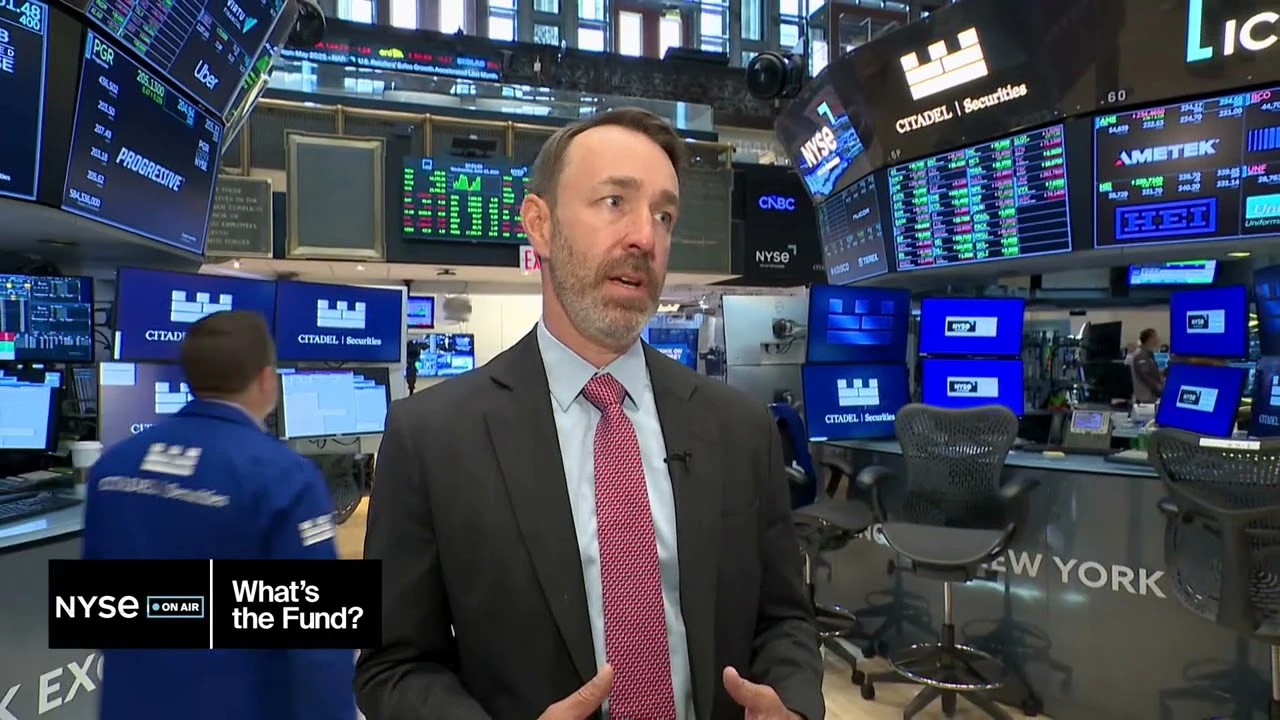
What's the Fund | Ocean Park Diversified Income ETF (DUKZ)
James St Aubin, Chief Investment Officer at Ocean Park Asset Management, discuss the DUKZ ETF, exposing investors to the whole spectrum of asset classes in the fixed income markets, through their rules-based process.

Browse all educational columns



Expert-Built ETF Portfolios, All in One Place
Don’t start from scratch. Discover ready-made ETF portfolios built by professionals to match different goals, timelines, and market views. Use them as inspiration or as a starting point for your own allocation.