Open Now: The Global ETF Survey Take the Survey →



Notable ETF Filings and Launches Recap: August 2024
We look at some of the most interesting prospective ETFs awaiting regulatory approval or those that just debuted as of August 2024.


Keep up with what matters in ETFs
Get timely ETF insights, market trends, and top ideas straight to your inbox.
Your newsletter subscriptions with us are subject to ETF Central's Privacy Policy and Terms and Conditions.
As of August 21, the ETF Central Screener lists a total of 3,664 U.S.-listed ETFs—a number that's almost guaranteed to be out of date by the time you read this article.
In fact, my July update highlighting the recent prospectuses filings and launches noted there were previously 3,613 ETFs on the screener—the industry is still firing on all cylinders.
So, with autumn on the horizon, here's a look at what I consider to be some of the most interesting and innovative ETFs either set to make their debut or that began trading recently!
The ETF Industry Is Evolving Fast
From AI infrastructure to active strategies, the ETF landscape is shifting. Share your perspective in the 7th Annual Global ETF Survey and get exclusive early access to the final report.
Recent ETF filings
Most of this month's notable ETF filings have come from Alpha Architects, known for their quantitative, research driven approach to fund design.
First up, there's the Alpha Architect US Anti-Dividend ETF (AAUS). This ETF aims for tax efficiency by leveraging proprietary research that suggests stocks scheduled to pay dividends should be avoided just prior to the dividend distribution and for at least 30 days afterwards.
The theory here is that demand for dividend-paying stocks drives prices away from fundamentals around dividend distributions—a phenomenon amplified by retail investors engaging in popular yet misinformed "dividend capture" strategies.
This ETF essentially mirrors a broad U.S. market cap-weighted index fund, minus any dividend-paying stocks during these critical periods. It's a novel approach that could complement tax-efficient portfolios, especially for those who prefer non-dividend-paying giants like Berkshire Hathaway and Amazon.
It's expected to have a higher turnover but sports a reasonable 0.15% expense ratio. There's also an international variant, the Alpha Architect International Anti-Dividend ETF (AAGL), which will follow a similar strategy with a slightly higher expense ratio of 0.25%.
Alpha Architects didn't stop there. They've also rolled out a suite of "BOX" ETFs, each following unique tax-efficient strategies pioneered by the Alpha Architect 1-3 Month Box ETF
- Alpha Architect 1-3 Year Box ETF (BOXS)
- Alpha Architect Intermediate-Term Treasury Bond ETF (BOXI)
- Alpha Architect Long-Term Treasury Bond ETF (BOXL)
- Alpha Architect Aggregate Bond ETF (BOXA)
- Alpha Architect Inflation-Protected Securities ETF (BOXP)
- Alpha Architect Real Estate ETF (BOXR)
These ETFs are synthetic and utilize combinations of call and put options on ETFs or indexes, or FLEX Options, to achieve their exposure.
They aim to outperform their respective benchmarks using trend-following methods, like moving average rules, time-series momentum rules, and implied volatility levels, with excess cash in box spreads (or BOXX) to generate additional low-risk positive carry.
Recent ETF launches
The first launch that really caught my attention was the Defiance Daily Target 1.75X Long MSTR (MicroStrategy) ETF
This ETF extends the concept of leveraged single stock ETFs by applying a daily 175% (1.75x) leverage target to the returns of MicroStrategy, a company well-known for its significant cryptocurrency holdings and associated volatility.
Since its debut on August 14, MSTX has already amassed $52 million in assets under management. Typical of leveraged ETFs, it achieves exposure through swaps and carries a high expense ratio of 1.29%.
Another noteworthy debut is the Jensen Quality Growth ETF
This makes it a direct competitor to incumbent fundamental index-based strategies like the WisdomTree US Quality Growth Fund
Lastly, Schwab is entering the ultra-short term bond ETF arena with the Schwab Ultra-Short Income ETF
This ETF provides a liquid alternative to money market funds—albeit without a fixed NAV per share. It's actively managed and invests in short maturity investment-grade debt, sporting an expense ratio of 0.14%. I anticipate it offering a competitive 30-day SEC yield of around 5%, similar to its competitors.
Please note this article is for information purposes only and does not in any way constitute investment advice. It is essential that you seek advice from a registered financial professional prior to making any investment decision.
Latest ETF News
See all ETF newsMoneyShow Chart of the Day 7/16/26: Good News/Bad News on Inflation (and the Fed)


MoneyShow Chart of the Day 7/1/26: The H1 Scorecard – and What Comes Next

MoneyShow Chart of the Day 6/22/26: Are World Cup Videos Helping US Companies Clean Up?

MoneyShow Chart of the Day 6/3/26: AI. AI. AI. (And a Handful of Other Stocks, Too)




 Advantages of ETFs over Mutual Funds1/6
Lower Costs
In this guide, we'll explore the advantages of ETFs over mutual funds, giving you valuable insights into why ETFs have gained significant popularity among investors like yourself.
Leveraged ETFs: Unlocking the Potential for Amplified Returns1/6
Understanding Leveraged ETFs
Explore leveraged ETFs: potential for amplified returns & risks. 5 ETFs to consider across equities, commodities & fixed income.
What is a Leveraged ETF?1/6
Introducing Leveraged and Inverse ETFs
In this guide, we'll dive into the world of leveraged ETFs, exploring their definition, mechanics, potential risks, and rewards.
Recent educational content

ETF Trends
ETF Industry KPIs July 20, 2026
This week’s KPI data overview highlights key metrics and trends shaping the ETF landscape.

ETF Trends
ETF Industry KPIs July 13, 2026
This week’s KPI data overview highlights key metrics and trends shaping the ETF landscape.
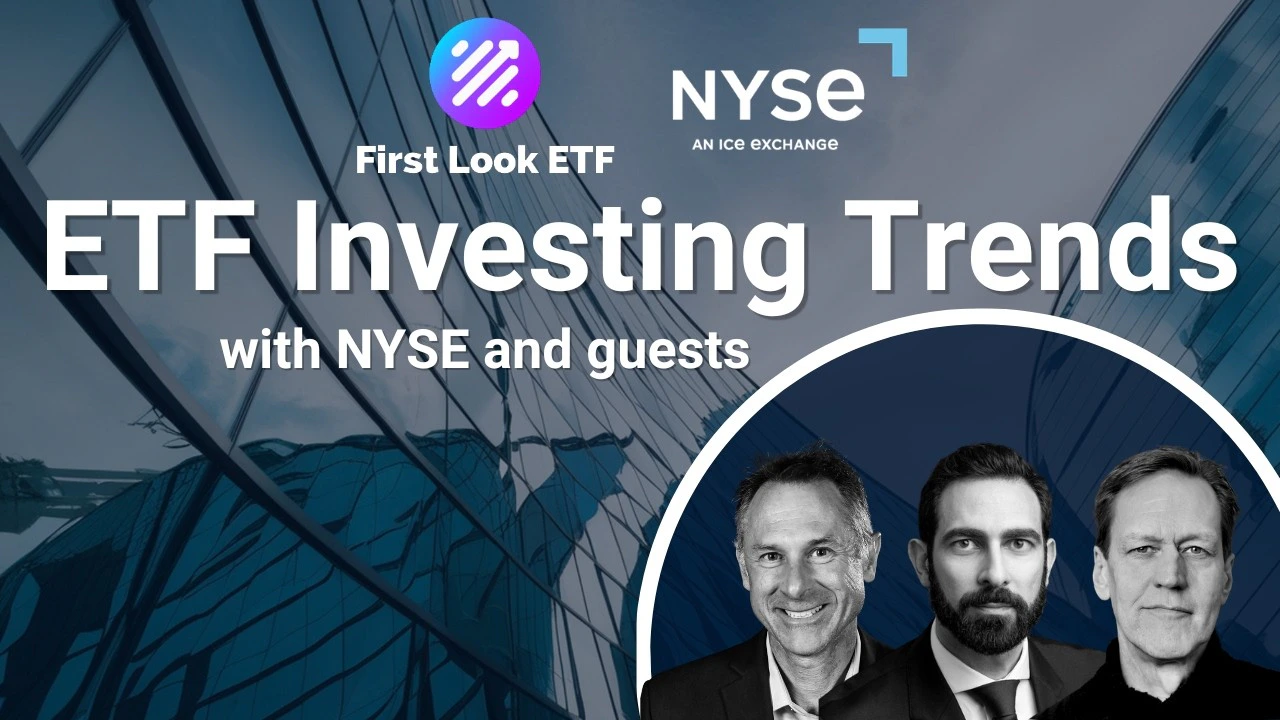
First Look ETF
First Look ETF: Cash Deployment, Bond, and Hedged ETFs
In this season 6 episode of First Look ETF, Stephanie Stanton examines the latest ETF marketplace trends with NYSE and guests.

ETF Trends
ETF Industry KPIs July 6, 2026
This week’s KPI data overview highlights key metrics and trends shaping the ETF landscape.
Browse all educational columns



Expert-Built ETF Portfolios, All in One Place
Don’t start from scratch. Discover ready-made ETF portfolios built by professionals to match different goals, timelines, and market views. Use them as inspiration or as a starting point for your own allocation.