Turn ETF ideas into real portfolios. Try the builder now →



New Year Outlook – ETFs to Consider in 2023
We look at the different scenarios that could play out in 2023, and how to benefit from each.


Keep up with what matters in ETFs
Get timely ETF insights, market trends, and top ideas straight to your inbox.
Your newsletter subscriptions with us are subject to ETF Central's Privacy Policy and Terms and Conditions.
There’s no denying 2022 was a turbulent year for investors. Rampant Covid-19 infections, the tragic war between Russia and Ukraine, high inflation and one of the most aggressive rate-hiking cycles seen in recent history sent the markets into meltdown with the S&P 500 Index tumbling ~19% in the year – one of the worst years in its history, with only six other worse-performing years since 1928.
Against this unprecedented backdrop, many investors are understandably entering 2023 with a fair degree of trepidation. So, what scenarios can we expect to play out over the next 12 months? And how should we best position our portfolios? Let’s dive in.
Like what you're reading?
Stay in the loop — get the latest ETF insights: trends, analysis, and expert picks.
What to expect in 2023
It’s widely understood that a recession may be in the cards for 2023. The big question is how deep and how long this recession will be. Recognizing that it’s impossible to predict what might happen – although there were some positive signals as 2022 drew to a close, including inflation trending down and employment remaining strong in the U.S. - we highlight three potential scenarios with varying ETF strategies for each:
- Rebound scenario – the economy recovers, with inflation trending down and interest rates moderating
- Shallow recession scenario – the economy shows stagnant growth while inflation stagnates, and interest rates remain flat
- Deep recession scenario – the economy plunges into a deep recession, however, interest rates will likely drop as a result
ETFs for a rebound scenario
In a rebound scenario, investors should consider positioning into higher-growth, albeit higher-risk, assets. These segments offer greater upside exposure given a change in sentiment to a more positive tone. However, we would certainly urge caution around ultra-speculative areas such as cryptocurrencies, emerging tech and unprofitable high-growth companies (e.g., biotech, marijuana stocks, etc.) as interest rates would likely remain relatively high.
Some examples of ETFs to capitalize on a rebound scenario include:
SPDR S&P 500 ETF (SPY) – While this may not sound like the most exciting of picks, history shows that the S&P 500 typically recovers well following a large drawdown. Indeed, subsequent years’ returns following the six poorly performing years mentioned above averaged around +7.4% thanks to a market rebound. Given its large exposure to big tech, the S&P 500 could be an effective and well-diversified way of playing a rebounding economy.
Consumer Discretionary Select Sector SPDR (XLY) – If the economy enters a rebound scenario, companies that will benefit disproportionately are consumer discretionary companies as spending picks up. Consumer discretionary suffered in 2022 and is well placed for a rebound in 2023 as the sentiment in this space has likely reached a trough.
ETFs for a shallow recession
This is the most likely scenario based on where economic indicators currently sit. In a shallow recession, investors could remain invested in stocks although ideally towards the lower-risk end of the spectrum. This could include companies in safer sectors or companies that face less cyclicality. Shorter-term, higher-yielding fixed income could also be an attractive asset class in a shallow recession.
Some examples of ETFs to capitalize on a shallow recession include:
Vanguard High Dividend Yield ETF (VYM) – In a shallow recession, investors would be better served to seek higher-yielding assets as capital appreciation could be difficult to find. High dividend-yielding equities offer a safer space for investors to position their investments as a shallow recession would likely not be enough to push companies to cut their dividends.
iShares Short Treasury Bond ETF (SHV) – As mentioned, a shallow recession has been all but priced into current market conditions. However, if this scenario does play out then interest rates could remain relatively high. Given how high rates are sitting at the current juncture, short-term treasuries could be a fairly attractive place for ETF investors to park their investments.
ETFs for a deep recession
A deep recession could come to pass if inflation continues to remain high or if employment unravels and significant negative growth surfaces. In this case, equity investors may wish to position into defensive sectors. Alternatively, investors may position for lower rates which typically occurs in the face of a recession.
Some examples of ETFs to capitalize on a deep recession include:
Consumer Staples Select Sector SPDR Fund (XLP) – No matter how deep of a recession we face, we still need to buy groceries. Consumer staple companies are able to preserve their earnings potential even in the face of a deep recession which allows these equities to outperform in these conditions.
Vanguard Long-Term Government Bond ETF (VGLT) – A deep recession is usually countered by a central bank response of lowering interest rates. A way to benefit from falling rates is with long-duration bonds. An ETF that provides exposure to these types of government bonds is Vanguard’s Long-Term Government Bond ETF.
Data as of January 12, 2023.
Please note this article is for information purposes only and does not in any way constitute investment advice. It is essential that you seek advice from a registered financial professional prior to making any investment decision.
Latest ETF News
See all ETF newsCould Water ETFs Be the Next AI Bottleneck Trade?


What is a Boomer Candy ETF?

ETF Comparison: NEOS Nasdaq-100 High Income ETF (QQQI) Versus Goldman Sachs Nasdaq-100 Premium Income ETF (GPIQ)





 Advantages of ETFs over Mutual Funds1/6
Lower Costs
In this guide, we'll explore the advantages of ETFs over mutual funds, giving you valuable insights into why ETFs have gained significant popularity among investors like yourself.
Leveraged ETFs: Unlocking the Potential for Amplified Returns1/6
Understanding Leveraged ETFs
Explore leveraged ETFs: potential for amplified returns & risks. 5 ETFs to consider across equities, commodities & fixed income.
What is a Leveraged ETF?1/6
Introducing Leveraged and Inverse ETFs
In this guide, we'll dive into the world of leveraged ETFs, exploring their definition, mechanics, potential risks, and rewards.
Recent educational content

ETF Trends
ETF Industry KPIs September 8, 2026
This week’s KPI data overview highlights key metrics and trends shaping the ETF landscape.

ETF Trends
ETF Industry KPIs August 31, 2026
This week’s KPI data overview highlights key metrics and trends shaping the ETF landscape.
ETF Trends
ETF Industry KPIs August 24, 2026
This week’s KPI data overview highlights key metrics and trends shaping the ETF landscape.
What’sTheFund
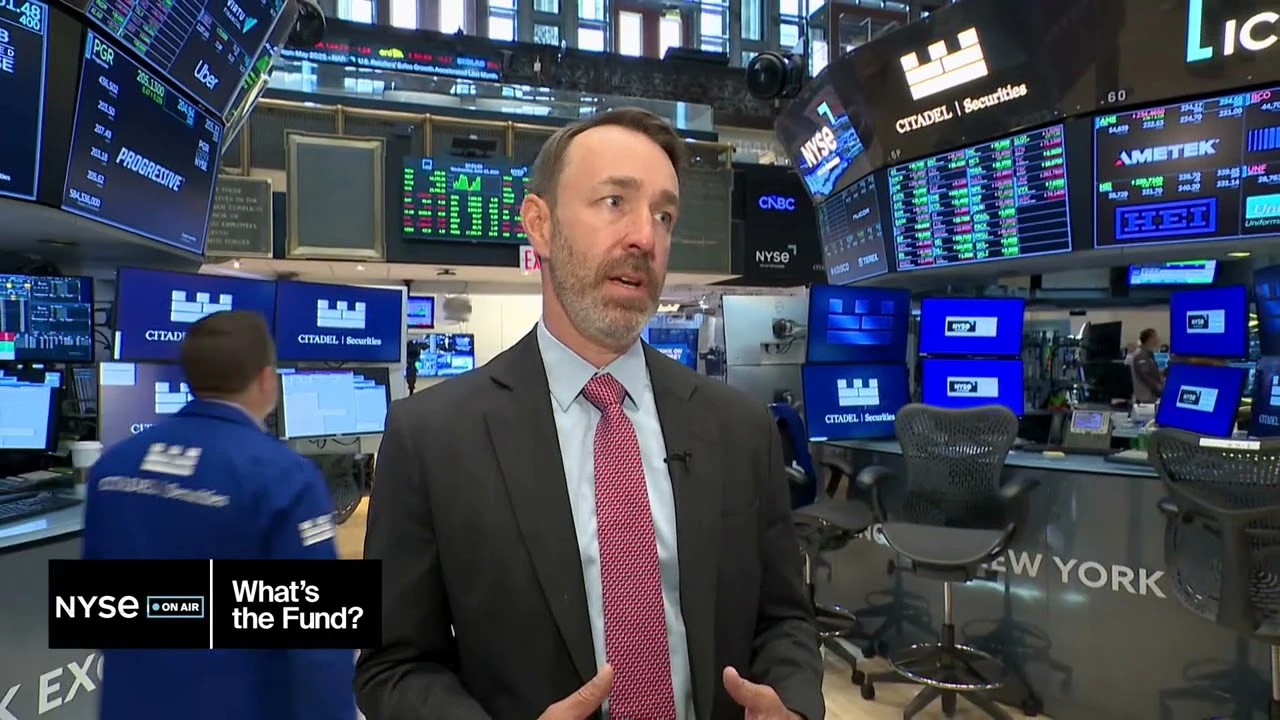
What's the Fund | Ocean Park Diversified Income ETF (DUKZ)
James St Aubin, Chief Investment Officer at Ocean Park Asset Management, discuss the DUKZ ETF, exposing investors to the whole spectrum of asset classes in the fixed income markets, through their rules-based process.

Browse all educational columns



Expert-Built ETF Portfolios, All in One Place
Don’t start from scratch. Discover ready-made ETF portfolios built by professionals to match different goals, timelines, and market views. Use them as inspiration or as a starting point for your own allocation.