Open Now: The Global ETF Survey Take the Survey →



New ETF Directed by AI to Buy the Dip
The newly launched BTD Capital Fund uses artificial intelligence to actively manage an ETF that buys the dip in large-cap U.S. stocks.


Keep up with what matters in ETFs
Get timely ETF insights, market trends, and top ideas straight to your inbox.
Your newsletter subscriptions with us are subject to ETF Central's Privacy Policy and Terms and Conditions.
Remember famous perma-bear Michael Burry? Well, at the end of March 2023 he admitted defeat after U.S. tech stocks rallied significantly to defy his one-word tweet urging investors to sell on January 31st.
In a rare move for the famous hedge fund manager, Burry admitted he "was wrong to say sell", and tweeted "Going back to the 1920s, there has been no BTFD generation like you. Congratulations." The term "BTFD" stands for "buy the f****** dip" and has become a rallying cry for retail investors online since the COVID-19 market crash.
The good news for the dip buying investors out there is that there is now an ETF that does this on your behalf. Enter the newly launched BTD Capital Fund (DIP), which uses artificial intelligence and machine learning to do exactly what its ticker suggests – buy the dip.
Like what you're reading?
Stay in the loop — get the latest ETF insights: trends, analysis, and expert picks.
Why buy the dip?
DIP is a bold experiment that departs from usual investing convention. While most investors fail to time the market properly, DIP seeks to avoid those usual behavioral errors by employing AI. This actively managed ETF identifies individual stocks with clear patterns in order to capitalize on short-term bounces.
DIP defines a "dip" as a "short-term mean reversion in price". That is to say that stocks can occasionally become oversold for brief periods due to factors like high-frequency trading, a lack of liquidity, or a good-old fashioned market panic. Moreover, stocks often trade within a range, so DIP can identify the supports that could precede a bounce.
The goal of DIP therefore is to identify only those oversold stocks with a high likelihood of experiencing a reversion to the mean in terms of share price. To accomplish this, DIP gathers market data from multiple feeds that provide indicators on a universe of 1,000 and more large-cap U.S. stocks.
DIP's AI then analyzes this information with the goal of identifying trading patterns and making predictions. This AI is dynamic in that it learns in real time – the more information it synthesizes, the better its predictive capabilities will become.
The common criticism of actively managed ETFs is that they fail to outperform passive indexing ones, with one major factor being style drift. That is, the tendency for the ETF's strategy to change markedly over time as the management team does. By employing AI, DIP can potentially implement its active management approach in a more consistent, speedy, and thorough manner.
How DIP works
As noted earlier, DIP is actively managed. The ETF primarily invests in large-cap U.S. stocks that are included in indexes like the S&P 500 and Nasdaq 100. To screen its stocks, DIP employs a proprietary AI based algorithm to identify oversold securities.
DIP will likely have high turnover. According to the ETF, individual stocks will be held for no more than seven days and sold when the AI determines they have reached fair value. DIP anticipates holding a portfolio of anywhere from 20 - 40 stocks, but can go as high as 80 stocks, in addition to a blend of four large-cap U.S. index ETFs.
Another notable feature of DIP is its risk management framework. The ETF employs both a "regime classification engine" and a "regime change engine". The former identifies the current market conditions, and the latter identifies the likelihood and direction of any potential changes.
All in all, DIP's objective is classic active management: beat the S&P 500 while minimizing downside risk. The difference is that with this ETF, there is a much greater focus on the algorithm-based trading usually seen with sophisticated hedge funds, now available to retail investors due to advancements in AI.
Ending thoughts on DIP
I heard a useful saying once that goes: "all models are wrong, some are just more useful than others." Whether or not DIP's AI will work over the long run remains to be seen once the ETF posts enough of a track record. That being said, it’s an interesting and novel approach to active management, and one that may be increasingly affordable and accessible to retail investors.
Two downsides of DIP worth noting are its lack of transparency and high fees. Like most active ETFs, especially those employing proprietary algorithms, DIP is a bit of a black box. Investors can see its daily holdings, but the complexities of how exactly the AI selects stocks or trades them will likely remain a mystery. The expense ratio is also very high at 1.25%, and I'd be interested to see if the ETF can outperform a standard index ETF long-term net of these high fees.
The really interesting dynamic at play is DIP's extensive use of AI. Seeing AI integrated with ETF strategy and management is likely a theme that will play out as AI and machine learning models become more and more sophisticated. With the ETF landscape growing more competitive by the day, these sorts of value-adds may just be what providers need to distinguish themselves.
Please note this article is for information purposes only and does not in any way constitute investment advice. It is essential that you seek advice from a registered financial professional prior to making any investment decision.
Topics
See all
Mentioned ETFs
No specific ETFs were tagged
Further reading

Latest ETF News
See all ETF newsThe Two Best Types of Fixed-Income ETFs For Managing Cash

ETF Comparison: Roundhill Generative AI & Technology ETF Versus iShares A.I. Innovation and Tech Active ETF

Crypto Income ETFs: Futures, Options, or Staking?

There’s an ETF for That? Air Conditioning Stocks




 Advantages of ETFs over Mutual Funds1/6
Lower Costs
In this guide, we'll explore the advantages of ETFs over mutual funds, giving you valuable insights into why ETFs have gained significant popularity among investors like yourself.
Leveraged ETFs: Unlocking the Potential for Amplified Returns1/6
Understanding Leveraged ETFs
Explore leveraged ETFs: potential for amplified returns & risks. 5 ETFs to consider across equities, commodities & fixed income.
What is a Leveraged ETF?1/6
Introducing Leveraged and Inverse ETFs
In this guide, we'll dive into the world of leveraged ETFs, exploring their definition, mechanics, potential risks, and rewards.
Recent educational content

ETF Trends
ETF Industry KPIs July 13, 2026
This week’s KPI data overview highlights key metrics and trends shaping the ETF landscape.

First Look ETF
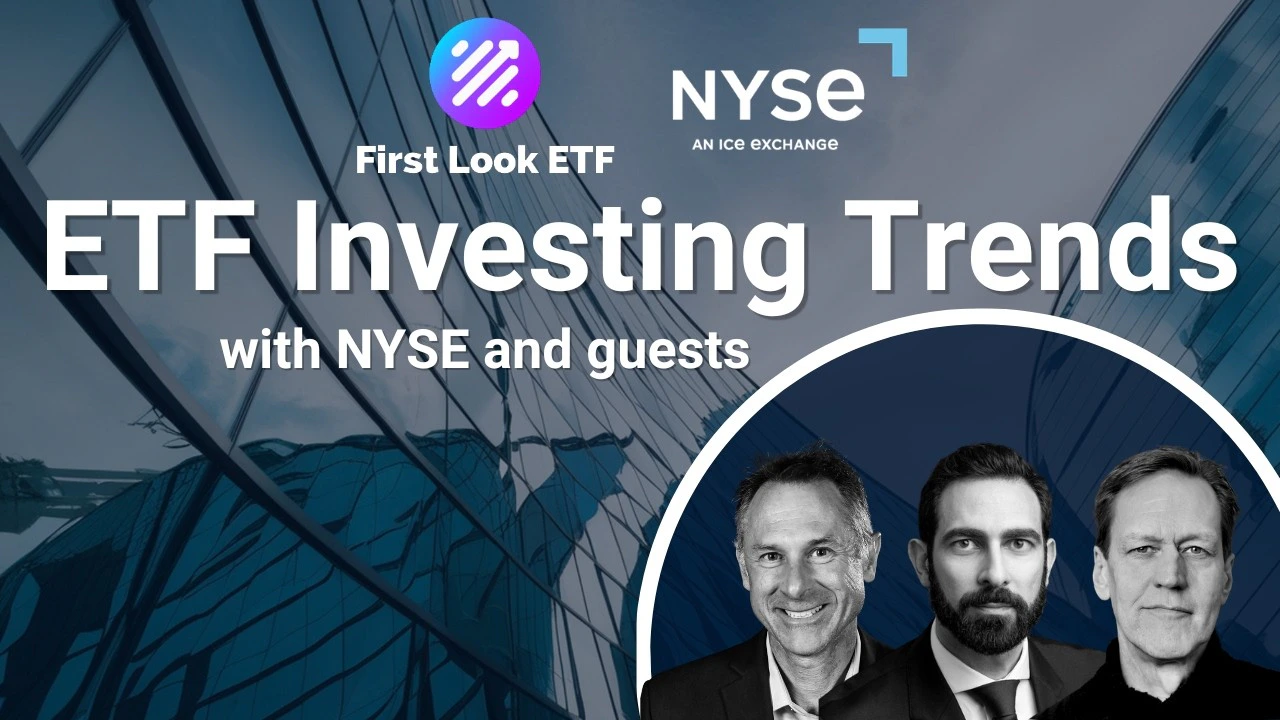
First Look ETF: Cash Deployment, Bond, and Hedged ETFs
In this season 6 episode of First Look ETF, Stephanie Stanton examines the latest ETF marketplace trends with NYSE and guests.

ETF Trends
ETF Industry KPIs July 6, 2026
This week’s KPI data overview highlights key metrics and trends shaping the ETF landscape.
Asset TV
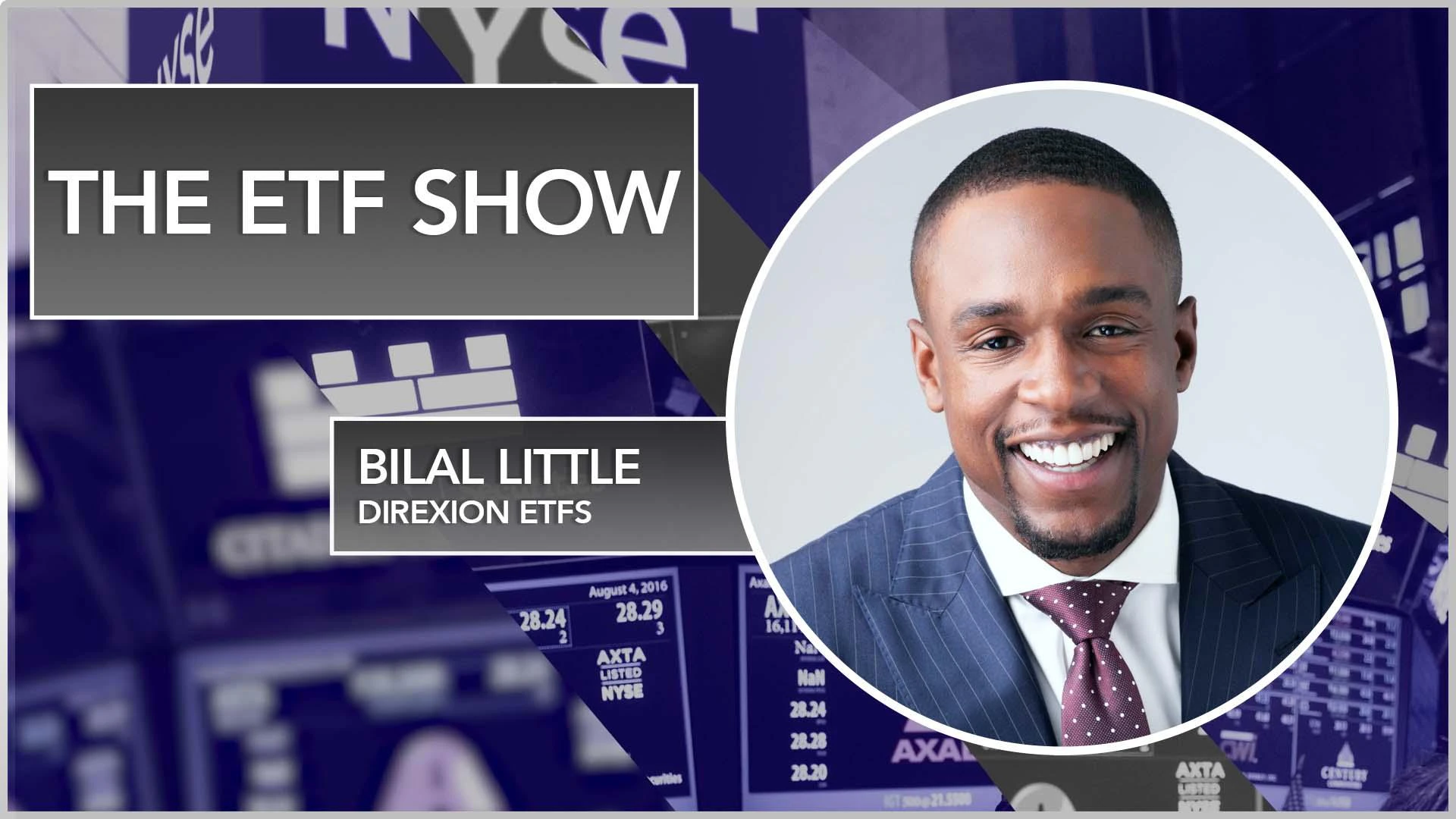
The ETF Show - The Evolution of Leveraged & Inverse ETFs
Leveraged and inverse ETFs have exploded in popularity over the past decade capturing more assets as retail traders seek to capture volatility.

Browse all educational columns



Expert-Built ETF Portfolios, All in One Place
Don’t start from scratch. Discover ready-made ETF portfolios built by professionals to match different goals, timelines, and market views. Use them as inspiration or as a starting point for your own allocation.