Open Now: The Global ETF Survey Take the Survey →



Natural Gas Dead Cat Bounce Amid Oversupply
The US natural gas market experienced significant movements this week, including a lower-than-expected storage draw and price changes spurred by production cuts.


Keep up with what matters in ETFs
Get timely ETF insights, market trends, and top ideas straight to your inbox.
Your newsletter subscriptions with us are subject to ETF Central's Privacy Policy and Terms and Conditions.
Natural Gas Storage Declines Less Than Forecast
Working gas in storage was 2,470 Bcf as of Friday, February 16, 2024, according to EIA estimates. This represents a net decrease of 60 Bcf from the previous week. Traders anticipated a 64 bcf draw.
Like what you're reading?
Stay in the loop — get the latest ETF insights: trends, analysis, and expert picks.
Storage Levels Above Seasonal Average
However, further analysis of EIA data shows that stored gas volumes are currently 22.3% above the seasonal norm due to mild weather. Oversupply has led Chesapeake Energy to reduce its projected output for 2024 by roughly 30%, thus joining other natural gas producers such as Antero Resources, Comstock Resources, and EQT.
Price Dynamics and Chesapeake Energy's Influence
Following Chesapeake Energy's announcement, natural gas prices experienced a sudden surge, climbing from $1.58 MMBtu to $1.78 MMBtu Wednesday. However, this gain was short-lived, as prices adjusted downwards, returning to $1.66 MMBtu Thursday and $1.58 MMBtu Friday, in a pattern reminiscent of a 'dead cat bounce'. This term is often used in financial markets to describe a temporary recovery in prices after a substantial fall, suggesting that the uptick may not signify a long-term trend reversal.
United States Natural Gas Fund Performance
Amidst these developments, the United States Natural Gas Fund (UNG) saw a significant upswing (+10.86% last week as of 22 February) before declining on Friday. This up-and-down performance illustrates the dynamic nature of commodity markets, where variables like production adjustments, storage data, weather hazards, and market expectations can significantly impact fund valuations.
Group Data
Funds Specific Data
Please note this article is for information purposes only and does not in any way constitute investment advice. It is essential that you seek advice from a registered financial professional prior to making any investment decision.
Segments
See all
Mentioned ETFs
Further reading


Latest ETF News
See all ETF newsMoneyShow Chart of the Day 7/29/26: Now, THAT's What I Call Market Rotation!


MoneyShow Chart of the Day 7/16/26: Good News/Bad News on Inflation (and the Fed)

MoneyShow Chart of the Day 7/1/26: The H1 Scorecard – and What Comes Next

MoneyShow Chart of the Day 6/22/26: Are World Cup Videos Helping US Companies Clean Up?




 Advantages of ETFs over Mutual Funds1/6
Lower Costs
In this guide, we'll explore the advantages of ETFs over mutual funds, giving you valuable insights into why ETFs have gained significant popularity among investors like yourself.
Leveraged ETFs: Unlocking the Potential for Amplified Returns1/6
Understanding Leveraged ETFs
Explore leveraged ETFs: potential for amplified returns & risks. 5 ETFs to consider across equities, commodities & fixed income.
What is a Leveraged ETF?1/6
Introducing Leveraged and Inverse ETFs
In this guide, we'll dive into the world of leveraged ETFs, exploring their definition, mechanics, potential risks, and rewards.
Recent educational content

ETF Trends
ETF Industry KPIs July 20, 2026
This week’s KPI data overview highlights key metrics and trends shaping the ETF landscape.

ETF Trends
ETF Industry KPIs July 13, 2026
This week’s KPI data overview highlights key metrics and trends shaping the ETF landscape.
First Look ETF
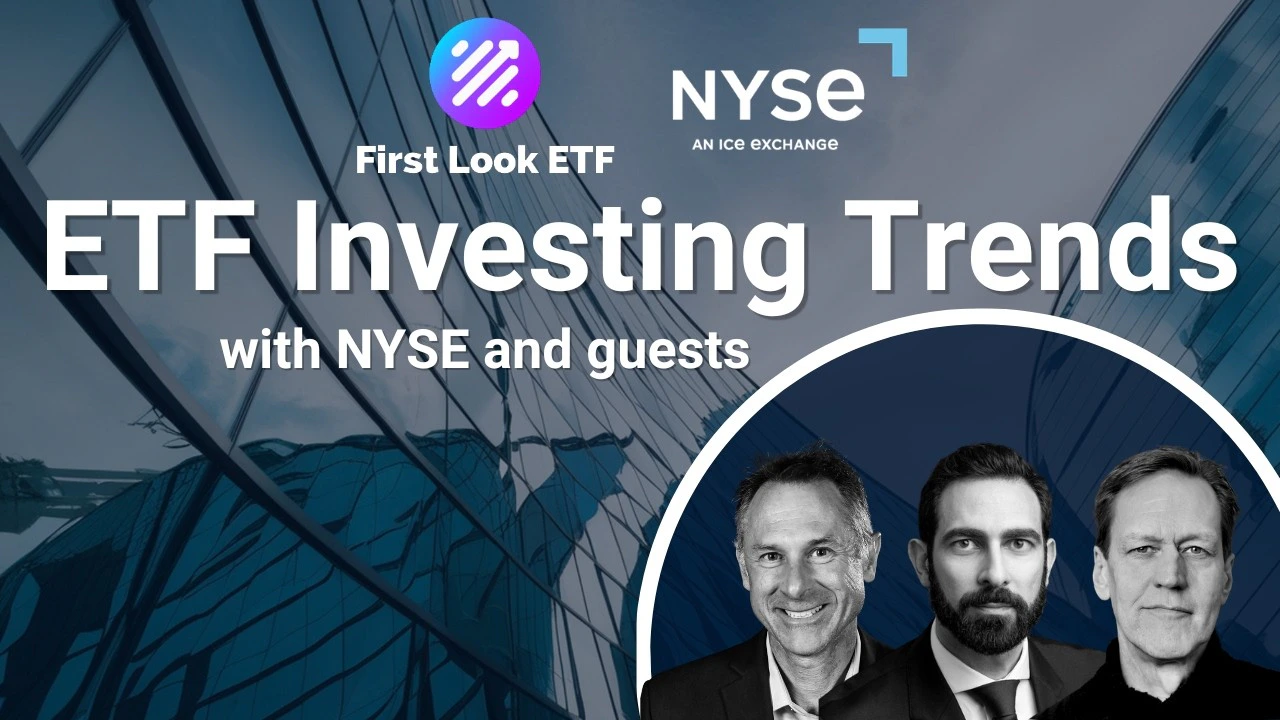
First Look ETF: Cash Deployment, Bond, and Hedged ETFs
In this season 6 episode of First Look ETF, Stephanie Stanton examines the latest ETF marketplace trends with NYSE and guests.

ETF Trends
ETF Industry KPIs July 6, 2026
This week’s KPI data overview highlights key metrics and trends shaping the ETF landscape.
Browse all educational columns



Expert-Built ETF Portfolios, All in One Place
Don’t start from scratch. Discover ready-made ETF portfolios built by professionals to match different goals, timelines, and market views. Use them as inspiration or as a starting point for your own allocation.