Keep tabs on your favorite ETFs with a personalized weekly tracker. Create a Watchlist now →



My Contrarian Equity ETF Picks For 2026
Here’s my analysis of some notable overlooked and out-of-favor ETFs that could rebound in 2026.


Keep up with what matters in ETFs
Get timely ETF insights, market trends, and top ideas straight to your inbox.
Your newsletter subscriptions with us are subject to ETF Central's Privacy Policy and Terms and Conditions.
It’s almost that time of year again when we start recapping the ETF winners and losers of 2025. While December isn’t in the books yet, it’s unlikely that the trends we’ve seen year to date will change much.
Anything tied to artificial intelligence or quantum computing has soared, driven by enormous capital spending for the former and speculative enthusiasm for the latter, despite sky-high valuations and in some cases, little in the way of earnings.
But what about the rest of the market? While equities as a whole have enjoyed a steady bull run aside from April’s tariff tantrum, not every sector, industry, or theme has kept pace. Market breadth has been weaker than expected, with equal-weight strategies badly trailing their market-cap-weighted peers. A handful of mega-cap stocks have done most of the heavy lifting.
That’s why today I’m turning my attention to what’s lagging. In this article, I’ll be highlighting a few equity ETF segments that, based on the flow data from ETF Central’s screener, could be contrarian opportunities heading into 2026.
Like what you're reading?
Stay in the loop — get the latest ETF insights: trends, analysis, and expert picks.
U.S. Energy ETFs
According to ETF Central segment data, U.S. energy tops the one-year outflow list as of November 11, with about $42.69 billion in AUM spread across 22 ETFs, having lost $10.32 billion over the same period.
Energy is a cyclical, boom-or-bust sector, and right now, performance is trending toward the latter. Crude oil prices are hovering around $60 per barrel, down from about $68 a year ago.
Geopolitical dynamics are also weighing on sentiment. OPEC crude oil production recently rose to about 30.34 million barrels per day, roughly 5% higher than a year ago, which has added to global supply pressures and limited price support.
Within the energy ETF category, investors can choose between futures-based funds or equity producers. I prefer the latter to avoid the risks of contango and the added complexity of K-1 tax forms.
A standout in this space remains the Energy Select Sector SPDR Fund
U.S. Small-Cap ETFs
Small-cap stocks have been laggards for more than a decade, as the Fama-French size factor has failed to deliver the historical outperformance it once did. The picture has been even worse for small-cap ETFs, which saw $8.63 billion in outflows across 50 funds over the past year. Still, the segment remains significant, with $312.07 billion in total AUM.
Part of the challenge comes down to sector composition. A large share of small-cap companies operate in consumer discretionary and industrial sectors, which are tightly linked to the health of the domestic economy. Uncertainty from tariffs and weaker demand has weighed heavily on these firms.
Smaller manufacturers and retailers, for example, often face higher input costs and less pricing power, leaving margins more exposed when trade tensions rise or supply chains tighten.
If I were to make a bet on small caps, I’d use the iShares Core S&P Small-Cap ETF
This quality screen helps weed out weaker “junk” names that often populate other small-cap benchmarks, making IJR a more disciplined and durable option for small-cap exposure.
U.S. Healthcare ETFs
Finally, we have the healthcare sector, which has seen $8.54 billion in net inflows over the trailing year, leaving the 22 ETFs in the segment with a combined $82.08 billion in assets under management.
Negative sentiment in the sector hasn’t been uniform; it is largely concentrated in two subsectors: biotechnology and healthcare insurers.
For insurers, policy shifts under the Donald Trump administration have rattled markets, as steps to redirect funding from insurers to individuals created uncertainty around revenue flows.
Meanwhile, in biotech, the nomination of Robert F. Kennedy Jr. to lead the U.S. Food & Drug Administration and changes in federal agency restructuring have raised questions about regulatory stability and future drug-approval timelines.
Structurally, healthcare has long been regarded as a defensive sector—one that holds up well during economic downturns. But it isn’t immune to idiosyncratic risk; when you tilt an allocation into healthcare, you still need to watch for subsector-specific issues and policy risk.
For that reason, if you are using healthcare as a broad sector tilt rather than a narrow bet, a more diversified vehicle makes sense. For that role, my go-to ETF is the Vanguard Health Care ETF
It has an expense ratio of 0.09% and gives you market-cap-weighted exposure to 351 large, mid and small-cap companies across all underlying healthcare industries—including pharmaceuticals, services, medical devices, insurance, and biotechnology.
Please note this article is for information purposes only and does not in any way constitute investment advice. It is essential that you seek advice from a registered financial professional prior to making any investment decision.
Mentioned ETFs
Further reading

Latest ETF News
See all ETF newsCould Water ETFs Be the Next AI Bottleneck Trade?

What is a Boomer Candy ETF?

ETF Comparison: NEOS Nasdaq-100 High Income ETF (QQQI) Versus Goldman Sachs Nasdaq-100 Premium Income ETF (GPIQ)




 Advantages of ETFs over Mutual Funds1/6
Lower Costs
In this guide, we'll explore the advantages of ETFs over mutual funds, giving you valuable insights into why ETFs have gained significant popularity among investors like yourself.
Leveraged ETFs: Unlocking the Potential for Amplified Returns1/6
Understanding Leveraged ETFs
Explore leveraged ETFs: potential for amplified returns & risks. 5 ETFs to consider across equities, commodities & fixed income.
What is a Leveraged ETF?1/6
Introducing Leveraged and Inverse ETFs
In this guide, we'll dive into the world of leveraged ETFs, exploring their definition, mechanics, potential risks, and rewards.
Recent educational content

ETF Trends
ETF Industry KPIs September 8, 2026
This week’s KPI data overview highlights key metrics and trends shaping the ETF landscape.

ETF Trends
ETF Industry KPIs August 31, 2026
This week’s KPI data overview highlights key metrics and trends shaping the ETF landscape.
ETF Trends
ETF Industry KPIs August 24, 2026
This week’s KPI data overview highlights key metrics and trends shaping the ETF landscape.
What’sTheFund
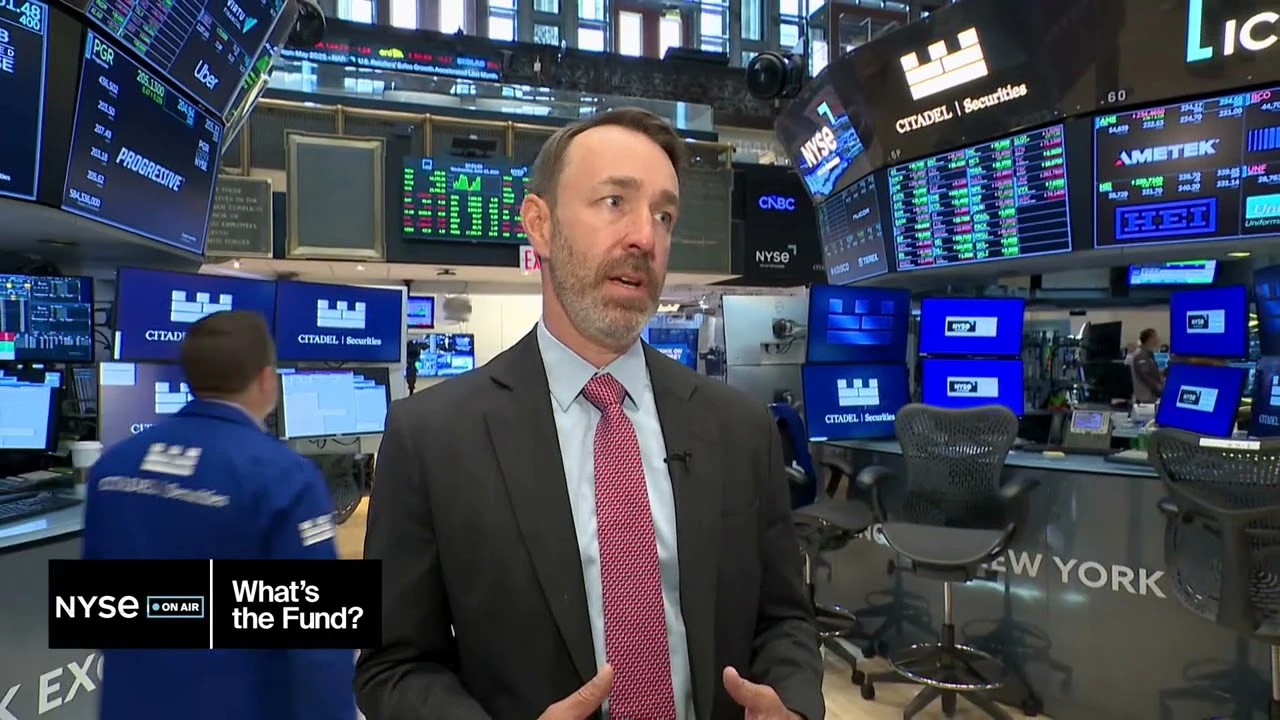
What's the Fund | Ocean Park Diversified Income ETF (DUKZ)
James St Aubin, Chief Investment Officer at Ocean Park Asset Management, discuss the DUKZ ETF, exposing investors to the whole spectrum of asset classes in the fixed income markets, through their rules-based process.

Browse all educational columns



Active Trader Report: Use of Leveraged & Inverse ETFs Way Up
Direxion partnered with Compound Insights and Vanda to explore what’s driving the evolution of active trading — and how active traders are using leveraged and inverse funds across equities, single stocks, commodities, and volatility.