Keep tabs on your favorite ETFs with a personalized weekly tracker. Create a Watchlist now →



MUSQ: New Music Thematic ETF Launched on NYSE ARCA
MUSQ offers investors pure-play exposure to the music industry.


Keep up with what matters in ETFs
Get timely ETF insights, market trends, and top ideas straight to your inbox.
Your newsletter subscriptions with us are subject to ETF Central's Privacy Policy and Terms and Conditions.
In an era of ever-expanding investment themes and opportunities, ETFs have proven to be a uniquely flexible instrument. They allow investors to target virtually any sector, industry, or theme, ranging from the broad-based to the highly niche.
With this versatility, ETFs are democratizing the investment landscape, enabling retail and institutional investors alike to tailor their portfolios in line with their specific interests and convictions.
A testament to this trend is the recent launch of the MUSQ Global Music Industry ETF (MUSQ), a new music-themed ETF on NYSE ARCA, which offers investors novel and rare pure-play exposure to the burgeoning music industry and its royalties.
Innovative ETFs like MUSQ have been made possible due to the advent of ETF white-label services such as Exchange-Traded Concepts and Tidal Financial Group. By providing the necessary infrastructure, regulatory framework, and operational support, these firms have significantly lowered the barriers to entry for aspiring ETF entrepreneurs.
These white-label firms have enabled the creation of highly specialized and niche thematic ETFs that would have been inconceivable a few years ago, reflecting the accessibility and economy of scale these services provide. Thanks to this dynamic, retail investors are no longer restricted to broad market indices or conventional sector ETFs and can instead start investing in ideas that resonate with them.
With the help of white-label services, ambitious entrepreneurs are ushering in a new era of thematic investing, where ETFs like MUSQ give investors the opportunity to tap into dynamic and rapidly evolving, previously inaccessible industries like music. Let's take a look at what this new ETF has to offer.
Like what you're reading?
Stay in the loop — get the latest ETF insights: trends, analysis, and expert picks.
MUSQ breakdown
As a passively managed ETF, MUSQ is designed to track the total returns of the MUSQ Global Music Industry Index, which provides targeted, pure-play exposure to what the index terms "the entire music ecosystem". Segments in this include streaming, content and distribution, live music events and ticketing, satellite and broadcast radio, and equipment/technology, to name a few.
MUSQ's index has a globally diversified focus, including both common stocks and royalty trusts. To be eligible for inclusion, a company must derive that at least 50% of its revenues from the global music industry be in the top five companies or have at least 10% global market share in the aforementioned five segments.
Currently, the fund has a total of 48 holdings weighted by market cap, subject to a 7% maximum weight on individual holdings to limit concentration risk. Notable stocks in MUSQ include Amazon, Google, Apple, Sony, Spotify, Sirius XM, Warner Music Group, and Tencent Music Entertainment Group. The ETF currently charges a 0.78% net expense ratio and has attracted $3.35 million in assets as of July 18, 2023.
"We believe music is an indispensable part of life and should be a core part of one’s equity allocation as it is not correlated, and MUSQ is the only ETF which gives investors full diversification across the global music industry ecosystem," says David Schulhof, Founder & CEO of MUSQ, LLC.
Why I think ETFs like MUSQ are good
While the merit of investing in the music industry as a theme remains to be seen, I think that ETFs like MUSQ are instrumental in pushing the boundaries of the ETF landscape. They challenge conventional approaches, introducing fresh, unique, and targeted investment opportunities that cater to a diverse and evolving investor base.
ETFs like MUSQ symbolize a disruption of traditional ETF thinking. Most ETFs historically have been broad market or sector-focused, built around established indices. MUSQ's index, which provides a comprehensive, pure-play exposure to the "entire music ecosystem", represents a departure from these norms. It demonstrates how modern ETFs can be sculpted around intricate and specific themes, reflecting the interests and passions of today's investor demographic.
Furthermore, the creation of MUSQ highlights the democratization of the ETF industry. The emergence of white-label ETF platforms has broken down barriers to entry, allowing smaller players to think creatively, challenge the status quo, and bring new perspectives to the table. It has created an environment where niche, innovative ETFs can thrive, showcasing the burgeoning entrepreneurial spirit within the ETF industry.
MUSQ also underlines the inherent flexibility and adaptability of ETFs. Its broad focus, covering everything from streaming to live events, showcases the ability of ETFs to offer diversified exposure within specific themes. This allows investors to gain a broad understanding of and investment in specific industries, like the music industry, in a way that would be challenging to achieve independently.
Lastly, the rise of ETFs like MUSQ signifies a paradigm shift in the industry towards more customized and personally relevant investment vehicles. By reflecting specific themes and sectors, these ETFs cater to a generation of investors who value not only financial returns but also personal relevance and alignment with their values and interests.
While the potential performance of the music industry and MUSQ is beyond the scope of my analysis, it's clear that such ETFs reflect the changing dynamics of the ETF industry. They demonstrate an increasing willingness among issuers to think outside the box, providing fresh perspectives and tailored offerings to meet the evolving needs and interests of a diverse range of investors.
Please note this article is for information purposes only and does not in any way constitute investment advice. It is essential that you seek advice from a registered financial professional prior to making any investment decision.
Latest ETF News
See all ETF newsCould Water ETFs Be the Next AI Bottleneck Trade?

What is a Boomer Candy ETF?

ETF Comparison: NEOS Nasdaq-100 High Income ETF (QQQI) Versus Goldman Sachs Nasdaq-100 Premium Income ETF (GPIQ)





 Advantages of ETFs over Mutual Funds1/6
Lower Costs
In this guide, we'll explore the advantages of ETFs over mutual funds, giving you valuable insights into why ETFs have gained significant popularity among investors like yourself.
Leveraged ETFs: Unlocking the Potential for Amplified Returns1/6
Understanding Leveraged ETFs
Explore leveraged ETFs: potential for amplified returns & risks. 5 ETFs to consider across equities, commodities & fixed income.
What is a Leveraged ETF?1/6
Introducing Leveraged and Inverse ETFs
In this guide, we'll dive into the world of leveraged ETFs, exploring their definition, mechanics, potential risks, and rewards.
Recent educational content

ETF Trends
ETF Industry KPIs September 8, 2026
This week’s KPI data overview highlights key metrics and trends shaping the ETF landscape.

ETF Trends
ETF Industry KPIs August 31, 2026
This week’s KPI data overview highlights key metrics and trends shaping the ETF landscape.
ETF Trends
ETF Industry KPIs August 24, 2026
This week’s KPI data overview highlights key metrics and trends shaping the ETF landscape.
What’sTheFund
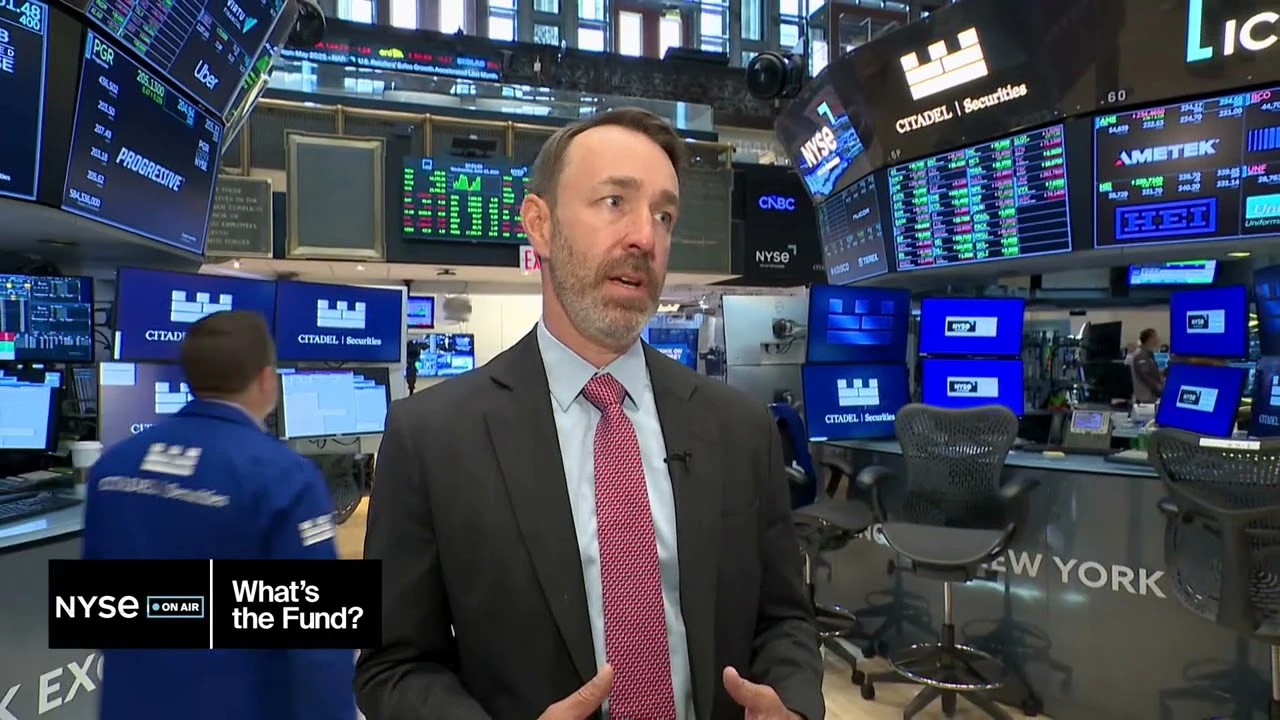
What's the Fund | Ocean Park Diversified Income ETF (DUKZ)
James St Aubin, Chief Investment Officer at Ocean Park Asset Management, discuss the DUKZ ETF, exposing investors to the whole spectrum of asset classes in the fixed income markets, through their rules-based process.

Browse all educational columns



Active Trader Report: Use of Leveraged & Inverse ETFs Way Up
Direxion partnered with Compound Insights and Vanda to explore what’s driving the evolution of active trading — and how active traders are using leveraged and inverse funds across equities, single stocks, commodities, and volatility.