From idea to ETF portfolio in minutes. Build yours now →



MoneyShow Chart of the Day 11/12/2025: With the Shutdown Behind Us, Will the Bulls Take Over?
Turns out, when Congress clocks out, the market clocks in.


Keep up with what matters in ETFs
Get timely ETF insights, market trends, and top ideas straight to your inbox.
Your newsletter subscriptions with us are subject to ETF Central's Privacy Policy and Terms and Conditions.
The government shutdown is over! Well, almost anyway. So, what does that mean for markets? You’ll probably like the answer.
Take a look at the MoneyShow Chart of the Day, courtesy of CNBC. It shows how the S&P 500 Index has performed after all the government shutdowns since 1980. Eight out of ten times the market was higher 100 days later – and nine out of ten times it was higher a year later.
Get data on 14,000+ ETFs
Access Trackinsight's reliable and comprehensive data with 500M+ points on 14,000+ ETFs.
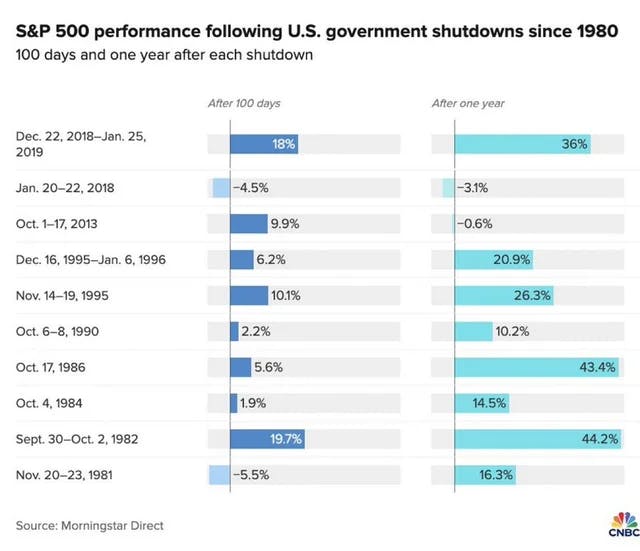
Source: CNBC
Not only that, but in some cases the gains were substantial.
Examples include 1982, 1986, and especially 2019 – when the market was up 18% in the intermediate term and 36% a year down the road.
Yes, in all these instances, the economic backdrop, the level of markets, and the geopolitical backdrop were all different. And yes, the world is a different place. I thought the Commodore 64 was pretty awesome in 1982. It pales in comparison to an iPhone in 2025.
But we’re already seeing markets rally on news the shutdown is ending. And we’re already seeing some rotation into other sectors (rather than just tech/AI) during the advance. That’s bullish trading action.
We’re also heading into a time of year where seasonality tends to favor risk-taking, as CFRA Research chief investment strategist Sam Stovall noted recently. That doesn’t guarantee gains. But it certainly doesn’t hurt the bull case.
If you want to get more articles and chart analysis from MoneyShow, subscribe to our Top Pros’ Top Picks newsletter here
Please note: This is syndicated content and reflects the author’s personal views. It does not represent the opinions of this publication or its affiliates. The article is for informational purposes only and does not constitute investment advice. Always consult a registered financial professional before making any investment decisions.
Mentioned ETFs
Further reading

Latest ETF News
See all ETF newsMoneyShow Chart of the Day 9/4/26: Don't Just Watch Oil. Watch THESE.

Chart of the Day 8/14/26: The Great "Hot Money" Migration

MoneyShow Chart of the Day 7/29/26: Now, THAT's What I Call Market Rotation!

MoneyShow Chart of the Day 7/16/26: Good News/Bad News on Inflation (and the Fed)




 Advantages of ETFs over Mutual Funds1/6
Lower Costs
In this guide, we'll explore the advantages of ETFs over mutual funds, giving you valuable insights into why ETFs have gained significant popularity among investors like yourself.
Leveraged ETFs: Unlocking the Potential for Amplified Returns1/6
Understanding Leveraged ETFs
Explore leveraged ETFs: potential for amplified returns & risks. 5 ETFs to consider across equities, commodities & fixed income.
What is a Leveraged ETF?1/6
Introducing Leveraged and Inverse ETFs
In this guide, we'll dive into the world of leveraged ETFs, exploring their definition, mechanics, potential risks, and rewards.
Recent educational content

ETF Trends
ETF Industry KPIs September 8, 2026
This week’s KPI data overview highlights key metrics and trends shaping the ETF landscape.

ETF Trends
ETF Industry KPIs August 31, 2026
This week’s KPI data overview highlights key metrics and trends shaping the ETF landscape.
ETF Trends
ETF Industry KPIs August 24, 2026
This week’s KPI data overview highlights key metrics and trends shaping the ETF landscape.
What’sTheFund
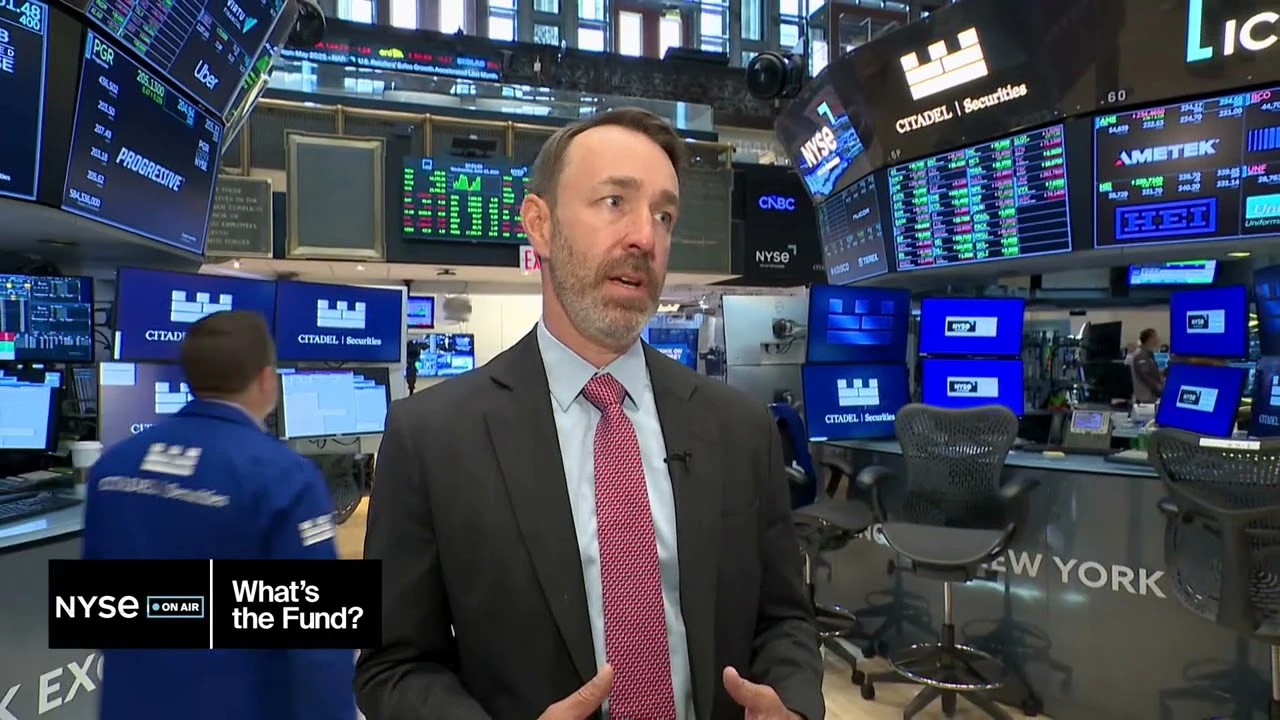
What's the Fund | Ocean Park Diversified Income ETF (DUKZ)
James St Aubin, Chief Investment Officer at Ocean Park Asset Management, discuss the DUKZ ETF, exposing investors to the whole spectrum of asset classes in the fixed income markets, through their rules-based process.

Browse all educational columns



Build and Analyze Your ETF Portfolio Like a Pro
Create your own ETF portfolio in minutes and instantly see allocations, exposures, performance, and risk. Visualize diversification across asset classes, regions, and sectors. Stress-test ideas, compare benchmarks, and refine your strategy with professional-grade analytics.