From idea to ETF portfolio in minutes. Build yours now →



How to Stand Out Among the Crowded ETF Pack: Mastering the ETF Market: Strategies for Financial Advisors
Here’s how advisors can stand out in this competitive market.


Keep up with what matters in ETFs
Get timely ETF insights, market trends, and top ideas straight to your inbox.
Your newsletter subscriptions with us are subject to ETF Central's Privacy Policy and Terms and Conditions.
Over the past decade, the Exchange Traded Fund (ETF) market has experienced a remarkable boom— presenting an abundance of opportunities for investors and financial advisors alike. However, the sheer volume of ETFs in existence poses a significant challenge for financial advisors striving to distinguish their funds in this crowded landscape. Here’s how advisors can stand out in this competitive market.
Like what you're reading?
Stay in the loop — get the latest ETF insights: trends, analysis, and expert picks.
Understanding Client Needs
Customized Portfolios
ETFs allow financial advisors to customize portfolios based on each client's unique financial goals and risk tolerances. Rather than using a one-size-fits-all strategy, financial advisors should delve deeply into each client's financial situation, future objectives, and risk appetite. This approach involves educating clients on how diversified ETFs can spread risk across various asset classes, sectors, and geographic regions which is crucial for effective risk management.
Risk Management
Clients often worry about the risks associated with their investments. Financial advisors can mitigate potential losses and provide clients with a sense of security by understanding their risk tolerance and utilizing a diversified mix of ETFs.
Leveraging Technology
Analytical Tools
Advanced analytical tools such as FINRA Fund Analyzer and ETF Central tools are invaluable for assessing ETF performance, fees, and underlying assets. Platforms offering real-time data, historical performance, and predictive analytics help financial advisors make informed decisions. This technological advantage allows advisors to present data-driven insights to clients, showcasing a higher level of expertise.
Robo-Advisors
Integrating robo-advisors into practice can cater to clients preferring a more automated approach. These platforms assist in efficiently managing portfolios, rebalancing, and tax-loss harvesting. Offering a hybrid model that combines robo-advisory services with personal consultation can appeal to a broader range of clients.
Staying Informed & Educated
Continuous Learning
The dynamic ETF market, with its constantly emerging new products and strategies, requires continuous learning. Financial advisors should commit to staying informed by attending industry conferences, participating in webinars, and reading up-to-date research. This ongoing education enables advisors to provide cutting-edge advice.
Certifications & Designations
Pursuing advanced certifications, such as the Chartered Financial Analyst (CFA) or CETF (Certified ETF advisor) designations, can enhance a financial advisor's credibility and deepen their knowledge. These certifications distinguish advisors and build client trust.
Effective Communication
Simplifying Complex Information
ETFs can be complex, especially for clients not well-versed in finance. Financial advisors should simplify technical information using analogies, visual aids, and straightforward language. When clients clearly understand how ETFs work and fit into their financial plans, they are more likely to trust the advisor's recommendations.
Regular Updates & Reviews
Keeping clients informed through regular updates and portfolio reviews reinforces the advisor's role as a proactive professional. These meetings provide opportunities to reassess goals and make necessary adjustments, ensuring that the investment strategy remains aligned with clients' objectives.
Emphasizing Cost Efficiency
Fee Transparency
ETFs offer cost efficiency compared to mutual funds. Financial advisors should highlight these cost benefits, emphasizing how lower fees can improve net returns over time. Complete transparency regarding any fees associated with recommended ETFs is essential.
Tax Efficiency
ETFs are known for their tax efficiency because their unique in-kind creation and redemption process helps avoid triggering capital gains, and they generally have lower portfolio turnover compared to mutual funds. This structure minimizes taxable events within the fund, leading to fewer capital gains distributions for investors. Educating clients on how ETFs can minimize capital gains taxes compared to other investment vehicles adds significant value and differentiates the advisor's services.
Diversifying ETF Offerings
Active vs. Passive ETFs
A balanced portfolio often includes both active and passive ETFs. Passive ETFs track a specific index, offering low-cost exposure to broad market segments. Active ETFs, on the other hand, are managed by professional fund managers aiming to outperform the market. Understanding the differences and benefits of active vs. passive ETF strategies allows advisors to tailor their recommendations to client preferences and investment goals.
Thematic ETFs
Offering thematic ETFs, which focus on specific trends or sectors like technology, renewable energy, or healthcare, can appeal to clients interested in particular areas. These ETFs align investment choices with clients' personal interests or beliefs, making their investment experience more engaging.
Inverse and Leveraged ETFs
Incorporating inverse and leveraged ETFs into client portfolios can provide opportunities for hedging and amplified returns. Inverse ETFs are designed to profit from declines in an underlying index or asset, while leveraged ETFs use financial derivatives and debt to amplify returns. Educating clients on the benefits and risks associated with these types of ETFs is essential, as they can be more complex and carry higher risks compared to traditional ETFs.
Building a Strong Online Presence
Educational Content
Creating a robust online presence with high-quality educational content, such as blog posts, videos, and email blasts, can establish financial advisors as knowledgeable resources. Hosting live webinars on specific financial topics or sharing timely posts about current financial events can help position them as thought leaders to their audience and prospective targets. This attracts potential clients and builds trust with the audience.
Social Media Engagement
Using social media to share insights, updates, and success stories helps financial advisors reach a wider audience and foster a community of informed investors. Engaging with the audience through social media showcases the advisor's commitment to client engagement and education.
Over the past decade, the Exchange Traded Fund (ETF) market has experienced a remarkable boom— presenting an abundance of opportunities for investors and financial advisors alike. However, the sheer volume of ETFs in existence poses a significant challenge for financial advisors striving to distinguish their funds in this crowded landscape. Here’s how advisors can stand out in this competitive market.
Fostering Relationships & Trust
Client-Centric Approach
Financial advisors should prioritize their clients' financial well-being, building strong, long-term relationships through genuine interest and regular check-ins. Celebrating clients' financial milestones and providing steady support and advice reinforces trust and loyalty.
Ethical Practices
Adhering to the highest ethical standards is non-negotiable. Financial advisors must ensure that all recommendations are in the best interest of their clients, with transparency, honesty, and integrity as cornerstones of their practice. Clients are more likely to refer others if they trust the advisor's ethics and professionalism.
Conclusion
By implementing these strategies, financial advisors can not only navigate but also thrive in the burgeoning ETF market. Understanding client needs, leveraging technology, and maintaining a commitment to continuous learning and ethical practices will ensure long-term success and client satisfaction.
About Arro Financial Communications
Arro Financial Communications is a marketing and public relations agency specializing in the financial services space. Their full-service approach encompasses branding, public relations, advertising, and content generation. From targeted campaigns to complete image overhauls, the agency helps its asset management clients navigate the quickly evolving new media landscape.
To learn more about Arro’s offerings, please visit: arrocomm.com.
For detailed information on their services, you can view the Arro Digital Brochure and the Arro ETF Ecosystem Infographic.
Latest ETF News
See all ETF newsForm 4 Has 20 Transaction Codes. None Say "Section 351 ETF Swap"


Who Really Owns a White-Label ETF?


What If a Futures-Based ETF Never Had to Roll Again?

How Do You Build a Winning ETF Business?

Losers Of Q2 2026 REIT Earnings Season


Winners of Q2 2026 REIT Earnings Season


 Advantages of ETFs over Mutual Funds1/6
Lower Costs
In this guide, we'll explore the advantages of ETFs over mutual funds, giving you valuable insights into why ETFs have gained significant popularity among investors like yourself.
Leveraged ETFs: Unlocking the Potential for Amplified Returns1/6
Understanding Leveraged ETFs
Explore leveraged ETFs: potential for amplified returns & risks. 5 ETFs to consider across equities, commodities & fixed income.
What is a Leveraged ETF?1/6
Introducing Leveraged and Inverse ETFs
In this guide, we'll dive into the world of leveraged ETFs, exploring their definition, mechanics, potential risks, and rewards.
Recent educational content

ETF Trends
ETF Industry KPIs September 8, 2026
This week’s KPI data overview highlights key metrics and trends shaping the ETF landscape.

ETF Trends
ETF Industry KPIs August 31, 2026
This week’s KPI data overview highlights key metrics and trends shaping the ETF landscape.
ETF Trends
ETF Industry KPIs August 24, 2026
This week’s KPI data overview highlights key metrics and trends shaping the ETF landscape.
What’sTheFund
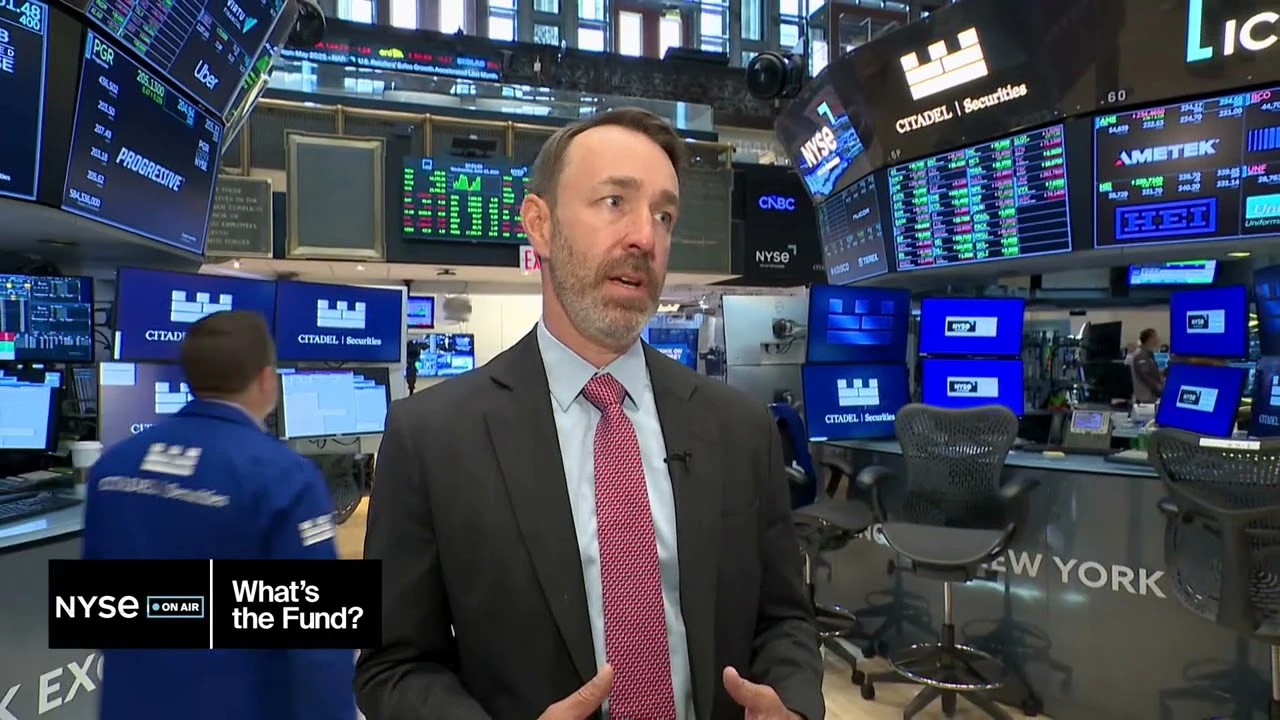
What's the Fund | Ocean Park Diversified Income ETF (DUKZ)
James St Aubin, Chief Investment Officer at Ocean Park Asset Management, discuss the DUKZ ETF, exposing investors to the whole spectrum of asset classes in the fixed income markets, through their rules-based process.

Browse all educational columns



Build and Analyze Your ETF Portfolio Like a Pro
Create your own ETF portfolio in minutes and instantly see allocations, exposures, performance, and risk. Visualize diversification across asset classes, regions, and sectors. Stress-test ideas, compare benchmarks, and refine your strategy with professional-grade analytics.