ETF model portfolios designed for real investor needs. Discover →



Markets on the Edge: David Rosenberg on Uncertainty, Gold, and Overvaluation
Economist David Rosenberg warns of an overvalued market, rising uncertainty, and why gold is the ultimate safe haven.

Keep up with what matters in ETFs
Get timely ETF insights, market trends, and top ideas straight to your inbox.
Your newsletter subscriptions with us are subject to ETF Central's Privacy Policy and Terms and Conditions.
On this episode of Commodity Culture, host Jesse Day welcomes renowned economist David Rosenberg to discuss why he believes the broad market is dangerously overvalued. They dive into the mania surrounding the Magnificent Seven stocks, Trump's economic policies, and the future of gold and silver. Rosenberg also shares where he's looking to allocate capital in today’s uncertain financial landscape.
Like what you're reading?
Stay in the loop — get the latest ETF insights: trends, analysis, and expert picks.
A Market Priced for Perfection? Not So Fast
David Rosenberg doesn't mince words: the stock market is wildly overvalued. According to him, by almost every historical measure, equities are pricing in an unrealistic future.
The CAPE ratio—an indicator of how expensive stocks are—has only been this high three times before: 1929, 1999, and briefly in 2021. None of those ended well for investors caught on the wrong side.
A big driver of this inflated market? Passive investing. With roughly 60% of the market now held in passive ETFs and index funds, money continues to pour into stocks regardless of fundamentals. The result is a market that goes up simply because people keep buying, not because earnings support these valuations.
This trend has also led to extreme concentration. The Magnificent Seven stocks dominate, similar to the dot-com era, and the retail crowd is all in.
That’s a dangerous setup. As Rosenberg points out, 70% of U.S. household financial assets are in stocks, the highest level ever recorded—even higher than during the tech bubble.
His advice? Don’t chase momentum. “Markets move in cycles, and this cycle is priced for perfection,” he warns.
Gold’s New Role: Currency, Not Just a Commodity
Gold has broken free from its traditional playbook. Historically, it struggled when the U.S. dollar and interest rates were rising. Not this time. Gold is hitting all-time highs while real rates remain above 2% and the dollar is strong. That’s a sign, according to Rosenberg, that gold is increasingly being viewed as a currency—a safe-haven asset outside the control of governments.
Another bullish factor? Central banks are aggressively accumulating gold. They aren’t interested in silver, which is why Rosenberg sees gold as the superior investment.
Silver, on the other hand, remains a hybrid between a monetary metal and an industrial commodity. He likes silver but doesn’t love it. For those looking for exposure, he believes gold miners present the best risk-reward opportunity, as they remain undervalued relative to bullion.
Trump’s Policies: Noise or Real Risk?
Trump’s economic impact is another key theme Rosenberg is watching. He describes a potential "Trump 2.0" as Trump 1.0 on steroids, bringing more uncertainty and risk into markets. One of the biggest risks? Trade policy.
Recent tariff threats against Canada and Mexico were likely a bluff, he argues. Trump needed a quick political win, and he got one. But tariffs on Mexico (a key food supplier) and Canada (the top oil exporter to the U.S.) would have fueled inflation—something Trump can’t afford if he wants to be re-elected.
Meanwhile, his "drill, baby, drill" energy policy faces serious hurdles. The U.S. oil industry isn’t interested in ramping up production just because Trump says so. They’re focused on paying down debt and returning capital to shareholders—not flooding the market with cheap oil.
The Biggest Economic Force? AI and Productivity
While many are fixated on inflation, interest rates, and geopolitical risks, Rosenberg sees something even more important: the AI-driven productivity boom.
Much like the internet revolutionized the economy in the late '90s and early 2000s (even as tech stocks collapsed), AI has the potential to reshape industries, lower costs, and increase efficiency. That’s why he remains a long-term deflationist.
The market, however, is pricing in 20% earnings growth per year for the next five years—triple the historical average. Even if AI is transformational, those numbers are simply too optimistic, he says. Investors are overestimating how quickly AI-driven profits will materialize.
Where to Invest Now? Stay Defensive
If Rosenberg had to deploy capital today, he wouldn’t be chasing growth stocks. Instead, he favors:
- Cash: 4-4.5% risk-free in T-bills is too attractive to ignore. Investors are greedy now, but when fear returns, this will look like gold.
- Bonds: The mid-section of the yield curve looks attractive, especially as the economy slows.
- Defensive dividend stocks: Big U.S. banks, utilities, and select REITs with strong yields offer stability.
- Gold and gold miners: The miners, in particular, have 70%+ upside potential if valuations normalize.
- Canadian equities: They trade at a discount to U.S. stocks, have higher dividend yields, and Canada is politically stabilizing.
While he doesn’t believe in going 100% into cash, he strongly advocates de-risking portfolios. There’s no need to chase stocks when valuations are stretched, passive flows are driving markets artificially higher, and uncertainty is rising.
Final Thoughts: When Will the Music Stop?
The market is dancing to the rhythm of momentum, but as Chuck Prince (former CEO of Citigroup) once said, "You have to keep dancing until the music stops." The problem? No one knows when that will be.
Rosenberg’s message is clear: markets move in cycles, and today’s euphoric sentiment won’t last forever. When the selling starts, it will be brutal, as passive investors scramble for the exits.
For those who stay patient, keep liquidity, and focus on real value, the next buying opportunity will come. Until then, play it safe.
This article is for informational purposes only and does not in any way constitute investment advice. The author may express their own opinions, which may not represent the opinions of ETF Central or its affiliated partners. It is essential that you seek advice from a registered financial professional prior to making any investment decisions.
Mentioned ETFs
No specific ETFs were tagged
Further reading


Latest ETF News
See all ETF newsForm 4 Has 20 Transaction Codes. None Say "Section 351 ETF Swap"


Who Really Owns a White-Label ETF?


What If a Futures-Based ETF Never Had to Roll Again?

How Do You Build a Winning ETF Business?

Losers Of Q2 2026 REIT Earnings Season


Winners of Q2 2026 REIT Earnings Season


 Advantages of ETFs over Mutual Funds1/6
Lower Costs
In this guide, we'll explore the advantages of ETFs over mutual funds, giving you valuable insights into why ETFs have gained significant popularity among investors like yourself.
Leveraged ETFs: Unlocking the Potential for Amplified Returns1/6
Understanding Leveraged ETFs
Explore leveraged ETFs: potential for amplified returns & risks. 5 ETFs to consider across equities, commodities & fixed income.
What is a Leveraged ETF?1/6
Introducing Leveraged and Inverse ETFs
In this guide, we'll dive into the world of leveraged ETFs, exploring their definition, mechanics, potential risks, and rewards.
Recent educational content

ETF Trends
ETF Industry KPIs September 8, 2026
This week’s KPI data overview highlights key metrics and trends shaping the ETF landscape.

ETF Trends
ETF Industry KPIs August 31, 2026
This week’s KPI data overview highlights key metrics and trends shaping the ETF landscape.
ETF Trends
ETF Industry KPIs August 24, 2026
This week’s KPI data overview highlights key metrics and trends shaping the ETF landscape.
What’sTheFund
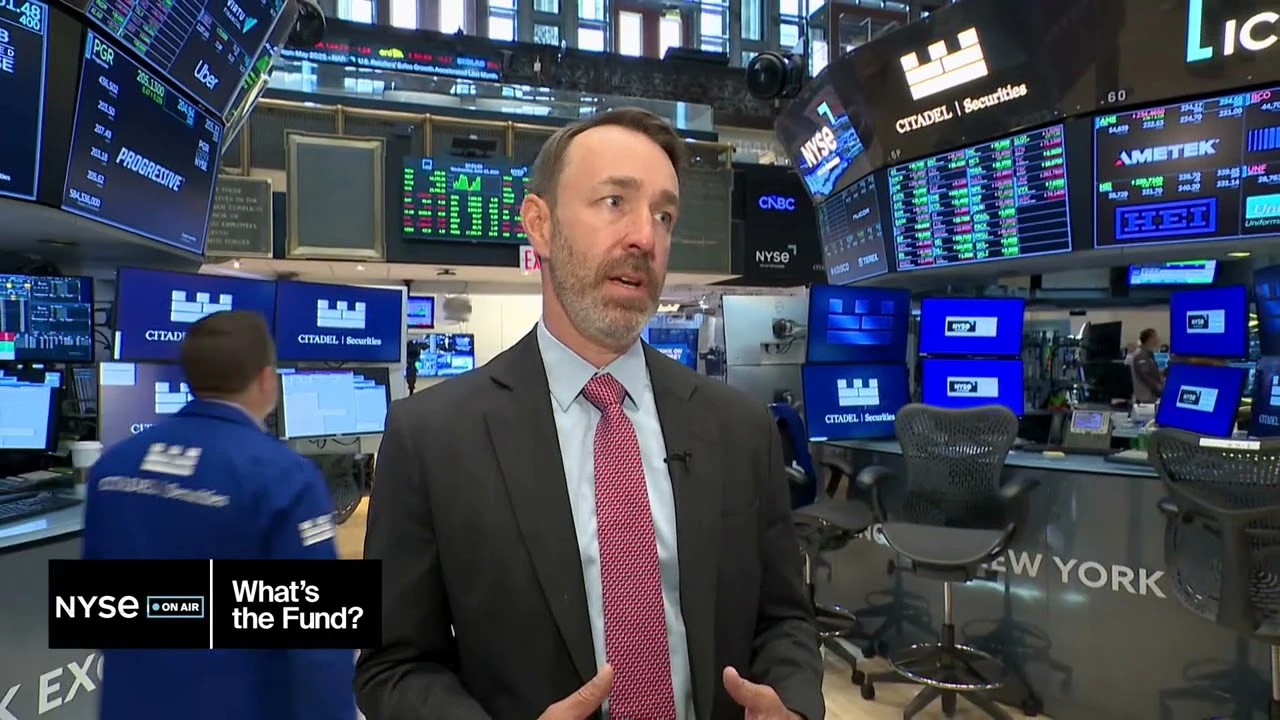
What's the Fund | Ocean Park Diversified Income ETF (DUKZ)
James St Aubin, Chief Investment Officer at Ocean Park Asset Management, discuss the DUKZ ETF, exposing investors to the whole spectrum of asset classes in the fixed income markets, through their rules-based process.

Browse all educational columns



Active Trader Report: Use of Leveraged & Inverse ETFs Way Up
Direxion partnered with Compound Insights and Vanda to explore what’s driving the evolution of active trading — and how active traders are using leveraged and inverse funds across equities, single stocks, commodities, and volatility.