Create, analyze, optimize your ETF portfolio. Start now →



Leverage ETFs, effective but potentially dangerous
Risk takers can take advantage of volatility with Leveraged ETFs. Find out how.


Keep up with what matters in ETFs
Get timely ETF insights, market trends, and top ideas straight to your inbox.
Your newsletter subscriptions with us are subject to ETF Central's Privacy Policy and Terms and Conditions.
The current market is characterized by higher-than-average volatility. An effective way to take advantage of this volatility (if you have strong short-term market views) is with Leveraged ETFs. However, serious risks must be understood before trading these ETFs.
Like what you're reading?
Stay in the loop — get the latest ETF insights: trends, analysis, and expert picks.
What is a Leveraged ETF?
A Leveraged ETF is a financial security that uses derivatives to amplify the returns of an underlying index. Most traditional ETFs will track the performance of an index as closely as possible. However, a Leveraged ETF may provide 2x or 3x the return of the underlying index.
Leveraged ETFs are available on various indexes such as the S&P 500, Dow Jones Industrial Average, and the NASDAQ 100, among others.
For example, the typical S&P 500 ETF index can increase 2% within a single day, meaning that a traditional S&P 500 ETF will increase by approximately 2%. Therefore, a two-times Leveraged ETF or three-times Leveraged ETF would go up around 4% and 6%, respectively.
It must be kept in mind that losses are also amplified. A 2% loss could become a 4% loss, and 6% loss with the use of a two-times and three-times Leveraged ETF.
Why use a Leveraged ETF?
Leveraged ETFs have the potential for significant gains in a short amount of time. This is ideal for traders with a strong view on a specific index that they expect to play out shortly. For example, a trader can expect a strong market rally based on an event such as an FOMC meeting or unemployment information release.
Leveraged ETFs also offer a wide variety of securities to trade. Furthermore, Leveraged ETFs can be applied to short-biased ETFs. This means that traders can make significant gains during a market sell-off.
Examples of Short-Biased ETFs
SPXL (Direxion Daily S&P 500 Bull 3X Shares)
- AUM: $1,902M
- Expense Ratio: 0.97%
- YTD performance: -55.4%
TQQQ (ProShares UltraPro QQQ 3X)
- AUM: $9,864M
- Expense Ratio: 0.95%
- YTD performance: -72.1%
UDOW (ProShares UltraPro Dow30 3X)
- AUM: $527M
- Expense Ratio: 0.95%
- YTD performance: -43.8%
Risks and Considerations of Leveraged ETFs
Leveraged ETFs should not be used as long-term investments. This is because of the compounding effect of losses— Leveraged ETFs attempt to provide an enhanced daily return. Over long periods, Leveraged ETFs fail to track the return of the benchmark index.
For example, if an index increases by 10% on one day and decreases by 10% on the next day. Therefore, a portfolio of $1,000 would end up at $990.
However, with a 3x Leveraged ETF, the increase would be 30% on one day and would decrease by 30% on the next day. This portfolio of $1,000 would end up at $910.
Using leverage has eroded returns, and this effect becomes more pronounced over more extended periods and with more volatile price movements.
Furthermore, it should also be considered that Leveraged ETFs have higher management expense ratios than traditional ETFs due to the leverage costs and management costs.
Data for this article is as of June 15th, 2022.

Latest ETF News
See all ETF newsMoneyShow Chart of the Day 9/4/26: Don't Just Watch Oil. Watch THESE.


Chart of the Day 8/14/26: The Great "Hot Money" Migration

MoneyShow Chart of the Day 7/29/26: Now, THAT's What I Call Market Rotation!

MoneyShow Chart of the Day 7/16/26: Good News/Bad News on Inflation (and the Fed)




 Advantages of ETFs over Mutual Funds1/6
Lower Costs
In this guide, we'll explore the advantages of ETFs over mutual funds, giving you valuable insights into why ETFs have gained significant popularity among investors like yourself.
Leveraged ETFs: Unlocking the Potential for Amplified Returns1/6
Understanding Leveraged ETFs
Explore leveraged ETFs: potential for amplified returns & risks. 5 ETFs to consider across equities, commodities & fixed income.
What is a Leveraged ETF?1/6
Introducing Leveraged and Inverse ETFs
In this guide, we'll dive into the world of leveraged ETFs, exploring their definition, mechanics, potential risks, and rewards.
Recent educational content

ETF Trends
ETF Industry KPIs September 8, 2026
This week’s KPI data overview highlights key metrics and trends shaping the ETF landscape.

ETF Trends
ETF Industry KPIs August 31, 2026
This week’s KPI data overview highlights key metrics and trends shaping the ETF landscape.
ETF Trends
ETF Industry KPIs August 24, 2026
This week’s KPI data overview highlights key metrics and trends shaping the ETF landscape.
What’sTheFund
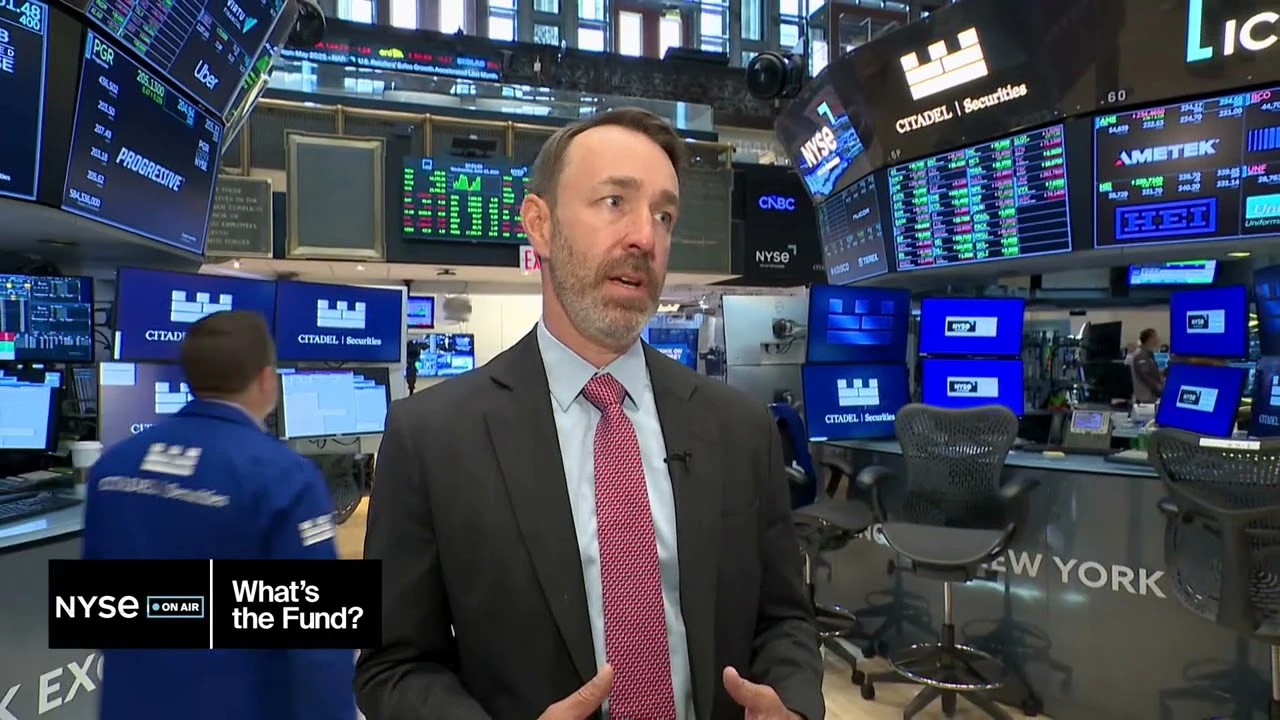
What's the Fund | Ocean Park Diversified Income ETF (DUKZ)
James St Aubin, Chief Investment Officer at Ocean Park Asset Management, discuss the DUKZ ETF, exposing investors to the whole spectrum of asset classes in the fixed income markets, through their rules-based process.

Browse all educational columns



Expert-Built ETF Portfolios, All in One Place
Don’t start from scratch. Discover ready-made ETF portfolios built by professionals to match different goals, timelines, and market views. Use them as inspiration or as a starting point for your own allocation.