ETF model portfolios designed for real investor needs. Discover →



Let's Talk About the Real First Active ETFs
Behind the passive facade of many fixed-income ETFs lies a world of active decision-making.


Keep up with what matters in ETFs
Get timely ETF insights, market trends, and top ideas straight to your inbox.
Your newsletter subscriptions with us are subject to ETF Central's Privacy Policy and Terms and Conditions.
When discussing actively managed ETFs, most investors think of funds where portfolio managers make discretionary decisions about which securities to include, often deviating from a specific index. However, the concept of active management in ETFs isn't new and didn't begin with the recent wave of equity-focused active funds. In fact, one could argue that actively managed ETFs found their roots in the earliest passive fixed-income ETFs. This may sound counterintuitive at first, but when we delve deeper into the mechanics of these products, the active decisions inherent in managing fixed-income ETFs become clear.
Like what you're reading?
Stay in the loop — get the latest ETF insights: trends, analysis, and expert picks.
The Complexity of Fixed Income Indexing
Fixed-income ETFs, particularly those tracking broad-based indexes, have always faced unique challenges. Unlike equity ETFs, where the underlying stocks are often highly liquid and readily available, fixed-income ETFs track indexes composed of thousands, sometimes tens of thousands, of individual bonds. The vast number of potential holdings, coupled with the illiquidity of certain bond issues, makes it impossible to achieve a perfect pro-rata slice of the index during creation or redemption processes.
This is where the concept of custom baskets comes into play, enabled by exemptive relief granted to ETF issuers by the Securities and Exchange Commission (SEC). Custom baskets allow ETF issuers to substitute certain bonds in and out of the fund, enabling them to better manage the fund's liquidity, track the index more closely, and minimize transaction costs.
Active Decision-Making in Portfolio Management
The portfolio manager’s role in managing these fixed-income ETFs can be likened to active management in several ways. Unlike a passive equity ETF manager who might simply replicate the index holdings, a fixed-income ETF manager must carefully select which bonds to include in the ETF. This selection process is driven by several factors, including liquidity, market conditions, and the availability of certain bond issues.
For instance, when money flows into a popular fixed-income ETF, the portfolio manager must decide which bonds to purchase to align with the index's duration, credit quality, and sector weightings. If a bond is illiquid or not available in the necessary quantities, the manager may choose a similar bond or adjust other parts of the portfolio to compensate. This discretion and flexibility are hallmarks of active management, even though the fund itself may be marketed as passive.
Challenges of Rebalancing and Liquidity
Rebalancing is another area where fixed-income ETF managers must employ active strategies. Bond indexes frequently rebalance, sometimes monthly, to account for new issuances, maturities, and changes in credit ratings. For a fixed-income ETF manager, rebalancing isn’t as simple as buying or selling a few shares. It often requires finding counterparties willing to trade specific bonds, many of which may not trade frequently. The manager must also consider transaction costs, which can accumulate and negatively impact the fund's tracking of its index.
If an ETF is still in its growth phase and doesn’t have the trading volume to facilitate easy rebalancing, the portfolio manager may need to engage in industry partnerships to exchange bonds. These partnerships are essential for maintaining the fund’s adherence to its index, but they can also introduce additional costs that need to be carefully managed.
The Importance of Strategic Relationships in Fixed Income Trading
In the world of fixed-income ETFs, success often hinges on the strength of relationships and trading partnerships within the fixed-income community. These relationships are often fostered by both the portfolio manager and the ETF Capital Markets expert at the issuing firm. The more strategic partnerships they can cultivate, the better access the portfolio manager has to the bonds needed to manage the fund effectively. Additionally, having multiple trading partners creates competition, which can help drive down the costs associated with rebalancing and portfolio adjustments.
Building these relationships isn’t just about having a wide network; it’s about ensuring that the portfolio manager has reliable, consistent access to the bonds that are critical for maintaining the fund’s alignment with its index. This access becomes particularly crucial during periods of market stress or when specific bonds are in high demand. By fostering strong relationships with market makers, dealers, and other participants in the bond market, the portfolio manager can secure the best prices and terms, ultimately benefiting the fund’s performance and its investors.
Strategic Adjustments for Tracking Performance
To maintain or improve tracking performance, portfolio managers sometimes make strategic adjustments within the fund. For example, they might overweight certain sectors or maturities where they see an opportunity to enhance tracking accuracy or offset previous underperformance. These decisions, while subtle, introduce an element of active management into what is otherwise perceived as a passive investment vehicle.
Final Words
The development and management of fixed-income ETFs have always required a level of active decision-making that might surprise some investors. From selecting the appropriate bonds for custom baskets to managing liquidity and rebalancing, the role of the portfolio manager in these funds is far from passive. The importance of strategic relationships in the fixed-income market further underscores the active nature of managing these ETFs. As the ETF industry continues to evolve, understanding these nuances is crucial for investors looking to navigate the complexities of fixed-income investing. The strategies and decisions made behind the scenes highlight the skill and expertise required to manage these products effectively, bridging the gap between passive indexing and active portfolio management.
About the Author
Nicholas Phillips | President of ETF Capital Markets Advisors LLC
With over 25 years of experience in ETF market making and capital markets, Nicholas Phillips is recognized as a subject matter expert in the ETF industry. He started his career spending the first ten years as a lead market maker for SIG and Goldman Sachs. At the helm of MCAP LLC's ETF Desk, Nicholas built and scaled the division, enhancing its operations through innovative pricing and risk models, and robust relationships with market makers and issuers. His tenure at Van Eck Associates as Director of ETF Capital Markets further solidified his expertise, managing critical facets of operations and deepening connections within the trading community. Beyond market making, Nicholas is an avid content creator, sharing insights that demystify complex market dynamics. He is keen on exploring board member roles that benefit from his extensive background and forward-thinking approach to ETF strategies. His dual US/Ireland citizenship complements his global perspective, enriching his professional endeavors in diverse markets.
Disclaimer
Please note this article is for information purposes only and does not in any way constitute investment advice. It is essential that you seek advice from a registered financial professional prior to making any investment decision.
Topics
See all
Mentioned ETFs
No specific ETFs were tagged
Further reading
Latest ETF News
See all ETF newsForm 4 Has 20 Transaction Codes. None Say "Section 351 ETF Swap"


Who Really Owns a White-Label ETF?

What If a Futures-Based ETF Never Had to Roll Again?

How Do You Build a Winning ETF Business?

Losers Of Q2 2026 REIT Earnings Season


Winners of Q2 2026 REIT Earnings Season


 Advantages of ETFs over Mutual Funds1/6
Lower Costs
In this guide, we'll explore the advantages of ETFs over mutual funds, giving you valuable insights into why ETFs have gained significant popularity among investors like yourself.
Leveraged ETFs: Unlocking the Potential for Amplified Returns1/6
Understanding Leveraged ETFs
Explore leveraged ETFs: potential for amplified returns & risks. 5 ETFs to consider across equities, commodities & fixed income.
What is a Leveraged ETF?1/6
Introducing Leveraged and Inverse ETFs
In this guide, we'll dive into the world of leveraged ETFs, exploring their definition, mechanics, potential risks, and rewards.
Recent educational content

ETF Trends
ETF Industry KPIs September 8, 2026
This week’s KPI data overview highlights key metrics and trends shaping the ETF landscape.

ETF Trends
ETF Industry KPIs August 31, 2026
This week’s KPI data overview highlights key metrics and trends shaping the ETF landscape.
ETF Trends
ETF Industry KPIs August 24, 2026
This week’s KPI data overview highlights key metrics and trends shaping the ETF landscape.
What’sTheFund
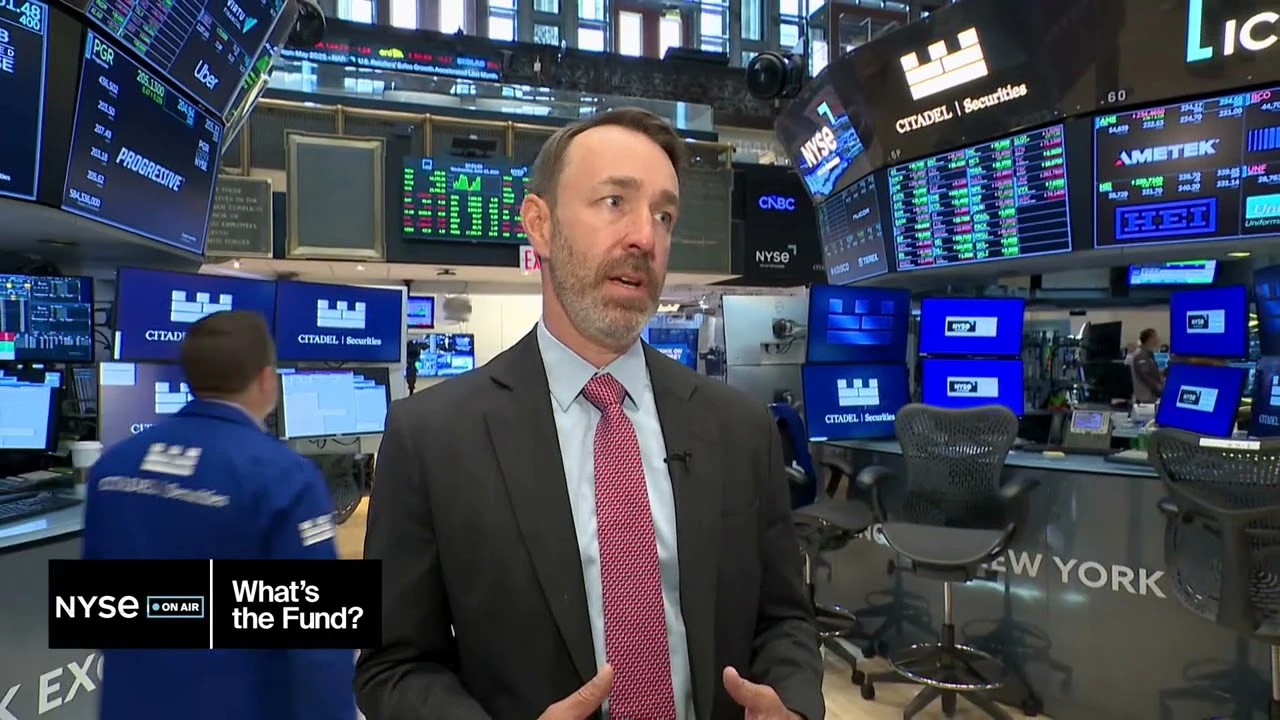
What's the Fund | Ocean Park Diversified Income ETF (DUKZ)
James St Aubin, Chief Investment Officer at Ocean Park Asset Management, discuss the DUKZ ETF, exposing investors to the whole spectrum of asset classes in the fixed income markets, through their rules-based process.

Browse all educational columns



Build and Analyze Your ETF Portfolio Like a Pro
Create your own ETF portfolio in minutes and instantly see allocations, exposures, performance, and risk. Visualize diversification across asset classes, regions, and sectors. Stress-test ideas, compare benchmarks, and refine your strategy with professional-grade analytics.