From idea to ETF portfolio in minutes. Build yours now →



Israel – Iran War: Read This Before Investing in an Oil ETF
Oil prices are on the rise, but oil ETFs can behave unpredictably and come with complex tax treatments. Here’s what investor’s need to know.


Keep up with what matters in ETFs
Get timely ETF insights, market trends, and top ideas straight to your inbox.
Your newsletter subscriptions with us are subject to ETF Central's Privacy Policy and Terms and Conditions.
Oil prices are climbing again after Iran retaliated following Israel’s surgical strikes on nuclear facilities and top leadership targets. With the world watching closely to see if tensions cool or spiral into a broader regional war involving Western nations, markets are understandably on edge.
On the finance side, this has reignited investor interest in oil ETFs. But if you weren’t around for the wild ride of the 2020 COVID oil crash and the flood of panicked questions from investors confused about why their oil ETFs didn’t match oil prices, now’s a good time for a quick reality check.
There are two key warnings to keep in mind before hitting “buy.” First, your oil ETF may not track oil prices the way you think it does. Second, many of these ETFs come with tax complexities that could cost you dearly at filing time. Here’s what you need to know.
Global ETF Survey 2026 is Live!
With 1,790 new products launched by July 2026, choosing is harder than ever. Our Global ETF Survey 2026, built on 620 professional investors and allocators, shows how active, fixed income, options-based and thematic ETFs are reshaping fund selection.
Why oil ETFs may not behave as expected
Let’s use the United States Oil Fund
USO doesn’t hold actual barrels of oil. Instead, it tries to match the average daily percentage change of its net asset value (NAV) to that of the front-month WTI crude oil futures contract over rolling 30-day periods, staying within a range of plus or minus 10%.
You’re getting exposure to futures, currently, for example, the August 2025 WTI contract. USO also uses financial tools like swaps with counterparties (e.g., Macquarie or Société Générale) and puts some cash into institutional money market funds as collateral.
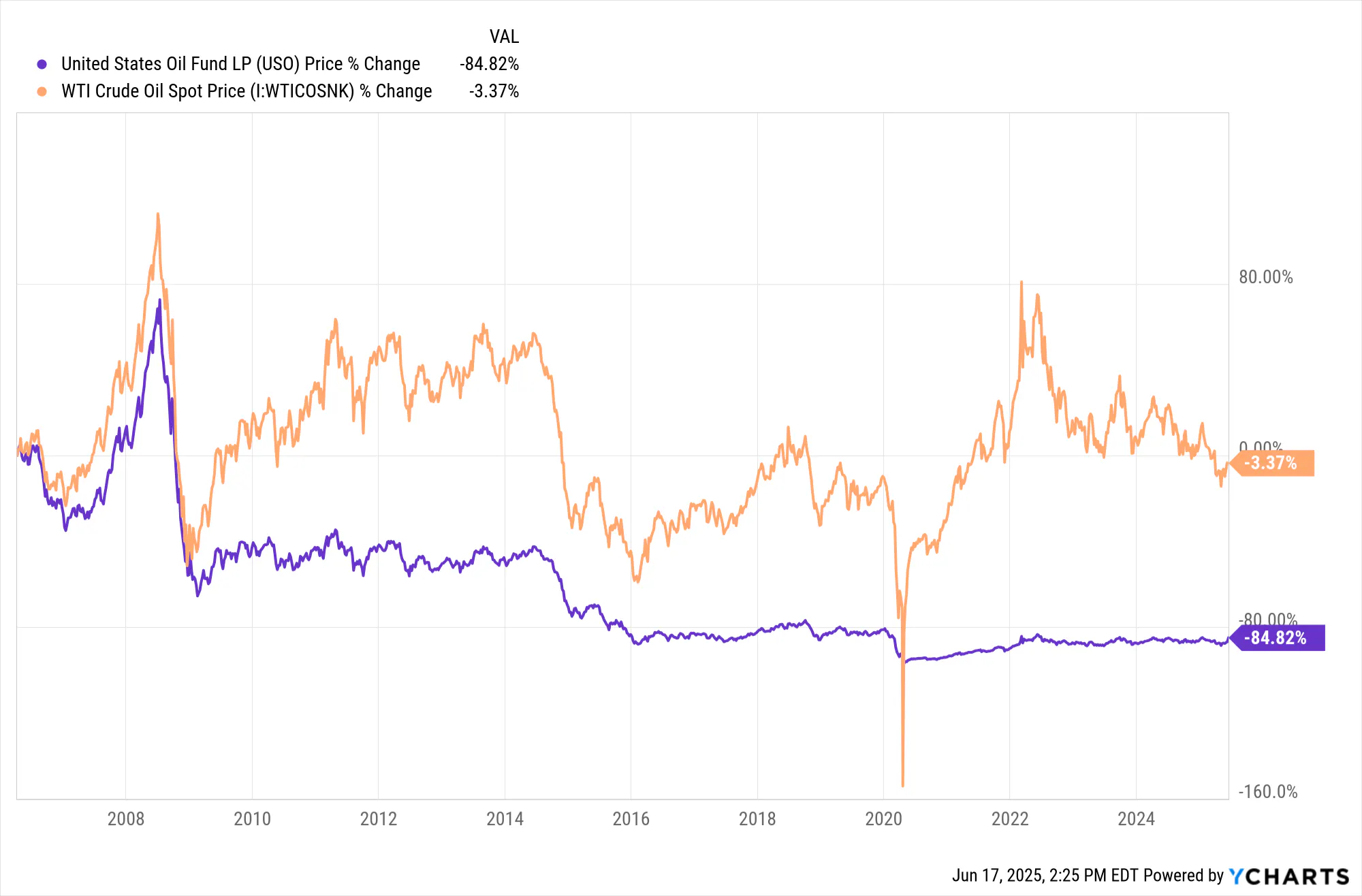
The biggest reason why USO doesn’t line up with oil prices over the long run (asides from expenses) is a market phenomenon called contango. That’s when the futures price for oil is higher than the spot price.
ETFs like USO that hold front-month futures contracts must roll them over each month—selling the near-term contract and buying the next one out.
If the next-month contracts are consistently more expensive, the fund ends up “selling low and buying high” each time it rolls forward, creating a drag on performance called negative roll yield.
In the short term, USO often moves in the same direction as oil prices. But over time, especially when contango is steep, that tracking breaks down. As the chart below shows, the compounding effect of contango can cause the ETF’s value to significantly underperform the actual movement in crude oil prices.
In the short term, USO can be an imperfect but acceptable tool for speculating on oil prices. If your goal is to make a directional bet on crude over a few days or weeks, and you understand the risks, it can serve that purpose.
But it’s absolutely crucial to have a clear exit plan. USO is not designed to be a long-term hold. because of the structural drag from rolling futures in contango, the longer you hold it, the more likely your performance will diverge negatively from actual oil prices.
Why you may get a nasty surprise come tax time
The other issue you won’t immediately realize after trading USO, regardless of how long you hold it, is the Schedule K-1. This tax form isn’t something most ETF investors expect, but it’s common with commodity funds structured as limited partnerships, like USO.
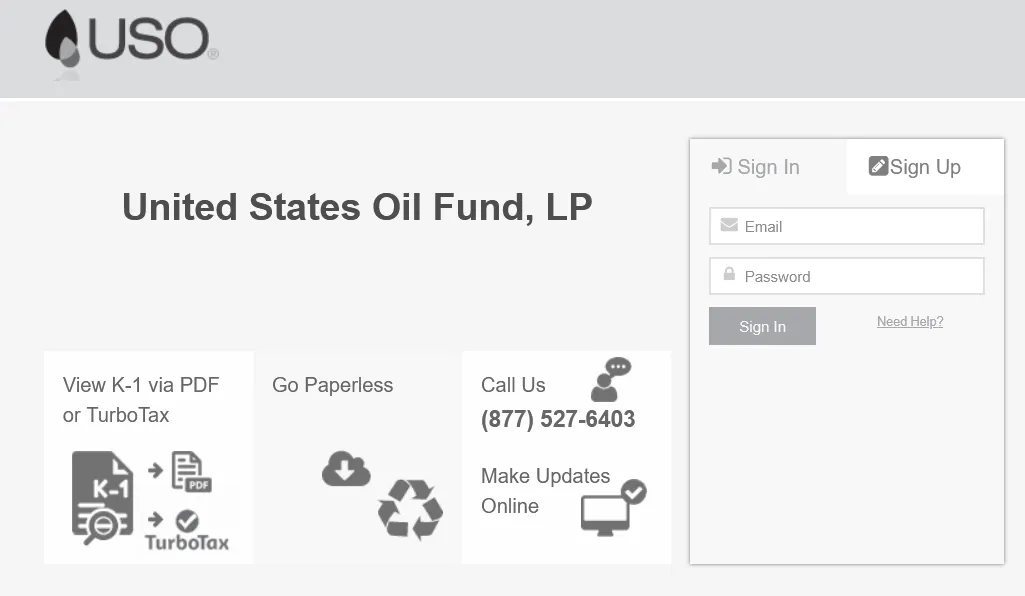
Unlike traditional equity ETFs, which typically send out a straightforward T3 or 1099 tax form, funds like USO must issue a K-1 to report each investor’s share of the fund’s income, gains, losses, deductions, and credits. This is because of the partnership structure.
For you, this means more complexity at tax time. First, the K-1 form itself is long, tedious, and often confusing, especially for investors who’ve never filed one before. Even if you work with a tax professional, many accountants consider K-1s a headache.
Second, K-1s tend to arrive late, sometimes well into March or even April, which can delay your ability to file on time. If you file your own taxes, expect a steep learning curve and frustration.
You can avoid this by choosing ETFs that explicitly advertise “No K-1” in their name or prospectus. But most investors simply pick the first oil ETF they find, often USO, and only realize the paperwork hassle when it’s too late.
Please note that this article reflects the author’s personal views and does not represent the opinions of the publication or its affiliates. It is for informational purposes only and does not constitute investment advice. It is essential to seek guidance from a registered financial professional before making any investment decisions.

Latest ETF News
See all ETF newsBeyond Big Tech: The Increasing Specialization of AI ETFs

There's an ETF for That? Humanoid Robotics and Physical AI

How Some ETF Issuers Use Their Own Funds for Cash Management

These Public-Private ETFs Invest in Polymarket and Anduril

There's an ETF for That? Frontier Markets



 Advantages of ETFs over Mutual Funds1/6
Lower Costs
In this guide, we'll explore the advantages of ETFs over mutual funds, giving you valuable insights into why ETFs have gained significant popularity among investors like yourself.
Leveraged ETFs: Unlocking the Potential for Amplified Returns1/6
Understanding Leveraged ETFs
Explore leveraged ETFs: potential for amplified returns & risks. 5 ETFs to consider across equities, commodities & fixed income.
What is a Leveraged ETF?1/6
Introducing Leveraged and Inverse ETFs
In this guide, we'll dive into the world of leveraged ETFs, exploring their definition, mechanics, potential risks, and rewards.
Recent educational content

First Look ETF
First Look ETF: Income, International, and Cash Flow ETFs
In this season 6 episode of First Look ETF, Stephanie Stanton @etfguide examines the latest ETF marketplace trends with NYSE and guests.


ETF Trends
ETF Industry KPIs October 5, 2026
This week’s KPI data overview highlights key metrics and trends shaping the ETF landscape.

ETF Trends
ETF Industry KPIs September 28, 2026
This week’s KPI data overview highlights key metrics and trends shaping the ETF landscape.
ETF Trends
ETF Industry KPIs September 22, 2026
This week’s KPI data overview highlights key metrics and trends shaping the ETF landscape.