Turn ETF ideas into real portfolios. Try the builder now →



Israel-Hamas War, Part 2: Implications for Middle East Equity ETFs
Part two of our ETF-focused analysis on the Israel-Hamas war focuses on possible downstream effects for three notable Middle East equity ETFs.


Keep up with what matters in ETFs
Get timely ETF insights, market trends, and top ideas straight to your inbox.
Your newsletter subscriptions with us are subject to ETF Central's Privacy Policy and Terms and Conditions.
The ripple effects of the Israel-Hamas conflict are making their mark across global financial markets and reshaping investment strategies.
In our initial analysis, we analyzed the aerospace and defense sectors, examining the potential impacts on industry-specific ETFs.
Shifting gears, our current focus is geography-specific, exploring the implications for ETFs that grant exposure to the equities of individual countries within the Middle East.
Amidst the region's complex interplay of politics, economics, and culture, single-country equity ETFs have emerged as a vital instrument for investors. They serve as a fine-tuned approach, enabling investors to express targeted strategies against the backdrop of broader regional dynamics.
In this installment, we'll dissect the trajectories of three prominent NYSE-listed Middle East equity ETFs, analyzing how the ongoing geopolitical events might influence them.
Like what you're reading?
Stay in the loop — get the latest ETF insights: trends, analysis, and expert picks.
iShares MSCI Israel ETF (EIS): The Immediate Fallout
EIS stands out as the most directly impacted ETF in the wake of the current Israel-Hamas conflict. Year to date, as of October 31, EIS has declined by a staggering 17%, with the last month accounting for a 14.75% plunge.
The sharp tumble post the October 7th attacks is reminiscent of memories of the aftermath of the 9/11 attacks on U.S. markets. Such unexpected geopolitical events can trigger abrupt and deep market reactions; for instance, the 9/11 tragedy precipitated a significant crash in the U.S. markets.
Investors looking to strategize around the EIS can interpret this situation in several ways, contingent on their assessment of the conflict's trajectory.
Going short on EIS implies anticipating a further deterioration in the situation, perhaps with intensifying conflict or even neighboring nations entering the scene. Conversely, taking a long position would suggest expecting a more positive turn of events, such as a potential ceasefire or diplomatic interventions leading to stabilization.
Regardless of the chosen path, it's evident that investors are essentially placing bets on unforeseen outcomes, be they in favor of tranquility or turmoil.
VanEck Egypt Index ETF (EGPT): The Harbinger of Uncertainty
When discussing the ripple effects of the Israel-Hamas conflict, Egypt's historical position as a key player in Middle Eastern geopolitics is undeniably significant. This makes EGPT a potentially pivotal ETF to monitor.
Historically, Egypt has seen its fair share of tension and conflict with Israel. This dynamic dates back decades, punctuated by multiple wars and diplomatic clashes.
From the Six-Day War in 1967 to the Yom Kippur War in 1973, the relationship between the two nations has been nothing short of complicated. The signing of the 1979 peace treaty marked a significant turning point in their relationship, leading to a somewhat fragile peace.
Recent developments have heightened concerns. Reports have surfaced of Egypt positioning tanks and armored vehicles near the Rafah border crossing, a critical junction point leading into Gaza.
The driving force behind this military presence can be attributed to Egypt's apprehensions about the potential flood of refugees escaping the fierce combat between Israel and Hamas. As of now, Egypt has largely kept its border with Gaza sealed, making exceptions only for the passage of aid trucks assisting the Gazan population.
It's noteworthy to mention that the 1979 peace treaty also placed limitations on the number of troops Egypt could deploy in the Sinai Peninsula. However, given the current circumstances, there's a possibility that Egypt might reinforce its positions further.
With the ever-present potential of neighboring countries becoming entangled in the Israel-Hamas conflict, EGPT's performance could either experience headwinds or tailwinds based on whether these tensions evolve or abate.
iShares MSCI Saudi Arabia ETF (KSA): The Dark Horse to Watch
When assessing the potential repercussions of the Israel-Hamas conflict on the ETF landscape, it's impossible to ignore the dynamics surrounding Saudi Arabia, a heavyweight in the Middle Eastern geopolitical arena.
Saudi Arabia's prominence in the region, bolstered by its massive oil reserves, religious significance, and longstanding bilateral ties with the U.S., makes its role in the ongoing conflict all the more intriguing.
The Kingdom finds itself on a diplomatic tightrope walk. On the one hand, overtly supporting Palestinian interests could strain its relationship with the U.S., a key ally and partner. On the other hand, choosing a path of inaction or perceived indifference could jeopardize its position and reputation as a leading Middle Eastern power.
In terms of potential involvement, Saudi Arabia's most probable path forward is one of moderation and mediation. The Kingdom could leverage its diplomatic might to push for a cease-fire, while also offering humanitarian aid to those affected. This would align with Saudi's recent endeavors to portray itself as a stabilizing force in the region.
Yet, given the unpredictable nature of Middle Eastern politics, one can't entirely rule out the possibility of Saudi Arabia resorting to stronger posturing or sabre-rattling to assert its stance or protect its interests.
For investors eyeing the Middle Eastern market, KSA stands out as one of the primary vehicles to gain exposure to Saudi equities. With an AUM of $683 million, it certainly has garnered attention, though the relatively high expense ratio of 0.74% might give some investors pause.
Please note this article is for information purposes only and does not in any way constitute investment advice. It is essential that you seek advice from a registered financial professional prior to making any investment decision.
Mentioned ETFs
Further reading

Latest ETF News
See all ETF newsEquity Investing 101: Understanding U.S. Large-Cap Growth ETFs

Tony's ETF Buyer's Guide: Sector ETFs (Vanguard versus State Street SPDR)

Options Strategies in ETFs, Part 4: Put-Selling and Leverage

Options Strategies in ETFs, Part 3: Buffer ETFs




 Advantages of ETFs over Mutual Funds1/6
Lower Costs
In this guide, we'll explore the advantages of ETFs over mutual funds, giving you valuable insights into why ETFs have gained significant popularity among investors like yourself.
Leveraged ETFs: Unlocking the Potential for Amplified Returns1/6
Understanding Leveraged ETFs
Explore leveraged ETFs: potential for amplified returns & risks. 5 ETFs to consider across equities, commodities & fixed income.
What is a Leveraged ETF?1/6
Introducing Leveraged and Inverse ETFs
In this guide, we'll dive into the world of leveraged ETFs, exploring their definition, mechanics, potential risks, and rewards.
Recent educational content

ETF Trends
ETF Industry KPIs September 8, 2026
This week’s KPI data overview highlights key metrics and trends shaping the ETF landscape.

ETF Trends
ETF Industry KPIs August 31, 2026
This week’s KPI data overview highlights key metrics and trends shaping the ETF landscape.
ETF Trends
ETF Industry KPIs August 24, 2026
This week’s KPI data overview highlights key metrics and trends shaping the ETF landscape.
What’sTheFund
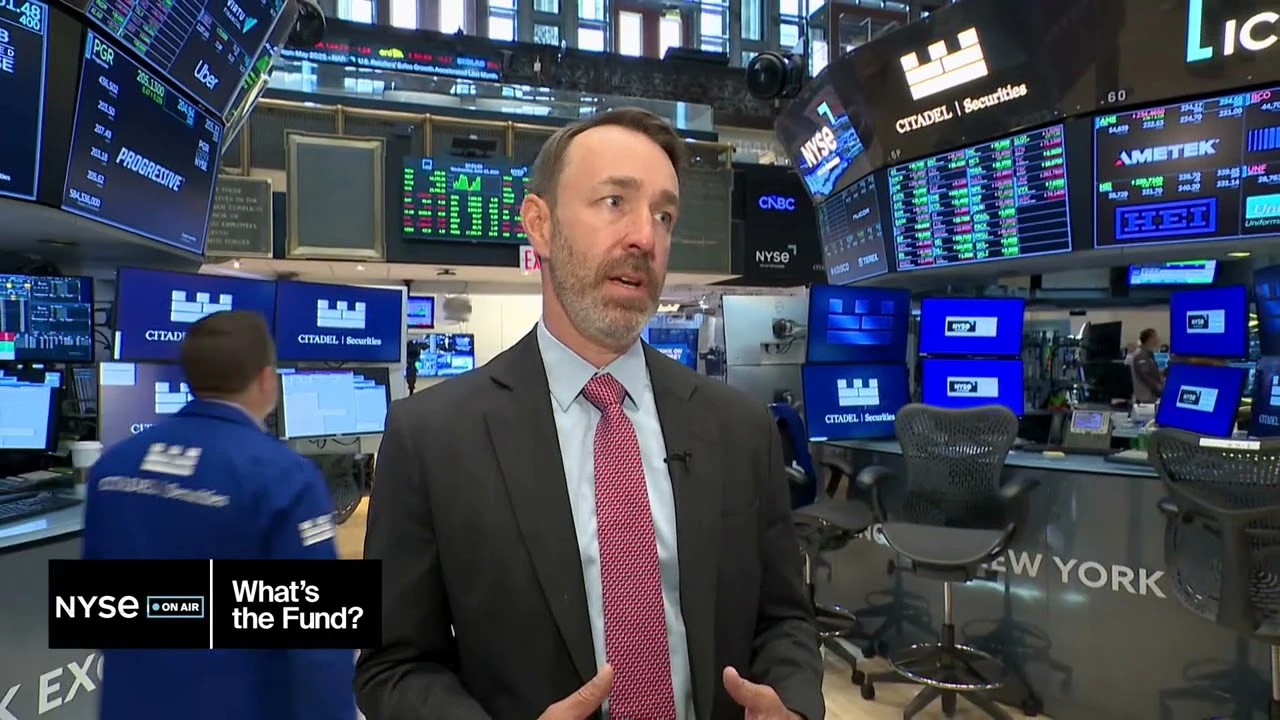
What's the Fund | Ocean Park Diversified Income ETF (DUKZ)
James St Aubin, Chief Investment Officer at Ocean Park Asset Management, discuss the DUKZ ETF, exposing investors to the whole spectrum of asset classes in the fixed income markets, through their rules-based process.

Browse all educational columns



Active Trader Report: Use of Leveraged & Inverse ETFs Way Up
Direxion partnered with Compound Insights and Vanda to explore what’s driving the evolution of active trading — and how active traders are using leveraged and inverse funds across equities, single stocks, commodities, and volatility.