From idea to ETF portfolio in minutes. Build yours now →



Israel-Hamas War, Part 1: Implications for Aerospace & Defense ETFs
Part one of our analysis looks at the possible downstream impacts on aerospace & defense ETFs.


Keep up with what matters in ETFs
Get timely ETF insights, market trends, and top ideas straight to your inbox.
Your newsletter subscriptions with us are subject to ETF Central's Privacy Policy and Terms and Conditions.
On October 7th, the world witnessed a significant escalation in tensions as the Palestinian militant group Hamas launched attacks on Israel. Israel swiftly declared war and responded with retaliatory strikes in the Gaza Strip.
Such geopolitical upheavals invariably create ripples across global markets. The energy sector, for instance, has been in the limelight given the Middle East's pivotal role in oil production.
But while many eyes are turned towards energy, there's another sector that's feeling the heat and might be coming into sharper focus: aerospace and defense ETFs.
Though it may represent a smaller niche in terms of assets under management within the ETF world, the current conflict, coupled with the ongoing war in Ukraine, may shift more attention to this industry.
"All signs point to higher global defense spending given the heightened risks around the world," says Tony Bancroft, Portfolio Manager for the Gabelli Commercial Aerospace & Defense ETF (GCAD). "Along with the Middle East, we have the long-term view that geopolitical volatility will remain heightened with countries such as Russia, China, Iran and North Korea."
In this analysis, we will delve into how the dynamics of the aerospace and defense sector might evolve in light of these new global tensions.
Like what you're reading?
Stay in the loop — get the latest ETF insights: trends, analysis, and expert picks.
What the research says
Understanding how aerospace and defense stocks react to wartime conditions is crucial for investors and market-watchers alike. While the academic landscape on this subject isn't exactly sprawling, the conclusions drawn from existing studies are clear-cut.
In the study titled "The budgets of wars: Analysis of the U.S. defense stocks in the Post-Cold War era" from November 2022, authors Gurdgiev, Henrichsen, & Mulhair observed that defense companies seem to prosper more during times when unexpected conflicts are more likely, there's geopolitical unrest, or when minor skirmishes might suddenly escalate.
The paper zoomed in on how the U.S. invests in situations where there might be direct confrontations or more indirect, behind-the-scenes tensions, keeping in mind other influencing factors like budget allocations and political considerations. For everyday readers, this essentially means that when there's uncertainty in global relations or a higher chance of conflicts, U.S. defense stocks might just get a boost.
Meanwhile, another interesting study to look at is "The 11/13 Paris terrorist attacks and stock prices: The case of the international defense industry" from May 2016 by Apergis & Apergis. Their research spotlighted the immediate aftermath of the tragic November 13 Paris terrorist attacks.
Their findings indicated that these attacks played a significant role in increasing the stock values of 24 global defense companies not just on the day of the incident but in the subsequent days as well. In simpler terms, major global events, like terror attacks, can have a ripple effect, driving up the stock prices of defense companies internationally.
Lastly, "Does Geopolitical Risk Predict Stock Returns and Volatility of Leading Defense Companies? Evidence from a Nonparametric Approach" from February 2017 by Apergis, Bonato, Gupta, & Kyei delved into whether geopolitical risks (measured using something called the Geopolitical Risk or GPR Index) can predict how defense stocks will perform.
They found that while these risks don't necessarily give a clear indication of stock returns, the GPR Index does show when stocks might have more fluctuation or volatility. This means that even if we can't predict exact stock performance based on global tensions, we can expect more ups and downs in defense stock prices during such times.
What it means for ETFs
Navigating the aerospace and defense ETF landscape requires a keen understanding of the intricacies and differences within major ETFs.
Specifically, investors should be aware that the Invesco Aerospace & Defense ETF (PPA) and the SPDR S&P Aerospace & Defense ETF (XAR), while both prominent NYSE-listed aerospace and defense ETFs aren't cut from the same cloth.
PPA adopts a more conventional approach, weighting its holdings based on market capitalization. It tracks the performance of 54 companies from the SPADE Defense Index.
This means that larger companies with greater market values have a higher representation in the ETF. Notably, the "big five" most influential domestic defense contractors constitute a significant chunk of its top holdings.
For instance, RTX Corp holds about 6.95% of the fund, followed closely by Northrop Grumman Corp at 6.89%, Lockheed Martin Corp at 6.86%, The Boeing Co. at 5.86%, and General Dynamics Corp rounding off at 5.16%.
In contrast, XAR takes a different approach. Managed by State Street SPDR, this ETF employs an equal-weighted strategy. This methodology results in a more balanced allocation across its holdings, with a noticeable tilt towards smaller and mid-cap aerospace and defense firms.
This means that while PPA focuses on the giants, XAR spreads its bets more evenly, giving investors exposure to a broader spectrum of companies in the industry.
Price is another distinguishing factor. PPA comes with an expense ratio of 0.68%, whereas XAR is more cost-efficient, charging investors 0.35%.
It's worth mentioning, however, that both ETFs are designed with tax efficiency in mind, boasting a minimal yield, which can be advantageous for investors concerned about the tax implications of their investments.
My analysis on these ETFs
In offering my perspective, the emphasis on the big five defense contractors, especially in the current geopolitical context, can't be overlooked.
While XAR's equally weighted portfolio might appeal to some investors for its diversified exposure, it's important to recognize that the giants in PPA's portfolio are uniquely positioned to benefit from direct government expenditures.
Israel, as a pivotal ally of the U.S. in the Middle East, holds considerable strategic importance. The U.S. has historically been invested in buttressing Israel's position, both diplomatically and through defense support.
As a result, companies that have established contracts and relationships with the U.S. government, like the big five, are likely to see more indirect benefits from increased Israeli defense spending in light of recent events.
"In 2022, Israel spent $23.4 billion on defense, which was up sharply from 2019, when the country spent $19.3 billion," Bancroft says. "Israel is likely to grow defense spending at a higher rate than the 3.9% CAGR over the last 5 years".
An actively managed alternative to consider
While ETFs like PPA prioritize these giants and XAR offers a balanced view, there's another strategy worth considering: an actively managed approach.
The aerospace and defense sectors, much like the biotech industry, hinge on a deep understanding of intricate details and nuances.
In biotech, it's about understanding FDA approvals and predicting drug success rates. In aerospace and defense, it's about having insight into where conflicts might break out, the probability of contract awards, and the implications of geopolitical events.
Enter the Gabelli Commercial Aerospace & Defense ETF (GCAD) actively managed by Lieutenant Colonel Tony Bancroft from the United States Marine Corps Reserve. Bancroft didn't just walk into the world of finance; he transitioned into it after serving the United States as an F/A-18 Hornet fighter pilot.
His boots-on-the-ground experience, coupled with his academic credentials — a systems engineering degree from the esteemed United States Naval Academy and an MBA focusing on finance and economics from Columbia Business School, makes him an expert here.
Bancroft's unique blend of military and financial expertise enables him to navigate the aerospace and defense sectors. His focus on suppliers to the commercial, military, and regional jet aircraft industry, as well as waste services, means he's looking at the entire ecosystem, not just the big players.
"In terms of opportunities, we find companies with missile and propulsion capabilities to be most attractive," Bancroft told me. "As a result, we continue to buy L3Harris which recently acquired Aerojet Rocketdyne and will have exposure to missile propulsion, and additionally, we would buy the two largest US missile OEMs, Lockheed Martin and RTX."
Please note this article is for information purposes only and does not in any way constitute investment advice. It is essential that you seek advice from a registered financial professional prior to making any investment decision.

Latest ETF News
See all ETF newsEquity Investing 101: Understanding U.S. Large-Cap Growth ETFs

Tony's ETF Buyer's Guide: Sector ETFs (Vanguard versus State Street SPDR)

Options Strategies in ETFs, Part 4: Put-Selling and Leverage

Options Strategies in ETFs, Part 3: Buffer ETFs




 Advantages of ETFs over Mutual Funds1/6
Lower Costs
In this guide, we'll explore the advantages of ETFs over mutual funds, giving you valuable insights into why ETFs have gained significant popularity among investors like yourself.
Leveraged ETFs: Unlocking the Potential for Amplified Returns1/6
Understanding Leveraged ETFs
Explore leveraged ETFs: potential for amplified returns & risks. 5 ETFs to consider across equities, commodities & fixed income.
What is a Leveraged ETF?1/6
Introducing Leveraged and Inverse ETFs
In this guide, we'll dive into the world of leveraged ETFs, exploring their definition, mechanics, potential risks, and rewards.
Recent educational content

ETF Trends
ETF Industry KPIs September 8, 2026
This week’s KPI data overview highlights key metrics and trends shaping the ETF landscape.

ETF Trends
ETF Industry KPIs August 31, 2026
This week’s KPI data overview highlights key metrics and trends shaping the ETF landscape.
ETF Trends
ETF Industry KPIs August 24, 2026
This week’s KPI data overview highlights key metrics and trends shaping the ETF landscape.
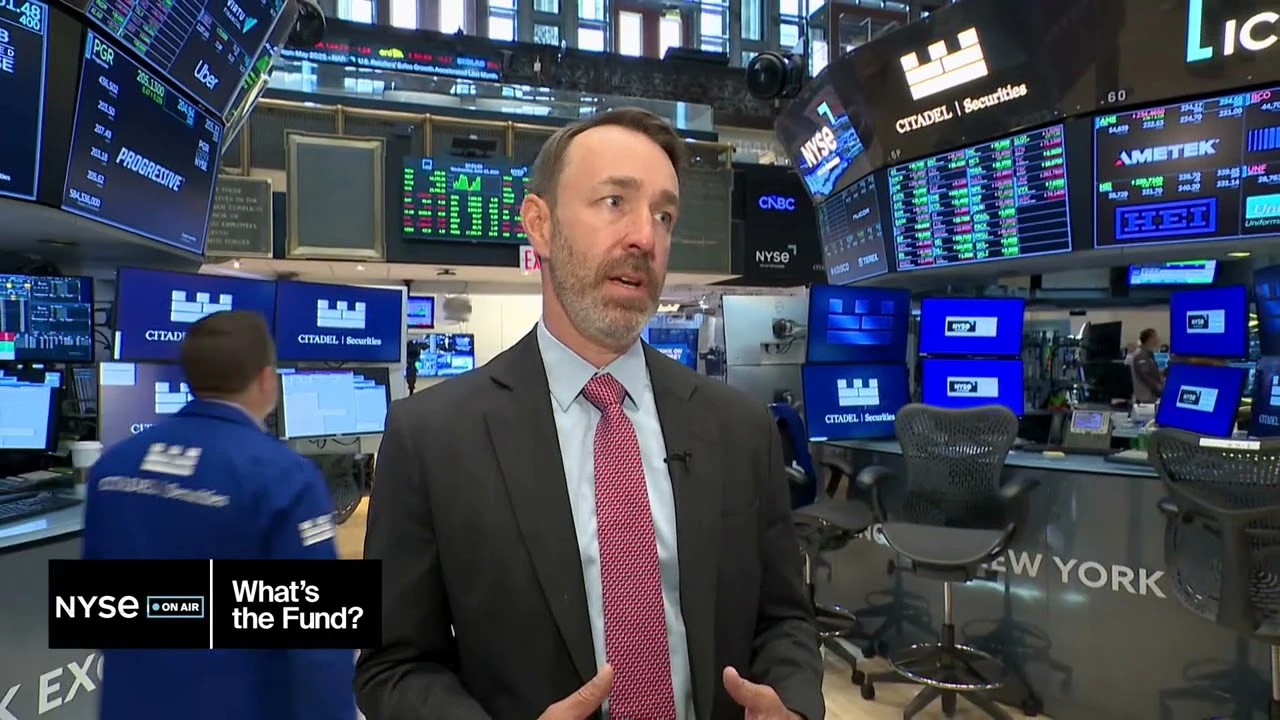
What’sTheFund
What's the Fund | Ocean Park Diversified Income ETF (DUKZ)
James St Aubin, Chief Investment Officer at Ocean Park Asset Management, discuss the DUKZ ETF, exposing investors to the whole spectrum of asset classes in the fixed income markets, through their rules-based process.

Browse all educational columns



Build and Analyze Your ETF Portfolio Like a Pro
Create your own ETF portfolio in minutes and instantly see allocations, exposures, performance, and risk. Visualize diversification across asset classes, regions, and sectors. Stress-test ideas, compare benchmarks, and refine your strategy with professional-grade analytics.