Global ETF Survey Is Live! 600+ ETF Professionals Weigh In. See Results →



Is It Finally Time for Investors to Consider Equal-Weighted ETFs?
Investors worried about concentration risk and high valuations can consider these ETF alternatives.


Keep up with what matters in ETFs
Get timely ETF insights, market trends, and top ideas straight to your inbox.
Your newsletter subscriptions with us are subject to ETF Central's Privacy Policy and Terms and Conditions.
As the tech world grapples with Tesla's slump and Google's mishandled launch of their new Gemini AI, the spotlight remains firmly on the "Magnificent Seven" stocks— the aforementioned two along with Meta, Microsoft, Amazon, Apple, and Nvidia.
Despite the mixed performance of some of its members, Nvidia's recent blowout earnings report has reignited interest in this elite group. This fascination is underscored by an astounding observation: the combined market capitalization of these seven giants, now exceeding $13 trillion, surpasses the GDP of most G20 nations. Their performance in 2023 was nothing short of extraordinary.
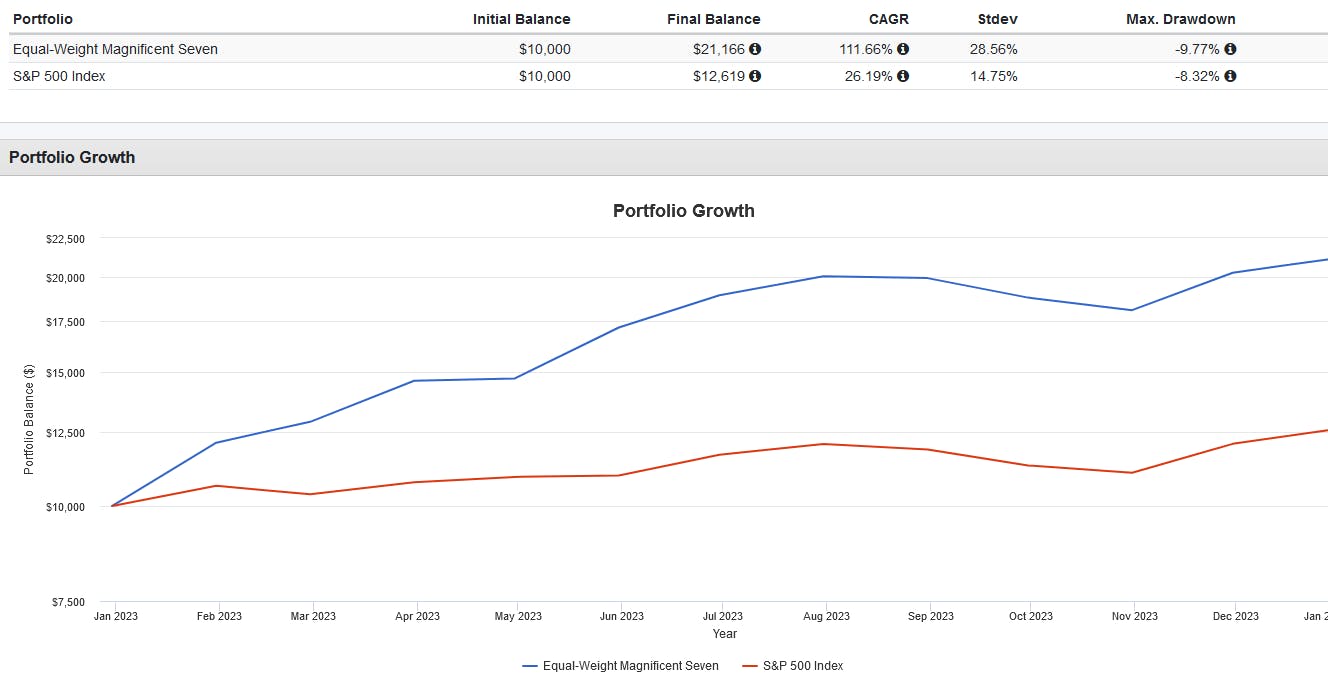
In the S&P 500, these seven behemoths constitute about 29% of the index's weight, a figure that climbs even higher in the Nasdaq 100, reaching 40%. Such concentration underscores the significant impact these companies have on market movements and investor portfolios, raising concerns about concentration risk and vulnerability to the high valuations of these tech titans.
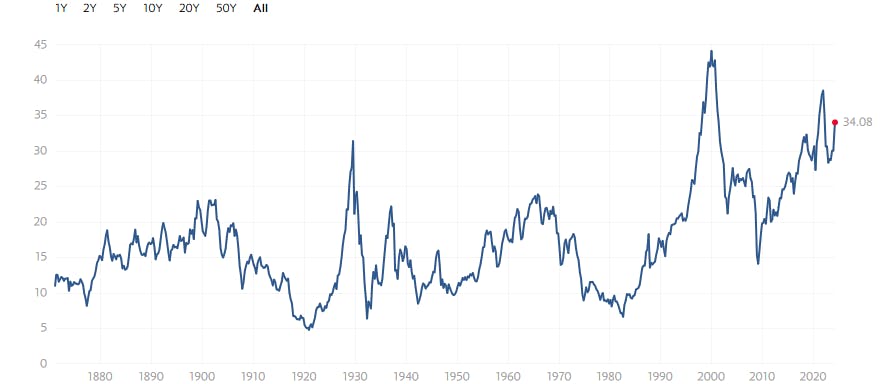
With the S&P 500's Shiller P/E ratio standing at 34.08—double its historical mean of 17.09—valuation-conscious investors may be wary of the heightened risk of market corrections. However, those unwilling to sideline their capital in a volatile market have viable alternatives.
Equal-weighted ETFs present a possible solution to the dilemma of concentration risk and inflated valuations. By offering a diversified approach that mitigates the outsized influence of the market's largest companies, equal-weighted ETFs ensure that each constituent stock contributes equally to the portfolio's performance, regardless of its market cap.
Global ETF Survey 2026 is Live!
With 1,790 new products launched by July 2026, choosing is harder than ever. Our Global ETF Survey 2026, built on 620 professional investors and allocators, shows how active, fixed income, options-based and thematic ETFs are reshaping fund selection.
What are equal-weighted ETFs?
Most index ETFs allocate their weightings based on a concept known as "float-adjusted market cap."
To simplify, "market cap" is the total value of all a company's shares of stock, found by multiplying the price of a single share by the total number of shares available.
"Float-adjusted" narrows this down to only include shares publicly available for trading, leaving out those held by insiders, governments, or under other restrictions.
This weighting approach means that in indices like the S&P 500, larger companies, such as Microsoft and Apple, dominate because they have the largest market caps. The greater a company's market value, the bigger its impact on the index's performance.
The benefits of this method are notable. It results in low turnover; beyond the occasional additions and deletions, the portfolio largely manages itself. For proponents of efficient markets, letting the most valuable companies lead makes sense, as it reflects the market's natural selection.
An alternative method is equal weighting, which is exactly what it sounds like, giving each stock in an index the same weight. In the case of the S&P 500, every stock would be assigned a weight of 0.20%. This strategy significantly cuts down on concentration risk and balances out sector representation more evenly.
However, equal weighting introduces its own challenges. It leads to higher costs due to increased turnover; portfolios must be rebalanced regularly to keep the weights equal, which can dampen momentum. Moreover, this strategy increases exposure to mid and small-cap stocks. Though these stocks may have higher growth potential, they also bring greater volatility.
The best equal-weighted ETFs
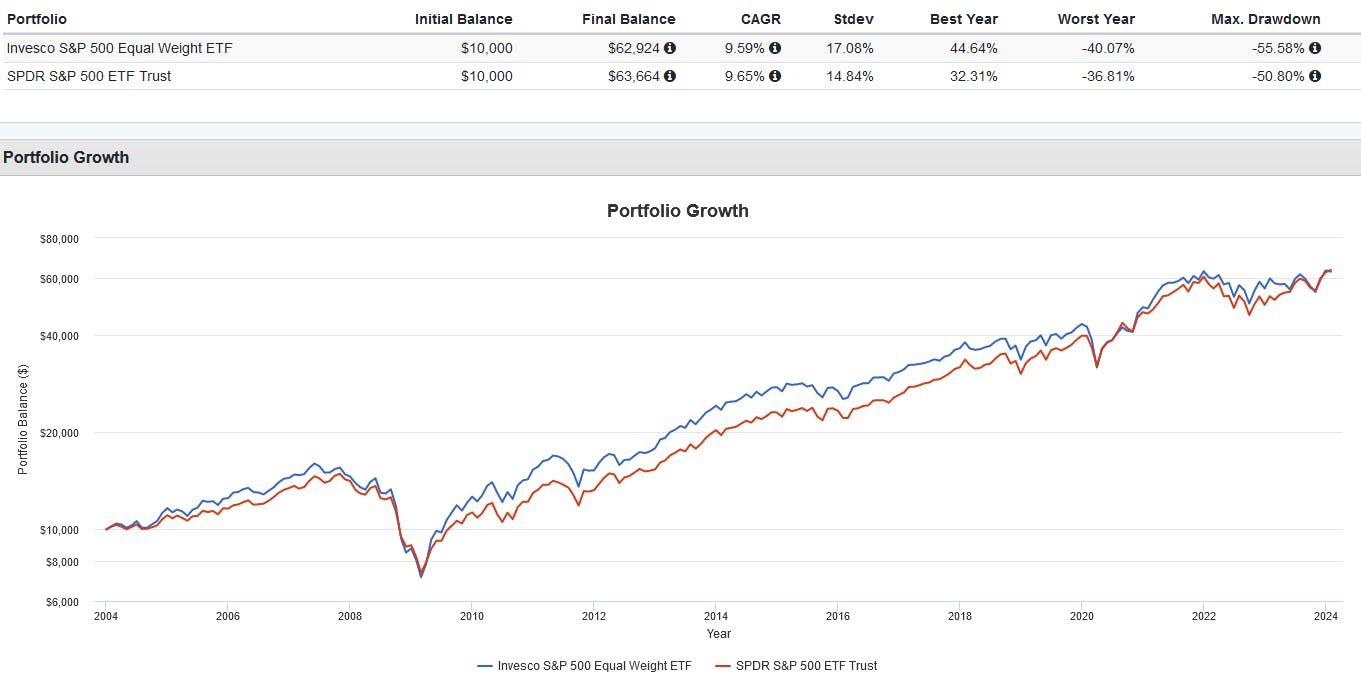
When it comes to equal-weighted ETFs, Invesco's offerings stand out prominently. Their flagship, the Invesco S&P 500 Equal Weight ETF (RSP), has been a staple in the market since its inception in April 2003, marking over two decades of performance. It’s also the largest in its category, boasting over $50 billion in assets under management.
Notably, RSP differentiates itself with a 0.20% expense ratio and higher turnover due to its quarterly rebalancing schedule. Despite these factors, it has admirably kept pace with the SPDR S&P 500 ETF (SPY), and before the significant market movements in 2023, RSP was even outperforming SPY.
The depth of Invesco's equal-weight strategy extends beyond just a broad market approach. For investors interested in diving into specific sectors of the S&P 500 through an equal-weight lens, Invesco provides a suite of sector-specific ETFs.
One such example is the Invesco S&P 500 Equal Weight Technology ETF (RSPT), allowing investors to focus on the technology sector while adhering to an equal-weight investment philosophy.
Please note this article is for information purposes only and does not in any way constitute investment advice. It is essential that you seek advice from a registered financial professional prior to making any investment decision.
Latest ETF News
See all ETF newsBeyond Big Tech: The Increasing Specialization of AI ETFs

There's an ETF for That? Humanoid Robotics and Physical AI

How Some ETF Issuers Use Their Own Funds for Cash Management

These Public-Private ETFs Invest in Polymarket and Anduril

There's an ETF for That? Frontier Markets



 Advantages of ETFs over Mutual Funds1/6
Lower Costs
In this guide, we'll explore the advantages of ETFs over mutual funds, giving you valuable insights into why ETFs have gained significant popularity among investors like yourself.
Leveraged ETFs: Unlocking the Potential for Amplified Returns1/6
Understanding Leveraged ETFs
Explore leveraged ETFs: potential for amplified returns & risks. 5 ETFs to consider across equities, commodities & fixed income.
What is a Leveraged ETF?1/6
Introducing Leveraged and Inverse ETFs
In this guide, we'll dive into the world of leveraged ETFs, exploring their definition, mechanics, potential risks, and rewards.
Recent educational content

First Look ETF
First Look ETF: Income, International, and Cash Flow ETFs
In this season 6 episode of First Look ETF, Stephanie Stanton @etfguide examines the latest ETF marketplace trends with NYSE and guests.


ETF Trends
ETF Industry KPIs October 5, 2026
This week’s KPI data overview highlights key metrics and trends shaping the ETF landscape.

ETF Trends
ETF Industry KPIs September 28, 2026
This week’s KPI data overview highlights key metrics and trends shaping the ETF landscape.
ETF Trends
ETF Industry KPIs September 22, 2026
This week’s KPI data overview highlights key metrics and trends shaping the ETF landscape.