From idea to ETF portfolio in minutes. Build yours now →



Is Cannabis Policy Shifting From Politics to Profits?
Federal cannabis rescheduling could reshape U.S. markets. Here’s what it means for businesses, policy, and cannabis ETFs eyeing new growth opportunities.


Keep up with what matters in ETFs
Get timely ETF insights, market trends, and top ideas straight to your inbox.
Your newsletter subscriptions with us are subject to ETF Central's Privacy Policy and Terms and Conditions.
The political, medical, and economic future of cannabis in America is heading toward its most significant shift in decades. As federal rescheduling discussions heat up, cannabis is moving from being regarded as a high-risk controlled substance to a treatment option with growing legitimacy. Yet, it’s important to acknowledge that we have been here before. The last administration spoke loudly on reform, promising no one would remain in jail for cannabis and that medical use would be legitimized nationwide, but those commitments seemed aimed more at winning votes than delivering real change. Now, with Congress introducing new legislation and President Donald Trump signaling openness to rescheduling, the question becomes whether this moment marks a genuine turning point, or another round of political posturing.
Like what you're reading?
Stay in the loop — get the latest ETF insights: trends, analysis, and expert picks.
Trump: Updates Coming “In the Coming Weeks”
President Donald Trump recently hinted at policy changes on cannabis scheduling, promising updates soon. His remarks underscore a cautious but notable recognition of medical benefits, alongside skepticism of broader recreational use.
“I’ve heard great things having to do with medical [cannabis], and I’ve heard bad things having to do with just about everything else,” Trump said. “But medical, for pain and various things, I’ve heard some pretty good things—but for other things, I’ve heard some pretty bad things.”
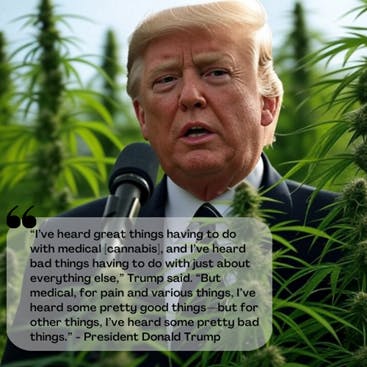
This reflects what many see as a pragmatic, piecemeal recognition: medical cannabis is gaining credibility, while broader acceptance remains politically delicate.
The Legislative Push: The Marijuana 1-to-3 Act
Rep. Greg Steube (R-FL) has filed the Marijuana 1-to-3 Act, a bill that would formally move cannabis from Schedule I to Schedule III under the Controlled Substances Act (CSA). This would classify cannabis alongside substances like ketamine and anabolic steroids, still regulated, but not regarded as having “no medical use.”
If enacted, the legislation would require the Attorney General to make the change within 60 days of passage. This would be the first congressional directive to reschedule cannabis in U.S. history.
What Rescheduling Would Mean
Rescheduling cannabis to Schedule III would be monumental, even though it falls short of full federal legalization.
Key impacts include:
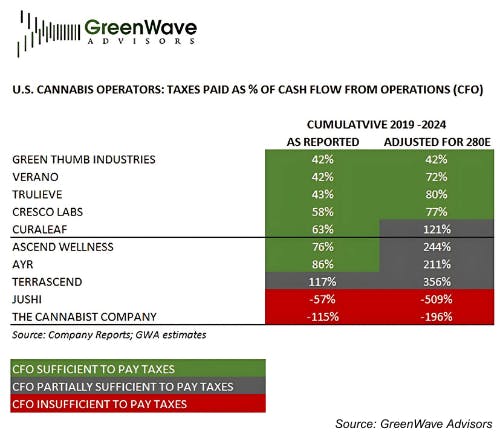
- Tax Relief for Businesses: Cannabis operators would potentially no longer be restricted by IRS 280E provisions, which prevent them from deducting ordinary business expenses. This could free up significant capital for reinvestment, expansion, and job creation.
- Banking & Safety: While rescheduling doesn’t automatically fix federal banking barriers, it could ease restrictions and reduce the need for cash-heavy operations, making the industry safer for employees and customers.
- Capital Markets: Cannabis companies may be able to uplist to major U.S. stock exchanges, opening the door for broader investment and liquidity in the sector.
- Research Expansion: Researchers would face fewer barriers in studying cannabis’ medical applications, accelerating innovation and legitimizing therapies for conditions such as chronic pain, PTSD, and epilepsy.
- Criminal Penalties: Although cannabis use wouldn’t be legalized federally, rescheduling could reduce the severity of federal cannabis-related charges under the CSA.
- Global Ripple Effects: As the U.S. shifts, other nations may follow suit, reshaping international cannabis policy in both medical and recreational markets.
What Rescheduling Will Not Do
- It will not fully legalize cannabis federally. States will still determine legality for medical or recreational use.
- Interstate commerce of cannabis will remain legally complicated.
- It will not eliminate conflicts between state-legal programs and federal prohibition entirely, but it may reduce tension over time.
Steps Toward Normalization
This move marks a turning point in cannabis normalization, removing cannabis from the same legal category as heroin and LSD, and beginning to calibrate its medical and economic role more sensibly.
For investors and businesses, it’s particularly meaningful for multi-state operators (MSOs), who would gain stronger financial footing and expanded access to capital markets under Schedule III. More broadly, this incremental progress could set the stage for eventual federal descheduling, an outcome many advocates see as the true end-goal.
Outlook
If the Marijuana 1-to-3 Act gains traction and the Trump camp follows through with policy announcements, the cannabis sector could be on the verge of its most consequential federal reform in history.
Rescheduling is not legalization, but it’s a powerful acknowledgment that cannabis has medical value and should not be treated as a top-tier dangerous drug. For businesses, investors, patients, and policymakers, this represents an overdue alignment of law with reality.
Investing In Cannabis
The next few months will be critical. If Congressional momentum and political will align, cannabis companies may finally operate under more common-sense laws, and the industry may be poised to scale at a pace that was once thought impossible.
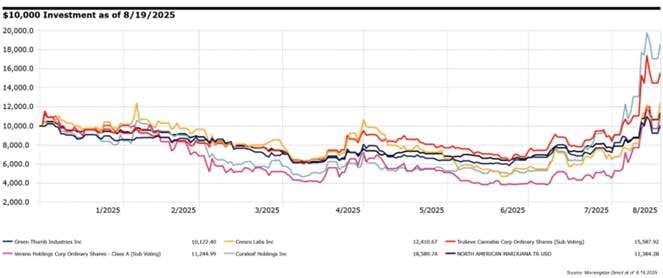
As federal rescheduling efforts advance and momentum builds around cannabis reform, exchange-traded funds (ETFs) tied to the cannabis sector are increasingly being viewed as a practical entry point for investors seeking exposure to the industry. ETFs offer diversification across a range of companies, producers, retailers, and ancillary businesses, potentially helping manage single-stock risk in what remains a highly volatile space.
If legislative changes ease federal restrictions, particularly with influential leaders signaling policy shifts, cannabis ETFs could gain additional legitimacy within the broader investment community. That said, the risks and volatility remain significant. Regulatory timelines are uncertain, individual company performance can vary widely, and the sector continues to operate in a fragmented legal environment.
As such, investors considering cannabis ETFs should remain cautious, conduct thorough due diligence, and approach the market as they would any emerging industry, focused on long-term developments rather than short-term speculation.
The opinions expressed in this publication are those of the authors and are subject to change. They do not purport to reflect the opinions or views of ETF Central or its members. ETF central does not guarantee the accuracy, completeness, or reliability of the information provided.
Sources:
● Marijuana Moment. Jaeger, Kyle. Trump Says He’ll Make Marijuana Rescheduling Decision ‘Over The Next Few Week’. August 11, 2025.
● GreenWave Advisors. The GreenWave Buzz. Cannabis and Cash Flow – Size Matters. April 8, 2025.
● Morningstar Direct
Segments
See all
Mentioned ETFs
No specific ETFs were tagged
Further reading
Latest ETF News
See all ETF newsHow Much ETF Infrastructure Do You Really Need?


Are ETFs Getting Too Complicated? Not Necessarily, But Complexity Has a Cost

Form 4 Has 20 Transaction Codes. None Say "Section 351 ETF Swap"


Who Really Owns a White-Label ETF?

What If a Futures-Based ETF Never Had to Roll Again?

How Do You Build a Winning ETF Business?


 Advantages of ETFs over Mutual Funds1/6
Lower Costs
In this guide, we'll explore the advantages of ETFs over mutual funds, giving you valuable insights into why ETFs have gained significant popularity among investors like yourself.
Leveraged ETFs: Unlocking the Potential for Amplified Returns1/6
Understanding Leveraged ETFs
Explore leveraged ETFs: potential for amplified returns & risks. 5 ETFs to consider across equities, commodities & fixed income.
What is a Leveraged ETF?1/6
Introducing Leveraged and Inverse ETFs
In this guide, we'll dive into the world of leveraged ETFs, exploring their definition, mechanics, potential risks, and rewards.
Recent educational content

ETF Trends
ETF Industry KPIs October 5, 2026
This week’s KPI data overview highlights key metrics and trends shaping the ETF landscape.

ETF Trends
ETF Industry KPIs September 28, 2026
This week’s KPI data overview highlights key metrics and trends shaping the ETF landscape.
ETF Trends
ETF Industry KPIs September 22, 2026
This week’s KPI data overview highlights key metrics and trends shaping the ETF landscape.

First Look ETF
First Look ETF: Income, Corporate Arbitrage, and Growth and Value Investing
First Look ETF September 2026: iCapital, Mast Investments and North Square unpack new ETFs targeting monthly income, merger arbitrage and complementary growth and value exposure.

Browse all educational columns



Have you tried our ETF Compare tool?
Compare ETFs like a pro. Analyze fees, performance, exposure & holdings side-by-side.