Open Now: The Global ETF Survey Take the Survey →



What do Investors and Voters Think About Crypto Today?
The 2024 crypto and ETF landscape transformed with spot Bitcoin and Ethereum ETFs, while the U.S. election fuels crypto policy debate.


Keep up with what matters in ETFs
Get timely ETF insights, market trends, and top ideas straight to your inbox.
Your newsletter subscriptions with us are subject to ETF Central's Privacy Policy and Terms and Conditions.
2024 marked a turning point for both the cryptocurrency and ETF sectors, driven by two major developments that have brought these markets together in the public eye.
Initially, January 11 saw the introduction of the first eleven spot Bitcoin ETFs. Unlike their predecessors—Bitcoin futures ETFs or closed-end trusts—these new offerings provided direct exposure to physically held Bitcoin, revolutionizing access to this cryptocurrency. Then, the momentum continued with the launch of nine spot Ethereum ETFs on July 23.
However, the focus is now shifting towards another pivotal moment—the upcoming U.S. presidential election in November.
Former President and Republican candidate Donald Trump has pledged to position America as "the crypto capital of the planet" and proposes establishing a "strategic national bitcoin stockpile," akin to the country's gold reserves. Conversely, Vice-President and Democratic candidate Kamala Harris has revealed very little about her stance on cryptocurrencies.
Amidst this political backdrop, what does the public think? To answer this, Grayscale conducted research to delve into the opinions, investment behaviors, crypto adoption and the broader financial perspectives of likely voters, exploring how these factors might influence their choices at the polls. Here's a look at the top three takeaways from their survey.
Get data on 14,000+ ETFs
Access Trackinsight's reliable and comprehensive data with 500M+ points on 14,000+ ETFs.
Interest in crypto has soared since December 2023
Grayscale found that nearly half of likely voters now view cryptocurrencies and blockchain technology as the future of finance, with a marked contrast between crypto owners and non-owners; crypto owners are significantly more likely to embrace this view.
The enthusiasm extends to the perceived benefits of cryptocurrency, such as job creation and providing more equitable access to financial services, with crypto owners again showing more optimism.
Investment in cryptocurrencies is growing, with three-quarters of likely voters owning some form of asset as an investment tool, and one in five owning cryptocurrencies, primarily Bitcoin. The interest in potentially owning cryptocurrencies in the future ranks third, just behind real estate and bonds, with over one-fifth of likely voters considering it.
Approximately one in five likely voters now consider cryptocurrencies, especially Bitcoin, as a viable long-term investment opportunity. This sentiment is likely influenced by witnessing Bitcoin's resilience through several market downturns, including the significant crashes in 2018 and 2022.
The primary reasons voters have invested in cryptocurrencies include diversification of investments and curiosity, with many planning to include crypto in their future investment portfolios, an again endeavor made easier with the launch of spot ETFs.
The impact of these ETFs on investor sentiment is profound; a significant number of likely voters reported an increased interest in investing in cryptocurrencies more broadly following the approval of the Bitcoin spot ETFs.
Additionally, the launch of Ethereum ETFs has specifically heightened interest in investing in Ethereum, indicating that these financial products have not only made cryptocurrency investments more accessible but have also significantly influenced public perception and investment behavior.
Regulation remains important in bolstering investor confidence in crypto
Following the collapse of FTX in November 2022 and the subsequent trial and conviction of Sam Bankman-Fried in 2024, the call for robust regulation has surged to the forefront of the crypto community's concerns.
According to Grayscale's survey, a significant majority—eight out of ten U.S. voters—believe regulators should play a crucial role in overseeing new and emerging technologies, including cryptocurrencies. Furthermore, one in five respondents indicated that they would be more inclined to invest in cryptocurrencies if there were clearer regulations and policies.
The landscape of cryptocurrency regulation remains fraught with uncertainty, often due to inconsistent enforcement and incomplete guidelines. An example of this is Crypto.com's recent legal challenge against the SEC, following a Wells Notice that signaled the regulator's intent to sue the exchange for operating as an unregistered broker-dealer and securities clearing agency.
This regulatory uncertainty isn't new. The protracted struggle to approve Bitcoin ETFs exemplifies the sector's ongoing challenges. Grayscale itself was at the forefront of this effort, eventually triumphing over the SEC after initially being denied in its application to convert its Bitcoin Trust into an ETF.
Additionally, the saga involving Ripple (XRP) and the SEC further illustrates the regulatory complexities. Recently, a judge ruled that sales of XRP to retail investors on secondary markets did not constitute securities transactions—a decision the SEC is now appealing.
These examples underscore a clear imperative: crypto investors are advocating for clear, fair regulations that minimize the risk of arbitrary decisions by regulators. This regulatory clarity is becoming increasingly influential in shaping how these investors will cast their votes in upcoming elections.
Crypto and politics are deeply intertwined
Finally, according to recent data from Grayscale's survey, the intersection of crypto and politics is more pronounced than ever, affecting how voters perceive and support political candidates.
A substantial 56% of surveyed individuals indicated they are more likely to support a candidate who shows a commitment to staying educated and informed about cryptocurrencies, rather than one who does not.
Moreover, 40% of respondents noted that they are paying more attention to candidates' positions on Bitcoin and other cryptocurrencies in this election than in any previous ones, underscoring the growing importance of this issue.
The divide between crypto investors and non-investors is also stark: 74% of crypto owners say they are more focused on candidates' crypto positions now compared to previous elections, compared to only 31% of non-owners.
Furthermore, 78% of crypto investors are more inclined to vote for candidates who are proactive about crypto education, versus 50% of non-owners. Additionally, 67% of crypto owners are considering candidates' crypto stances before voting, compared to just 25% of those who do not own crypto.
Current sentiments among voters suggest a slight preference for Republican crypto policies, with 34% perceiving the Republican party as more crypto-friendly compared to 33% for the Democratic party. This gap has narrowed since May 2024, indicating that voters are becoming more decisive in their opinions about political parties' support for cryptocurrency.
In terms of specific aspects of the crypto industry, the Republican party is viewed more favorably regarding policies that benefit crypto investors (32% vs. 24% for Democrats) and crypto companies (33% vs. 25%). However, both parties are seen almost equally favorable in terms of protecting investor financial privacy (34% for Republicans vs. 32% for Democrats).
This tilt towards Republican favorability could be attributed to the party's more outspoken stance on cryptocurrency, particularly in contrast to the Democrats. In addition, much of the regulatory action shaping the current crypto environment originated during the incumbency of the Biden administration.
Why crypto investors should care about politics
The insights from Grayscale's survey are particularly telling, revealing how deeply intertwined cryptocurrency is with contemporary political landscapes.
For the first time, both crypto enthusiasts and the general public can observe the direct interaction between this emerging asset class and modern politics. As regulations continue to evolve, they will inevitably shape the future of cryptocurrency, potentially impacting investors for better or worse.
With an election on the horizon and candidates presenting varied views on crypto, it’s imperative to understand not just where the market stands today but also how potential regulatory changes could affect your investments.
If crypto is a significant concern for you as a voter, taking the time to understand the broader sentiments and the political landscape is essential. The actions taken now by lawmakers and regulators will lay the groundwork for the future of digital assets, making it a critical time for informed participation and advocacy in the political process.
This article was prepared as part of Grayscale's general paid sponsorship of ETF Central. This specific content within and any opinions expressed therein belong solely to ETF Central and do not reflect the opinion or analysis of Grayscale, its employees, or its affiliates. Content published on ETF Central is provided for educational purposes only and should not be considered investment or tax advice. For investment or tax advice, please consult a financial professional.
Grayscale Investments, LLC ("Grayscale") is an independent company, unaffiliated with ETF Central. Grayscale has not been involved with the preparation of the content supplied by ETF Central. It does not guarantee, or assume any responsibility for its content.


Latest ETF News
See all ETF newsThe Two Best Types of Fixed-Income ETFs For Managing Cash

ETF Comparison: Roundhill Generative AI & Technology ETF Versus iShares A.I. Innovation and Tech Active ETF

Crypto Income ETFs: Futures, Options, or Staking?

There’s an ETF for That? Air Conditioning Stocks




 Advantages of ETFs over Mutual Funds1/6
Lower Costs
In this guide, we'll explore the advantages of ETFs over mutual funds, giving you valuable insights into why ETFs have gained significant popularity among investors like yourself.
Leveraged ETFs: Unlocking the Potential for Amplified Returns1/6
Understanding Leveraged ETFs
Explore leveraged ETFs: potential for amplified returns & risks. 5 ETFs to consider across equities, commodities & fixed income.
What is a Leveraged ETF?1/6
Introducing Leveraged and Inverse ETFs
In this guide, we'll dive into the world of leveraged ETFs, exploring their definition, mechanics, potential risks, and rewards.
Recent educational content

ETF Trends
ETF Industry KPIs July 13, 2026
This week’s KPI data overview highlights key metrics and trends shaping the ETF landscape.


First Look ETF
First Look ETF: Cash Deployment, Bond, and Hedged ETFs
In this season 6 episode of First Look ETF, Stephanie Stanton examines the latest ETF marketplace trends with NYSE and guests.

ETF Trends
ETF Industry KPIs July 6, 2026
This week’s KPI data overview highlights key metrics and trends shaping the ETF landscape.
Asset TV
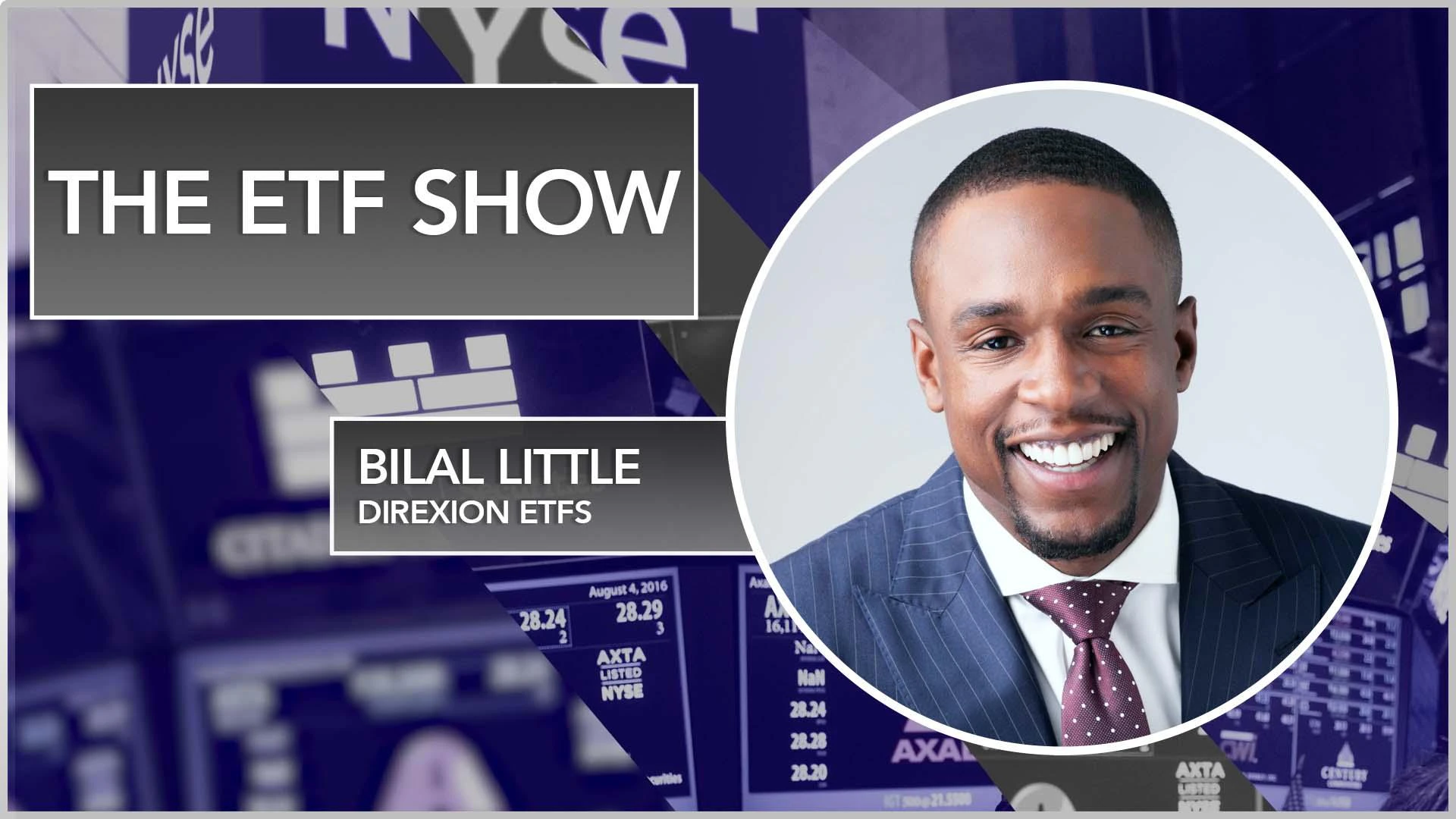
The ETF Show - The Evolution of Leveraged & Inverse ETFs
Leveraged and inverse ETFs have exploded in popularity over the past decade capturing more assets as retail traders seek to capture volatility.

Browse all educational columns



Expert-Built ETF Portfolios, All in One Place
Don’t start from scratch. Discover ready-made ETF portfolios built by professionals to match different goals, timelines, and market views. Use them as inspiration or as a starting point for your own allocation.