Create, analyze, optimize your ETF portfolio. Start now →



Investors Hate TreasuryDirect: These Treasury ETFs Offer a Solution
Tired of TreasuryDirect's awful user interface? Consider these Treasury ETFs instead.


Keep up with what matters in ETFs
Get timely ETF insights, market trends, and top ideas straight to your inbox.
Your newsletter subscriptions with us are subject to ETF Central's Privacy Policy and Terms and Conditions.
Treasury bonds are renowned for their safety in terms of credit risk and their high liquidity, making them a staple in many investment portfolios. However, purchasing individual Treasury issues can be frustrating, largely due to the challenges presented by TreasuryDirect.
This platform is the U.S. government's official website where individuals can purchase and redeem Treasury securities directly, but it has become notorious for its user-unfriendly interface. The overall user experience has led to poor reviews, with TreasuryDirect receiving an average rating of 1.2 out of 5 on Yelp based on 131 reviews.
Investors have expressed numerous complaints about TreasuryDirect, particularly on platforms like Reddit. Common grievances include its dated website design and cumbersome verification processes that often require a visit to a bank to get an authorization form stamped and mailed.
Users also report significant difficulties with account lockouts after failed security question attempts, requiring phone calls to customer service, which are met with extremely long wait times. The frustration is compounded by a required multi-step login process that includes temporary codes, tax ID numbers, and multiple security questions—which many find excessive.
Given these challenges, Treasury ETFs offer an alternative. They provide similar exposure to Treasury securities but with greater accessibility, fewer headaches, and more flexibility. Here's a look at some ETF options that can serve as practical substitutes for dealing directly with TreasuryDirect.
Like what you're reading?
Stay in the loop — get the latest ETF insights: trends, analysis, and expert picks.
Regular Treasury bond ETFs
When exploring Treasury bond ETFs, a great starting point for new ETF investors is the iShares U.S. Treasury Bond ETF
GOVT tracks the ICE U.S. Treasury Core Bond Index, which includes Treasury bonds ranging from 1–30-year maturities. It boasts a low expense ratio of 0.05%, making it a cost-effective choice for investors looking to "buy the entire Treasury market."
One key aspect of GOVT is its approach to maintaining its index characteristics, with about 23% turnover annually. This level of trading is significant because, unlike individual Treasury bonds, you cannot hold a position in GOVT to maturity to avoid interest rate risk.
With individual Treasurys, even if rates rise and the market value of the bonds drops temporarily, holding to maturity guarantees the return of your principal.
However, with ETFs like GOVT, the value can fluctuate up and down, governed by the duration of the underlying bonds. Currently, GOVT has a duration of 5.81 years, indicating that it is relatively sensitive to changes in interest rates.
Regarding expected returns, two metrics are important: the 30-day SEC yield and the average yield to maturity. The 30-day SEC yield, a standardized measure for comparing the income potential of bond funds, currently stands at 3.97% for GOVT, with distributions paid monthly.
The average yield to maturity, which measures the average total return expected if all of GOVT's underlying securities were held to maturity, is currently 4.21%. This figure highlights the theoretical return potential, though it's not practical given the ETF's need to turnover holdings to maintain its benchmark characteristics.
Single-issue Treasury bond ETFs
If you're looking to target a specific portion of the yield curve, such as the 10-year Treasury bond, general ETFs like the iShares 7-10 Year Treasury Bond ETF
Although they provide exposure to maturities around this tenor, they do not focus precisely on the ten-year mark but rather offer a sample of securities within that range.
For more targeted exposure, consider the U.S. Benchmark Series of Treasury ETFs, which spans from 3 months up to 30 years and importantly, holds only the latest on-the-run issue of a specific tenor.
For example, the US Treasury 10 Year Note ETF
This bond will remain the sole holding of UTEN until the next 10-year note is issued. The benefits of such an ETF include highly precise, tailored yield curve exposure combined with the liquidity and structure of an ETF. Additionally, this setup offers the convenience of monthly distributions.
Target maturity Treasury bond ETFs
One popular strategy used by treasury bond investors is laddering. For example, an investor might split $30,000 evenly among 12-month, 2-year, and 3-year Treasuries.
This approach helps to manage interest rate risks and liquidity needs by staggering the maturity dates of investments, ensuring that not all investments mature at the same time or during a potential low-interest-rate period.
Typically, individuals purchasing individual bonds would have to rely on platforms like TreasuryDirect. However, for those looking for a simpler and more user-friendly option, the third and unique type of Treasury ETF—target maturity ETFs—provides a viable alternative.
A leader in this space is the iBond series from iShares. For instance, the iShares iBonds Dec 2025 Term Treasury ETF
The significance of the maturity date is crucial; at the end of 2025, IBTF will liquidate and pay out the net asset value (NAV) to investors, functioning much like a regular bond would by returning principal upon maturity. In the meantime, it offers monthly distributions.
This arrangement resolves the issue of the inability to hold to maturity found in regular Treasury bond ETFs like GOVT, which constantly turnover bonds to match their index. It also simplifies the laddering strategy.
Instead of purchasing through TreasuryDirect, an investor could use IBTF for 2025, iShares iBonds Dec 2026 Term Treasury ETF
Please note this article is for information purposes only and does not in any way constitute investment advice. It is essential that you seek advice from a registered financial professional prior to making any investment decision.

Latest ETF News
See all ETF newsCould Water ETFs Be the Next AI Bottleneck Trade?

What is a Boomer Candy ETF?

ETF Comparison: NEOS Nasdaq-100 High Income ETF (QQQI) Versus Goldman Sachs Nasdaq-100 Premium Income ETF (GPIQ)





 Advantages of ETFs over Mutual Funds1/6
Lower Costs
In this guide, we'll explore the advantages of ETFs over mutual funds, giving you valuable insights into why ETFs have gained significant popularity among investors like yourself.
Leveraged ETFs: Unlocking the Potential for Amplified Returns1/6
Understanding Leveraged ETFs
Explore leveraged ETFs: potential for amplified returns & risks. 5 ETFs to consider across equities, commodities & fixed income.
What is a Leveraged ETF?1/6
Introducing Leveraged and Inverse ETFs
In this guide, we'll dive into the world of leveraged ETFs, exploring their definition, mechanics, potential risks, and rewards.
Recent educational content

ETF Trends
ETF Industry KPIs September 8, 2026
This week’s KPI data overview highlights key metrics and trends shaping the ETF landscape.

ETF Trends
ETF Industry KPIs August 31, 2026
This week’s KPI data overview highlights key metrics and trends shaping the ETF landscape.
ETF Trends
ETF Industry KPIs August 24, 2026
This week’s KPI data overview highlights key metrics and trends shaping the ETF landscape.
What’sTheFund
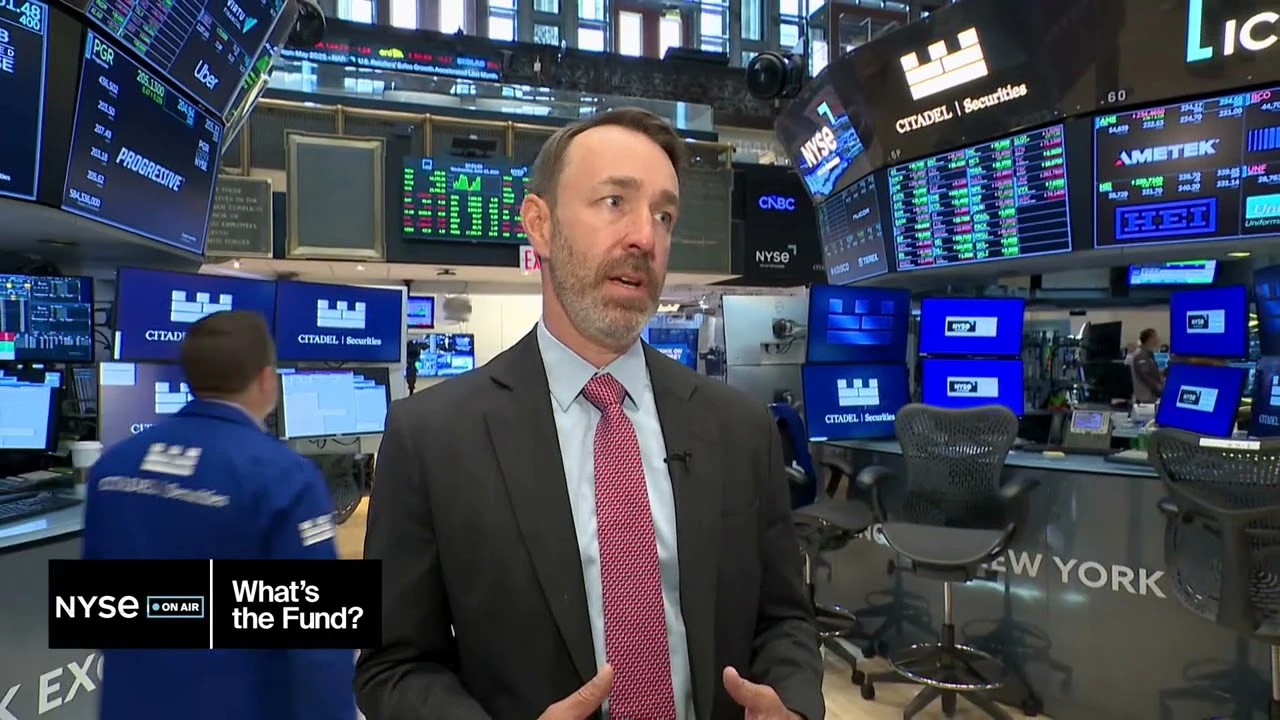
What's the Fund | Ocean Park Diversified Income ETF (DUKZ)
James St Aubin, Chief Investment Officer at Ocean Park Asset Management, discuss the DUKZ ETF, exposing investors to the whole spectrum of asset classes in the fixed income markets, through their rules-based process.

Browse all educational columns



Active Trader Report: Use of Leveraged & Inverse ETFs Way Up
Direxion partnered with Compound Insights and Vanda to explore what’s driving the evolution of active trading — and how active traders are using leveraged and inverse funds across equities, single stocks, commodities, and volatility.