Ready-made ETF portfolios built for real investor needs. Explore now →



Investing When Fundamentals Matter: Seeking Profitable, Dividend-paying Companies

Keep up with what matters in ETFs
Get timely ETF insights, market trends, and top ideas straight to your inbox.
Your newsletter subscriptions with us are subject to ETF Central's Privacy Policy and Terms and Conditions.
Ten rate hikes and over 500 basis points later, the Federal Reserve finally pushed pause on its tightening plans. As the June 2023 Federal Open Market Committee meeting concluded, equity and fixed income markets alike released a sigh of relief. What followed was the continuation of a trend that began in October of 2022, when equity markets found a floor and began a cautious march upward.
Technically speaking, a new equity bull market has begun. With hope, investors search for parallels to the early days of the record-breaking 2009 to 2021 expansion, but the reality is, we’re cooking with very different ingredients. Today, asset prices are higher than they were during the early stages of the post-crisis bull run, and credit conditions are substantially tighter.
Even after a harrowing 2022 that slashed prices of stocks and bonds, equity markets remain expensive. For evidence, look no further than the S&P 500. The index still trades at a forward price-to-earnings (P/E) ratio of nearly 19x as of June 2023, notably higher than long-term averages and post-crisis multiples. The 25-year average clocks in at 16.8x, and the 2009-2010 era ratio flirted with 13x forward earnings.
In further contrast to today, the Great Recession ushered in an extended period of low interest rates that had never been seen before in the American economy. The Fed would keep short-term rates parked below 2.5 percent for 12 years, which facilitated favorable borrowing conditions and buoyed asset prices. The “Fed put” was one of the most potent ingredients we had.
Importantly, this historic period of low rates was made possible by enduring goldilocks inflation. Today, in contrast, the short end of the curve sits north of 5 percent to squelch what some economists have called inflation’s perfect storm. Fortunately, the Fed’s hawkish stance seems to be working, albeit on a lagged basis. The year-over-year inflation print as of June 2023 was corralled to 4 percent. Yet, price increases breached 9 percent at this same time in 2022.
Post-crisis equity investors didn’t know it at the time, but we had all the economic ingredients to create financial success. Looking back, cooking is straightforward when you have a fully stocked pantry.
Today’s basket of ingredients looks much different. As such, investors may be wise to consider a more discerning approach should a new guard of stock market leadership take hold.
Get data on 14,000+ ETFs
Access Trackinsight's reliable and comprehensive data with 500M+ points on 14,000+ ETFs.
Changing Tides
The post-crisis bull run was led by mega cap growth stocks. During this era, investors were rewarded for holding market beta at the lowest possible cost and little else. One could even go as far to say that investors employing a fundamental investment methodology were punished.
In reality, many stock market leaders traded up on the distant promise of future earnings. As the bull market grew long in the tooth, investors hoped these stocks’ growth prospects could provide support through an imminent downturn. The year 2022 brutally shunned this thesis when the S&P 500 Index fell by over -18 percent, and the Nasdaq fell by -33 percent.
Today, fundamentals are back in the picture. U.S. equity markets remain volatile as they sort through what has the potential to become a multi-year, sideway market.
From cycle to cycle, change of market leadership is a common phenomenon. It’s impossible to predict when the baton will be passed, but when it comes to capitalism, change is the only constant. With that being said, let’s take a trip down memory lane.
Of course, the winners of the last run were high-flying, Silicon Valley stocks. Apple led the way from 2010 onward, but before Apple came Exxon Mobile and General Electric. Through the 1980s, IBM was in the driver’s seat. Even further back, AT&T and General Motors reigned as the largest companies in the U.S. stock market for several decades.
The bottom line is nothing lasts forever. It’s impossible to predict where newfound capital will shift from 2023 to 2030, but if 2022 was any indication, investors are looking for healthy companies that can deliver results over time. Given our basket of economic ingredients, it’s less likely a rising tide will lift all boats.
Investing When Fundamentals Matter: Profitable, Dividend-paying Companies
Investors seeking exposure to capital appreciation in a time-tested way might consider high-quality companies that pay a dividend. When fundamentals matter, profitable names with robust balance sheets tend to hold up better on the downside, like markets saw in 2022. Yet, these companies still have the potential to provide full market participation. Over time, research shows that companies with higher operating profitability (i.e., higher quality) have outpaced those with lower quality.
Striking a balance between selecting quality companies and seeking yield is where the magic happens. Blindly pursuing yield without consideration of quality is a recipe for a portfolio riddled with value traps. Cheap stocks may pay high yields for a reason and can fall subject to the whims of the business cycle when unchecked. In what could be an extended, sideways market where there are clear winners and losers, this is a risk.
On the other hand, investing in quality companies in isolation leads to a rather expensive group of stocks. This basket of companies wouldn’t be dissimilar to the large cap tech names at the top of the S&P 500 Index, which takes investors right back to square one.
Selecting profitable, fundamentally strong companies through a dividend-paying lens can bring sobriety to the valuation of a quality portfolio. Dividend-payers tend to trade more cheaply than high-growth (i.e., high-quality) counterparts, as demonstrated by the difference in price-to-earnings multiples of the growth versus value styles. Meanwhile, sustainably paying a dividend demonstrates the potential to consistently deliver results. Employing these approaches in tandem may have the added benefit of not committing too much of your portfolio to the growth or value factors.
An Actionable Solution: WisdomTree U.S. Quality Dividend Growth Fund
WisdomTree U.S. Quality Dividend Growth Fund (ticker: DGRW) seeks to track an index that marries dividend growth with quality. By consistently applying a systematic approach over the past decade, it has been able to best the S&P 500 Index and at least 90 percent of its US Large Cap Blend peers over the 3-, 5-, and 10-year timeframes as of June 30, 2023.*
The fund’s index begins with a potential universe of dividend-paying U.S. equities with a market cap greater than $2 billion. It then screens out companies with earnings yields that are lower than their dividend yields, which increases the probability that portfolio companies can sustainably pay dividends regardless of economic conditions. The fund’s index also considers quality and momentum scores, reducing exposure to value traps.
From there, WisdomTree U.S. Quality Dividend Growth’s index selects the top 300 stocks based on their estimated earnings growth, return on equity, and return on assets. The remaining companies are weighted by the most substantial aggregate dividends paid. Finally, diversification parameters are in place that cap holdings at the individual company and sector levels.
The resulting portfolio has the potential to provide upside growth and to lessen downside capture. In 2022, when the S&P 500 Index fell by over -18 percent, this fund’s drawdown was limited to -6.3 percent.
Important Information:
*DGRW has an overall Morningstar rating of 5 stars based on risk-adjusted returns in the Large Blend category which includes 1,289 Funds.
Morningstar, Inc. All Rights Reserved. The information herein: (1) is proprietary to Morningstar and/or its content providers; (2) may not be copied or distributed; and (3) is not warranted to be accurate, complete or timely. Neither Morningstar nor its content providers are responsible for any damages or losses arising from any use of this information.
The Morningstar Rating™ for funds, or "star rating", is calculated for managed products (including mutual funds, variable annuity and variable life subaccounts, exchange-traded funds, closed-end funds, and separate accounts) with at least a three-year history. Exchange-traded funds and open-ended mutual funds are considered a single population for comparative purposes. It is calculated based on a Morningstar Risk-Adjusted Return measure that accounts for variation in a managed product's monthly excess performance, placing more emphasis on downward variations and rewarding consistent performance. The top 10% of products in each product category receive 5 stars, the next 22.5% receive 4 stars, the next 35% receive 3 stars, the next 22.5% receive 2 stars, and the bottom 10% receive 1 star. The Overall Morningstar Rating for a managed product is derived from a weighted average of the performance figures associated with its three-, five-, and 10-year (if applicable) Morningstar Rating metrics. The weights are: 100% three year rating for 36-59 months of total returns, 60% five-year rating/40% three-year rating for 60-119 months of total returns, and 50% 10-year rating/30% five-year rating/20% three-year rating for 120 or more months of total returns. While the 10-year overall star rating formula seems to give the most weight to the 10-year period, the most recent three-year period actually has the greatest impact because it is included in all three rating periods.
For standardized performance of DGRW, and its holdings please visit the DGRW Fund page.
For definitions of terms in the article, please visit the glossary.
There are risks associated with investing, including possible loss of principal. Funds focusing their investments on certain sectors increase their vulnerability to any single economic or regulatory development. This may result in greater share price volatility. Dividends are not guaranteed, and a company currently paying dividends may cease paying dividends at any time. Please read the Fund’s prospectus for specific details regarding the Fund’s risk profile.
Investors should carefully consider the investment objectives, risks, charges and expenses of the Funds before investing. To obtain a prospectus containing this and other important information, please call 866.909.9473, or visit WisdomTree.com/investments to view or download a prospectus. Investors should read the prospectus carefully before investing.
WisdomTree Funds are distributed by Foreside Fund Services, LLC, in the U.S.
Latest ETF News
See all ETF newsCould Water ETFs Be the Next AI Bottleneck Trade?


What is a Boomer Candy ETF?

ETF Comparison: NEOS Nasdaq-100 High Income ETF (QQQI) Versus Goldman Sachs Nasdaq-100 Premium Income ETF (GPIQ)




 Advantages of ETFs over Mutual Funds1/6
Lower Costs
In this guide, we'll explore the advantages of ETFs over mutual funds, giving you valuable insights into why ETFs have gained significant popularity among investors like yourself.
Leveraged ETFs: Unlocking the Potential for Amplified Returns1/6
Understanding Leveraged ETFs
Explore leveraged ETFs: potential for amplified returns & risks. 5 ETFs to consider across equities, commodities & fixed income.
What is a Leveraged ETF?1/6
Introducing Leveraged and Inverse ETFs
In this guide, we'll dive into the world of leveraged ETFs, exploring their definition, mechanics, potential risks, and rewards.
Recent educational content

ETF Trends
ETF Industry KPIs September 8, 2026
This week’s KPI data overview highlights key metrics and trends shaping the ETF landscape.

ETF Trends
ETF Industry KPIs August 31, 2026
This week’s KPI data overview highlights key metrics and trends shaping the ETF landscape.
ETF Trends
ETF Industry KPIs August 24, 2026
This week’s KPI data overview highlights key metrics and trends shaping the ETF landscape.
What’sTheFund
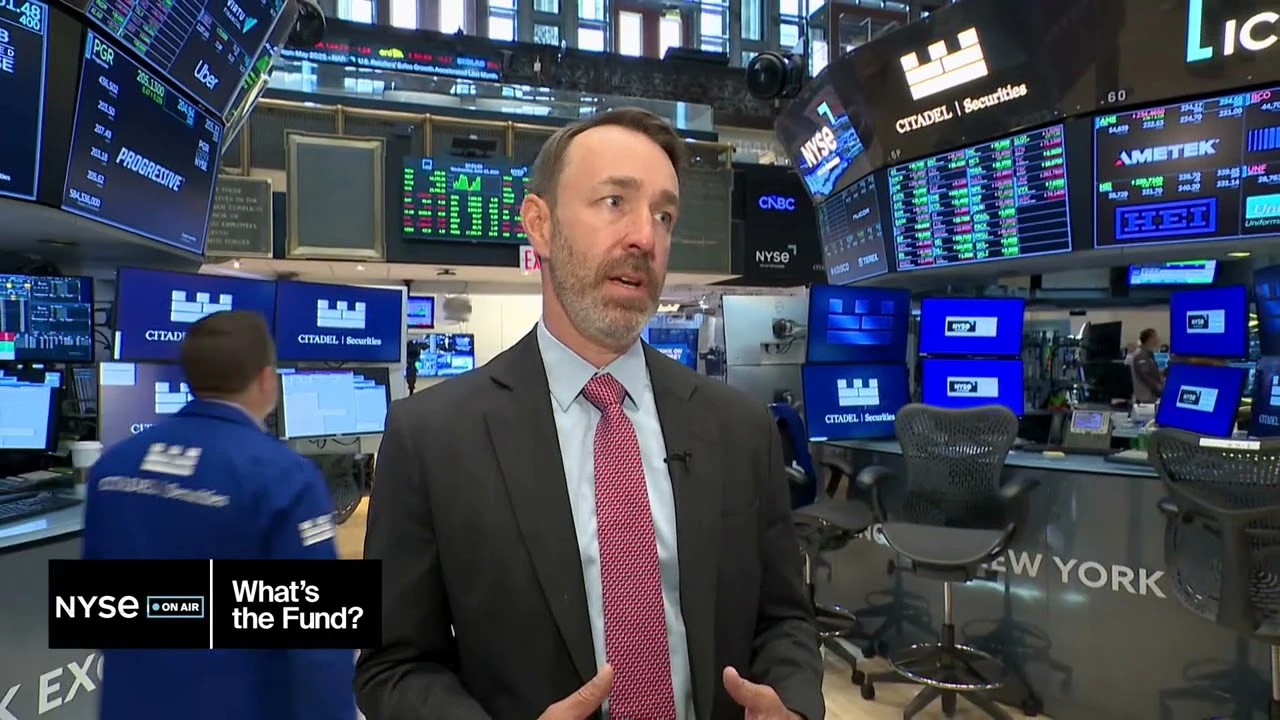
What's the Fund | Ocean Park Diversified Income ETF (DUKZ)
James St Aubin, Chief Investment Officer at Ocean Park Asset Management, discuss the DUKZ ETF, exposing investors to the whole spectrum of asset classes in the fixed income markets, through their rules-based process.

Browse all educational columns



Expert-Built ETF Portfolios, All in One Place
Don’t start from scratch. Discover ready-made ETF portfolios built by professionals to match different goals, timelines, and market views. Use them as inspiration or as a starting point for your own allocation.