Turn ETF ideas into real portfolios. Try the builder now →



Investing in U.S. Small Cap Value ETFs
Small-cap value funds could be a way to beat the market over time.


Keep up with what matters in ETFs
Get timely ETF insights, market trends, and top ideas straight to your inbox.
Your newsletter subscriptions with us are subject to ETF Central's Privacy Policy and Terms and Conditions.
One of the first things I learned at Columbia while studying for my master's degree in risk management was "without risk, there is no return." Generally, investors try to seek compensated risks, ones that reward them with commensurate returns. Examples include market risk, which rewards you with better returns (over time that is) compared to risk-free alternatives like Treasury bills.
Your goal when designing an investment portfolio should be to optimize risk-adjusted returns. Instead of targeting the maximum return you could feasibly achieve, consider targeting how much risk you can tolerate, and pick the right investments to optimize that. Rather than take on uncompensated risks (like investing in speculative thematic ETFs or actively managed funds that stock pick), try targeting discrete risk factors instead.
Like what you're reading?
Stay in the loop — get the latest ETF insights: trends, analysis, and expert picks.
Factor investing & small-cap value
Back in the 1990s, Eugene Fama and Kenneth French identified a set of three (later expanded to five) risk factors that drove investment returns. Today, the list includes market, size, value, profitability, and investment. You may recognize some of these factors from various "smart beta" ETFs out there, which are funds that attempt to target different ones.
We'll be focusing on the size and value factors, which are defined as follows:
- Size: Returns of small-cap stocks minus the returns of large-cap stocks (Small minus Big, or SmB).
- Value: Returns of high-book-value stocks minus the returns of low-book-value stocks (High minus Low, or HmL).
Small-cap stocks have market capitalizations below $2 billion, while value stocks are those that appear to be trading at prices below their fundamentals (mainly price-to-equity, price-to-sales, and price-to-book ratios). These are some basic criteria, and funds out there may have more stringent screens.
Combining the two factors creates small-cap value stocks, which have historically been the strongest performing component of the U.S. market by a long shot. In line with what we discussed earlier, they tend to be riskier, and investors have historically been rewarded with higher returns for taking that on.
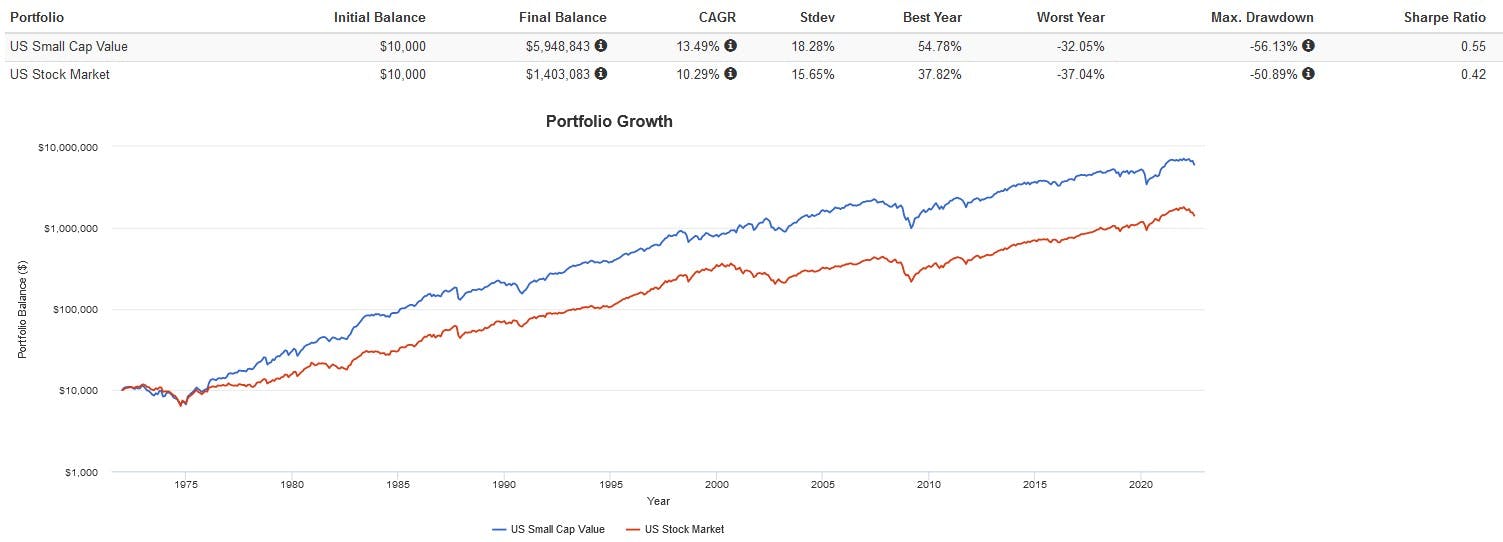

That being said, there have been periods of time, however, where the small-cap value premium returns negative. That is, large-cap growth stocks beat them, like in the previous decade, thanks to FAANG stocks. This is to be expected. Even the market risk premium has returned negative at times, with risk-free T-Bills beating stocks. A small-cap value tilt requires a long time horizon and conviction to pay off.
Small-cap value ETFs
Selecting a small-cap value fund isn’t as easy as just looking at the name of the ETF. Many funds purport to target small-cap value but actually hold mid-caps or non-value stocks. A better way is to conduct a factor regression analysis, which can be done via Portfolio Visualizer. Investors can use factor regression for backtesting various funds and comparing their "loadings" for the size and value factors.
In my opinion, the best small-cap value ETFs on the market come from two fund managers with a strong history of factor investing expertise: Dimensional Fund Advisors and Avantis Investors. Some examples of their ETFs include:
- Dimensional U.S. Small Cap Value ETF (DFSV): 0.33% expense ratio
- Avantis U.S. Small Cap Value ETF (AVUV): 0.25% expense ratio
Both ETFs use systemic screening methodologies and rigorous frameworks to sift out small-cap stocks that truly trade-in value territory. For a more passive, lower-cost approach, investors can also use more traditional index ETFs, but keep in mind that for factor investing, these funds might have lower loadings:
- SPDR S&P 600 Small Cap Value ETF (SLYV): 0.15% expense ratio
- Vanguard Small-Cap Value ETF (VBR): 0.07% expense ratio

Latest ETF News
See all ETF newsCould Water ETFs Be the Next AI Bottleneck Trade?

What is a Boomer Candy ETF?

ETF Comparison: NEOS Nasdaq-100 High Income ETF (QQQI) Versus Goldman Sachs Nasdaq-100 Premium Income ETF (GPIQ)





 Advantages of ETFs over Mutual Funds1/6
Lower Costs
In this guide, we'll explore the advantages of ETFs over mutual funds, giving you valuable insights into why ETFs have gained significant popularity among investors like yourself.
Leveraged ETFs: Unlocking the Potential for Amplified Returns1/6
Understanding Leveraged ETFs
Explore leveraged ETFs: potential for amplified returns & risks. 5 ETFs to consider across equities, commodities & fixed income.
What is a Leveraged ETF?1/6
Introducing Leveraged and Inverse ETFs
In this guide, we'll dive into the world of leveraged ETFs, exploring their definition, mechanics, potential risks, and rewards.
Recent educational content

ETF Trends
ETF Industry KPIs September 8, 2026
This week’s KPI data overview highlights key metrics and trends shaping the ETF landscape.

ETF Trends
ETF Industry KPIs August 31, 2026
This week’s KPI data overview highlights key metrics and trends shaping the ETF landscape.
ETF Trends
ETF Industry KPIs August 24, 2026
This week’s KPI data overview highlights key metrics and trends shaping the ETF landscape.
What’sTheFund
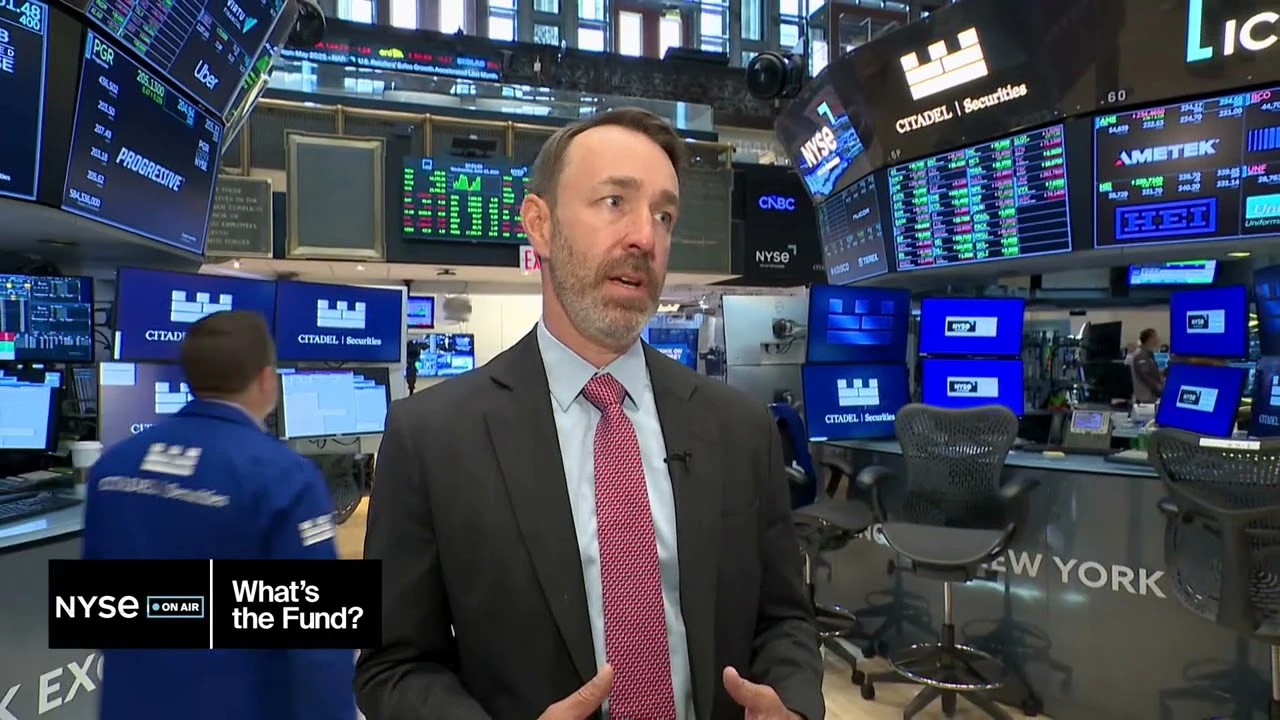
What's the Fund | Ocean Park Diversified Income ETF (DUKZ)
James St Aubin, Chief Investment Officer at Ocean Park Asset Management, discuss the DUKZ ETF, exposing investors to the whole spectrum of asset classes in the fixed income markets, through their rules-based process.

Browse all educational columns



Build and Analyze Your ETF Portfolio Like a Pro
Create your own ETF portfolio in minutes and instantly see allocations, exposures, performance, and risk. Visualize diversification across asset classes, regions, and sectors. Stress-test ideas, compare benchmarks, and refine your strategy with professional-grade analytics.