NYSE CRTR Economy Event Watch the replay →



Investing in international ETFs: A primer
U.S. investors should consider diversifying internationally. Here's how to do it via ETFs.


Keep up with what matters in ETFs
Get timely ETF insights, market trends, and top ideas straight to your inbox.
Your newsletter subscriptions with us are subject to ETF Central's Privacy Policy and Terms and Conditions.
The U.S. stock market comprises around 55% of the world by market capitalization, but most U.S. investors overweight it in their portfolios at around 80% (called a home-country bias). This is suboptimal. I realize that many investors will disagree with me, but in my opinion, there is no good reason for a U.S. overweight beyond recency bias and performance chasing.
International stocks are worth investing in but buying them can be difficult due to currency conversion costs. Instruments like American Depository Receipts (ADRs) are available but suffer from shortcomings like poor liquidity. A better option is buying international stocks through an ETF. Let's go over the approach.
The ETF Industry Is Evolving Fast
From AI infrastructure to active strategies, the ETF landscape is shifting. Share your perspective in the 7th Annual Global ETF Survey and get exclusive early access to the final report.
What are international stocks?
From a U.S. point of view, international stocks are simply those that are not traded on U.S.-based exchanges such as the NYSE or NASDAQ, hence the term "ex-U.S.." They can broadly be categorized into two different markets:
- International Developed: Consists of countries like Japan, the U.K., Canada, France, Switzerland, Australia, Germany, Korea, Netherlands, Sweden, Denmark, Spain, Italy, Singapore, etc.
- International Emerging: Consists of countries like China, Taiwan, India, Brazil, Saudi Arabia, South Africa, Mexico, Thailand, Indonesia, Malaysia, United Arab Emirates, Kuwait, Philippines, Chile, etc.
Why international stocks?
The reason for diversifying some portion of your portfolio's equity allocation (usually anywhere from 20% - 40%) are numerous:
- Mitigating the risk of the U.S. experiencing a long period of underperformance, such as what happened from 2001 – 2009 (the "lost decade").
- Taking advantage of lower valuations for international stocks compared to U.S. ones.
- Lower correlations to the U.S. market for international stocks, which improves risk-adjusted returns.
The simple argument though is to avoid performance chasing and succumbing to recency bias. There have been numerous times where other countries' stock markets (Australia, South Africa) continually outperformed the U.S., yet hardly anybody advocates for investing 100% in those markets.
So why the U.S. only? I think the recent generation of investors only remembers the last 10 years of U.S. outperformance, which cannot last forever. Winners rotate, and reversion to the mean is a very real phenomenon. We all know past performance doesn't predict future performance, so why point to the recent U.S. outperformance as a reason to double down?
International ETF options
There are numerous types of international ETFs out there. As with all ETFs, the ones with the lowest expense ratios and highest assets under management (AUM) are generally good picks, especially if they're from a reputable fund manager.
Investors have the ability to invest in the ex-U.S. market as a whole or break their picks down by developed vs. emerging. Many of these ETF pairs can serve as tax-loss harvesting pairs for each other given that they track different indexes.
Ex-U.S. as a whole:
- Vanguard Total International Stock ETF (VXUS): 0.07% expense ratio.
- iShares Core MSCI Total International Stock ETF (IXUS): 0.07% expense ratio.
International developed:
- Vanguard FTSE Developed Markets ETF (VEA): 0.05% expense ratio.
- iShares Core MSCI International Developed Markets ETF (IDEV): 0.04% expense ratio.
International emerging:
- Vanguard FTSE Emerging Markets ETF (VWO): 0.08% expense ratio.
- iShares MSCI Emerging Markets Index ETF (EEM): 0.68% expense ratio.
Most international equity ETFs are market-cap weighted, meaning that large-cap stocks tend to dominate the holdings. Investors who want to take on more risk for potentially more return have the option of targeting small-cap stocks, in particular small-cap value:
- Avantis International Small-Cap Value ETF (AVDV): 0.36% expense ratio.
- Dimensional International Small-Cap Value ETF (DISV): 0.42% expense ratio.
Finally, totally hands-off passive investors who want a one-ticket solution to holding U.S. and international stocks at their natural market cap weights can use the Vanguard Total World Stock ETF (VT), which is currently around 55/45 U.S. vs. international.

Latest ETF News
See all ETF newsThe Super El Niño Trade: Two Potential ETF Winners and Losers


The SpaceX (SPCX) IPO: Here's Which ETFs Already Own it



 Advantages of ETFs over Mutual Funds1/6
Lower Costs
In this guide, we'll explore the advantages of ETFs over mutual funds, giving you valuable insights into why ETFs have gained significant popularity among investors like yourself.
Leveraged ETFs: Unlocking the Potential for Amplified Returns1/6
Understanding Leveraged ETFs
Explore leveraged ETFs: potential for amplified returns & risks. 5 ETFs to consider across equities, commodities & fixed income.
What is a Leveraged ETF?1/6
Introducing Leveraged and Inverse ETFs
In this guide, we'll dive into the world of leveraged ETFs, exploring their definition, mechanics, potential risks, and rewards.
Recent educational content
Asset TV
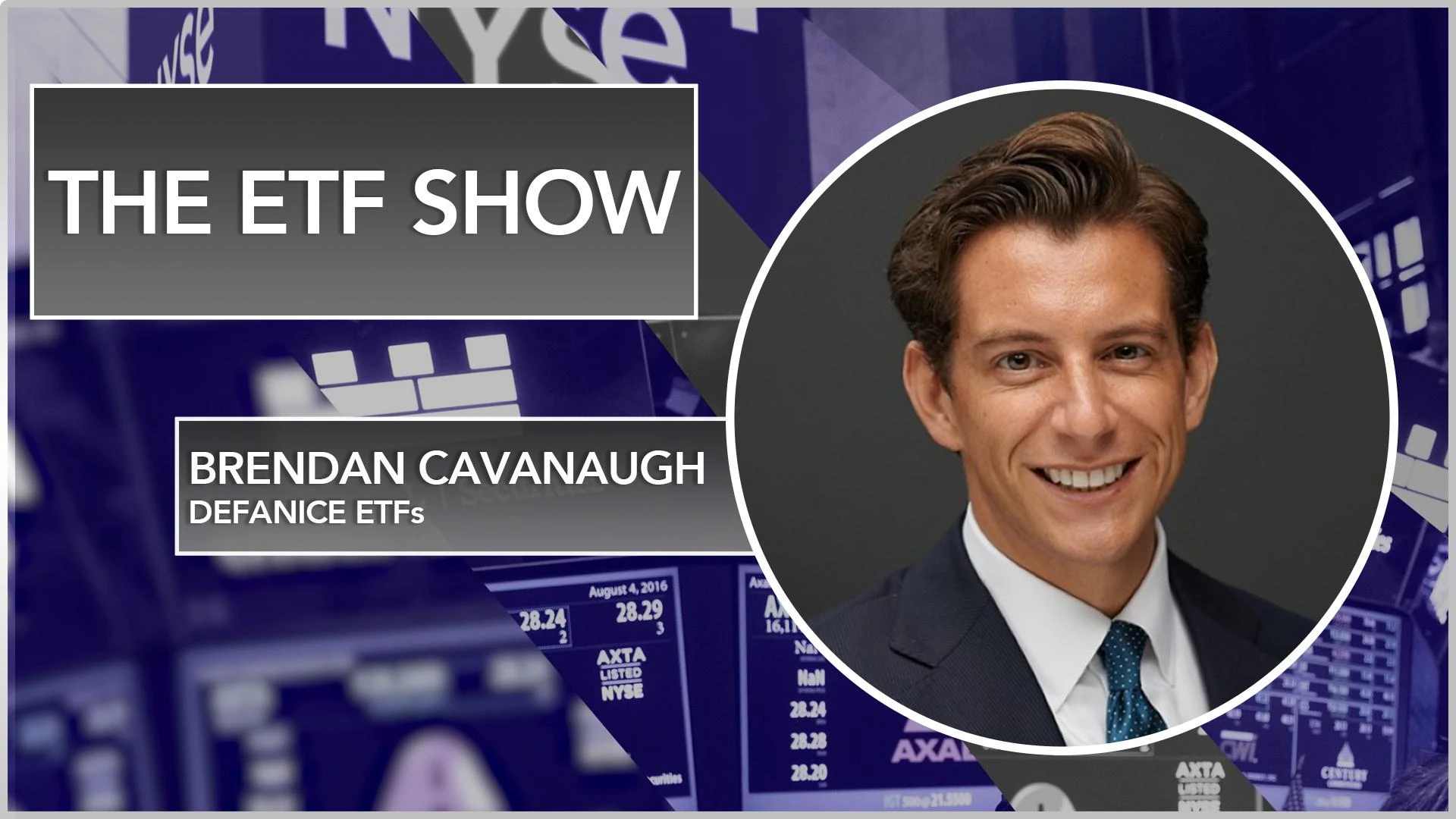
The ETF Show - New Autism-Impact ETF Launched
Defiance ETFs has launched the first ETF, $ASD, focused on the autism ecosystem, investing in companies that provide services, products, and research related to autism and neurodivergence.


ETF Trends
ETF Industry KPIs June 1, 2026
The ETF Industry saw 22 New Launches, 1 Ticker Change and 1 closure last week.

ETF Trends
ETF Industry KPIs May 20, 2026
The ETF Industry saw 44 New Launches, 3 Mutual Fund Conversions and 9 closures last week.
Asset TV
The ETF Show - Politics Becomes Investable Trade through ETFs
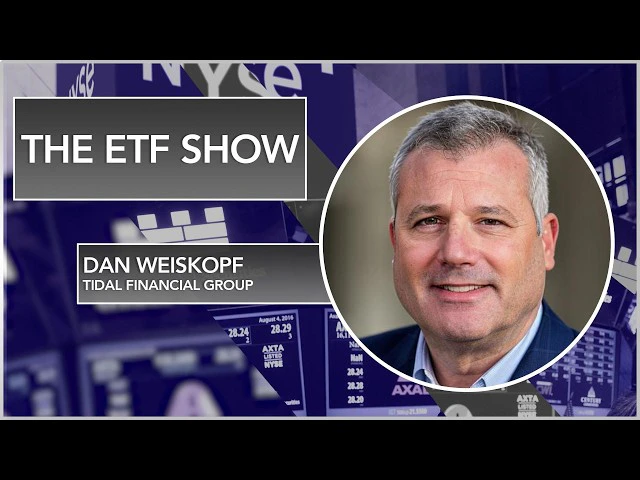
Dan Weiskopf, Senior Portfolio Manager at Tidal Financial Group spoke with the ETF Show about Subversive ETFs that help investors trade like politicians.
Browse all educational columns



Expert-Built ETF Portfolios, All in One Place
Don’t start from scratch. Discover ready-made ETF portfolios built by professionals to match different goals, timelines, and market views. Use them as inspiration or as a starting point for your own allocation.